27.05.2025 - 21.09.2025

27.05.2025 - 21.09.2025

Following on from Titian (2003), Tintoretto (2007) and Lorenzo Lotto. Portraits (2018), with Paolo Veronese the Museo del Prado is now bringing to close an unrepeatable cycle of exhibitions of Venetian Renaissance painting, a cornerstone of its collection.
Paolo Veronese (1528–1588) was a painter who enjoyed extraordinary renown, both during his lifetime and in subsequent centuries; an artist with an all-embracing idea of art that encompassed countless aesthetic and cultural references which he translated to canvas with great formal and conceptual ease. He did so at a critical time for Venice, when religious tensions were surfacing along with the first symptoms of economic and political decline, which his brushes masterfully camouflaged. No other artist contributed more powerfully to recreating in images the ‘myth of Venice’ that has survived to the present day.
The exhibition is divided into six chronological and thematic sections.
The first, From Verona to Venice, focuses on his training in his native Verona, a city with a rich Roman past where local tradition coexisted alongside contributions from Venice (especially Titian) and central Italian artists such as Raphael and Parmigianino. Building on them, Veronese soon developed a style of his own characterised by formal and compositional elegance and contrasting colours, which facilitated his triumphant debut in Venice in 1551.
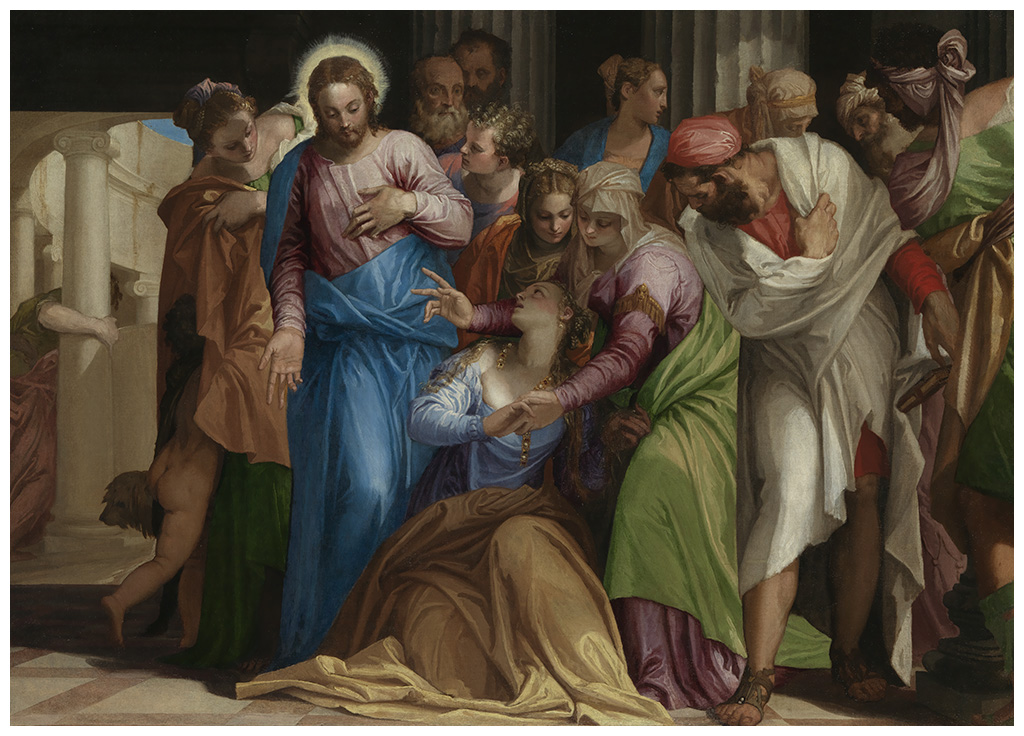
The Conversion of Mary Magdalene, c. 1548. Oil on canvas, 117,5 × 163,5 cm. London, The National Gallery, Wynn Ellis Bequest, 1876
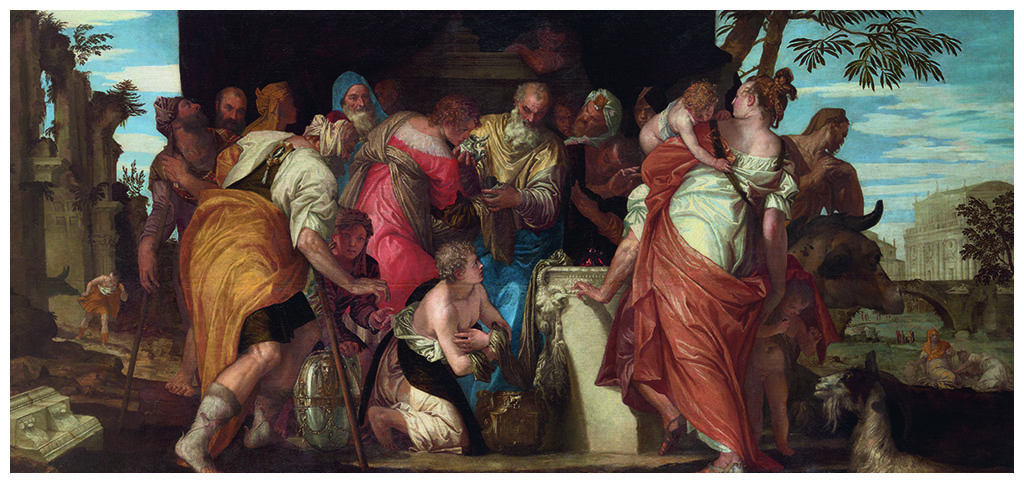
The Anointment of David, c. 1550. Oil on canvas, 174 × 365 cm. Viena, Kunsthistorisches Museum, Gemäldegalerie
The second section, ‘Maestoso Teatro’. Architecture and Stage Design, explores his understanding of space and storytelling, which involved combining the Venetian tradition with the theatrical and architectural notions of Andrea Palladio and Daniele Barbaro, and contrasts it with the alternative vision embodied by Jacopo Tintoretto and Sebastiano Serlio’s ideas on stage design. Particular attention is paid to the famous Feasts, sumptuous displays of the refinement and material culture of the Venetian patricians.
The third, Creative Process. Invention and Repetition, examines Veronese’s pictorial intelligence and how he ran one of the most productive and highest quality workshops of the time. This was made possible by his strict control of the creative process and skilful division of tasks, in which drawing played a fundamental role.
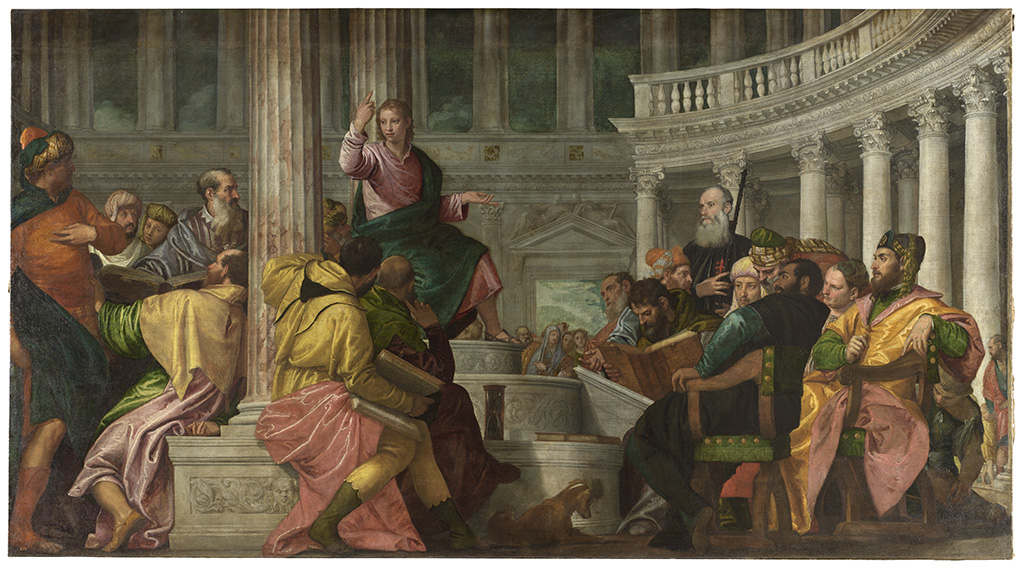
Christ among the Doctors in the Temple, c. 1550-56. Oil on canvas, 223 × 434 cm. Madrid, Museo Nacional del Prado
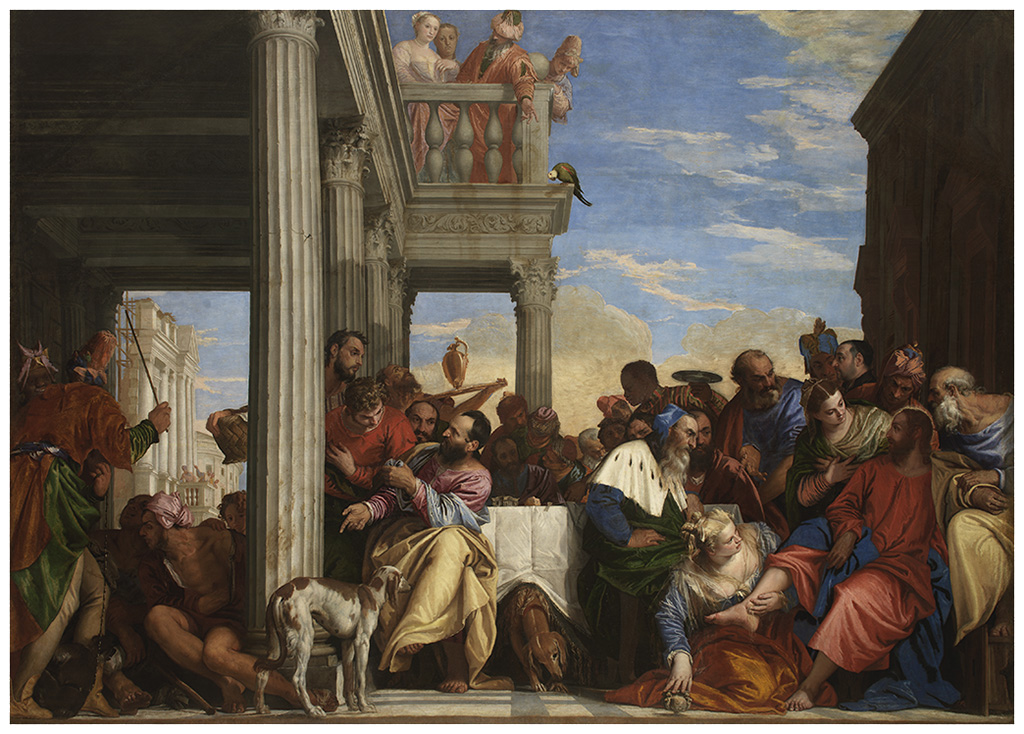
The Feast in the House of Simon, c. 1556-60. Oil on canvas, 315 × 451 cm. Turín, Musei Reali di Torino, Galleria Sabauda
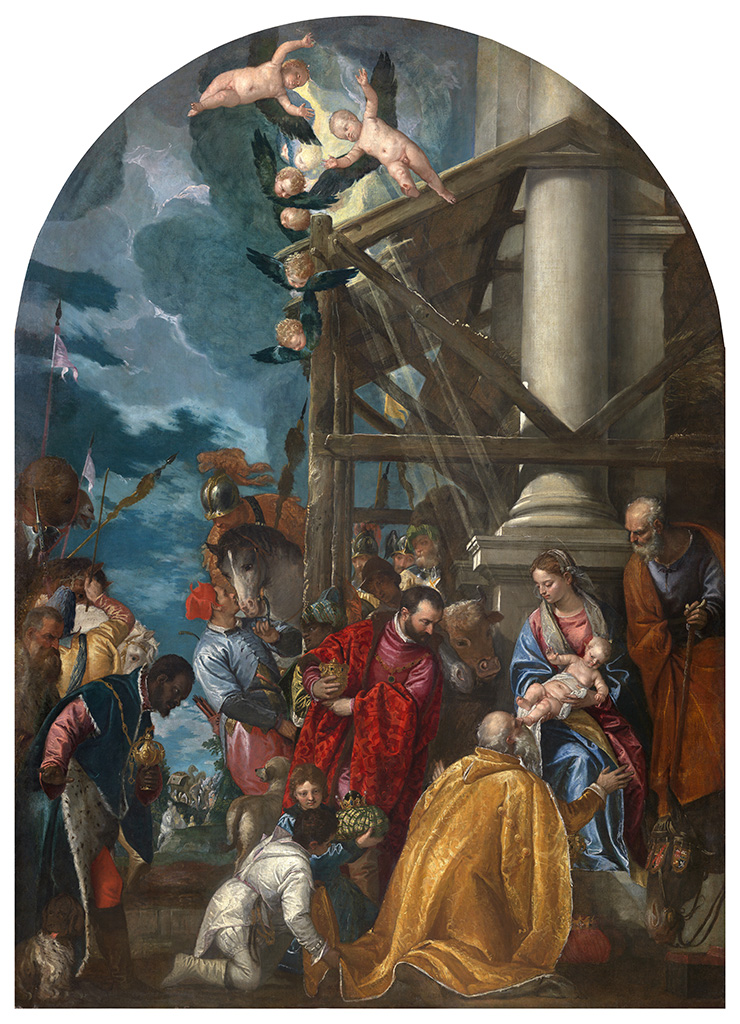
The Adoration of the Magi, c. 1573-74. Oil on canvas, 375 × 288 cm. Vicenza, Musei Civici, Chiesa di Santa Corona, Cappella di San Giuseppe
The fourth section, Allegory and Mythology, shows his excellence in two fields particularly dear to the elites: allegory and mythological fables, where he proved to be the only artist capable of competing with Titian, enabling him to inherit his powerful clientele, both inside and outside Venice.
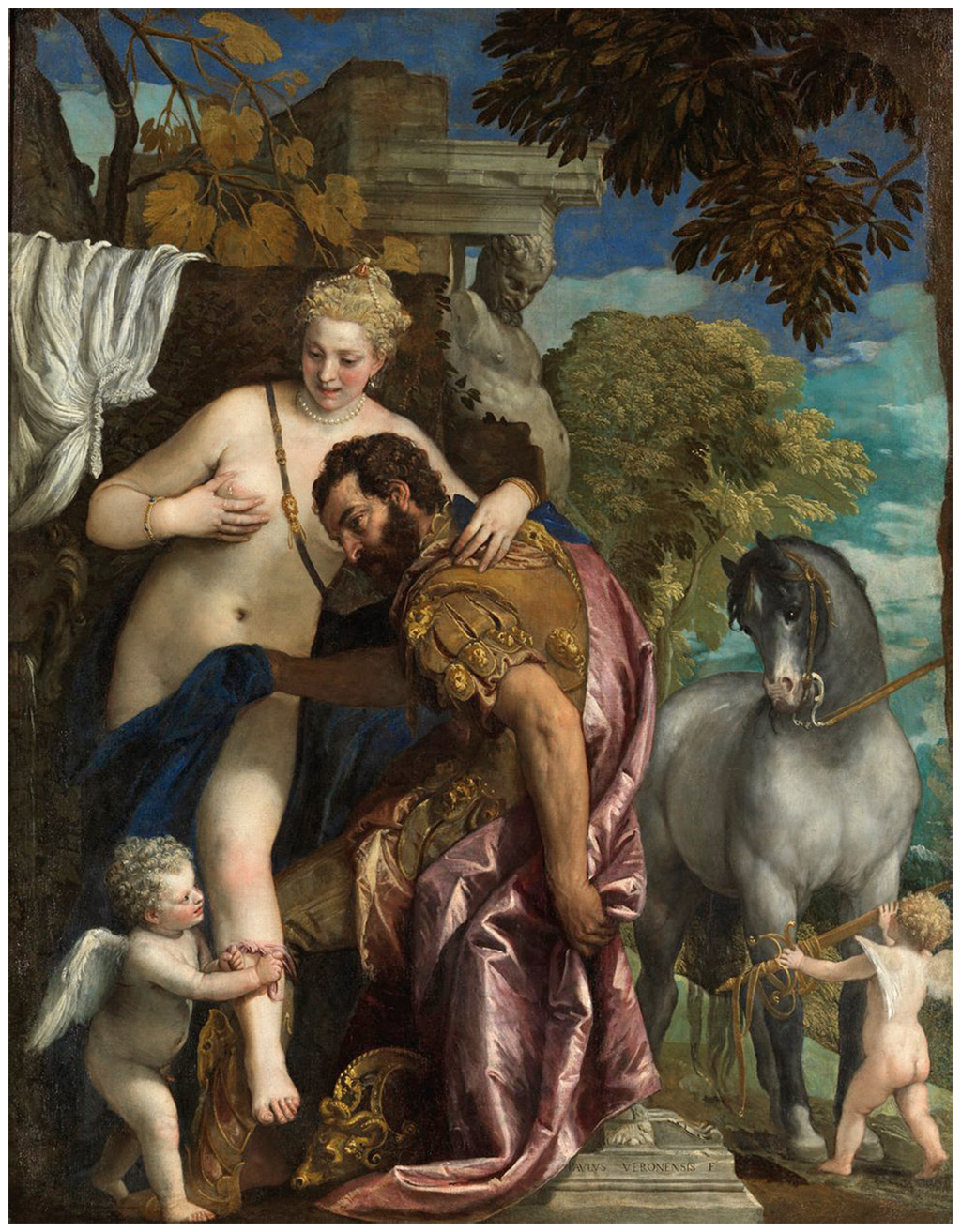
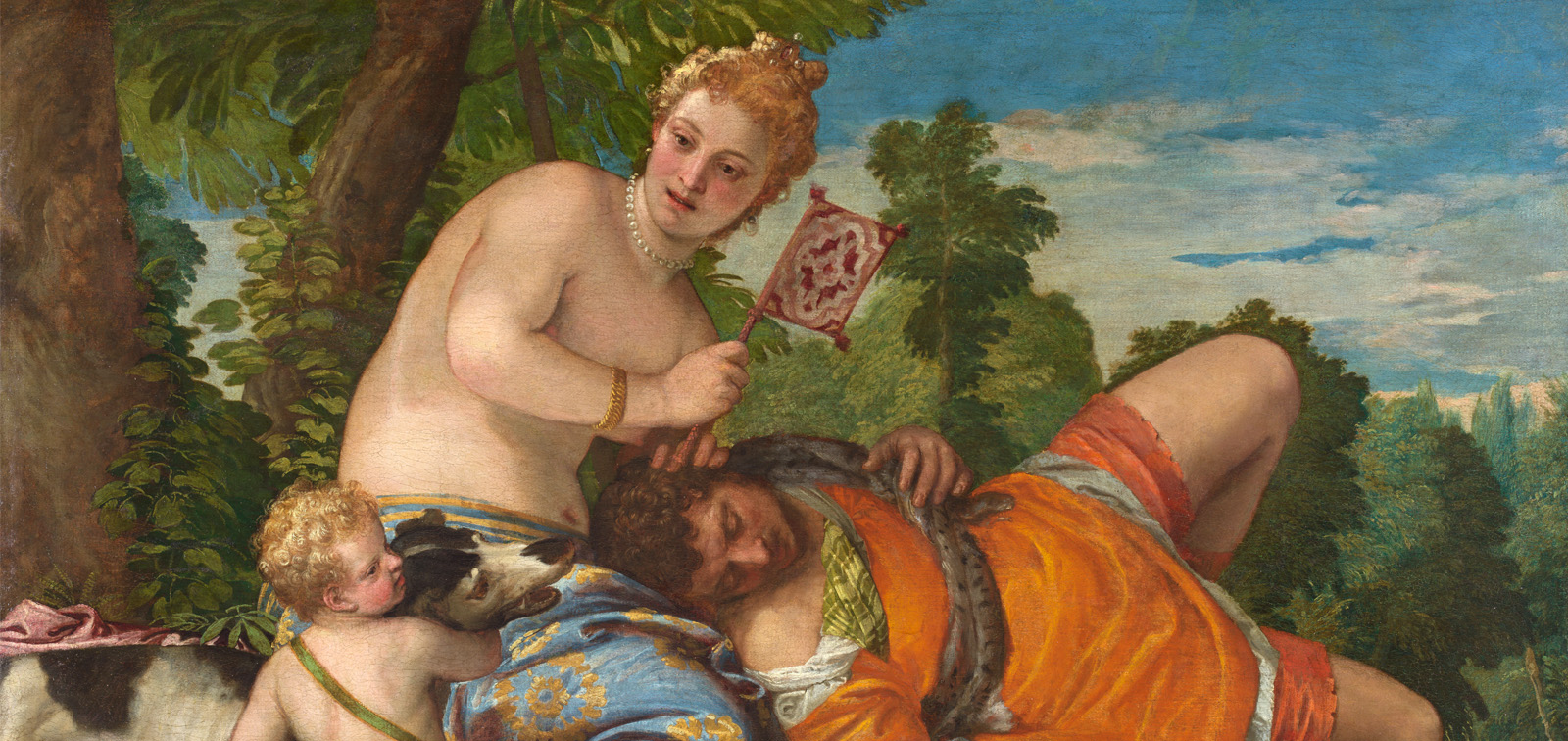
Mars and Venus united by Love, 1570s. Oil on canvas, 205,7 × 161 cm. New York, The Metropolitan Museum of Art, John Stewart Kennedy Fund, 1910
The fifth section, The Late Veronese, addresses his final decade, when a significant change took place in his painting, with unstable compositions, darker colours and a focused and often symbolic use of light, in which the landscape takes on a new prominence. This transformation, which heralds the major pictorial achievements of the Baroque, stemmed from a variety of factors: some aesthetic, such as the impact of the contemporary oeuvre of Tintoretto and Jacopo Bassano; and others ‘environmental’, such as the religious climate following the Council of Trent.
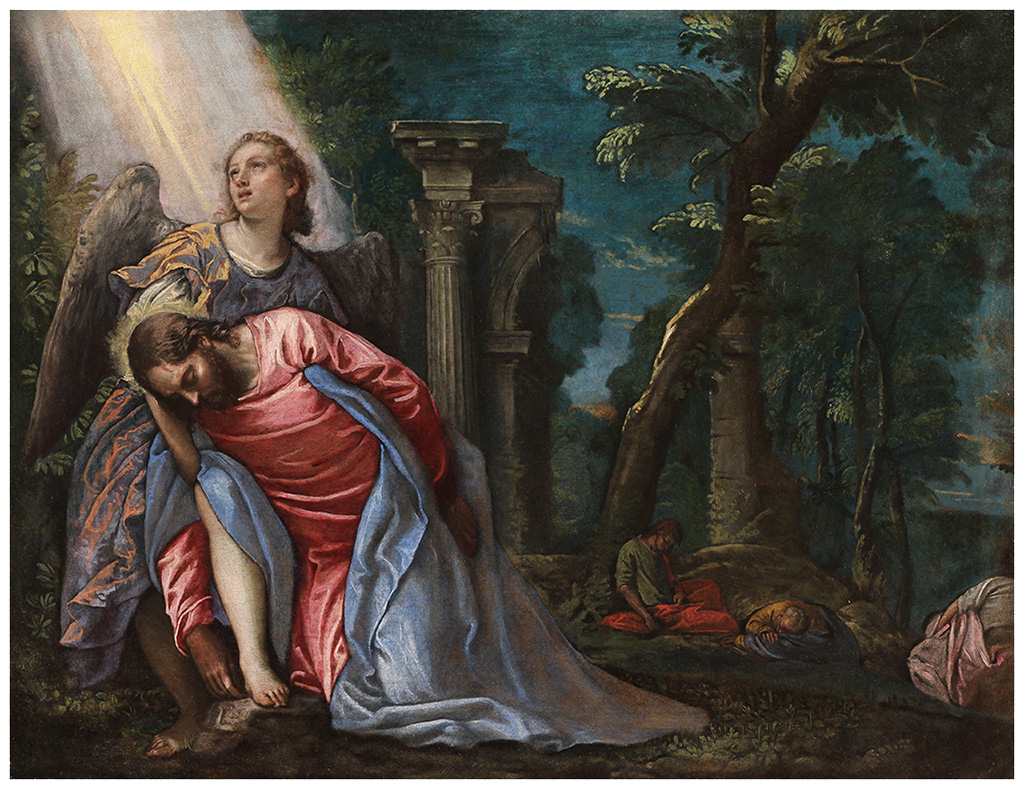
The Agony in the Garden, c. 1582-83. Oil on canvas, 81,8 × 106,5 cm. Milán, Pinacoteca di Brera
The final section surveys his legacy: ‘Haeredes Pauli’ and Veronese's Admirers. On the one hand, there were his relatives, who simply rehashed his models for a decade, going by the name ‘Haeredes Pauli’, and on the other, the truly talented artists who embraced and disseminated his legacy. The exhibition focuses on those who came immediately after him – El Greco, the Carracci and Peter Paul Rubens – though Veronese’s status as a ‘painters’ painter’ extended into the 20th century and influenced artists as diverse as Diego Velázquez, Giovanni Battista Tiepolo, Eugène Delacroix and Paul Cézanne. The show ends by recalling his exceptional popularity with European collectors, which is the ultimate reason why he is so superbly represented in the Prado’s collections.
English
37€
Compra ahora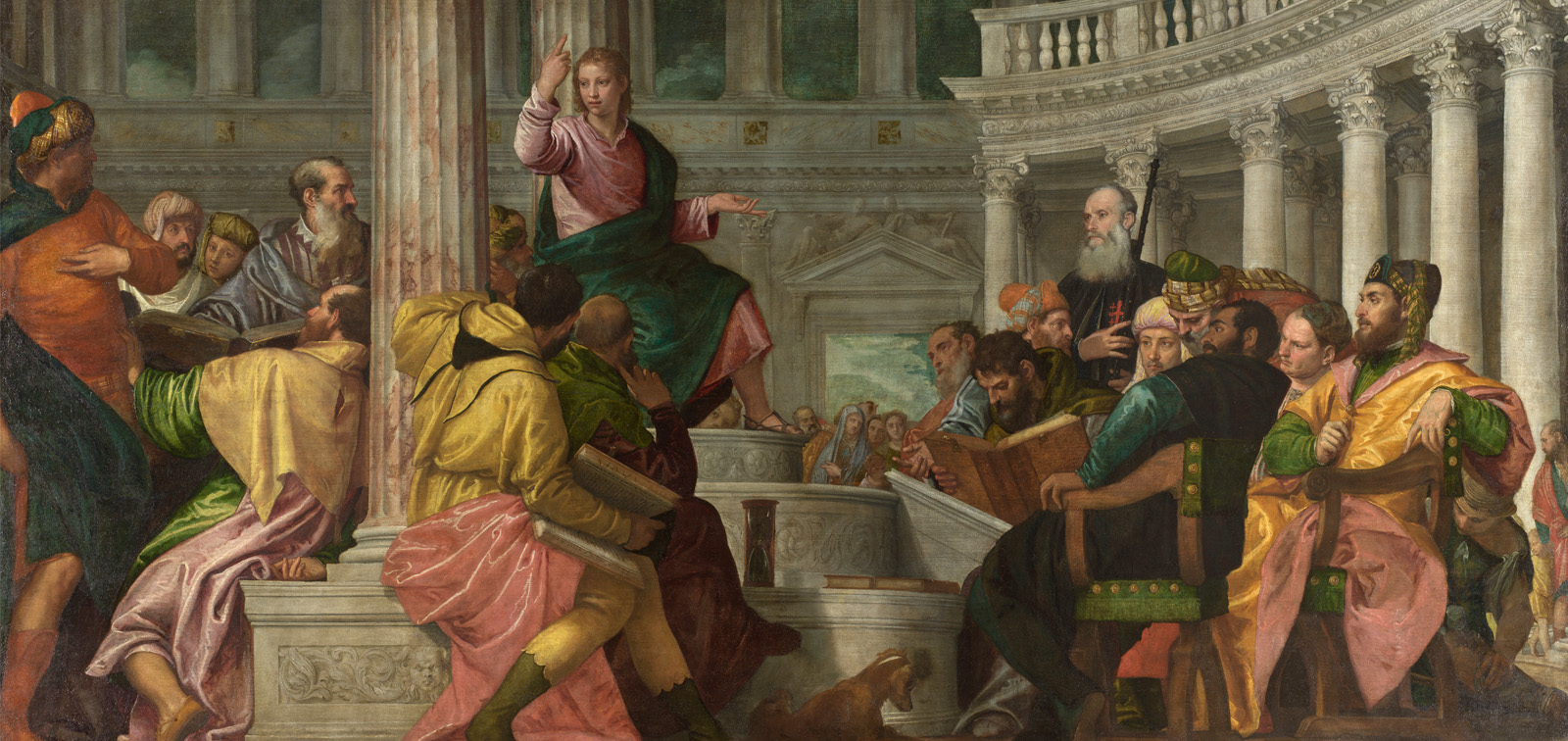
Tuesday to Sunday at 12.00 p.m.
Starting May 30th
Mostrador de Educación
Entrada  10 €
10 €
Mondays at 1 p.m. and 5.30 p.m.
Sala de Conferencias
Actividad gratuita para los visitantes con entrada al Museo
More info
For blind and low vision people
June: Thursday and Friday at 10.00 a.m.
July and September: Monday to Friday at 10.00 a.m.
Registration required: comunidad.pradoeducacion@museodelprado.es
Mostrador de Educación
Gratuito
More info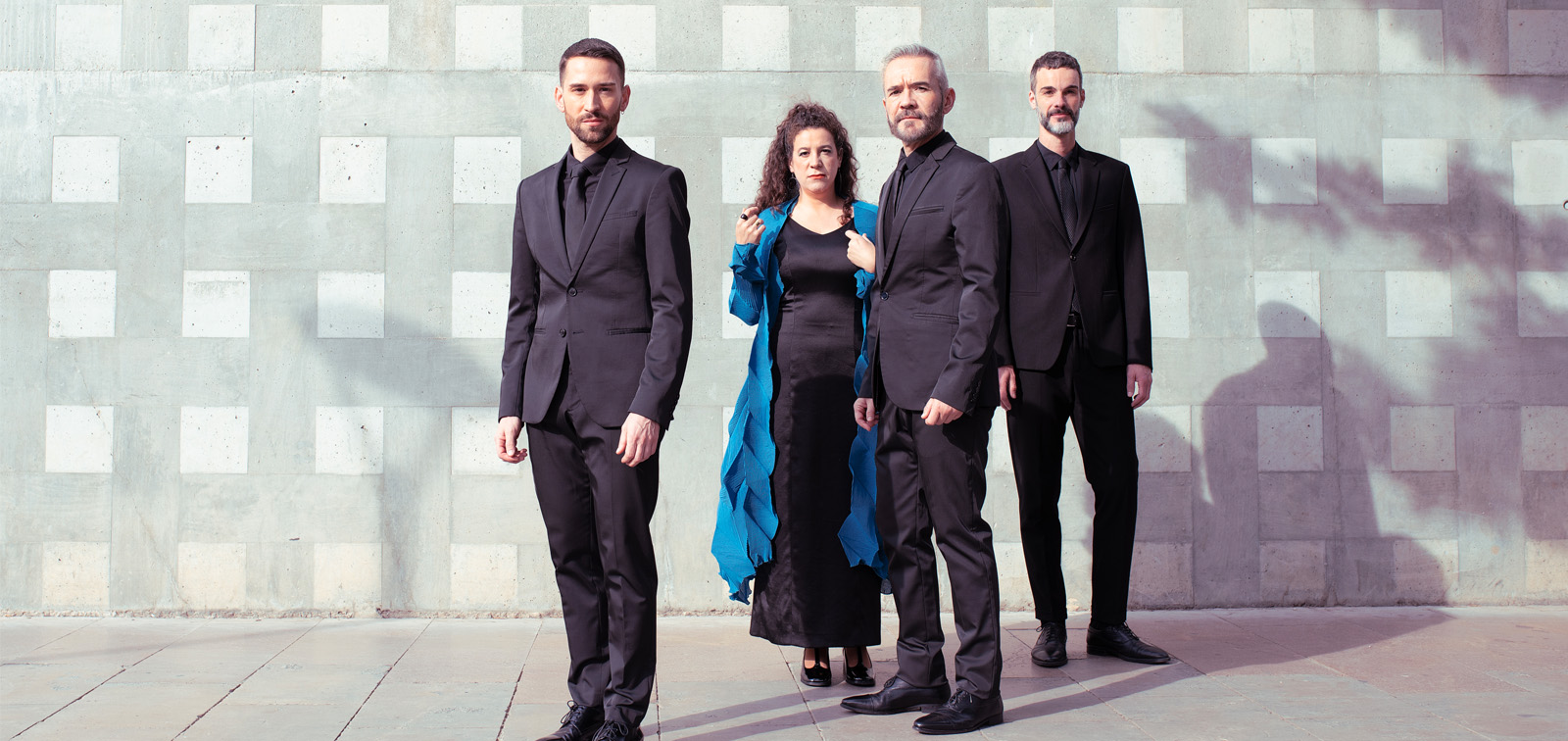
Performed by Qvinta Essençia.
June 20th at 7 p.m.
Online and ticket office sales
With the collaboration of ICCMU
12 €
More info
Directed by Miguel Falomir Faus, director del Museo Nacional del Prado
May 28th, 11th, 11th, 18th, June 25th and 2nd July
6.30 p.m.
Auditorium
Sponsored by the Friends of the Prado Museum Foundation
More info
140 € niño/a
More info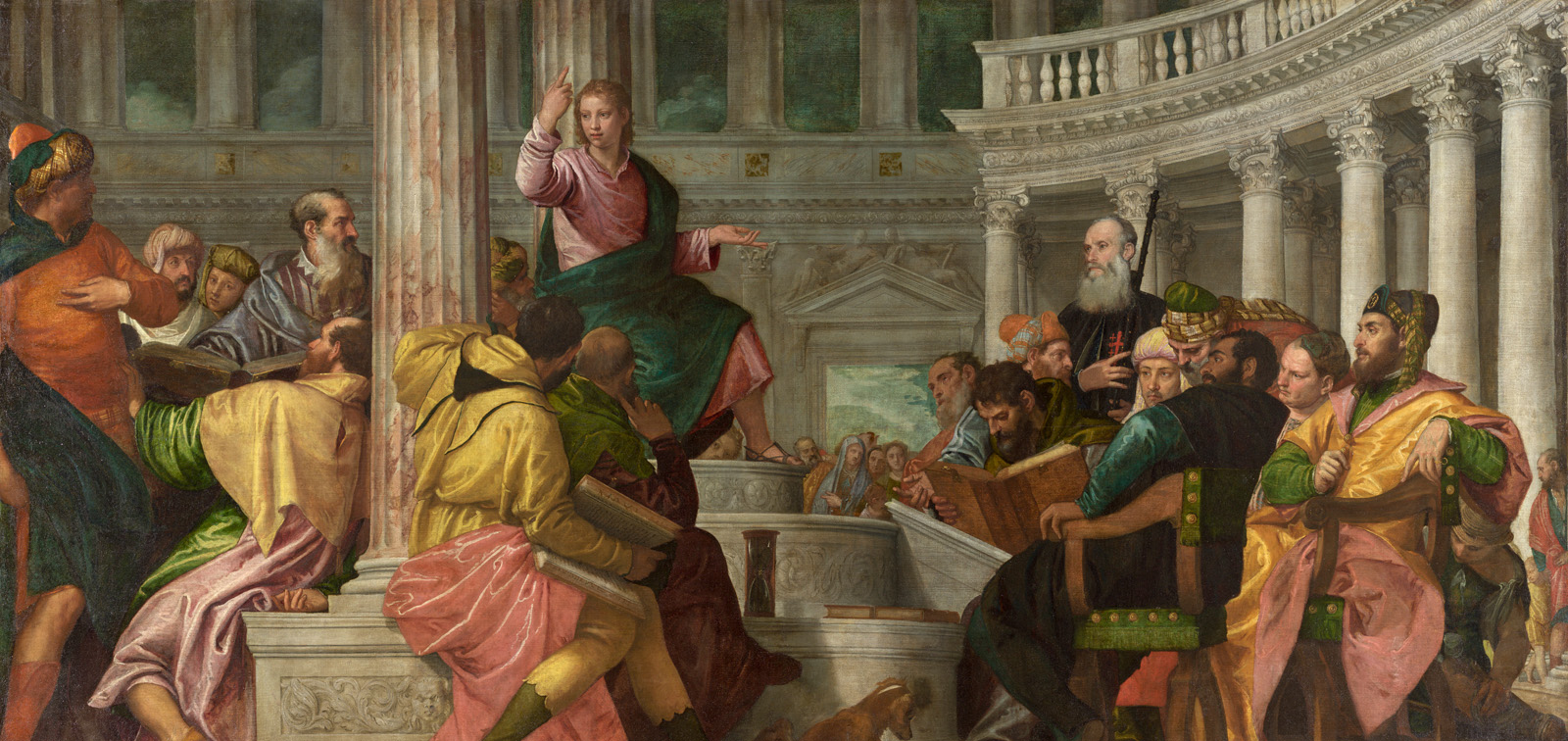
June 10th, 11th, 23th and 24th at 10.30 a.m.
Sign up from June 4th at 10.00 a.m.
Gratuita previa compra de entrada y haberse inscrito y recibido confirmación de la inscripción
More infoMonday to Saturday: 10.00 am - 8.00 pm
Sundays and holidays: 10.00 am - 7.00 pm
6 January and 24, 31 December: 10.00 am - 2.00 pm
Last admission 30 min before closing time
Visitors must leave the galleries 10 min before they close
1 January, 1 May and 25 December
Open until 30 min before closing time
www.museodelprado.es and ticket office
91 068 30 01 / cav@museodelprado.es
Standard ticket: 15 €
Reduced price ticket 7,50 € (with proof of status)
Spanish and English
Includes the Collection and temporary exhibitions
On sale at the ticket office and online
Sponsored by: