formularioRDF
The itinerary <em>TITULORECORRIDO</em> has been successfully created. Now you can add in works from the Collection browser
<em>TITULOOBRA</em> added to <em>TITULORECORRIDO</em> itinerary

The Immaculate Conception of Los Venerables. Murillo

The Immaculate Conception of Los Venerables is a painting by Bartolomé Murillo, a Spanish painter. 

The painting is from 1678.

ETR (Easy to Read) icon
© Easy-to-read european logo: Inclusion Europe. More information at: Easy-to-read

What is the subject?

Bartolomé Murillo created this painting of the Virgin Mary as the Immaculate Conception, surrounded by angels.

This way of portraying the Virgin Mary was common in Spain, and many artists from Seville created paintings of the Immaculate Conception.

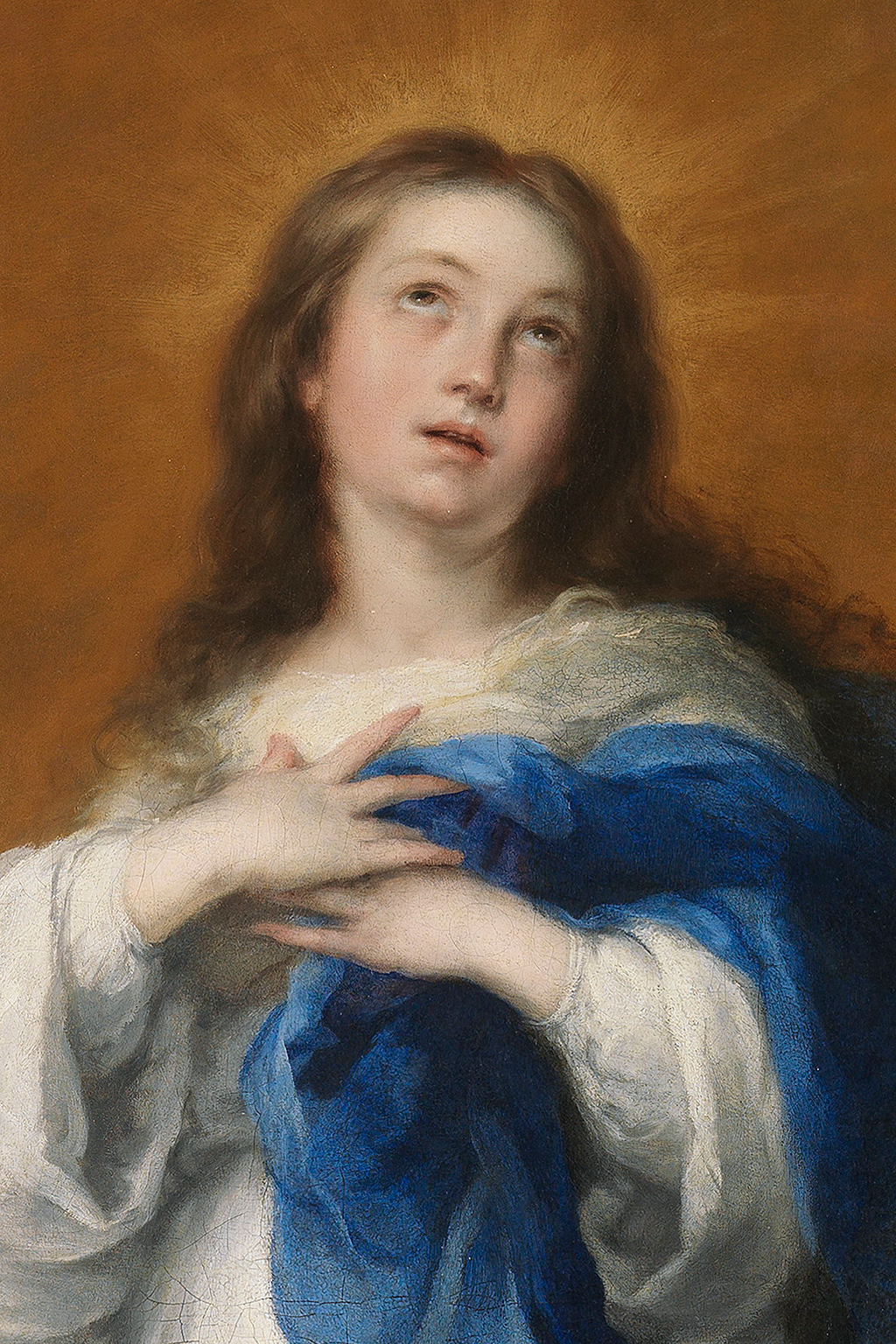
The painting depicts the Virgin Mary standing on the moon in the centre, with her hands crossed over her chest and looking towards the sky.

The clouds surrounding her give the impression that she ascends to Heaven.

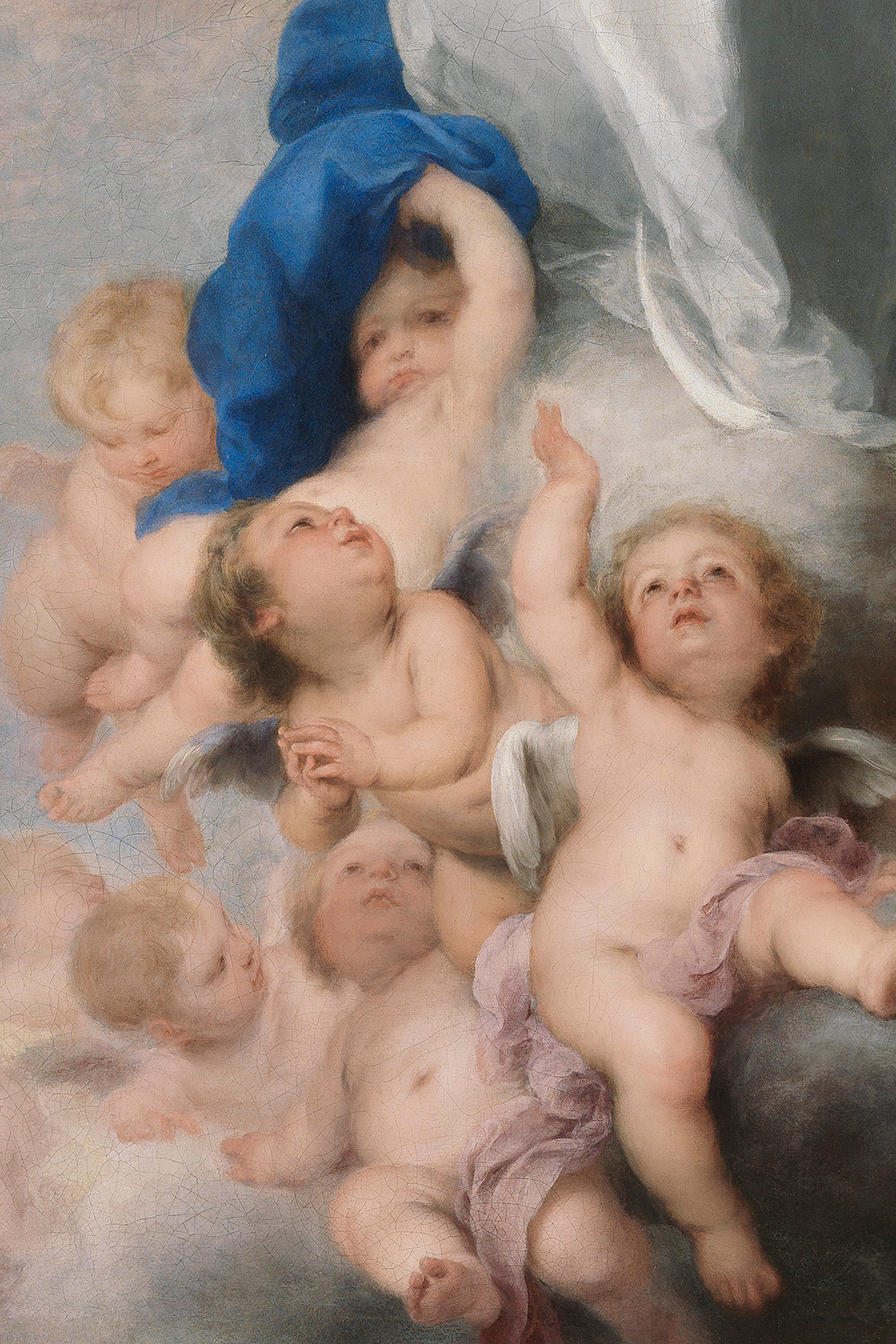
The angels surrounding her appear to be moving, revolving around her.

Murillo used a unique technique to depict the sweetness of the Virgin and the admiration of the angels.

Murillo blurred the image and added different colours to create an impression of a moving image.

This technique makes the viewers feel like they witness a miracle in the painting.
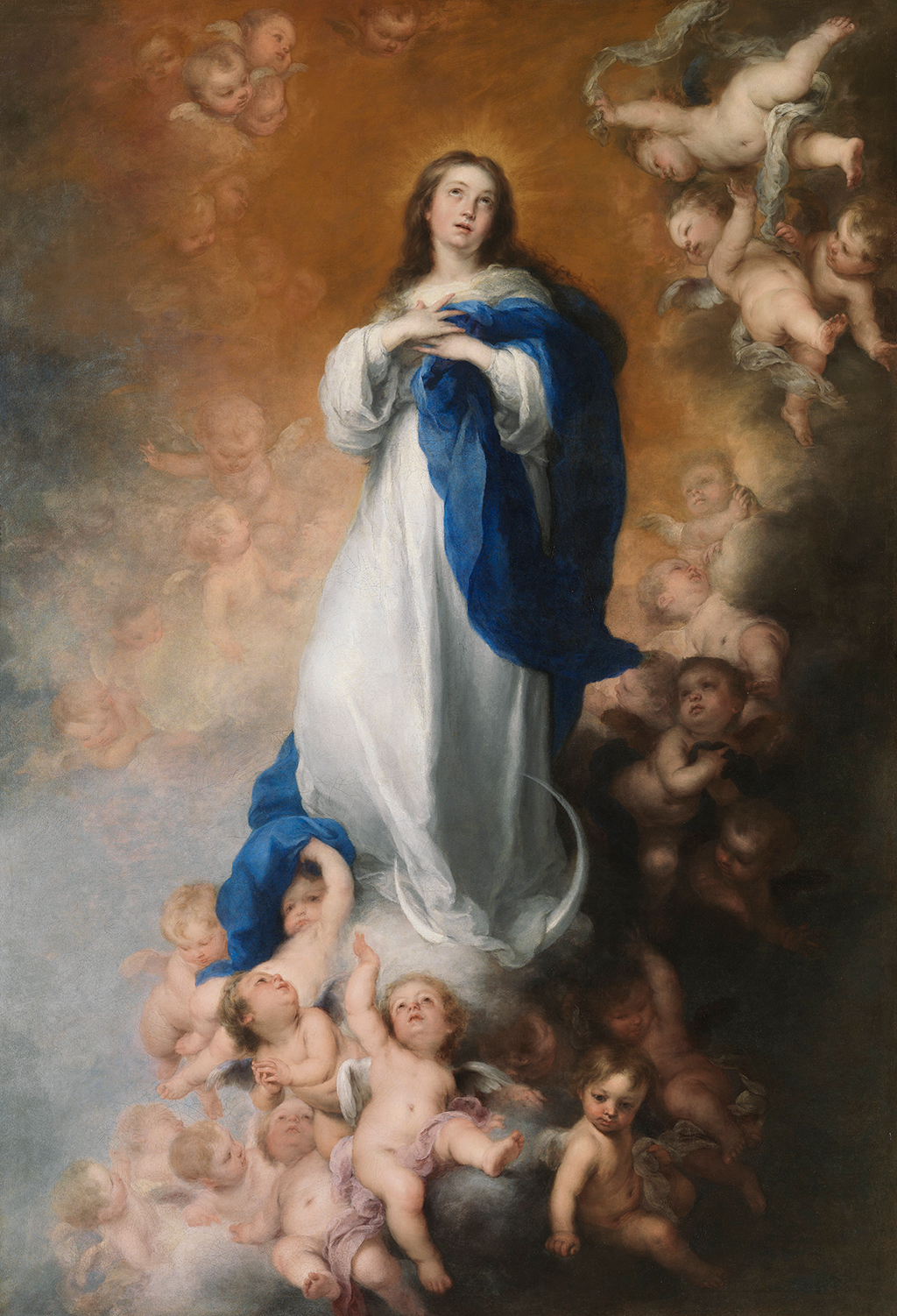
The Immaculate Conception of Los Venerables
The Immaculate Conception of Los Venerables by Murillo

The painter

Murillo is a Spanish painter born in Seville.

He was trained in painting by the painter Juan del Castillo.

Juan de Castillo was a relative of Murillo.

Murillo was one of the most famous painters of his time.

He devoted his life to painting religious themes, focusing on the Immaculate Conception.

Detail of the Virgin

The history of the painting

This painting is the most monumental and impressive work of Murillo on this theme.

Murillo also created many paintings for wealthy people in Seville.

The painting was commissioned by the Hospital of Venerable Priests in Seville.

The painting was first kept at the Hospital.

Later, Marshal Soult took it to France during the War of Independence.

The painting was exhibited at the Louvre Museum for many years.

In 1941, the painting was returned to the Prado Museum as part of an artwork exchange program between the French and Spanish governments.

Detail of the angels
Funded by the European Union - NextGenerationEU Government of Spain - Ministry of Culture Recovery, Transformation and Resiliency Plan Museo Nacional del Prado

Funded with the National Recovery and Resilience Plan (NRPP) , Spain’s Next Generation EU financing and according to the initiatives within the component C.24.I3 Digitization and valorization of major cultural services. The project is part of Campus Prado within Accessibility and Signage: Revitalization of the Urban Environment action line and as a universal accessibility activity.

Up