-

-
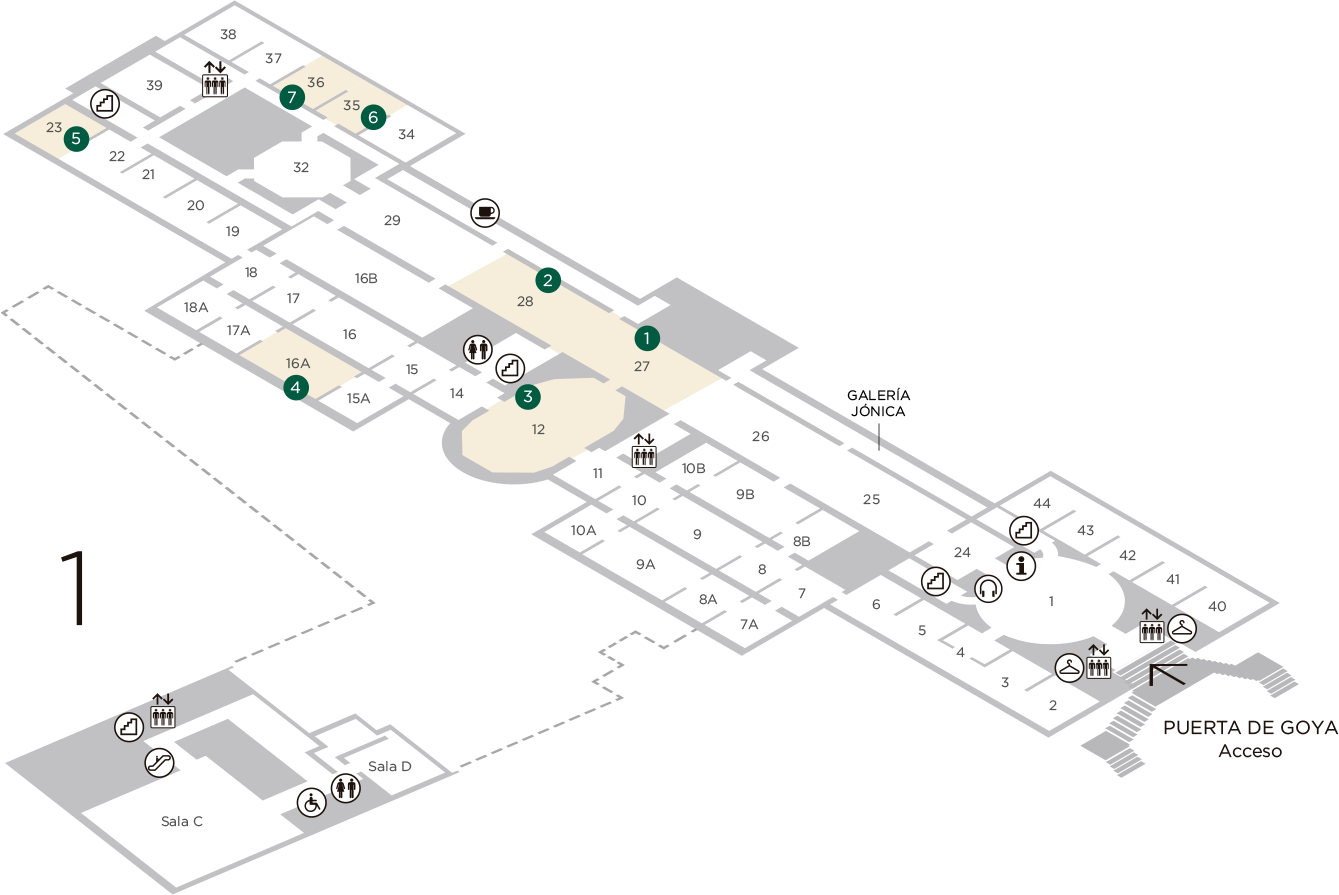
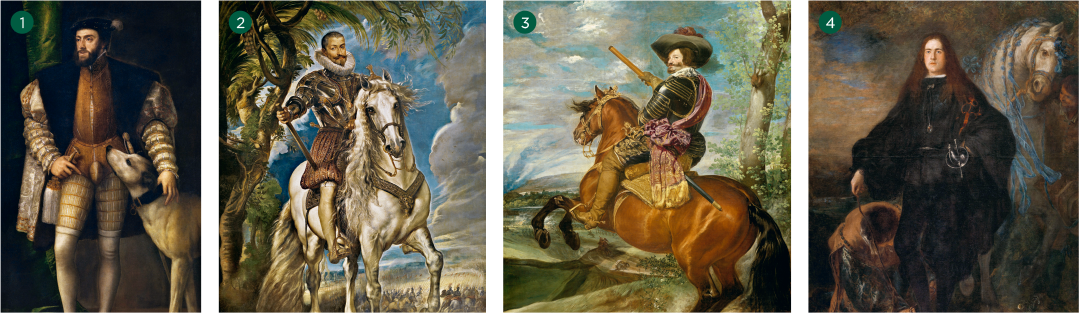
To mark the 500th anniversary of the Council of State, the Museo del Prado – working closely with the Council itself – has drawn up an itinerary comprising portraits of several Councillors of State currently on show in its galleries. The survey also provides an overview of the changing approach to portraiture as a genre, from the 16th to the 19th centuries, starting with a likeness of Emperor Charles V – the Council’s founder – by his leading portrait painter, Titian. Nowhere is the Baroque court portrait better epitomised than in the likeness of the Duke of Lerma painted by Peter Paul Rubens or in Velázquez’s portrait of the Count-Duke of Olivares; in both cases, the protagonists are depicted on horseback, thus conveying the authority conferred upon them by their status as the kings’ favourites. This opening section highlights the convergence of the three major schools represented in the Prado: the Venetian and Flemish schools, and the Spanish school which was influenced by both. A good example is Juan Carreño de Miranda’s portrait of the Duke of Pastrana, with its clear echoes of Anthony van Dyck.
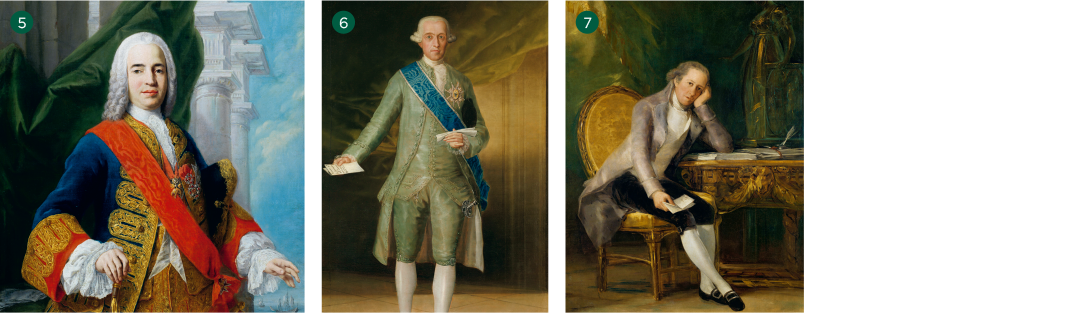
The 18th-century Enlightenment is represented by three portraits. The likeness of the Marquis of La Ensenada is by the Italian painter Jacopo Amiconi, the leading portrait artist in the reign of Ferdinand VI. The portraits of the Count of Floridablanca and Gaspar Melchor de Jovellanos, both by Francisco de Goya, demonstrate his mastery of the genre in the 1780s and 1790s; Goya’s rendering of Jovellanos, skilfully conveying a sense of the sitter’s melancholy, pioneered a new approach to portraying the modern intellectual in Spain.
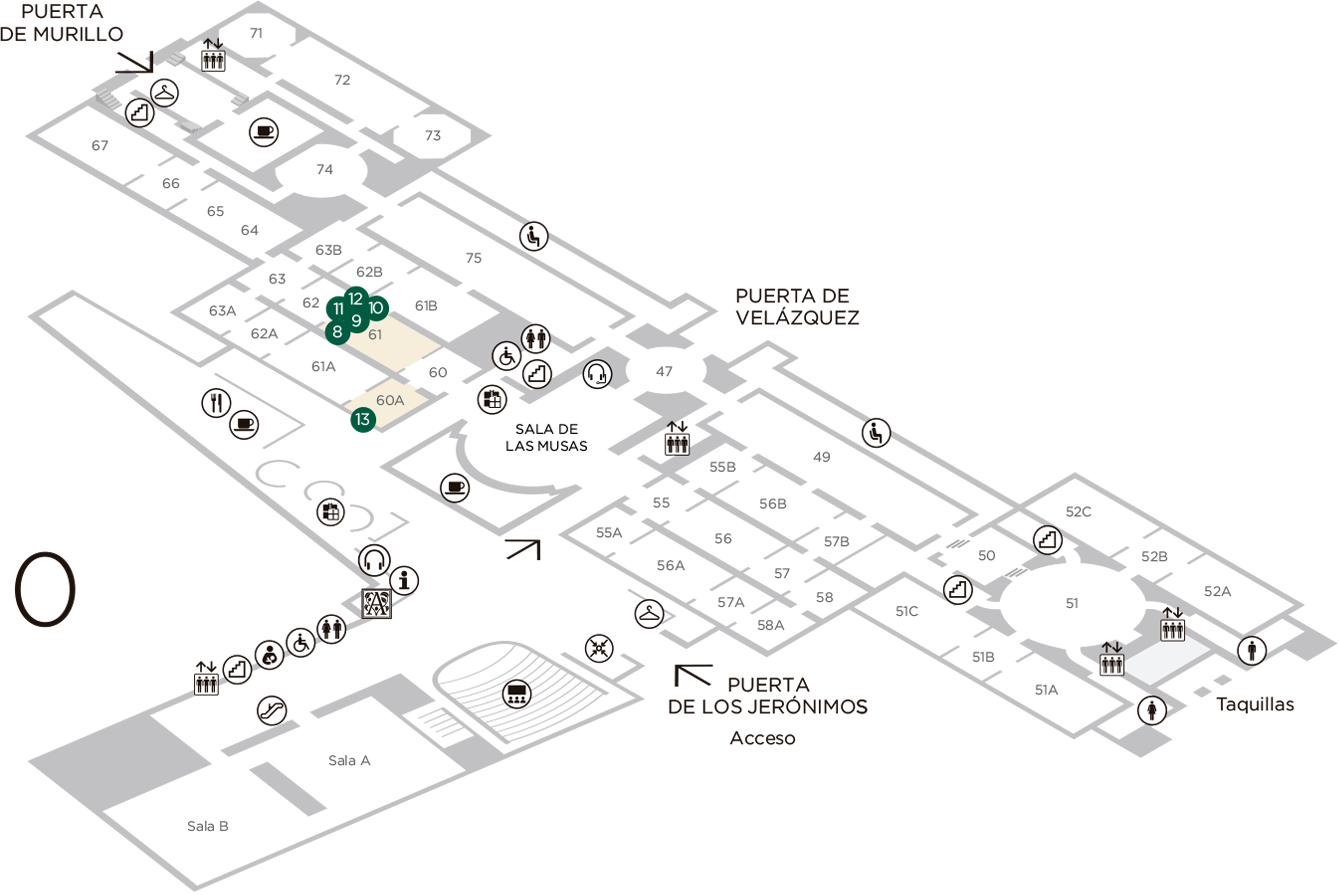
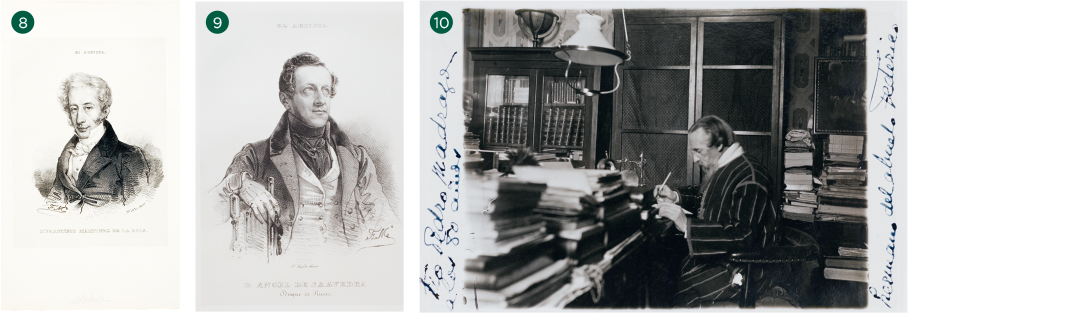
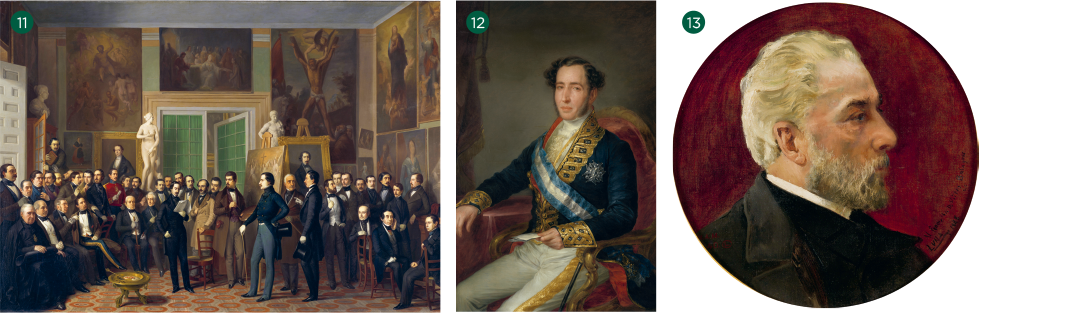
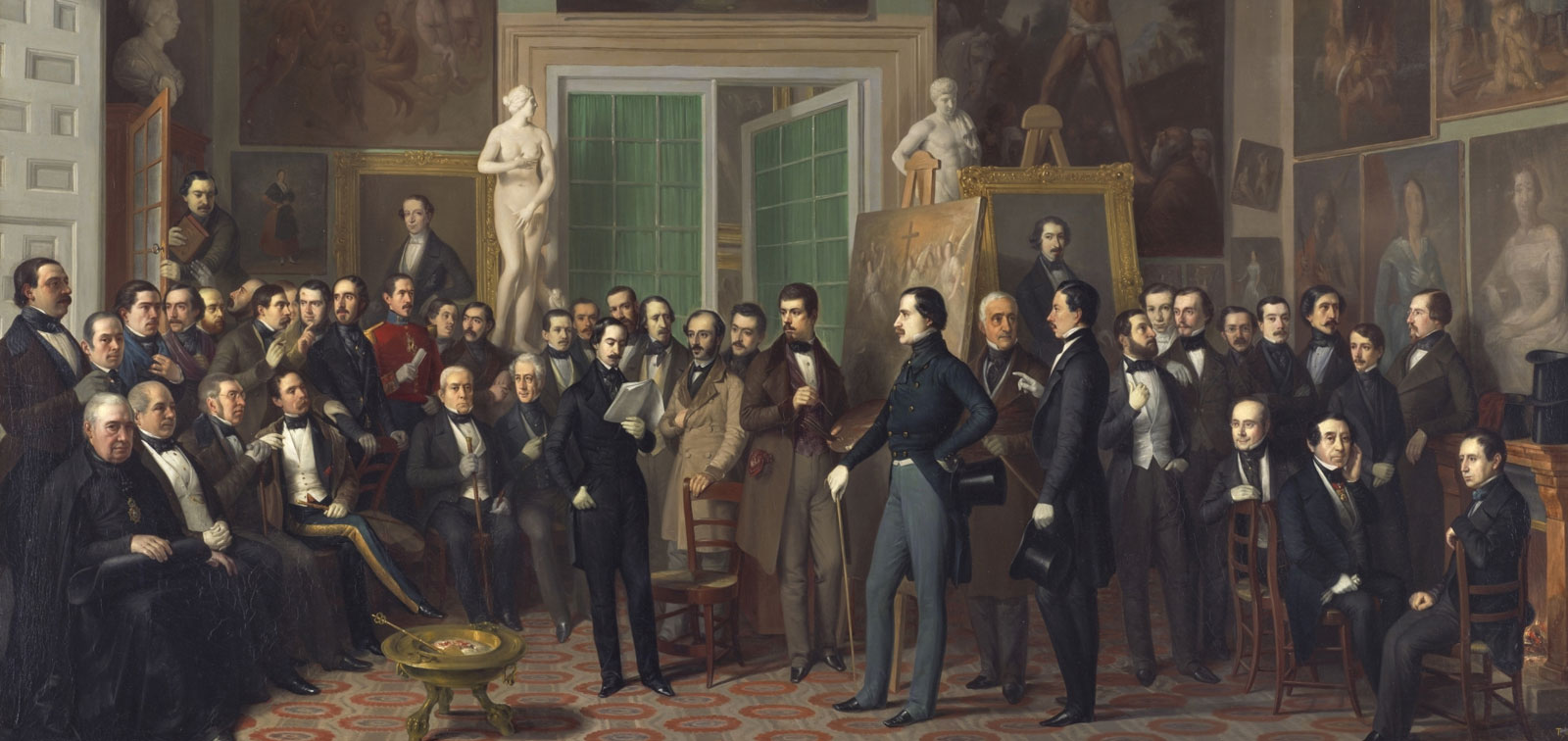
A key aspect of Antonio María Esquivel’s oeuvre during the Spanish Romantic period was his focus on group portraits, which – though popular in Britain and France – were uncommon in Spain at that time. Contemporary Poets. A Reading by Zorrilla in the Painter’s Studio brings together – with quite a natural air – a whole cast of Spanish writers of the time. Many were also politicians; Francisco Martínez de la Rosa, Angel Saavedra, Duke of Rivas (shown in a portrait), Joaquín Francisco Pacheco, Ramón de Campoamor, Javier de Burgos and Pedro de Madrazo were all members of the Council of State. The first two also sat for lithograph portraits – a technique which flourished in the mid-18th century – by another leading Spanish Romantic portraitist, Federico de Madrazo, executed with characteristic elegance of line. Madrazo’s brother Pedro was also captured, in his later years, using a medium which was to become even more significant: photography. The seated portrait of Manuel de Seijas by José Gutiérrez de la Vega – a Sevillian, like Esquivel – is a good example of the ministerial painting typical of the period. The round portrait of Victor Balaguer, Overseas Minister, by the Filipino artist Juan Luna has been placed high up, as it was in the location for which it was painted, the Overseas Museum-Library.
27 June, 1 July and 23 September at 6:30 pm
Auditorium
More infoMonday to Saturday: 10.00 am - 8.00 pm
Sundays and holidays: 10.00 am - 7.00 pm
6 January and 24, 31 December: 10.00 am - 2.00 pm
Last admission 30 min before closing time
Visitors must leave the galleries 10 min before they close
1 January, 1 May and 25 December
Open until 30 min before closing time
www.museodelprado.es and ticket office
91 068 30 01 / cav@museodelprado.es
Standard ticket: €15
Reduced price ticket €7.50 (with proof of status)
Spanish and English
Includes the Collection and current temporary exhibitions
On sale at the ticket office and online
Photography and filming not allowed in the rooms


Follow us on
