13.07.2026 - 04.10.2026
13.07.2026 - 04.10.2026
The Prado Museum is bringing together, for the first time, the eight paintings produced by Valeriano Domínguez Bécquer between 1866 and 1867 as part of a commission for the Museo Nacional de Pinturas (or Museo de la Trinidad); following the museum’s closure, the works were transferred to the Prado. To carry out this task, he was awarded a grant by Royal Order of 6 February 1865, which was terminated in 1868 following the overthrow of Queen Isabel II. The set of paintings began to be dispersed in 1877, when they were placed on extended loan to various institutions.
This series is one of the finest examples of 19th-century Spanish genre painting, unrivalled in other Spanish museums, in terms not only of its quality but also of the artist’s sincere, objective approach, an essential feature of pictorial realism in Spain. There is a further exceptional element, crucial to the interpretation of these paintings: the documents containing the painter’s own descriptions of the pictures have been fully preserved, and excerpts have been included in this exhibition.
The paintings made in Zaragoza (two) and Soria (three) were delivered in 1866; a further three pictures, painted in Ávila, arrived in 1867. The first consignment comprised two canvases, both produced in Vera del Moncayo: Interior of a house in a village in Aragón and The Offering. Festivities in Moncayo (Aragón). In the first, women play a central role, as they often did in Bécquer’s oeuvre, either in domestic settings or at work. Here, he has rendered their richly-coloured attire in meticulous detail. The second picture also features a wide variety of costumes (from the mayor to the dancers) and festive customs, such as the paloteo (a stick dance common throughout much of Spain, though with countless variations) or the so-called presente, ágape or puñado, a modest offering of food and drink usually paid for by one of the members of the brotherhood or guild organising the festival.
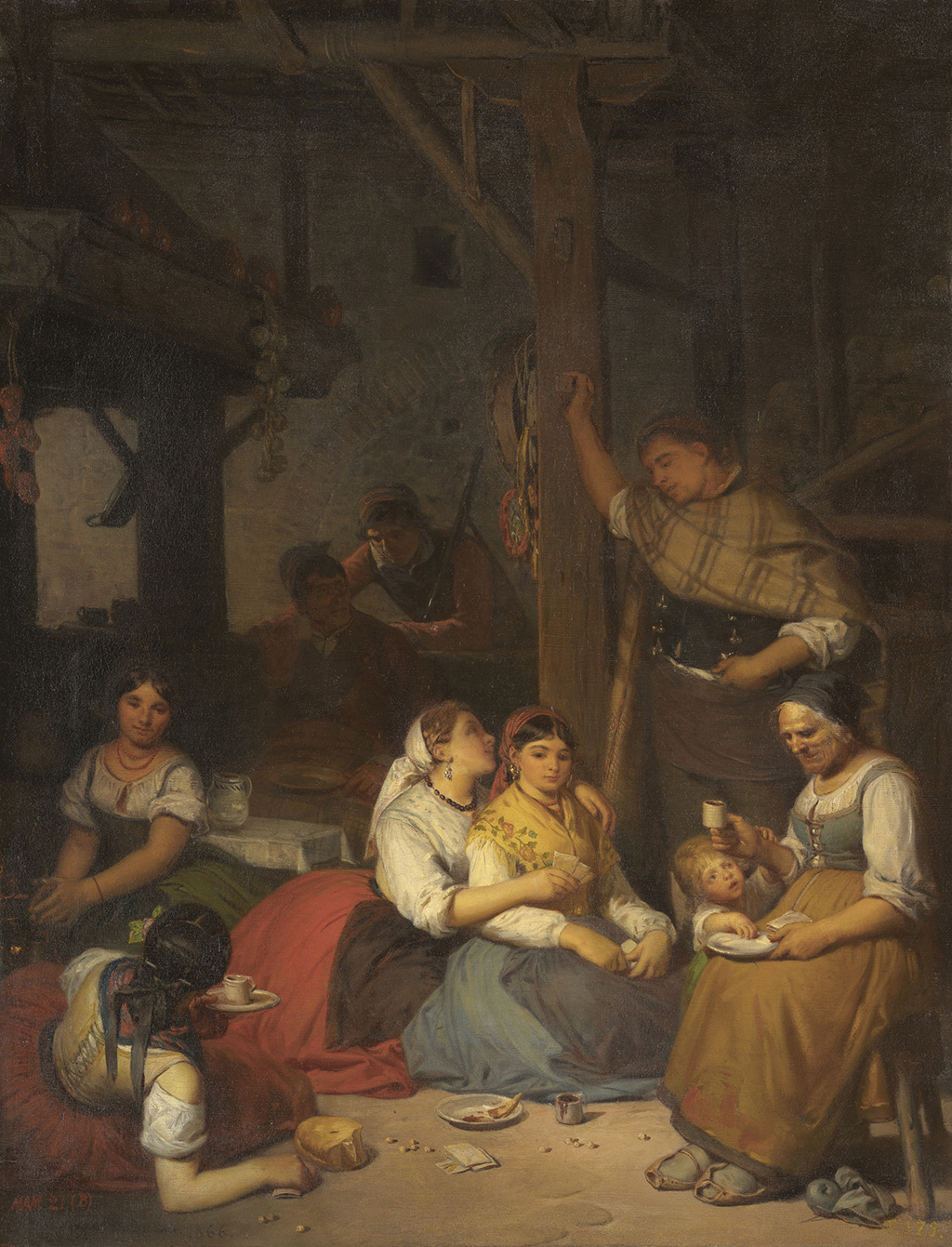
Interior of a house in a village in Aragón, when the family gathers in the afternoon to have hot chocolate. 1866. Oil on canvas. Signed and dated. P-7336
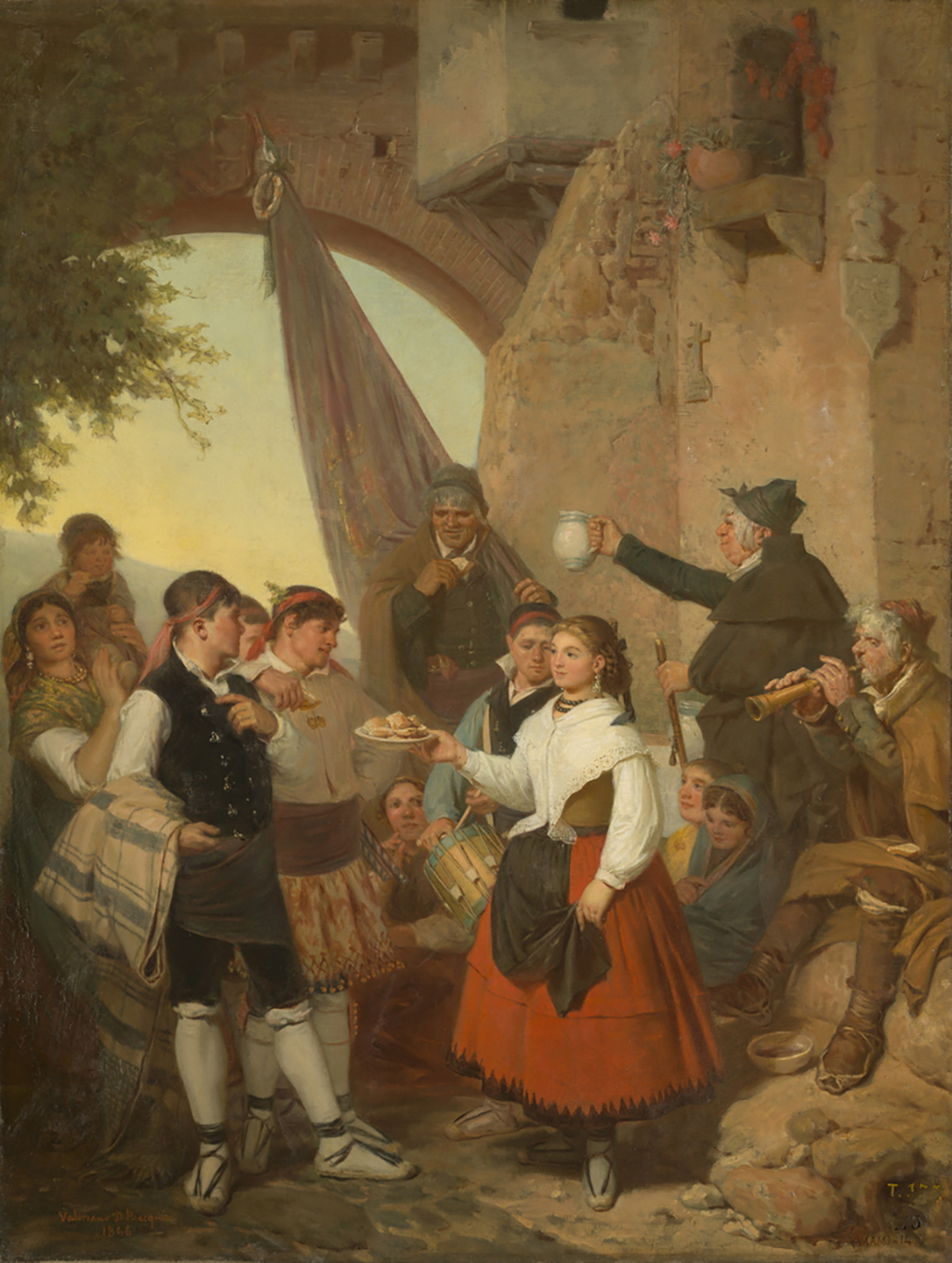
The Offering. Festivities in Moncayo (Aragón), on the eve of the patron saint’s day. 1866. Oil on canvas. Signed and dated. P-4237
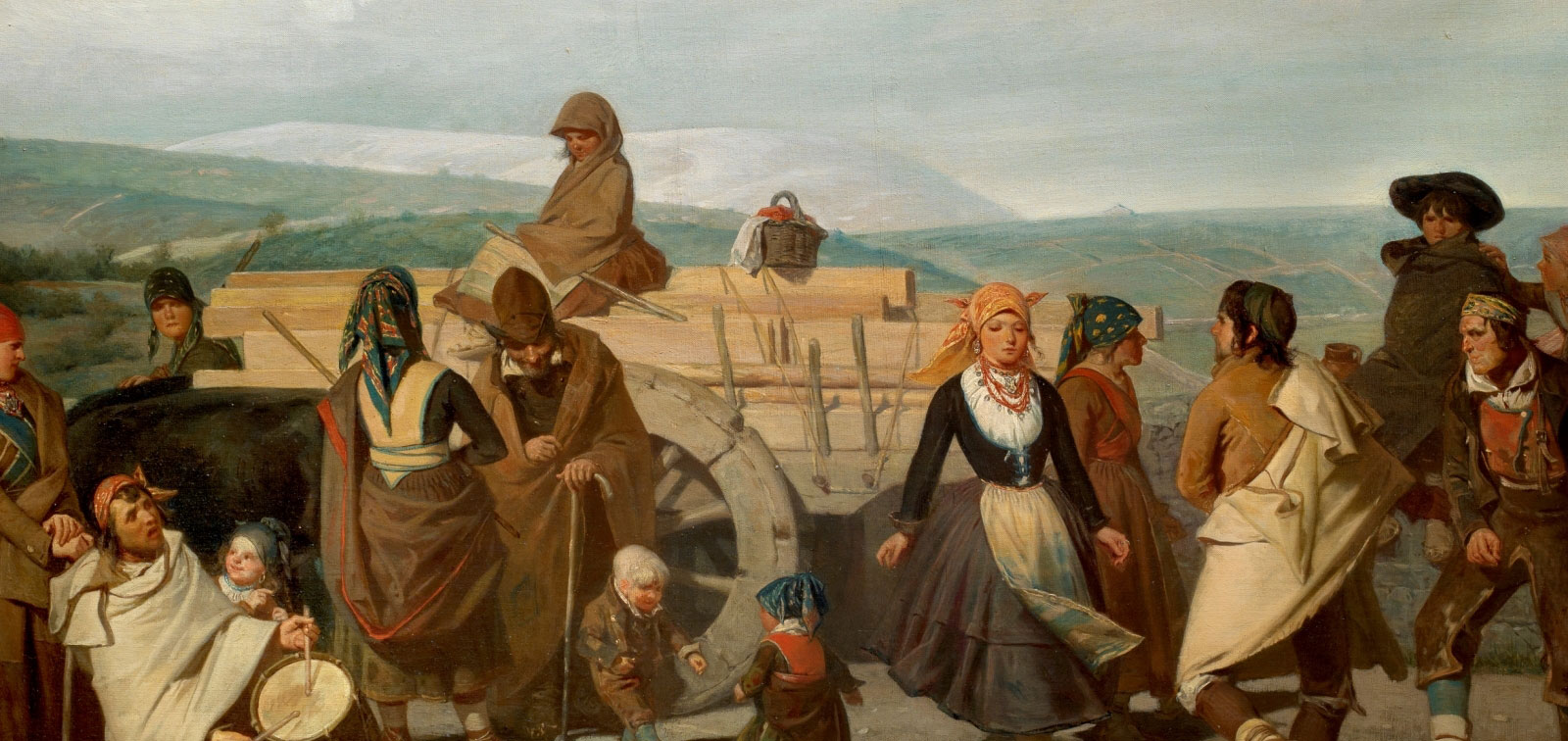
The Soria paintings, remarkable for their high quality, are also linked to the personal experience of the artist and his brother, the poet Gustavo Adolfo. His travels through Villaciervos and Burgo de Osma inspired The Dance, The Woodcutter and The Spinner. The harsh nature of their labour is tempered by Bécquer’s exquisite rendering of the two single figures, whom he has imbued with great dignity, and by the playful nature of the dance, which allows him to focus on a wide range of physiognomies and details.
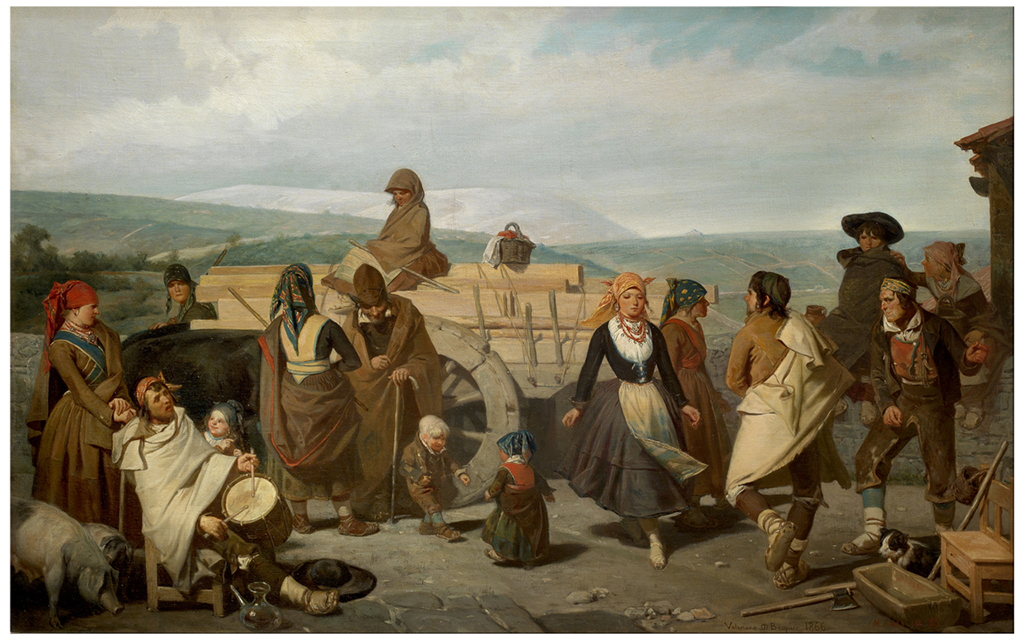
The Dance. Folk Traditions from the Province of Soria. 1866. Oil on canvas. Signed and dated. P-4234
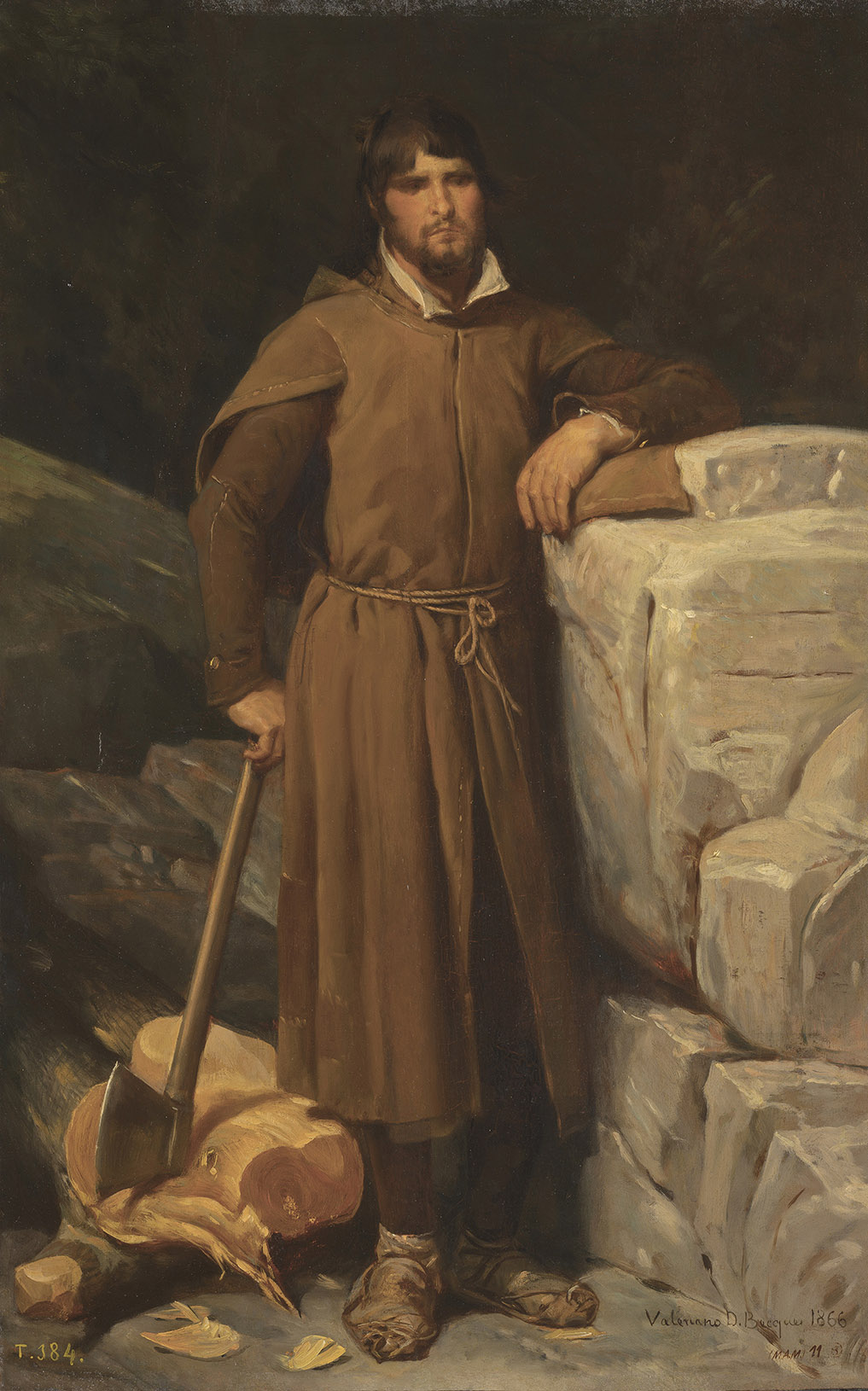
The Woodcutter near Burgo de Osma. 1866. Oil on panel. Signed and dated. P-4236
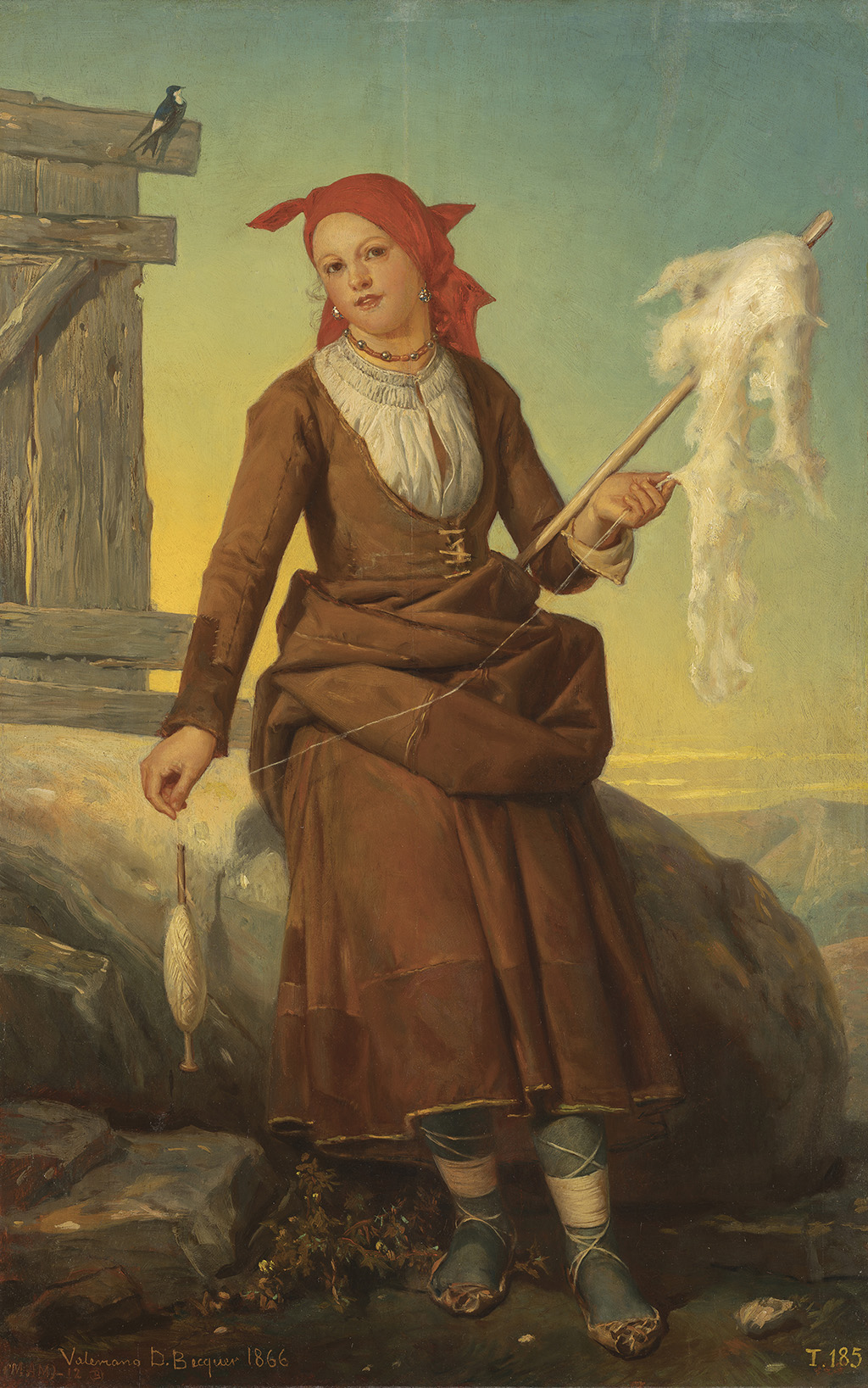
The Spinner near Burgo de Osma. 1866. Oil on panel. Signed and dated. P-4238
For the Ávila consignment, Bécquer chose to depict various aspects of the pilgrimage to the sanctuary of Sonsoles, in the Amblés valley, such as the pilgrims resting (The Chapel Spring), a young woman carrying a basket of offerings to the Virgin, or the man standing before the wine stall, whose attire recalls that of the “armed men” or “halberdiers”, commonly involved in various religious celebrations in Castile.
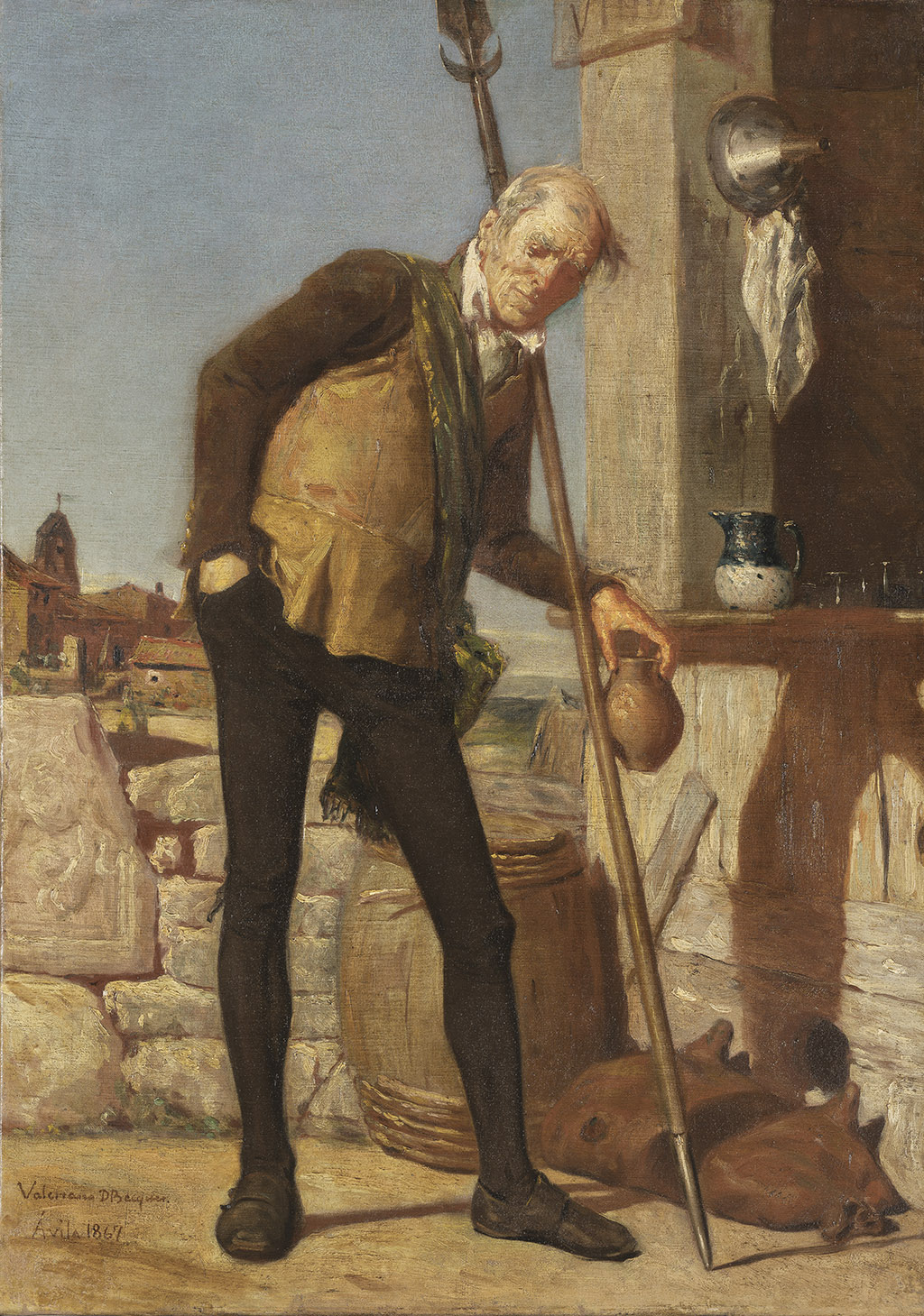
A Man from the Amblés Valley. 1867. Oil on canvas. Signed and dated. P-6007
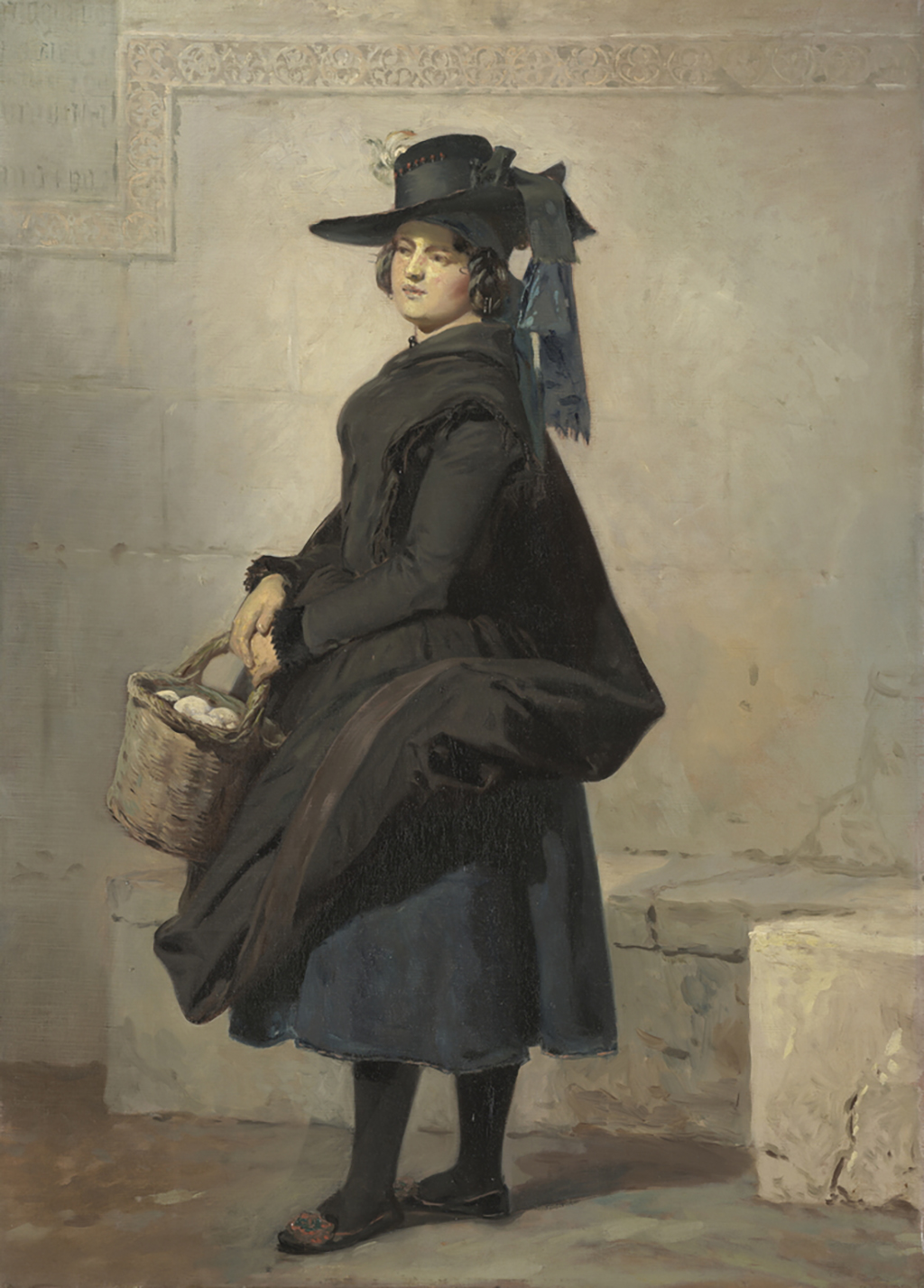
Village Girl from the Amblés Valley. 1867. Oil on canvas. P-6787
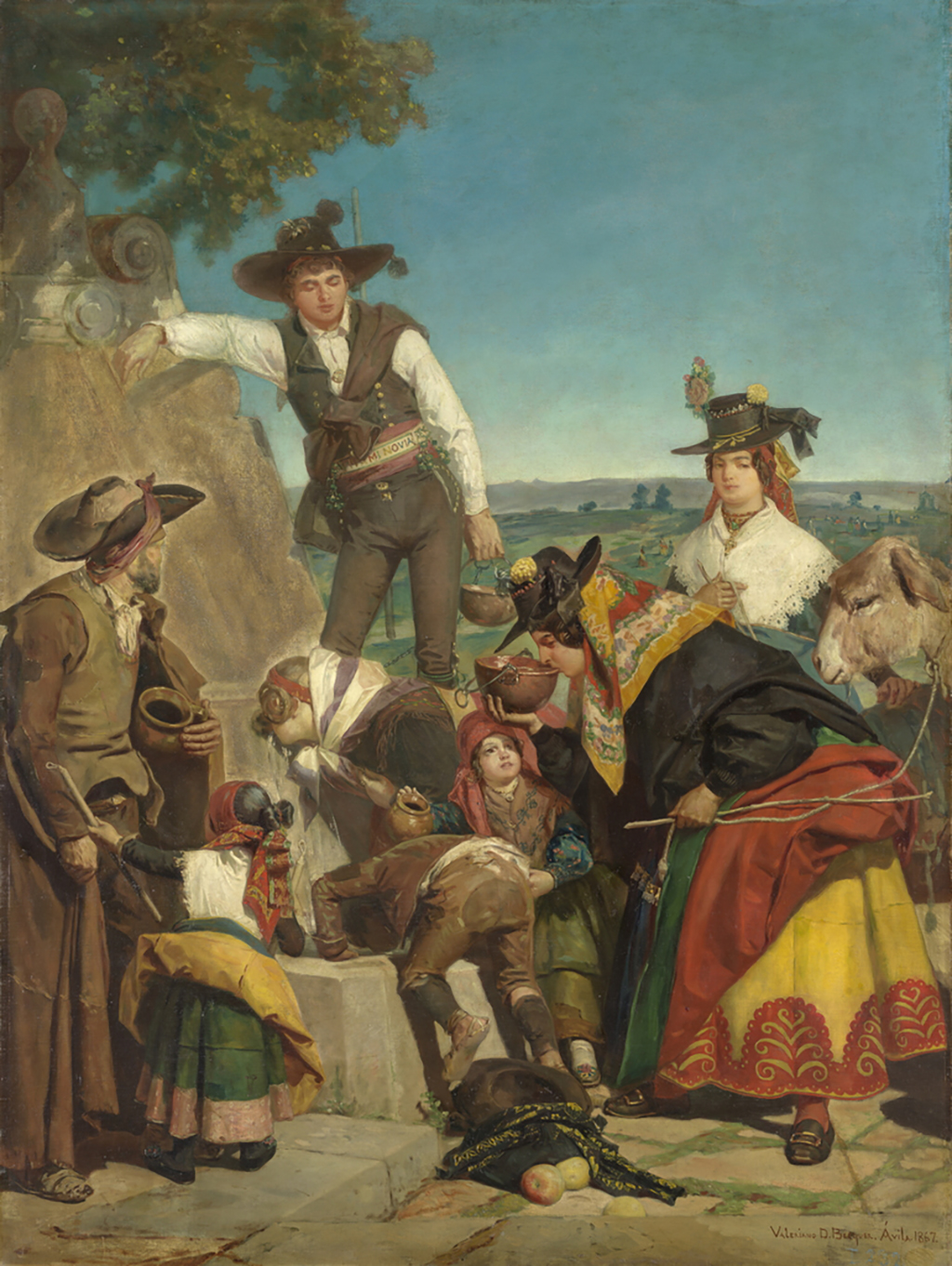
The Chapel Spring (Customs in the Amblés valley, in the province of Avila). 1867. Oil on canvas. Signed and dated. P-3300
Bécquer also made countless drawings during this period, many of which were used to produce prints which were then reproduced in magazines; it was this, rather than the paintings themselves, that brought his work to public attention.
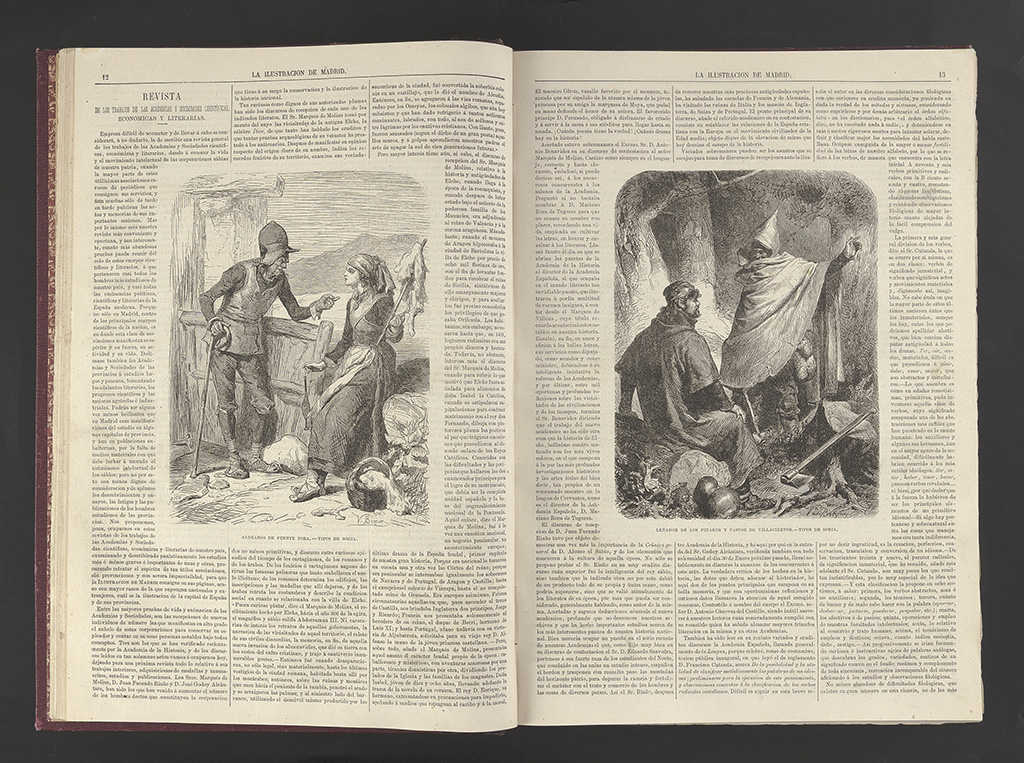
Valeriano D. Bécquer (illustrator) and Bernardo Rico Ortega (engraver). Villagers of Fuente Toba. Local people from Soria and Woodcutter from Los Pinares and shepherd from Villaciervos. In La Ilustración (Madrid), nº 9. 27 February 1870. Library of Museo del Prado, sign RFA / 87
30 September at 6.30 pm
Auditorium
Sponsored by the Friends of the Prado Museum Foundation
More info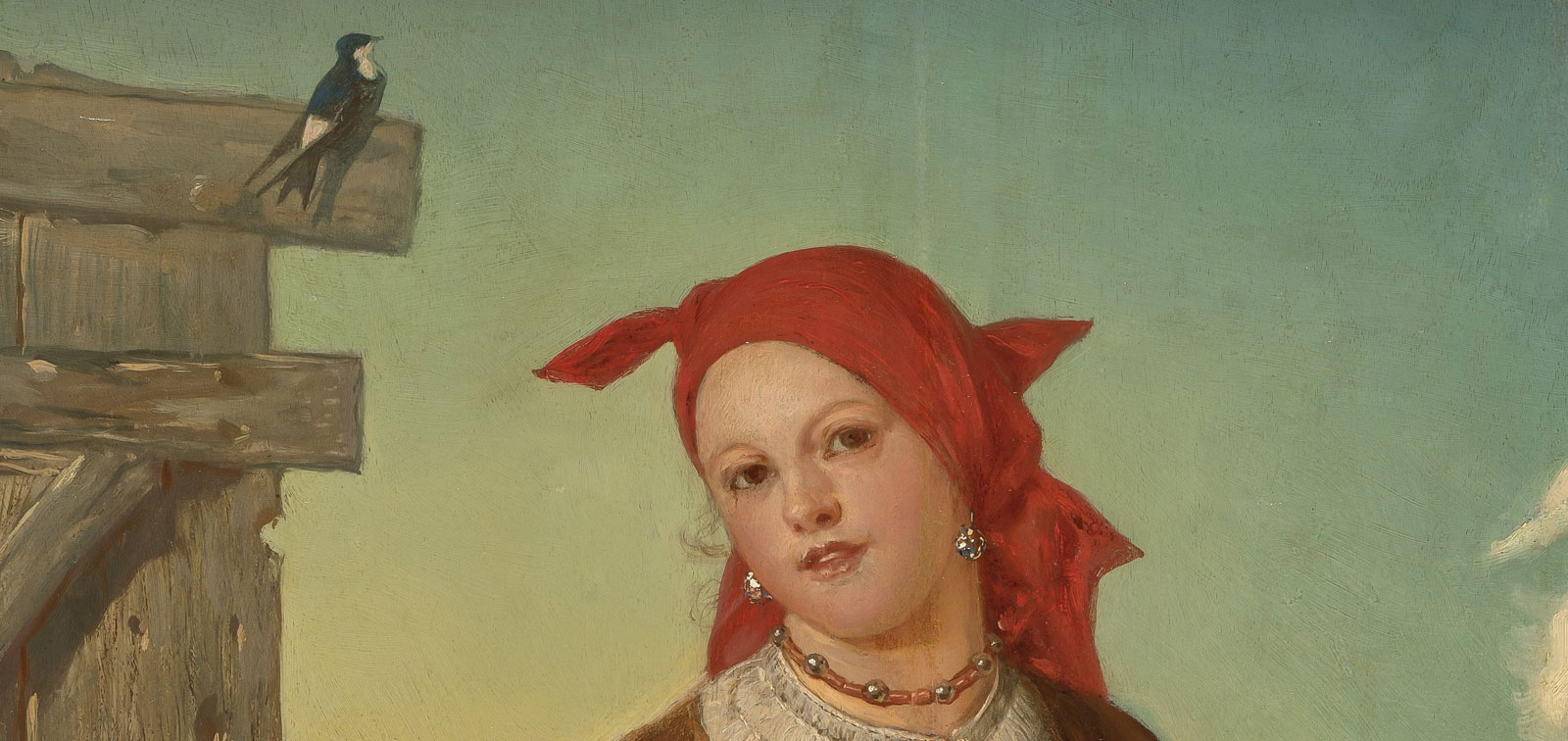
3 October at 6.30 pm
Auditorium
Sponsored by the Friends of the Prado Museum Foundation
More info