Gian Lorenzo Bernini
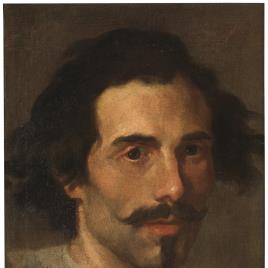
Naples (Italy), 1598 - Rome (Italy), 1680Italian painter, sculptor and architect. Bernini's long life was an almost continuous succession of triumphs, in the course of which the Neapolitan came to impose a genuine artistic dominance in the Rome of much of the seventeenth century, the city that had become the undisputed center of the contemporary artistic avant-garde. A multifaceted creator, Bernini stood out, above all, for his sculptural and architectural works, although he also practiced painting -especially portraiture-, although to a lesser extent than the previous ones. A favorite of almost all the popes, he also created for them and for the Roman nobility grandiose scenographic montages, and he himself composed the text and music for some of them. His rhetorical and grandiloquent style became the definition of one of the most prolific and influential poetics of the Baroque. In the Museo del Prado only two works related to the great baroque artist are preserved. The first is a bust of a supposed Seneca from the royal collection. The relationship of this work with Bernini is only one of influence, as we find a marble possibly inspired by a known Hellenistic model from the Museum of the Royal Palace in Naples, although worked with greater drama and use of the trephine, so it has been attributed to a follower of our artist. Its exact provenance is in doubt, and it may come from the collection of Christina of Sweden or that of Isabella of Farnese. The second work is a Self-Portrait, a canvas unanimously considered an autograph work. It was acquired by the Spanish Government in 1929 from the Messinger collection, is dated around 1640, and is similar to those now in the Galleria Borghese in Rome and the Uffizi in Florence (García López, D., Enciclopedia M. N. P., 2006, T. II, pág. 469).
His self-portrait corresponds to the work P02476, Museo del Prado.