Juan de Espinosa
Doc. 1628, Doc. 1659This painter, whose biography is unknown, may have been mainly active during the first half of the 17th century in Madrid. His name is cited in relation to other Madrid painters in documents dated 1628 and 1659. Other surviving information appears to add to the vagueness surrounding this figure, as there were at least two painters by the same name working at the court; one had died in 1641 and the second lived in the capital in 1651 and subsequent years.
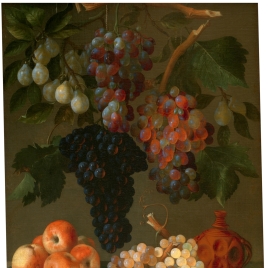
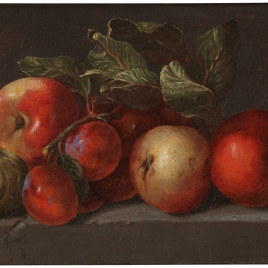
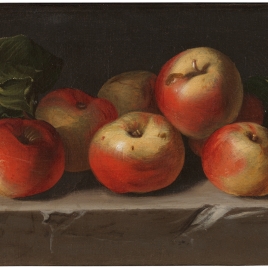
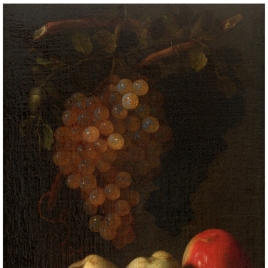
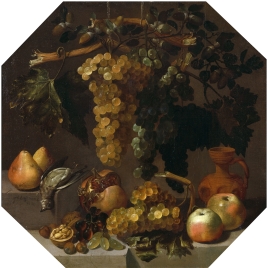
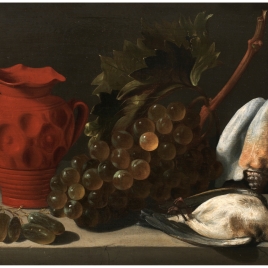
Espinosa painted still-life scenes incorporating fruits, particularly grapes -which attest to a great painterly virtuosity that almost became the master's hallmark- as well as seashells, poultry and ceramic ware from the Americas. His art shows that he mastered the use of chiaroscuro devices of the first third of the century to achieve contrasts that accentuate the volumes of the forms that he brings into play in each of his works. He must have been an artist of certain renown, as his name is often quoted in inventories of the estates of individuals of the age. There are known works by this artist in private and public collections in Madrid, Paris and London. In them Espinosa proves to be a staunch cultivator of tenebrism who does not renounce dramatic light effects and is stylistically linked to Juan Fernandez, "el Labrador" (Luna, J. J.: From Titian to Goya. Great Masters of the Museo del Prado, National Art Museum of China-Shanghai Museum, 2007, p. 386).