formularioRDF
The itinerary <em>TITULORECORRIDO</em> has been successfully created. Now you can add in works from the Collection browser
<em>TITULOOBRA</em> added to <em>TITULORECORRIDO</em> itinerary

Metabuscador

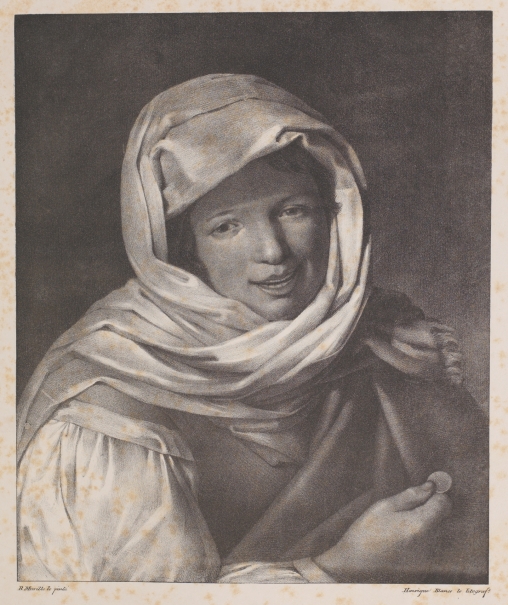
La gallega de la moneda
Lithographic aquatint, Pen lithography, Crayon lithography on wove paper. 1826 - 1837
The Company for the engraving of the paintings from the Royal Palaces was one of the Spanish Enlightenment’s major undertakings during the second half of the 18th century. It supervised the reproduction of prints of paintings from the Royal Collections and its early projects were carried out by Francisco de Goya, who reproduced some of Velázquez’s paintings in 1778, and by Juan Barcelón and Nicolás Barsanti, who reproduced The Labors of Hercules after the fresco that Luca Gi
ARTWORK
Enrique Blanco – Lithographer – (The original work, according to inscriptions, attributed to: Bartolomé Esteban Murillo)
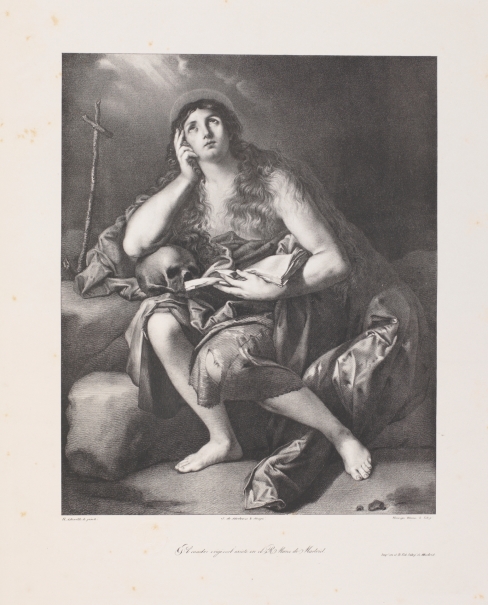
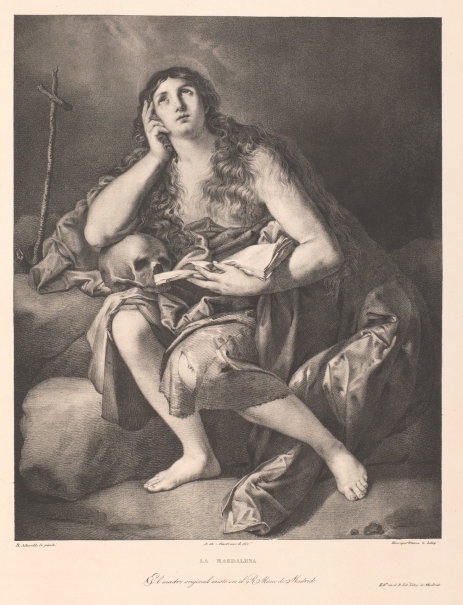
The penitent Magdalen
Lithographic aquatint, Pen lithography, Crayon lithography, Scraper on wove paper. 1832 - 1837
The Company for the engraving of the paintings from the Royal Palaces was one of the Spanish Enlightenment’s major undertakings during the second half of the 18th century. It supervised the reproduction of prints of paintings from the Royal Collections and its early projects were carried out by Francisco de Goya, who reproduced some of Velázquez’s paintings in 1778, and by Juan Barcelón and Nicolás Barsanti, who reproduced The Labors of Hercules after the fresco that Luca Gi
ARTWORK
Enrique Blanco – Lithographer – (The original work, according to inscriptions, attributed to: Bartolomé Esteban Murillo)
Luca Giordano – (Author of the original work)
Penitent Magdalene
Lithographic aquatint, Crayon lithography, Printing on japon, Scraper, Pen lithography on wove paper. 1832 - 1837
Es una litografía de Enrique Blanco (activo en Madrid entre 1826 y 1837) que reproduce el óleo de Luca Giordano conservado en el Museo Nacional del Prado (P01105), anteriormente atribuido a Bartolomé Esteban Murillo. Esta estampa se entregaba con el cuadernillo CLXXXI acompañado de un texto explicativo de Pedro de Madrazo. Iba encuadernada en el tomo III de la serie dirigida por José de Madrazo, Colección litográfica de cuadros del rey de España el señor don Fernando VII, editada por el Real Est
ARTWORK
Enrique Blanco – Lithographer – (The original work, according to inscriptions, attributed to: Bartolomé Esteban Murillo)
Luca Giordano – (Author of the original work)
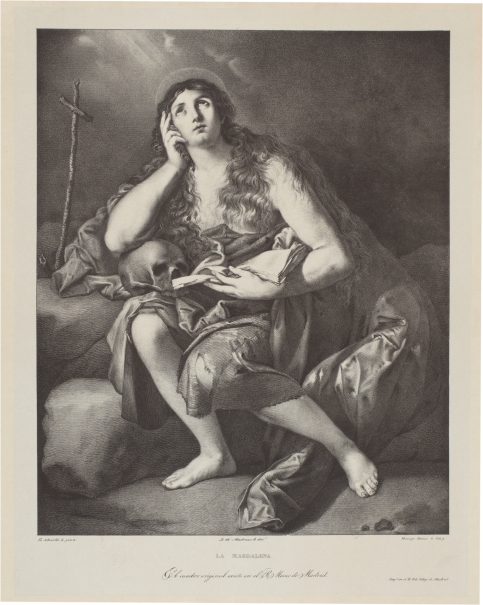
Penitent Magdalene
Crayon lithography, Lithographic aquatint, Pen lithography, Scraper on wove paper. 1832 - 1837
Es una litografía de Enrique Blanco (activo en Madrid entre 1826 y 1837) que reproduce el óleo de Luca Giordano conservado en el Museo Nacional del Prado (P01105), anteriormente atribuido a Bartolomé Esteban Murillo. Esta estampa se entregaba con el cuadernillo CLXXXI acompañado de un texto explicativo de Pedro de Madrazo. Iba encuadernada en el tomo III de la serie dirigida por José de Madrazo, Colección litográfica de cuadros del rey de España el señor don Fernando VII, editada por el Real Est
ARTWORK
Enrique Blanco – Lithographer – (The original work, according to inscriptions, attributed to: Bartolomé Esteban Murillo)
Luca Giordano – (Author of the original work)
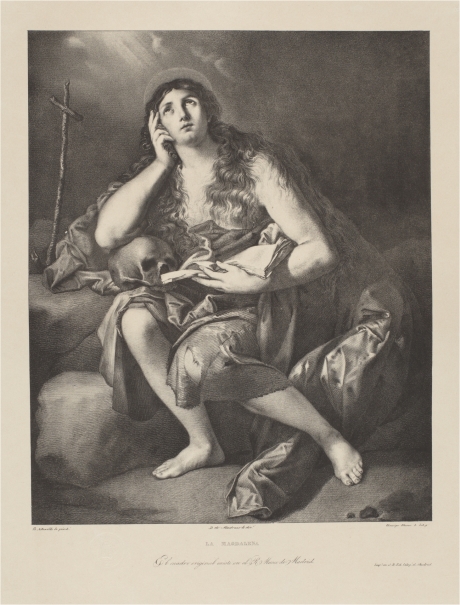
The Penitent Magdalen
Lithographic aquatint, Pen lithography, Scraper, Crayon lithography, Printing on japon on wove paper. 1832 - 1837
Es una litografía de Enrique Blanco (activo en Madrid entre 1826 y 1837) que reproduce el óleo de Luca Giordano conservado en el Museo Nacional del Prado (P01105), anteriormente atribuido a Bartolomé Esteban Murillo. Esta estampa se entregaba con el cuadernillo CLXXXI acompañado de un texto explicativo de Pedro de Madrazo. Está encuadernada en el tomo III de la serie dirigida por José de Madrazo, Colección litográfica de cuadros del rey de España el señor don Fernando VII, editada por el Real Es
ARTWORK
Enrique Blanco – Lithographer – (The original work, according to inscriptions, attributed to: Bartolomé Esteban Murillo)
Luca Giordano – (Author of the original work)
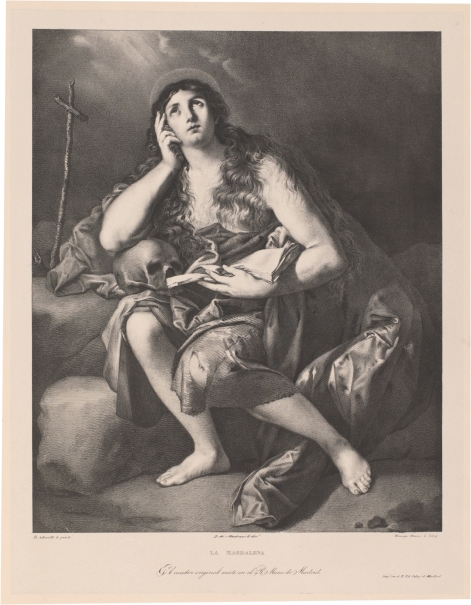
The penitent Magdalen
Crayon lithography, Lithographic aquatint, Scraper, Pen lithography on wove paper. 1832 - 1837
Es una litografía de Enrique Blanco (activo en Madrid entre 1826 y 1837) que reproduce el óleo de Luca Giordano conservado en el Museo Nacional del Prado (P01105), anteriormente atribuido a Bartolomé Esteban Murillo. Esta estampa se entregaba con el cuadernillo CLXXXI acompañado de un texto explicativo de Pedro de Madrazo. Está encuadernada en el tomo III de la serie dirigida por José de Madrazo, Colección litográfica de cuadros del rey de España el señor don Fernando VII, editada por el Real Es
ARTWORK
Enrique Blanco – Lithographer – (The original work, according to inscriptions, attributed to: Bartolomé Esteban Murillo)
Luca Giordano – (Author of the original work)
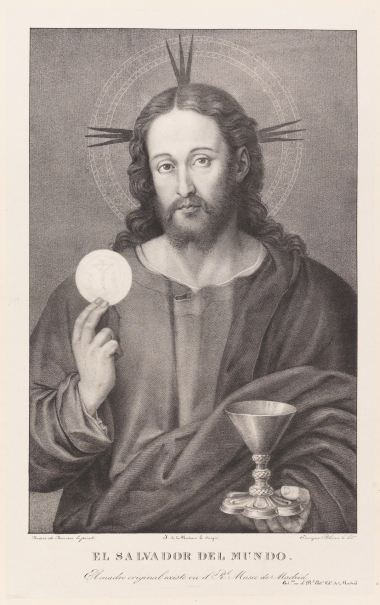
Christ the Saviour with the Eucharist
Lithographic aquatint, Printing on japon, Scraper, Pen lithography on wove paper. 1829 - 1832
Es una litografía de Enrique Blanco (activo en Madrid entre 1826 y 1837) que reproduce el lienzo de Juan de Juanes conservado en el Museo Nacional del Prado (P00844). Esta estampa se entregaba con el cuadernillo XCII e iba acompañado de un texto explicativo de José Musso y Valiente. Está encuadernada en el tomo II de la serie editada por el Real Establecimiento Litográfico, dirigida por José de Madrazo, Colección litográfica de cuadros del rey de España el señor don Fernando VII, Madrid, 1829-18
ARTWORK
Enrique Blanco – Lithographer – (Author of the original work: Juan de (Vicente Juan Masip) Juanes)
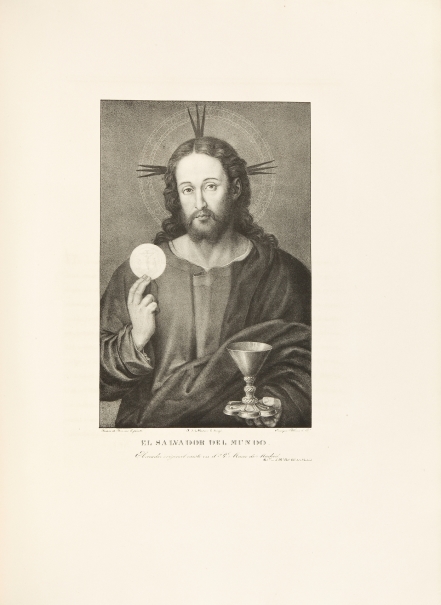
Christ the Saviour with the Eucharist
Lithographic aquatint, Scraper, Pen lithography on wove paper. 1829 - 1832
Es una litografía de Enrique Blanco (activo en Madrid entre 1826 y 1837) que reproduce el lienzo de Juan de Juanes conservado en el Museo Nacional del Prado (P00844). Esta estampa se entregaba con el cuadernillo XCII e iba acompañado de un texto explicativo de José Musso y Valiente. Está encuadernada en el tomo II de la serie editada por el Real Establecimiento Litográfico, dirigida por José de Madrazo, Colección litográfica de cuadros del rey de España el señor don Fernando VII, Madrid, 1829-18
ARTWORK
Enrique Blanco – Lithographer – (Author of the original work: Juan de (Vicente Juan Masip) Juanes)
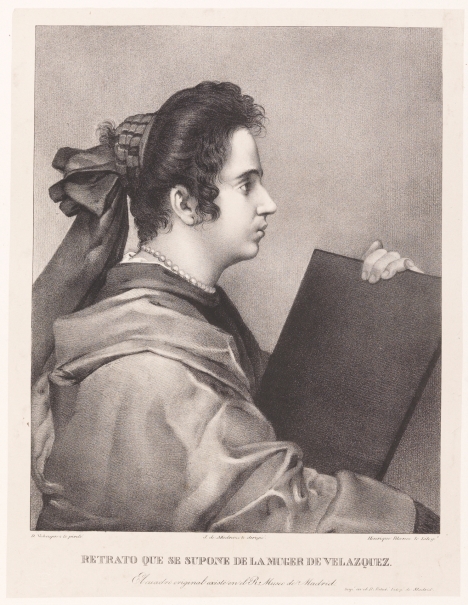
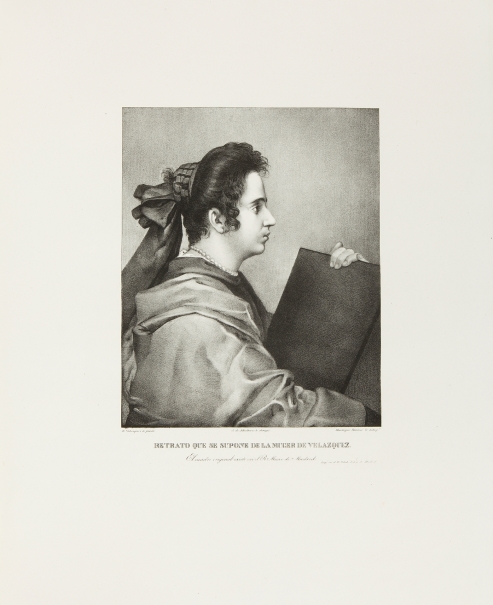
A Sybil
Lithographic aquatint, Scraper, Printing on japon, Crayon lithography on wove paper. 1832 - 1836
Estampa de Enrique Blanco que reproduce un lienzo de Diego Rodríguez de Silva y Velázquez conservada en el Museo Nacional del Prado (P01197). En el inventario de las pinturas del palacio de La Granja se atribuyó a Velázquez, y se identificó con su mujer Juana, hija del pintor Pacheco. El interés por vincular retratos anónimos con la biografía de sus autores fue frecuente durante los siglos XVIII y XIX, y del mismo no se salvó Velázquez, cuyo rostro, el de su mujer y el de sus hijas se quiso reco
ARTWORK
Enrique Blanco – Lithographer – (Author of the original work: Diego Rodríguez de Silva y Velázquez)
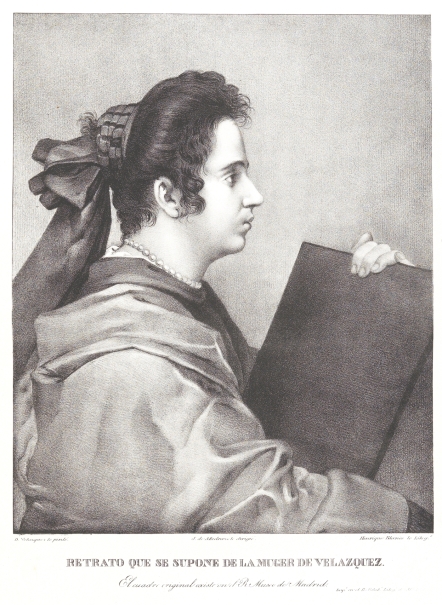
A Sybil
Lithographic aquatint, Crayon lithography, Scraper on wove paper. 1832 - 1836
Es una litografía de Enrique Blanco que reproduce el lienzo de Diego Rodríguez de Silva y Velázquez conservado en el Museo Nacional del Prado (P01197). En el inventario de las pinturas del palacio de La Granja se atribuyó a Velázquez, y se identificó con su mujer Juana, hija del pintor Pacheco. El interés por vincular retratos anónimos con la biografía de sus autores fue frecuente durante los siglos XVIII y XIX, y del mismo no se salvó Velázquez, cuyo rostro, el de su mujer y el de sus hijas se
ARTWORK
Enrique Blanco – Lithographer – (Author of the original work: Diego Rodríguez de Silva y Velázquez)
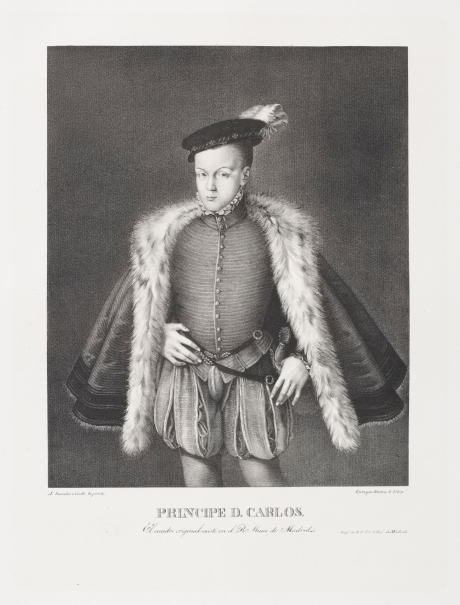
Prince Don Carlos
Scraper, Lithographic aquatint, Crayon lithography on wove paper. 1826 - 1829
The Company for the engraving of the paintings from the Royal Palaces was one of the Spanish Enlightenment’s major undertakings during the second half of the 18th century. It supervised the reproduction of prints of paintings from the Royal Collections and its early projects were carried out by Francisco de Goya, who reproduced some of Velázquez’s paintings in 1778, and by Juan Barcelón and Nicolás Barsanti, who reproduced The Labors of Hercules after the fresco that Luca Gi
ARTWORK
Enrique Blanco – Lithographer – (Author of the original work: Alonso Sánchez Coello)
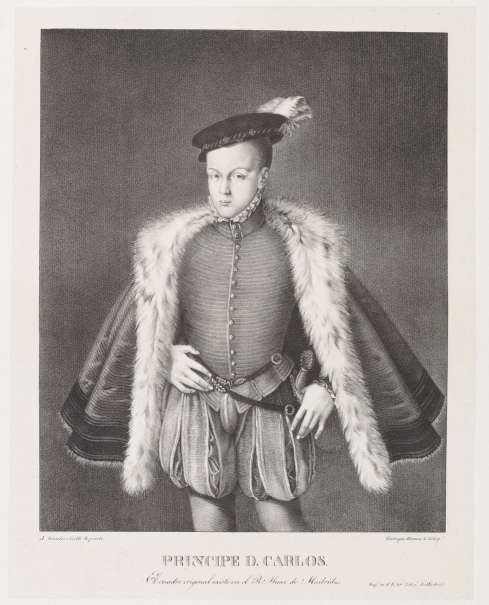
Prince Don Carlos
Lithographic aquatint, Scraper, Printing on japon, Crayon lithography on wove paper. 1826 - 1829
The Company for the engraving of the paintings from the Royal Palaces was one of the Spanish Enlightenment’s major undertakings during the second half of the 18th century. It supervised the reproduction of prints of paintings from the Royal Collections and its early projects were carried out by Francisco de Goya, who reproduced some of Velázquez’s paintings in 1778, and by Juan Barcelón and Nicolás Barsanti, who reproduced The Labors of Hercules after the fresco that Luca Gi
ARTWORK
Enrique Blanco – Lithographer – (Author of the original work: Alonso Sánchez Coello)
A Sybil
Lithographic aquatint, Crayon lithography, Scraper on wove paper. 1829 - 1832
The Company for the engraving of the paintings from the Royal Palaces was one of the Spanish Enlightenment’s major undertakings during the second half of the 18th century. It supervised the reproduction of prints of paintings from the Royal Collections and its early projects were carried out by Francisco de Goya, who reproduced some of Velázquez’s paintings in 1778, and by Juan Barcelón and Nicolás Barsanti, who reproduced The Labors of Hercules after the fresco that Luca Gi
ARTWORK
Enrique Blanco – Lithographer – (Author of the original work: Diego Rodríguez de Silva y Velázquez)
Loading...

Loading...

Up