formularioRDF
The itinerary <em>TITULORECORRIDO</em> has been successfully created. Now you can add in works from the Collection browser
<em>TITULOOBRA</em> added to <em>TITULORECORRIDO</em> itinerary

Metabuscador

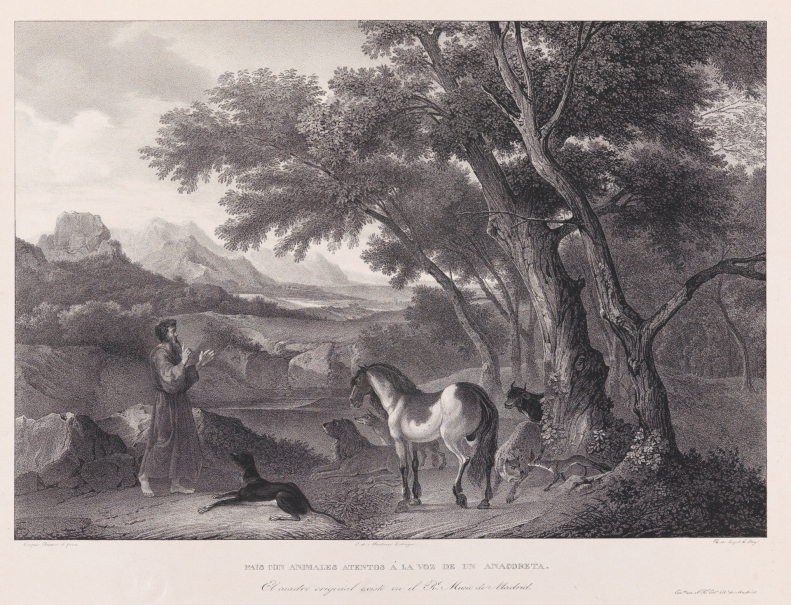
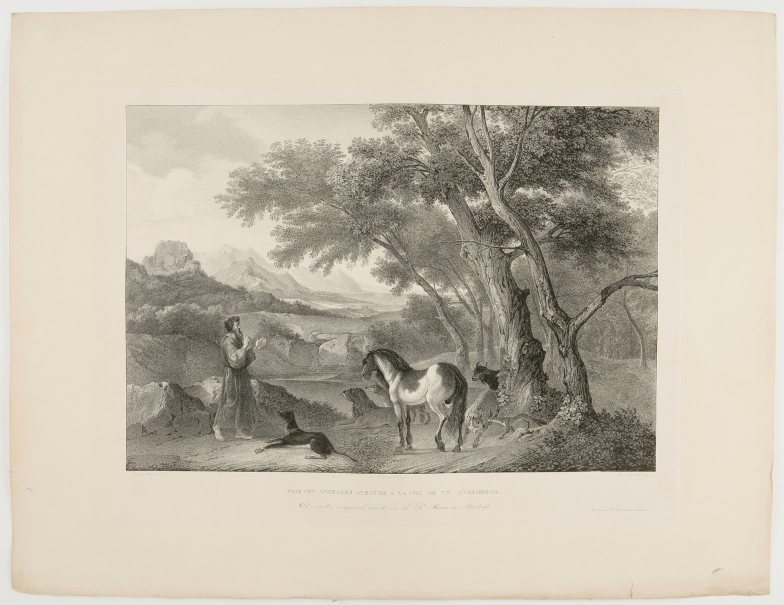
Landscape with a Hermit preaching to Animals
Lithographic aquatint, Pen lithography, Crayon lithography, Printing on japon, Scraper on wove paper. 1832 - 1837
Es una litografía de Andreas Pic de Leopold (1789?-después de 1860) que reproduce el óleo de Gaspar Dughet conservado en el Museo Nacional del Prado (P02305). Se trata de una de las pinturas realizadas para el conjunto del Retiro, en las que se duda sobre la autoría del paisaje, del anacoreta y de los animales. Parece claro que el paisaje es obra de Gaspar Dughet y el personaje de Nicolás Poussin. La firma como pintor en la estampa contribuye aún más a la confusión al mezclar el nombre de uno co
ARTWORK
Andreas Pic de Leopold – Lithographer – (The original work, according to inscriptions, attributed to: Nicolas Poussin)
Gaspard Dughet – (Author of the original work)
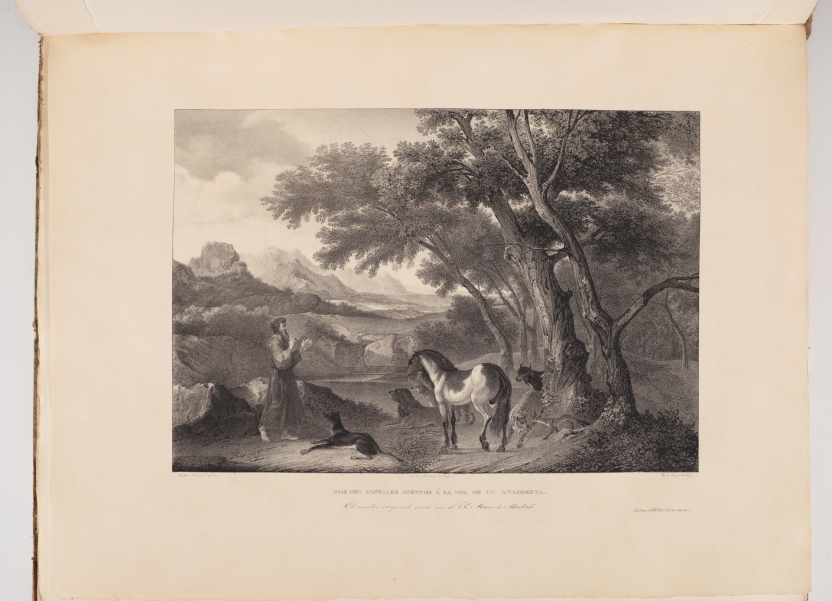
Landscape with a Hermit preaching to Animals
Lithographic aquatint, Pen lithography, Scraper, Printing on japon, Crayon lithography on wove paper. 1832 - 1837
Es una litografía de Andreas Pic de Leopold (1789?-después de 1860) que reproduce el óleo de Gaspar Dughet conservado en el Museo Nacional del Prado (P02305). Se trata de una de las pinturas realizadas para el conjunto del Retiro, en las que se duda sobre la autoría del paisaje, del anacoreta y de los animales. Parece claro que el paisaje es obra de Gaspar Dughet y el personaje de Nicolás Poussin. La firma como pintor en la estampa contribuye aún más a la confusión al mezclar el nombre de uno co
ARTWORK
Andreas Pic de Leopold – Lithographer – (The original work, according to inscriptions, attributed to: Nicolas Poussin)
Gaspard Dughet – (Author of the original work)
Landscape with a Hermit preaching to Animals
Lithographic aquatint, Scraper, Pen lithography, Crayon lithography on wove paper. 1832 - 1837
Es una litografía de Andreas Pic de Leopold (1789?-después de 1860) que reproduce el óleo de Gaspar Dughet conservado en el Museo Nacional del Prado (P02305). Se trata de una de las pinturas realizadas para el conjunto del Retiro, en las que se duda sobre la autoría del paisaje, del anacoreta y de los animales. Parece claro que el paisaje es obra de Gaspar Dughet y el personaje de Nicolás Poussin. La firma como pintor en la estampa contribuye aún más a la confusión al mezclar el nombre de uno co
ARTWORK
Andreas Pic de Leopold – Lithographer – (Author of the original work: Nicolas Poussin)
Gaspard Dughet – (Author of the original work)
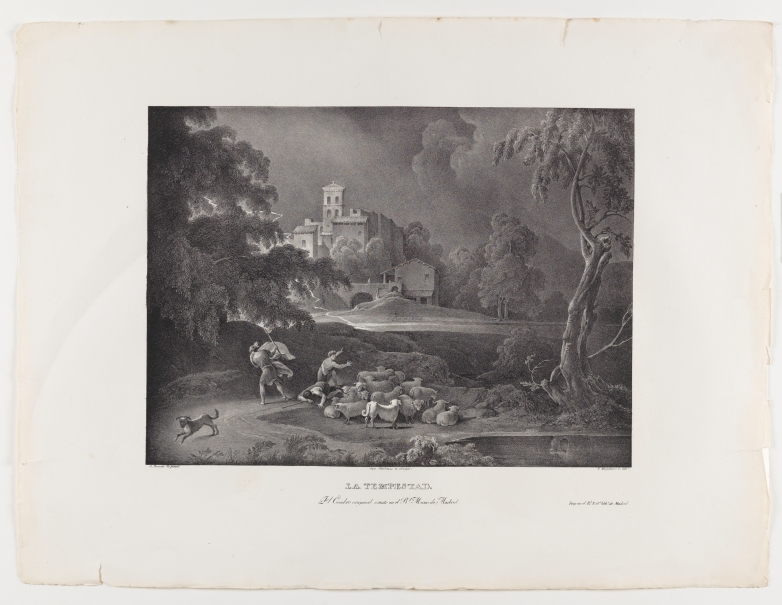
The Tempest
Pen lithography, Lithographic aquatint, Crayon lithography, Scraper on wove paper. 1826 - 1829
The Company for the engraving of the paintings from the Royal Palaces was one of the Spanish Enlightenment’s major undertakings during the second half of the 18th century. It supervised the reproduction of prints of paintings from the Royal Collections and its early projects were carried out by Francisco de Goya, who reproduced some of Velázquez’s paintings in 1778, and by Juan Barcelón and Nicolás Barsanti, who reproduced The Labors of Hercules after the fresco that Luca Gi
ARTWORK
Pharamond Blanchard – Lithographer – (The original work, according to inscriptions, attributed to: Nicolas Poussin)
Gaspard Dughet – (Author of the original work)
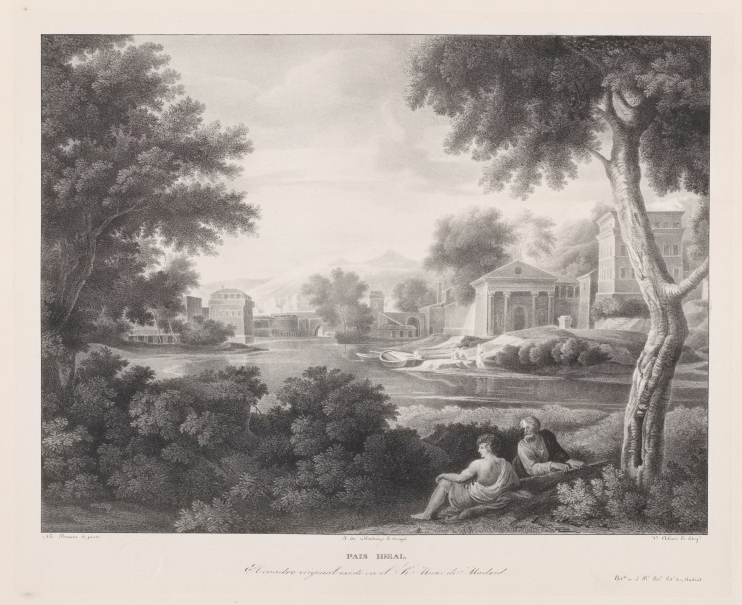
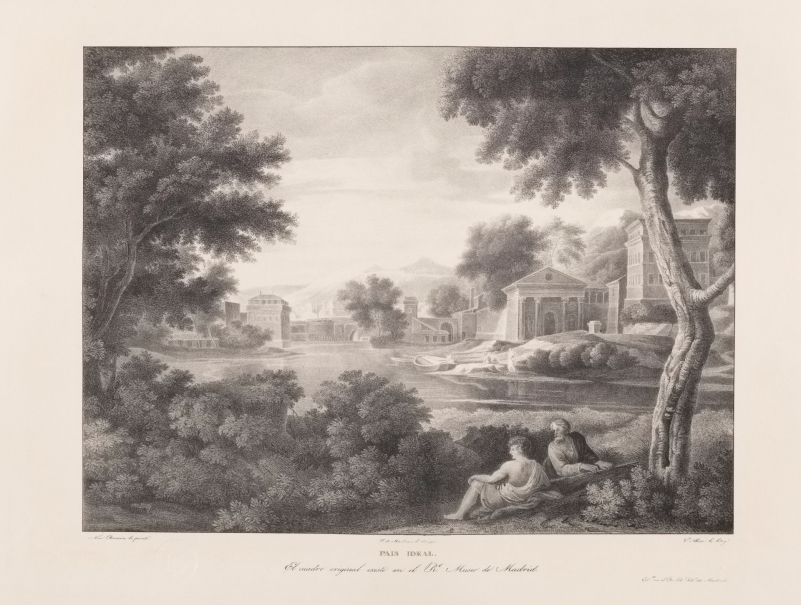
Landscape
Lithographic aquatint, Scraper, Crayon lithography, Printing on japon, Pen lithography on wove paper. 1826 - 1837
Es una litografía de Víctor Alexis que reproduce el óleo de Gaspard Dughet conservado en el Museo Nacional del Prado (P02307), el lienzo en su momento se creía de Poussin como se indica en la letra de la estampa. De esta estampa existen pocos ejemplares. Salió al mercado sin encuadernar en ninguno de los tres volúmenes de los que constaba la Colección litográfica de cuadros del rey de España el señor don Fernando VII, dirigida por José de Madrazo y editada por el Real Establecimiento Litográfico
ARTWORK
Victor Alexis – Lithographer – (The original work, according to inscriptions, attributed to: Nicolas Poussin)
Gaspard Dughet – (Author of the original work)
Landscape
Lithographic aquatint, Crayon lithography, Pen lithography, Scraper on wove paper. 1826 - 1837
Es una litografía de Víctor Alexis que reproduce el óleo de Gaspard Dughet conservado en el Museo Nacional del Prado (P02307), el lienzo en su momento se creía de Poussin como se indica en la letra de la estampa. De esta estampa existen pocos ejemplares. Salió al mercado sin encuadernar en ninguno de los tres volúmenes de los que constaba la Colección litográfica de cuadros del rey de España el señor don Fernando VII, dirigida por José de Madrazo y editada por el Real Establecimiento Litográfico
ARTWORK
Victor Alexis – Lithographer – (The original work, according to inscriptions, attributed to: Nicolas Poussin)
Gaspard Dughet – (Author of the original work)
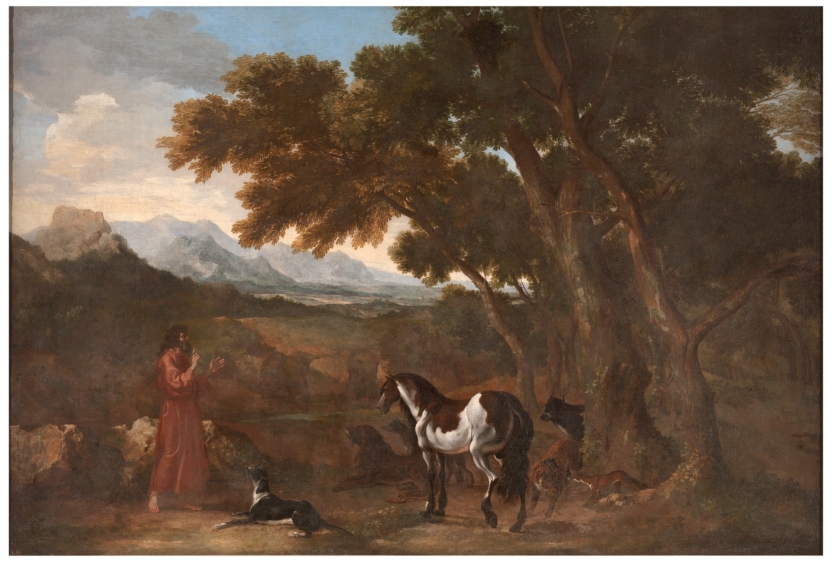
Landscape with a Hermit preaching to Animals
Oil on canvas. 1637 - 1638
This work was one of a large group of landscapes commissioned in Rome by agents of Philip IV to decorate the new Buen Retiro Palace in Madrid. Others artists involved included Claude Lorraine and Poussin who was Dughet´s brother-in-law and teacher. Dughet developed a type of idyllic, artificial eighteenth-century art.
ARTWORK
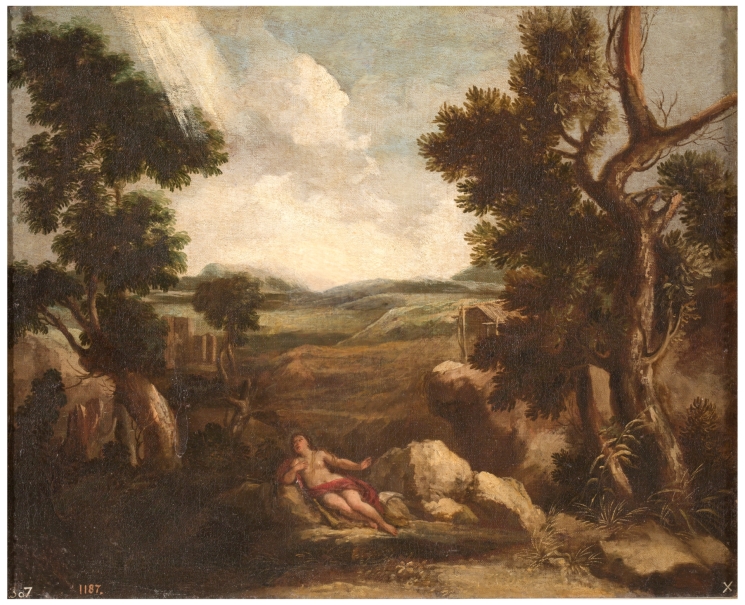
Landscape with the Penitent Magdalene
Oil on canvas. Ca. 1660
En un bellísimo paisaje, pleno de luz y diferentes detalles, a cuál más refinado y auténtico, tomado del amplísimo repertorio que ofrece la naturaleza, en cuyos fondos se aprecian unas edificaciones, aparece la figura de la Magdalena a un lado contemplando una cruz, casi en éxtasis, con un libro ante sí. La presente obra prueba no solo el virtuosismo del autor al concebir e interpretar el tema, sino también sus agudas dotes de observación para captar la atmósfera. Hay un abandono de la sobriedad
ARTWORK
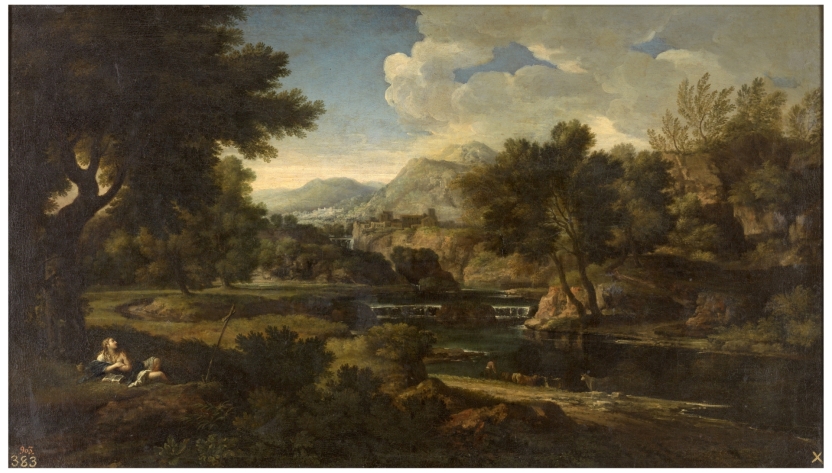
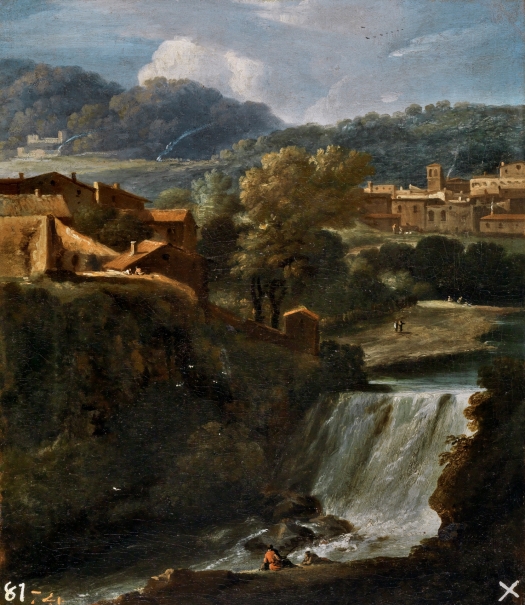
Landscape with Waterfall
Oil on canvas. 1650 - 1660
A landscape with waterfalls appears at one side of the composition. At the other, various buildings oppose their rational and geometrical mass to Nature’s freer expression. The canvas’s human presence consists of various tiny figures in different parts of the composition. The suggestion of the Tivoli cascades and their wild surroundings are the main argument of this painting, which is characteristic of both this painter and his time. Indeed, places on the outskirts of Rome, like the one appearin
ARTWORK
Loading...

Loading...

Up