formularioRDF
The itinerary <em>TITULORECORRIDO</em> has been successfully created. Now you can add in works from the Collection browser
<em>TITULOOBRA</em> added to <em>TITULORECORRIDO</em> itinerary

Metabuscador

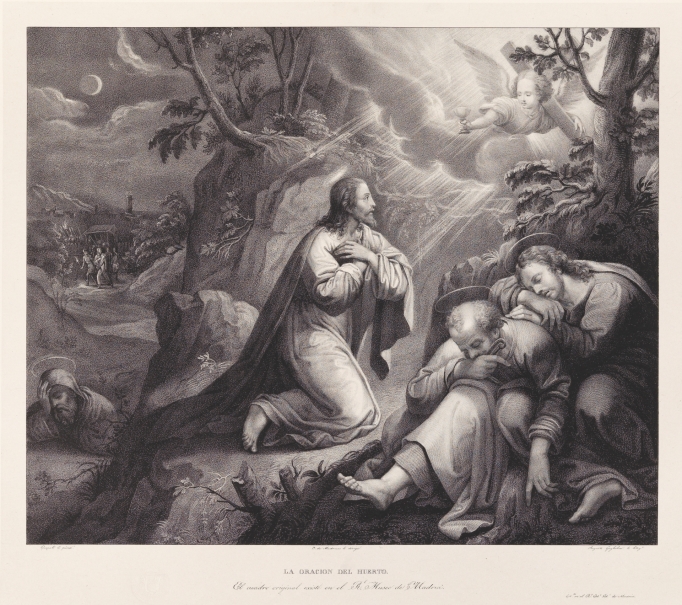
The Agony in the Garden
Lithographic aquatint, Pen lithography, Scraper, Crayon lithography on wove paper. 1832 - 1837
Es una litografía de Augusto Guglielmi que reproduce un lienzo de un discípulo de Vasari (P98), atribuido hasta 1920 a Jacopo Chimenti y como tal aparece en la firma de la estampa. Esta estampa se entregaba con el cuadernillo CXXXIV acompañado de un texto explicativo de José Musso y Valiente. Iba encuadernada en el tomo III de la serie dirigida por José de Madrazo, Colección litográfica de cuadros del rey de España el señor don Fernando VII, editada por el Real Establecimiento Litográfico en Mad
ARTWORK
Augusto Guglielmi – Lithographer – (The original work, according to inscriptions, attributed to: Jacopo Chimenti)
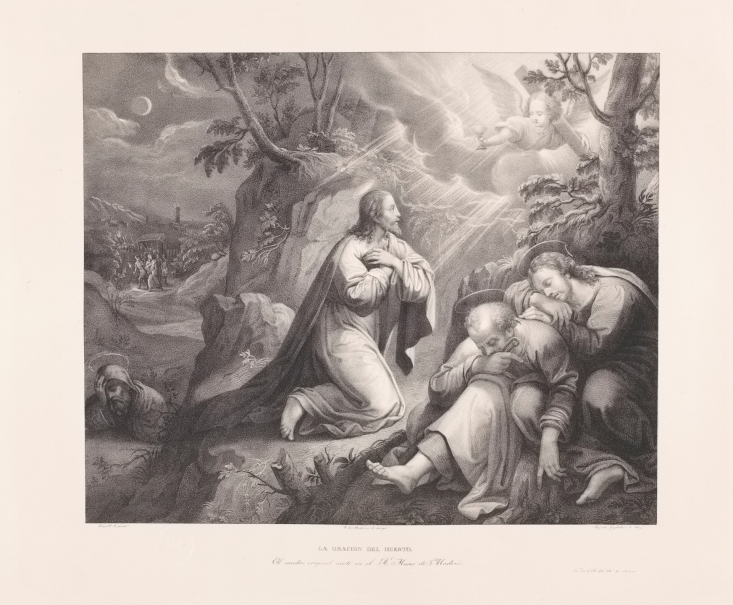
The Agony in the Garden
Crayon lithography, Pen lithography, Lithographic aquatint, Scraper, Printing on japon on wove paper. 1832 - 1837
Es una litografía de Augusto Guglielmi que reproduce un lienzo de un discípulo de Vasari (P00098), atribuido hasta 1920 a Jacopo Chimenti y como tal aparece en la firma de la estampa. Esta estampa se entregaba con el cuadernillo CXXXIV acompañado de un texto explicativo de José Musso y Valiente. Está encuadernada en el tomo III de la serie dirigida por José de Madrazo, Colección litográfica de cuadros del rey de España el señor don Fernando VII, editada por el Real Establecimiento Litográfico en
ARTWORK
Augusto Guglielmi – Lithographer – (The original work, according to inscriptions, attributed to: Jacopo Chimenti)
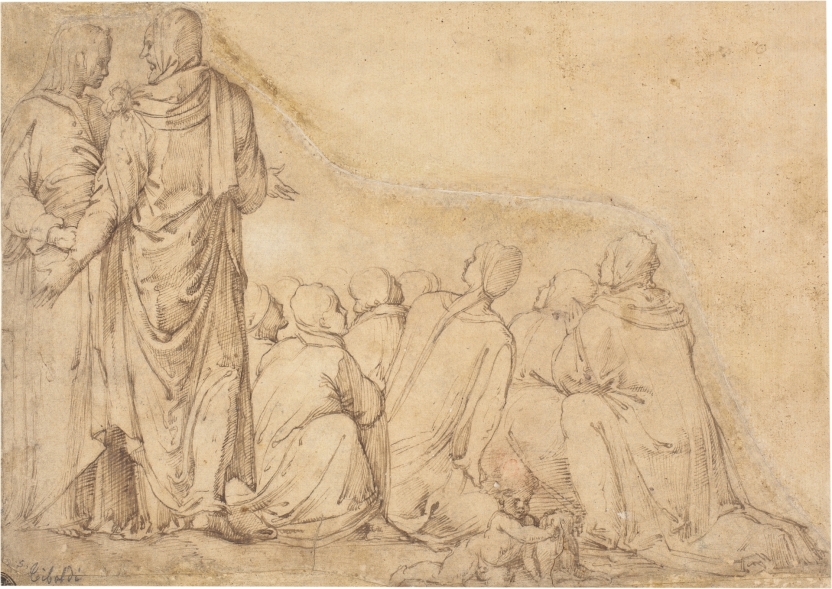
Group of Figures Conversing
Pencil, Grey-brown ink on brown paper. XVI century
Florian Härb first suggested the very plausible attribution to Vasari. He pointed out that this is very likely an early work, done when the artist was in the habit of making drawn copies after paintings by others masters. The composition in which the figures appear has not been identified so far, but the elongated figuretypes and distinctive facil features suggest that the work of another Florentine, Rosso Fiorentino (1494-1540), could have been the model. The figures appear to be spectator
ARTWORK
Giorgio Vasari – (Attributed to)
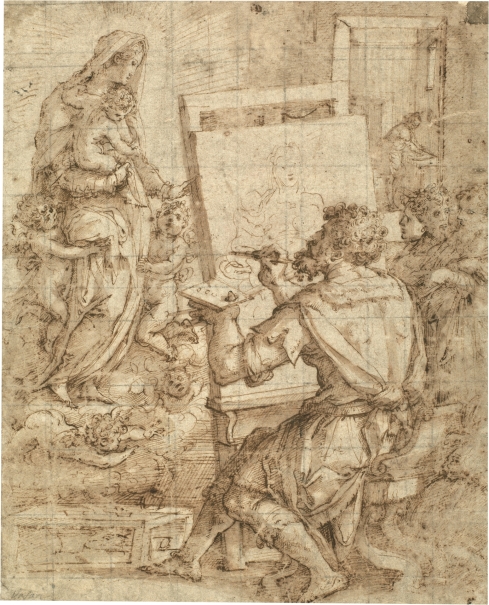
Saint Luke painting the Virgin
Wash, Squared-up, Pencil, Grey-brown ink, Pencil on laid paper. 1567 - 1572
This is a preparatory drawing for Vasari´s fresco of St. Luke Painting the Virgin in the Cappella di San Luca in S. Annunziata, Florence. In 1560 the chapel, formerly the Cappella Benizzi, was granted to the sculptor Fra Giovanni Angelo Montorsoli (c. 1507-1563), who had been inducted into the Servite Order at S. Annunziata some three decades earlier. He presented it to his fellow Florentine artists, including Vasari, Bronzino (1503-1572), Francesco Salviati (1510-1563), Bartolomeo Ammanati (151
ARTWORK
Loading...

Loading...

Up