formularioRDF
The itinerary <em>TITULORECORRIDO</em> has been successfully created. Now you can add in works from the Collection browser
<em>TITULOOBRA</em> added to <em>TITULORECORRIDO</em> itinerary

Metabuscador

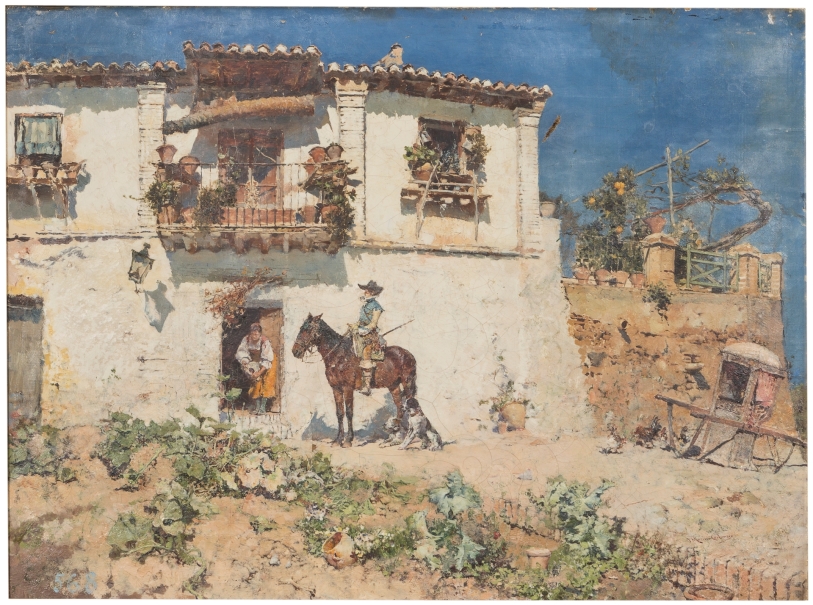
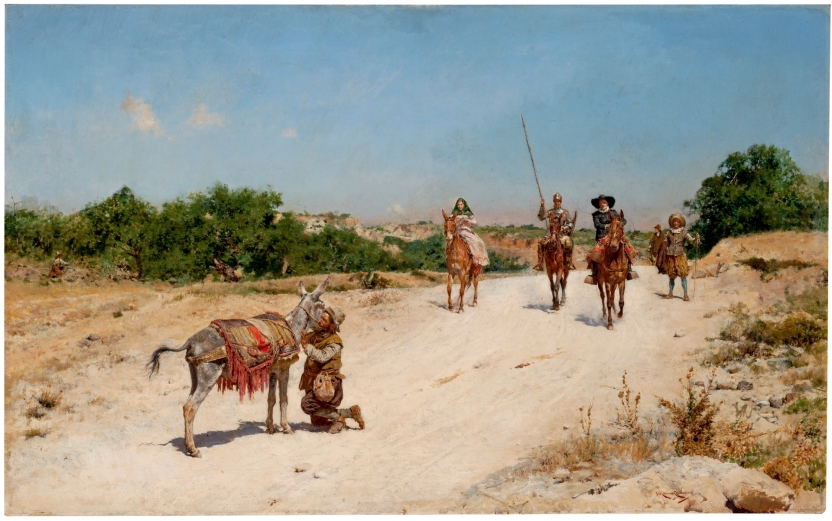
Sancho Panza recovers his lost donkey
Oil on canvas. Ca. 1894
In the last quarter of the nineteenth century, a significant number of Spanish writers and artists viewed themselves as heirs to the rich heritage of the Golden Age realist tradition, particularly the work of Miguel de Cervantes and Diego Velázquez. Their interpretation and imitation of those models lent nineteenth-century Spanish naturalism its particular character within the larger context of European literature and visual art. With artists´ concerted adoption of Cervantine references,
ARTWORK
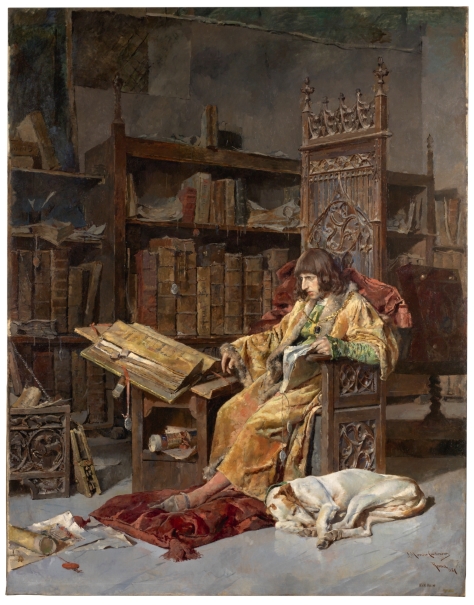
Prince Carlos de Viana
Oil on canvas. 1881
The eldest son of King Juan II of Aragon and Queen Blanca of Navarre, Carlos de Viana was heir to both thrones, yet his father disowned him in favor of his other son, Fernando “The Catholic.” Because of his growing popularity in Catalonia, Fernando forced him to abandon public life, and that is the moment Moreno Carbonero immortalizes in this work. A resigned Carlos dedicates himself to reading and studying at the library of the Neapolitan convent where he took refuge, accompanied only by a dog.
ARTWORK
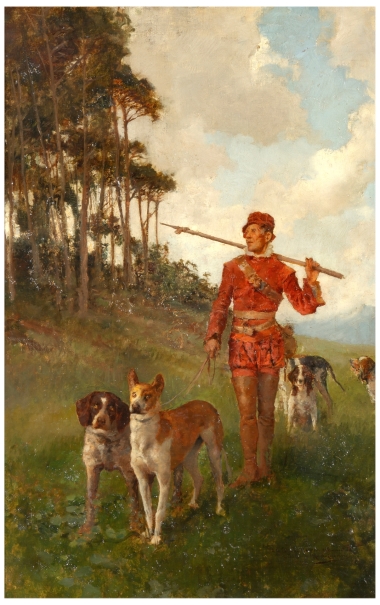
Huntsman with dogs
Oil on canvas. Ca. 1885
Possibly related to the series of paintings made by the author on the picaresque novel Gil Blas de Santillana (1715/1735), by Alain-René Lesage (1668–1747).
ARTWORK
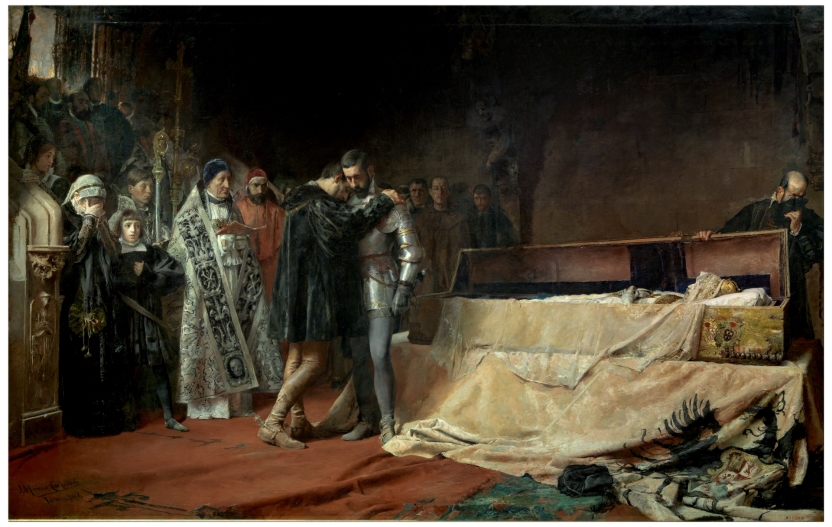
The Conversion of the Duke of Gandía
Oil on canvas. 1884
Seeing the cadaver of Empress Isabel of Portugal, the wife of Carlos V, has a profound effect on Francisco de Borja, Duke of Gandía, who almost collapses in front of one of his knights. The melodramatic vision with which the painter approaches this work is reinforced by the expressions of the other characters, such as the horrified boy, who may be seeing his first dead person, or the heartbroken lady who covers her face with her hands. The whiteness of the casket, shroud and catafalque ca
ARTWORK
The Glass of Water
Oil on canvas. Ca. 1882
It is likely that this work is related to the series of paintings by the artist on the picaresque novel Gil Blas de Santillana (1715–1735), by Alain-René Lesage (1668–1747).
ARTWORK
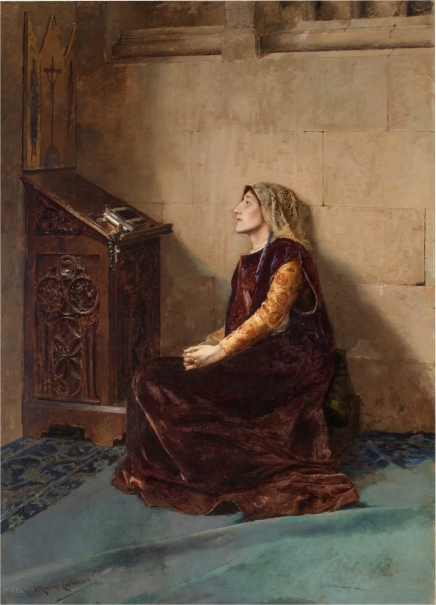
Blanche II of Navarre
Oil on canvas. Ca. 1885
Blanche II (1424–1464). Queen of Navarre. Daughter of John II of Aragon and Navarre and Blanche I. She was declared heiress to the kingdom of Navarre and married Henry IV of Castile (P7071). Her father imprisoned her in the castle of Olite to prevent the surrender of Navarre to Castile. She was forced to cede her rights to her sister Eleanor, Countess of Foix. Blanche died of poisoning during her subsequent imprisonment in the castle of Orthez, France.
ARTWORK
Alhucemas landing
Oil on canvas. 1929
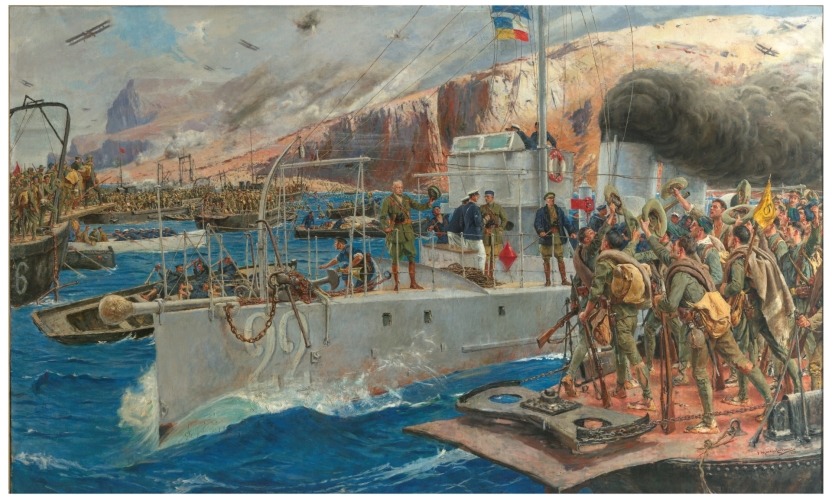
The landing of the Spanish Navy in the bay of Alhucemas took place on the 8th of September 1925, under the command of General Primo de Rivera, and marked the end of Spain´s war against Morocco. Generals Miguel Primo de Rivera (1870–1930) and José Sanjurjo Sacanell (1872–1936) appear on the deck of the torpedo 22. In the background appears the mountain of Morro Nuevo.
ARTWORK
Purificación Fontán, Widowed Marchioness of the Pazo de la Merced
Oil on canvas. 1906
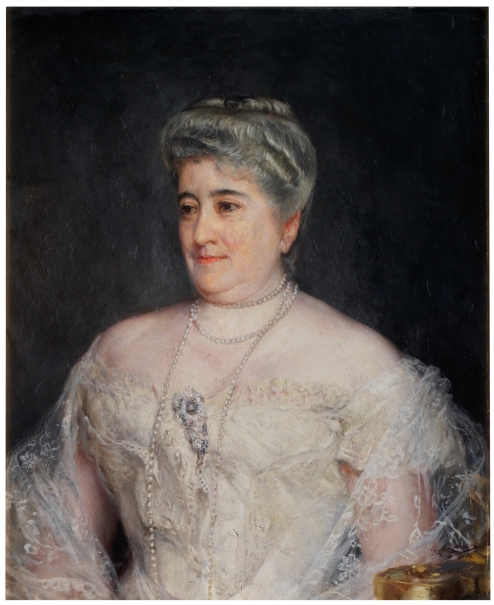
Purificación Fontán (around 1846–Madrid, 1921) married José de Elduayen y Gorriti (1823–1898), I Marquis of the Pazo de la Merced and a distinguished politician. During his position at the Ministry of Overseas, in 1880, the Slavery Abolition Act and the establishment of the patronage was promulgated in Cuba. Alfonso XII granted him the marquisate in 1875.
ARTWORK
Loading...

Loading...

Up