formularioRDF
The itinerary <em>TITULORECORRIDO</em> has been successfully created. Now you can add in works from the Collection browser
<em>TITULOOBRA</em> added to <em>TITULORECORRIDO</em> itinerary

Metabuscador

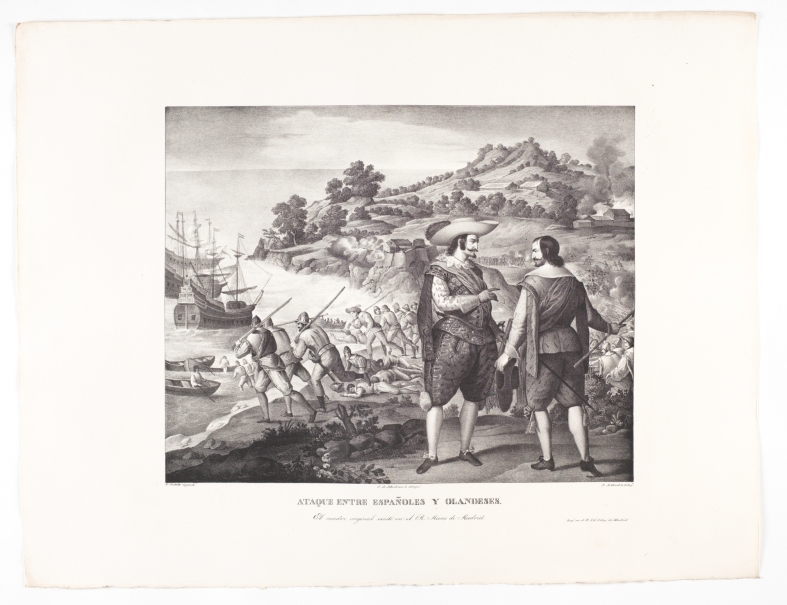
The Recapture of San Juan in Puerto Rico
Lithographic aquatint, Crayon lithography, Scraper on wove paper. 1829 - 1832
Es una litografía de Pierre-Jules Jollivet (1784-1871) que reproduce uno de los lienzos de la serie de batallas del Salón de Reinos del palacio del Buen Retiro de Eugenio Cajés conservado en el Museo Nacional del Prado (P00653). Fue uno de los 50 cuadros elegidos para el Museo Napoleón. Devuelto de Francia el 10 de junio de 1816, entró en el Museo en 1827. Hasta 1952 estuvo atribuido a Félix Castello, pintor que figura en la estampa.Esta estampa se entregaba con el cuadernillo LXIX acompañado de
ARTWORK
Pierre-Jules Jollivet – Lithographer – (Author of the original work: Eugenio Cajés)
Félix Castello – (The original work, according to inscriptions, attributed to)
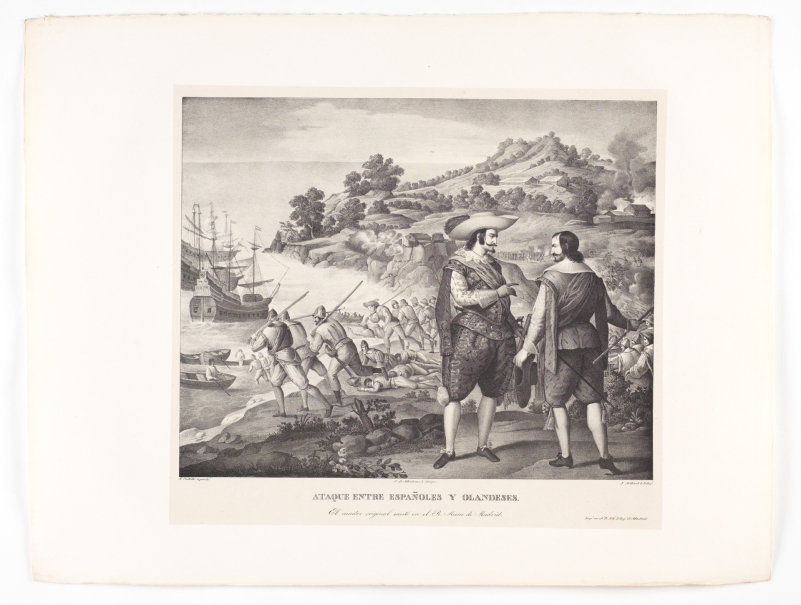
The Recapture of San Juan in Puerto Rico
Lithographic aquatint, Printing on japon, Scraper, Crayon lithography on wove paper. 1829 - 1832
Es una litografía de Pierre-Jules Jollivet (1784-1871) que reproduce uno de los lienzos de la serie de batallas del Salón de Reinos del palacio del Buen Retiro de Eugenio Cajés conservado en el Museo Nacional del Prado (P00653). Fue uno de los 50 cuadros elegidos para el Museo Napoleón. Devuelto de Francia el 10 de junio de 1816, entró en el Museo en 1827. Hasta 1952 estuvo atribuido a Félix Castello, pintor que figura en la estampa.Esta estampa se entregaba con el cuadernillo LXIX acompañado de
ARTWORK
Pierre-Jules Jollivet – Lithographer – (Author of the original work: Eugenio Cajés)
Félix Castello – (The original work, according to inscriptions, attributed to)
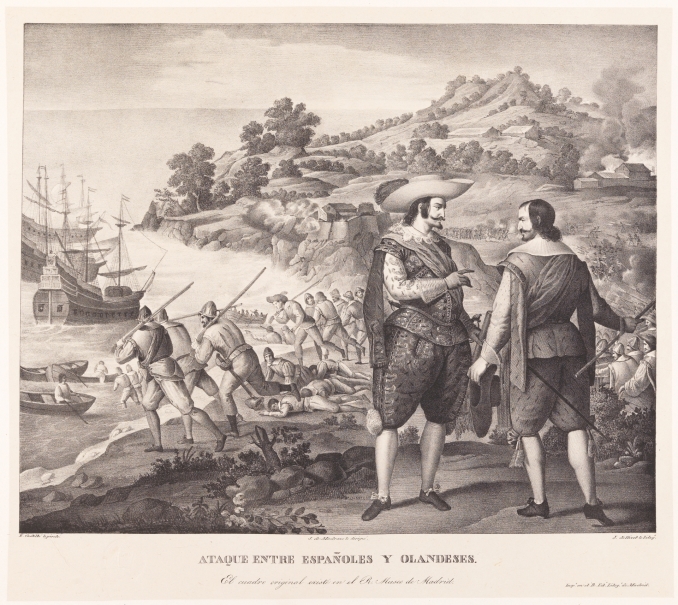
The Recapture of San Juan in Puerto Rico
Lithographic aquatint, Crayon lithography, Printing on japon, Scraper on wove paper. 1829 - 1832
Es una litografía de Pierre-Jules Jollivet que reproduce uno de los lienzos de la serie de batallas del Salón de Reinos del palacio del Buen Retiro de Eugenio Cajés conservado en el Museo Nacional del Prado (P00653). Fue uno de los 50 cuadros elegidos para el Museo Napoleón. Devuelto de Francia el 10 de junio de 1816, entró en el Museo en 1827. Hasta 1952 estuvo atribuido a Félix Castello, pintor que figura en la estampa.La estampa se encuadernó en el segundo volumen, cuadernillo LXIX, con un te
ARTWORK
Pierre-Jules Jollivet – Lithographer – (Author of the original work: Eugenio Cajés)
Félix Castello – (The original work, according to inscriptions, attributed to)
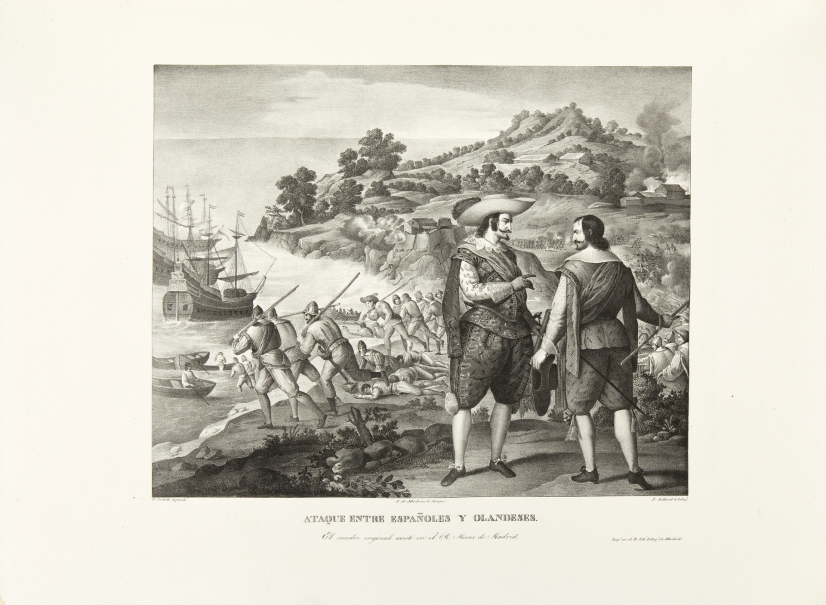
The Recapture of San Juan in Puerto Rico
Crayon lithography, Lithographic aquatint, Scraper on wove paper. 1829 - 1832
Es una litografía de Pierre-Jules Jollivet (1794-1871) que reproduce uno de los lienzos de la serie de batallas del Salón de Reinos del palacio del Buen Retiro de Eugenio Cajés conservado en el Museo Nacional del Prado (P00653). Fue uno de los 50 cuadros elegidos para el Museo Napoleón. Devuelto de Francia el 10 de junio de 1816, entró en el Museo en 1827. Hasta 1952 estuvo atribuido a Félix Castello, pintor que figura en la estampa.La estampa se encuadernó en el segundo volumen, cuadernillo LXI
ARTWORK
Pierre-Jules Jollivet – Lithographer – (Author of the original work: Eugenio Cajés)
Félix Castello – (The original work, according to inscriptions, attributed to)
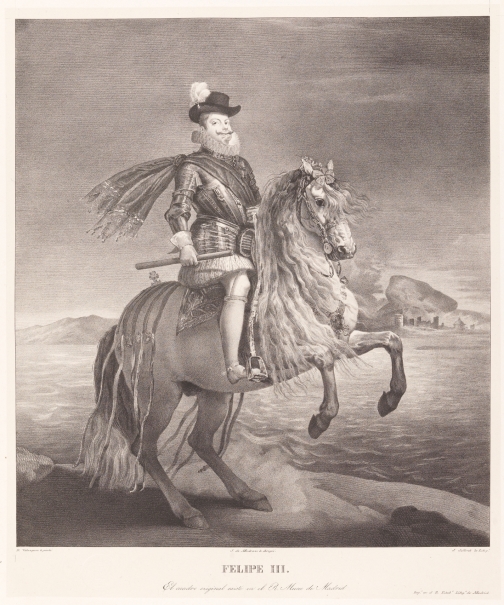
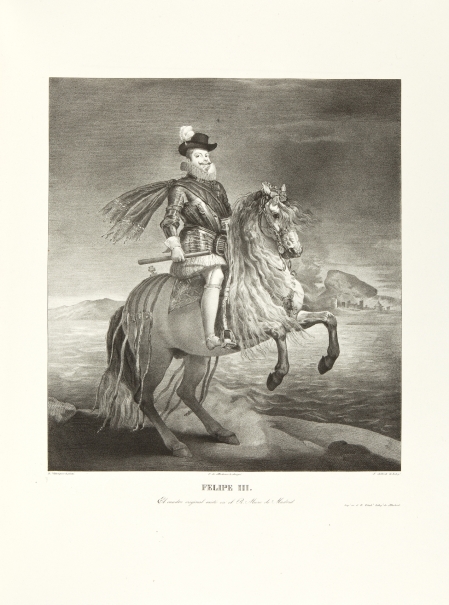
Philip III on Horseback
Lithographic aquatint, Printing on japon, Scraper, Crayon lithography on wove paper. 1829 - 1832
Es una litografía de Pierre-Jules Jollivet que reproduce el lienzo de Velázquez conservado en el Museo Nacional del Prado (P1176). Estampa encuadernada en el segundo volumen, cuadernillo LXVIII, con un texto explicativo de José Musso y Valiente. Pertenece a la serie editada por el Real Establecimiento Litográfico, dirigida por José de Madrazo, "Colección litográfica de cuadros del rey de España el señor don Fernando VII", Madrid, 1829-1832. Estampada sobre papel china. Hay otros dos ejemplares e
ARTWORK
Pierre-Jules Jollivet – Lithographer – (Author of the original work: Diego Rodríguez de Silva y Velázquez)
Philip III on Horseback
Lithographic aquatint, Crayon lithography on wove paper. 1829 - 1832
Es una litografía de Pierre-Jules Jollivet (1794-1871) que reproduce el lienzo de Velázquez conservado en el Museo Nacional del Prado (P1176). Esta estampa se entregaba con el cuadernillo LXVIII acompañado de un texto explicativo de José Musso y Valiente. Iba encuadernada en el tomo II de la serie dirigida por José de Madrazo, "Colección litográfica de cuadros del rey de España el señor don Fernando VII", editada por el Real Establecimiento Litográfico en Madrid, 1829-1832. El Museo custodia dos
ARTWORK
Pierre-Jules Jollivet – Lithographer – (Author of the original work: Diego Rodríguez de Silva y Velázquez)
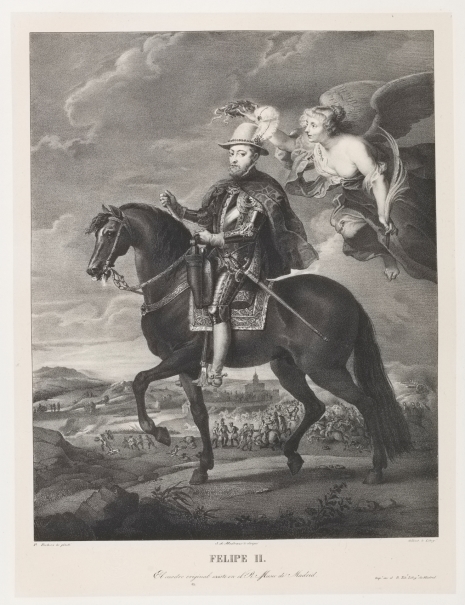
Philip II on Horseback
Lithographic aquatint, Scraper, Crayon lithography, Printing on japon on wove paper. 1826 - 1829
Es una litografía, sin encuadernar, de Pierre-Jules Jollivet (1794-1871) que reproduce el lienzo de Rubens (P01686) conservado en el Museo Nacional del Prado. Esta estampa se entregaba con el cuadernillo LX acompañado de un texto explicativo de José Musso y Valiente. Iba encuadernada en el tomo I de la serie dirigida por José de Madrazo, Colección lithográphica de cuadros del rey de España el señor don Fernando VII, editada por el Real Establecimiento Litográfico en Madrid, 1826-1829. Este tomo
ARTWORK
Pierre-Jules Jollivet – Lithographer – (Author of the original work: Peter Paul Rubens)
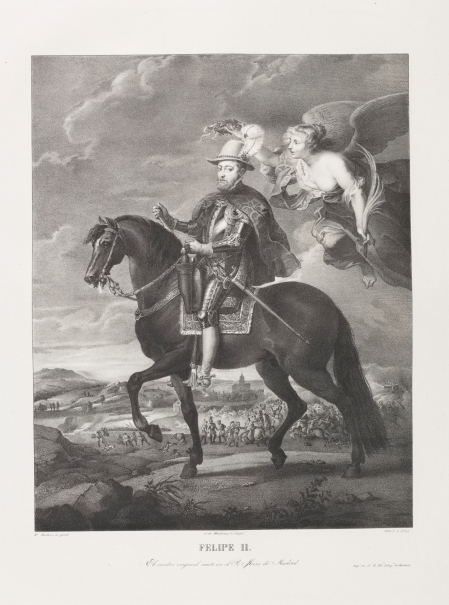
Philip II on Horseback
Crayon lithography, Lithographic aquatint, Scraper on wove paper. 1826 - 1829
The Company for the engraving of the paintings from the Royal Palaces was one of the Spanish Enlightenment’s major undertakings during the second half of the 18th century. It supervised the reproduction of prints of paintings from the Royal Collections and its early projects were carried out by Francisco de Goya, who reproduced some of Velázquez’s paintings in 1778, and by Juan Barcelón and Nicolás Barsanti, who reproduced The Labors of Hercules after the fresco that Luca Gi
ARTWORK
Pierre-Jules Jollivet – Lithographer – (Author of the original work: Peter Paul Rubens)
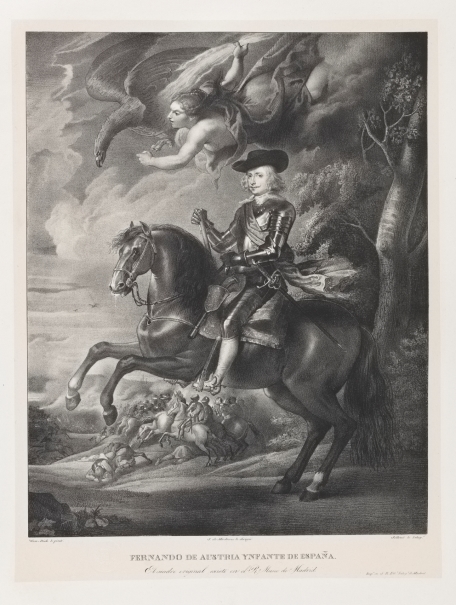
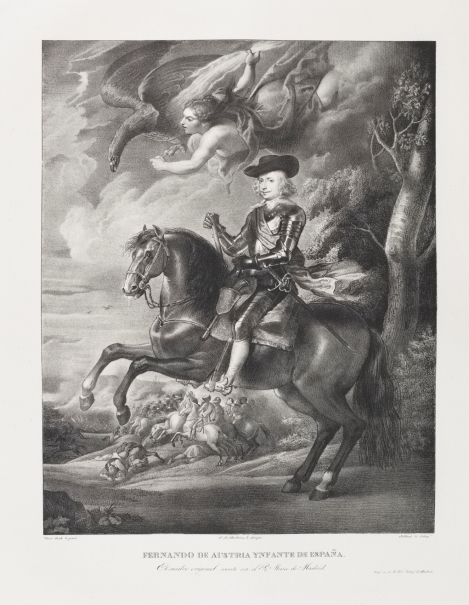
The Cardinal-Infante Don Fernando de Austria, at the Battle of Nördlingen
Lithographic aquatint, Crayon lithography, Pen lithography, Scraper, Printing on japon on wove paper. 1826 - 1829
The Company for the engraving of the paintings from the Royal Palaces was one of the Spanish Enlightenment’s major undertakings during the second half of the 18th century. It supervised the reproduction of prints of paintings from the Royal Collections and its early projects were carried out by Francisco de Goya, who reproduced some of Velázquez’s paintings in 1778, and by Juan Barcelón and Nicolás Barsanti, who reproduced The Labors of Hercules after the fresco that Luca Gi
ARTWORK
Pierre-Jules Jollivet – Lithographer – (The original work, according to inscriptions, attributed to: Anthony van Dyck)
Peter Paul Rubens – (Author of the original work)
The Cardinal-Infante Don Fernando de Austria, at the Battle of Nördlingen
Lithographic aquatint, Scraper, Crayon lithography on wove paper. 1826 - 1829
The Company for the engraving of the paintings from the Royal Palaces was one of the Spanish Enlightenment’s major undertakings during the second half of the 18th century. It supervised the reproduction of prints of paintings from the Royal Collections and its early projects were carried out by Francisco de Goya, who reproduced some of Velázquez’s paintings in 1778, and by Juan Barcelón and Nicolás Barsanti, who reproduced The Labors of Hercules after the fresco that Luca Gi
ARTWORK
Pierre-Jules Jollivet – Lithographer – (The original work, according to inscriptions, attributed to: Anthony van Dyck)
Peter Paul Rubens – (Author of the original work)
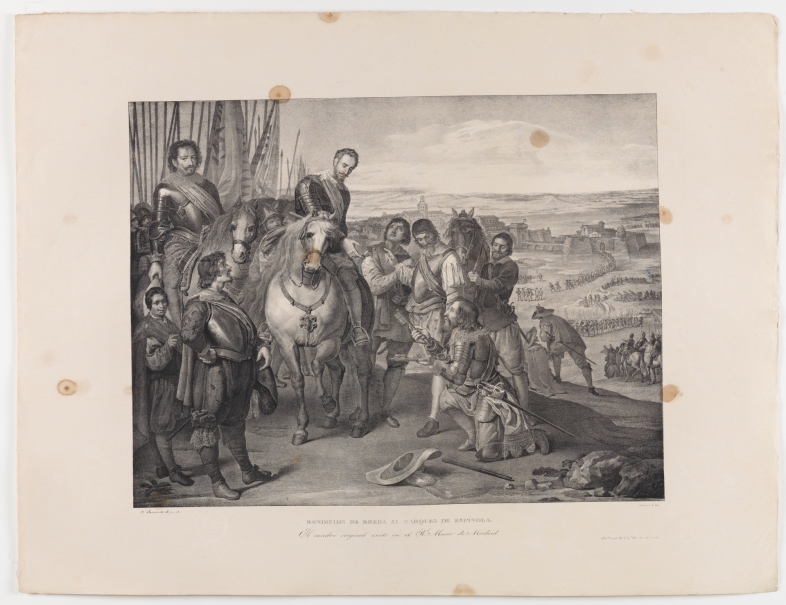
The Surrender of Jülich
Lithographic aquatint, Pen lithography, Scraper, Crayon lithography on wove paper. 1826 - 1829
The Company for the engraving of the paintings from the Royal Palaces was one of the Spanish Enlightenment’s major undertakings during the second half of the 18th century. It supervised the reproduction of prints of paintings from the Royal Collections and its early projects were carried out by Francisco de Goya, who reproduced some of Velázquez’s paintings in 1778, and by Juan Barcelón and Nicolás Barsanti, who reproduced The Labors of Hercules after the fresco that Luca Gi
ARTWORK
Pierre-Jules Jollivet – Lithographer – (Author of the original work: Jusepe Leonardo)
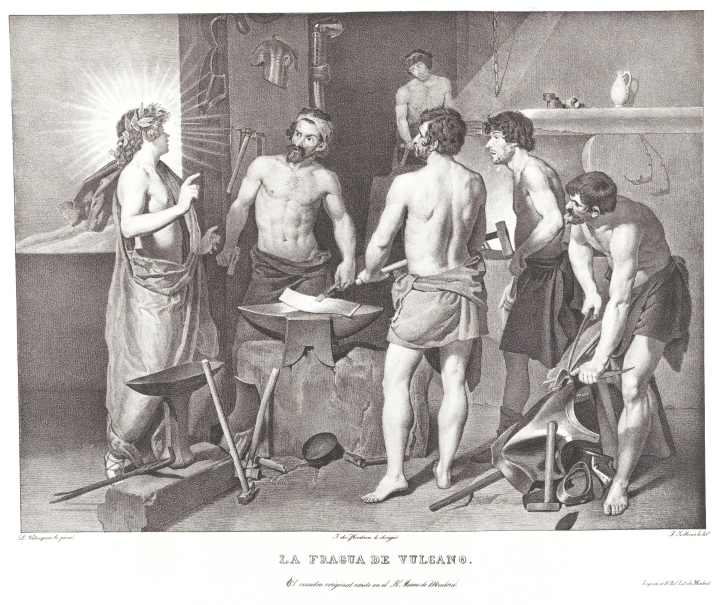
Vulcan’s Forge
Lithographic aquatint, Crayon lithography, Scraper on wove paper. 1826 - 1829
The Company for the engraving of the paintings from the Royal Palaces was one of the Spanish Enlightenment’s major undertakings during the second half of the 18th century. It supervised the reproduction of prints of paintings from the Royal Collections and its early projects were carried out by Francisco de Goya, who reproduced some of Velázquez’s paintings in 1778, and by Juan Barcelón and Nicolás Barsanti, who reproduced The Labors of Hercules after the fresco that Luca Gi
ARTWORK
Pierre-Jules Jollivet – Lithographer – (Author of the original work: Diego Rodríguez de Silva y Velázquez)
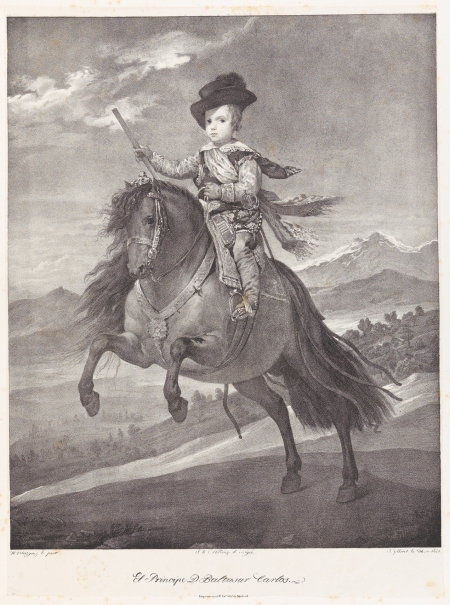
Prince Baltasar Carlos on Horseback
Lithographic aquatint, Scraper, Printing on japon, Crayon lithography on wove paper. 1825
The Company for the engraving of the paintings from the Royal Palaces was one of the Spanish Enlightenment’s major undertakings during the second half of the 18th century. It supervised the reproduction of prints of paintings from the Royal Collections and its early projects were carried out by Francisco de Goya, who reproduced some of Velázquez’s paintings in 1778, and by Juan Barcelón and Nicolás Barsanti, who reproduced The Labors of Hercules after the fresco that Luca Gi
ARTWORK
Pierre-Jules Jollivet – Lithographer – (Author of the original work: Diego Rodríguez de Silva y Velázquez)
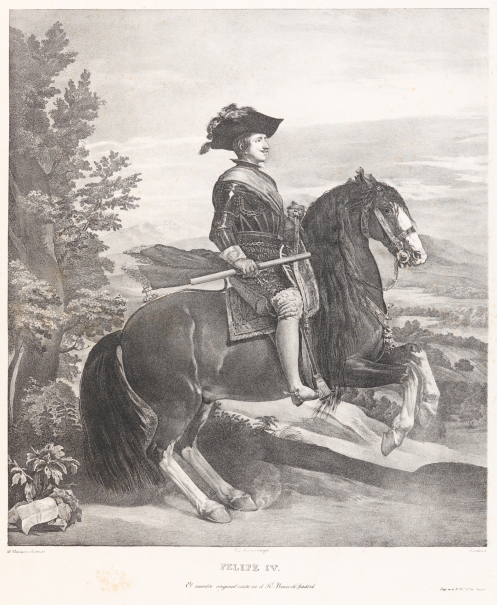
Philip IV on Horseback
Lithographic aquatint, Crayon lithography, Scraper on wove paper. 1826 - 1829
The Company for the engraving of the paintings from the Royal Palaces was one of the Spanish Enlightenment’s major undertakings during the second half of the 18th century. It supervised the reproduction of prints of paintings from the Royal Collections and its early projects were carried out by Francisco de Goya, who reproduced some of Velázquez’s paintings in 1778, and by Juan Barcelón and Nicolás Barsanti, who reproduced The Labors of Hercules after the fresco that Luca Gi
ARTWORK
Pierre-Jules Jollivet – Lithographer – (Author of the original work: Diego Rodríguez de Silva y Velázquez)
Loading...

Loading...

Up