formularioRDF
The itinerary <em>TITULORECORRIDO</em> has been successfully created. Now you can add in works from the Collection browser
<em>TITULOOBRA</em> added to <em>TITULORECORRIDO</em> itinerary

Metabuscador

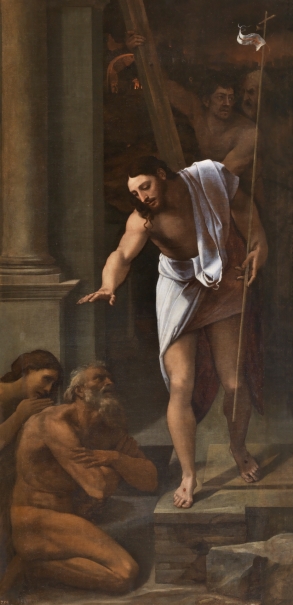
Christ’s Descent into Limbo
Oil on canvas. 1516
Wearing a white tunic and bearing the standard of victory, Christ leans toward Adam and Eve who, nude, hope to be rescued from Limbo and taken to the Kingdom of Heaven. This passage appears in the Apocrypha, specifically in the Gospel of Nicodemus, which tells of the Resurrection of Christ. The painting´s composition reveals two fundamental influences: Michelangelo, in the monumentality of the figures; and the Venetian school, to which Piombo belonged, in the use of color for symbolic and dramat
ARTWORK
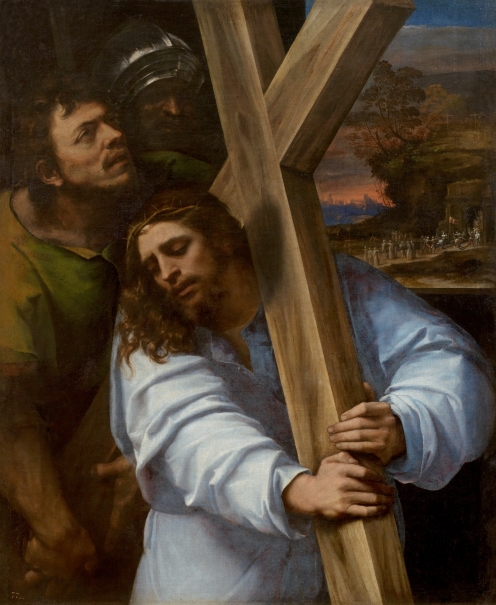
Jesus carrying the Cross
Oil on canvas. Ca. 1516
Jerónimo Vich y Valterra (1459-1535) was Spain’s ambassador to Rome between 1506 and 1521, under the reigns of Ferdinand the Catholic and Charles V. Vich commissioned Sebastiano del Piombo to paint a triptych whose central panel with the Lamentation over the Body of Christ is now at the Hermitage Museum in Saint Petersburg. One of its sides bears Christ’s Descent into Limbo and is also at the Museo del Prado (P346). The triptych dates from 1516, the year King Ferdinand died. At that time,
ARTWORK
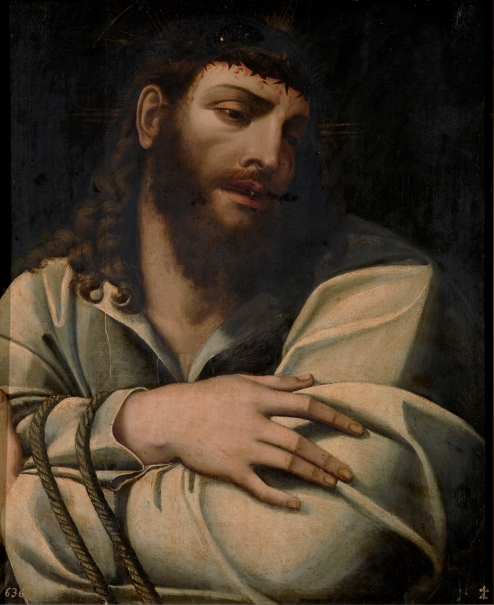
Ecce Homo
Oil on panel. Mid-XVIcentury
The work reproduces a prototype by Sebastiano del Piombo that had to have some success in the 16th century, as witnessed by another version very close to this one kept in the Galleria Borghese in Rome (inv. 179, oil on panel, 59 x 43 cm), where it is cataloged as in the style of Luis de Morales.
ARTWORK
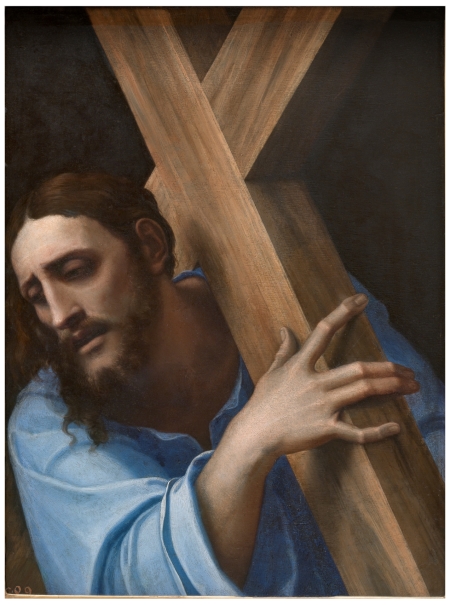
Sebastiano del Piombo – (Copy after)
Jesus carrying the Cross
Oil on slate. 1532 - 1535
Piombo was the Italian painter most in demand by Spanish clients during the first half of the sixteenth century. Fernando de Silva, Count of Cifuentes and ambassador to Rome from 1533 to 1536, commissioned him to paint Christ carrying the Cross, which is now at the Hermitage Museum and is extraordinarily similar to the present work. The Prado´s work is less dramatic, in part because here, Christ is not wearing the Crown of thorns. As part of the Royal Collection, this work was listed in the Aran
ARTWORK
Loading...

Loading...

Up