formularioRDF
The itinerary <em>TITULORECORRIDO</em> has been successfully created. Now you can add in works from the Collection browser
<em>TITULOOBRA</em> added to <em>TITULORECORRIDO</em> itinerary

Still Life with Game, Vegetables and Fruit. Juan Sánchez Cotán.

Accessible visit / Easy-to-read content of Museo del Prado / Still Life with Game, Vegetables and Fruit. Juan Sánchez Cotán.

Still Life with Game, Vegetables and Fruit is a painting by Sánchez Cotán, a Spanish painter.

The painting is from 1602.

ETR (Easy to Read) icon
© Easy-to-read european logo: Inclusion Europe. More information at: Easy-to-read

What is the subject?

This painting is a still life with game animals, vegetables, and fruits.

A still life is a painting that depicts objects and food.

In this painting, we see a stone window with a dark background that looks like a cupboard for preserving fresh food.

On the window are several vegetables, such as a thistle, the white vegetable on the right.

We also see radishes and carrots.

From the top, hang lemons, apples, 1 goldfinch, 1 sparrow, and 2 partridges.

They are about to be cooked.

On the left, there are 6 small birds tied to a stick that leans on the edge of the window.

Sánchez Cotán realistically painted the food, light, and shadows in this still life.

Some objects lean on the window frame.

Other objects, such as radishes and carrots, extend beyond the window frame, creating the illusion of depth in the space.
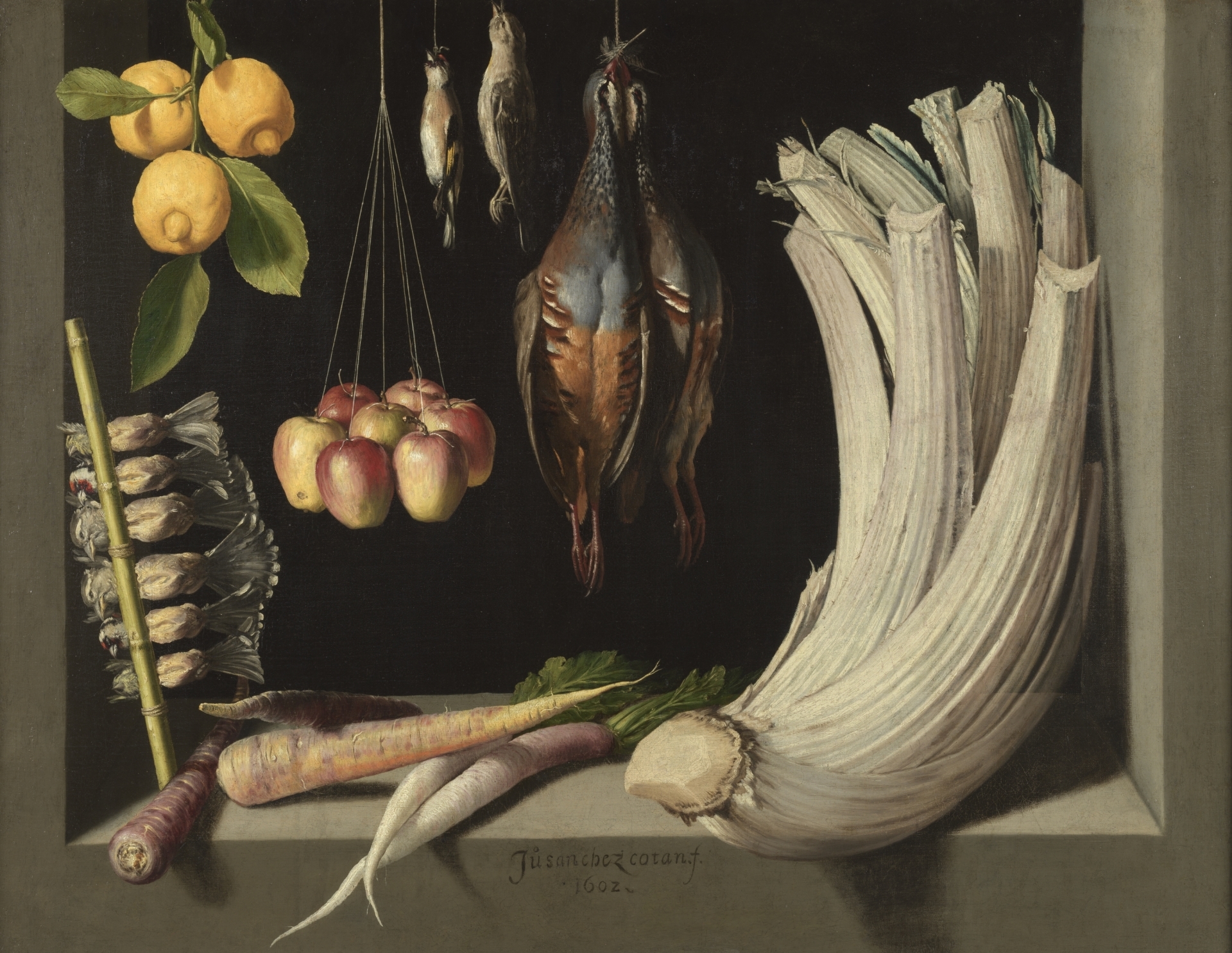
Still Life with Game, Vegetables and Fruit by Juan Sánchez Cotán.

The painter

Sánchez Cotán was a painter famous for creating the first still lifes in Spain and Europe.

Other Spanish painters were inspired by his paintings and created their still lifes later on.

Only 6 still lifes by Cotán survived to the present day.

Sánchez Cotán painted every detail in his works to create a realistic effect.

Instead of depicting luxurious objects, he chose to paint everyday objects that are common in life.

Cotán wanted to prove that we can find beauty in ordinary things and that it is not necessary to depict wealth or luxury in art to create something beautiful.

Sánchez Cotán painted this still life in 1602 when he lived in Toledo.

A year later, he left his painting studio to live with a religious order of Carthusian monks.

The Infante Sebastián Gabriel was the owner of this painting.

The Museo del Prado acquired this painting in 1991 from one of the descendants of the Infante.

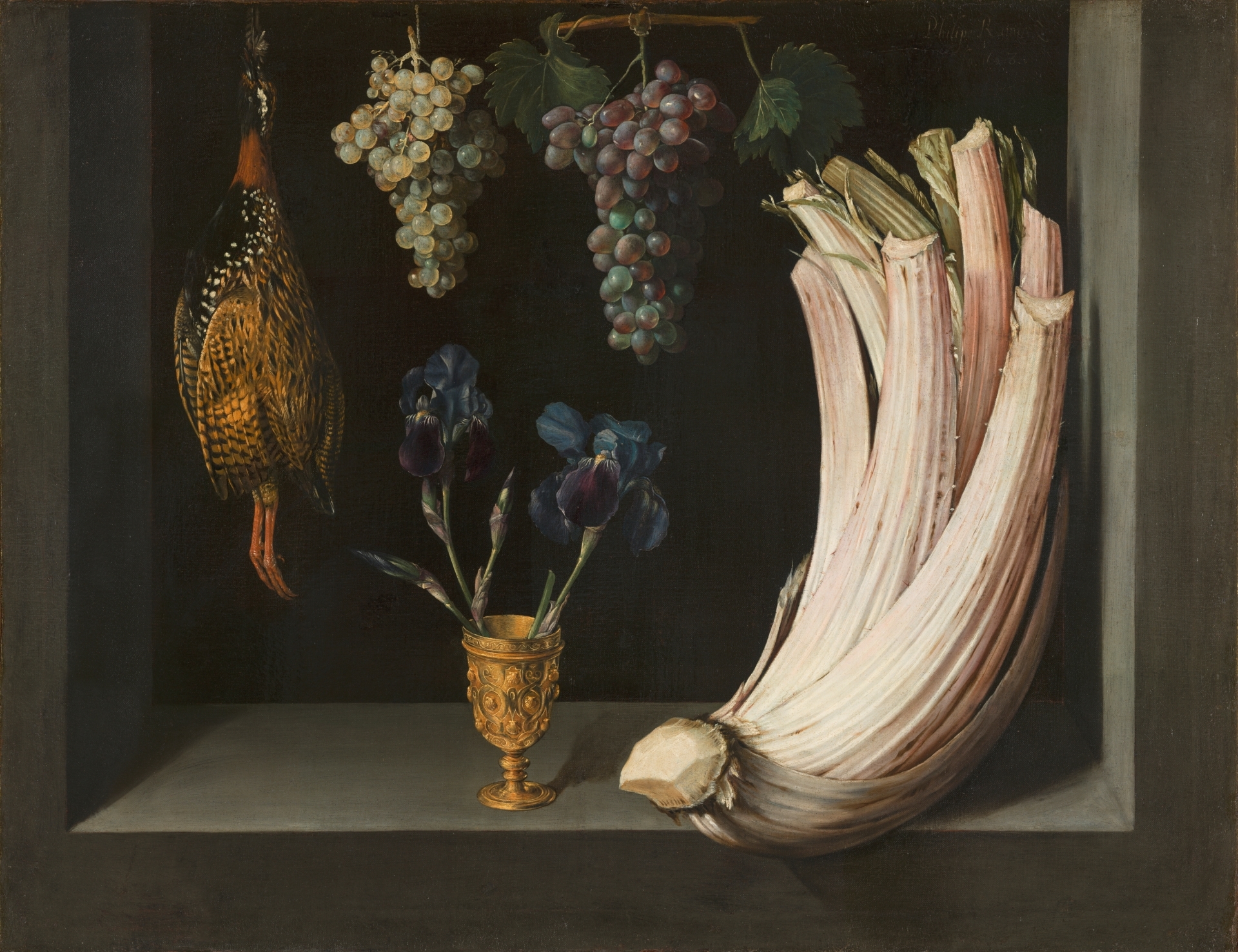
Still Life with Cardoon, Francolin, Grapes and Irises by Felipe Ramírez.
Funded by the European Union - NextGenerationEU Government of Spain - Ministry of Culture Recovery, Transformation and Resiliency Plan Museo Nacional del Prado

Funded with the National Recovery and Resilience Plan (NRPP) , Spain’s Next Generation EU financing and according to the initiatives within the component C.24.I3 Digitization and valorization of major cultural services. The project is part of Campus Prado within Accessibility and Signage: Revitalization of the Urban Environment action line and as a universal accessibility activity.

Up