formularioRDF
The itinerary <em>TITULORECORRIDO</em> has been successfully created. Now you can add in works from the Collection browser
<em>TITULOOBRA</em> added to <em>TITULORECORRIDO</em> itinerary

The Embarkation of Saint Paula. Claude Lorrain

The Embarkation of Saint Paula is a painting by Claude Lorrain, a French painter. 

The painting is from 1639.

ETR (Easy to Read) icon
© Easy-to-read european logo: Inclusion Europe. More information at: Easy-to-read

What is the artist depicting?

This painting shows a scene from the story of Saint Paula.

Saint Paula was a wealthy woman from Rome.

When her husband died, she left her life in Rome and became a follower of Saint Jerome.

Saint Paula went to live alone in the desert to devote herself to praying.

This painting depicts a large landscape of a port.

Saint Paula is on the port stairs with her children before embarking for Bethlehem, where she retires to dedicate herself to prayer.

Claude Lorrain depicted the landscape of the port of Ostia, which served as the ancient port of the city of Rome.

The painting portrays the sunlight appearing on the horizon.

The air seems filled with mist.

The horizon is the line that separates the sea and the sky.
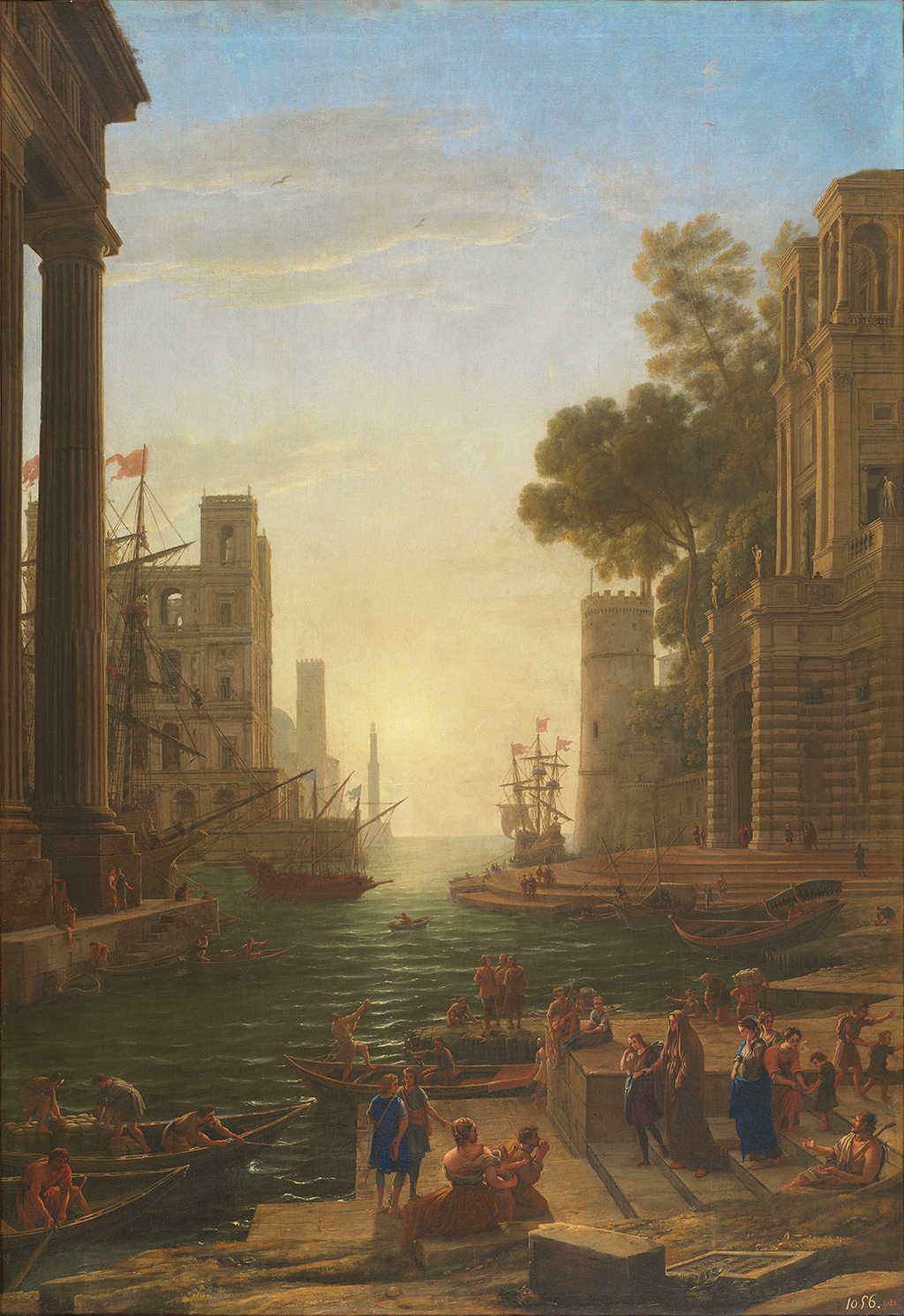
The Embarkation of Saint Paula
The Embarkation of Saint Paula by Claude Lorrain

What makes this piece relevant?

The painting stands out for the realistic lighting of the scene.

For example, we see the sunlight on the horizon and its reflections on the water waves.

Claude Lorrain combines natural elements like the large trees on the right with large buildings and ships on the sides of the port.

At the bottom of the painting, there are small human figures.

Claude Lorrain used this small size of human figures to make the buildings and nature appear even larger.

This way, the viewer can see the entire landscape without figures blocking it.

This painting is part of a series of 4 works with religious scenes commissioned by the Spanish King Philip the Fourth to decorate the Buen Retiro Palace.

All 4 works are displayed in the Prado Museum.

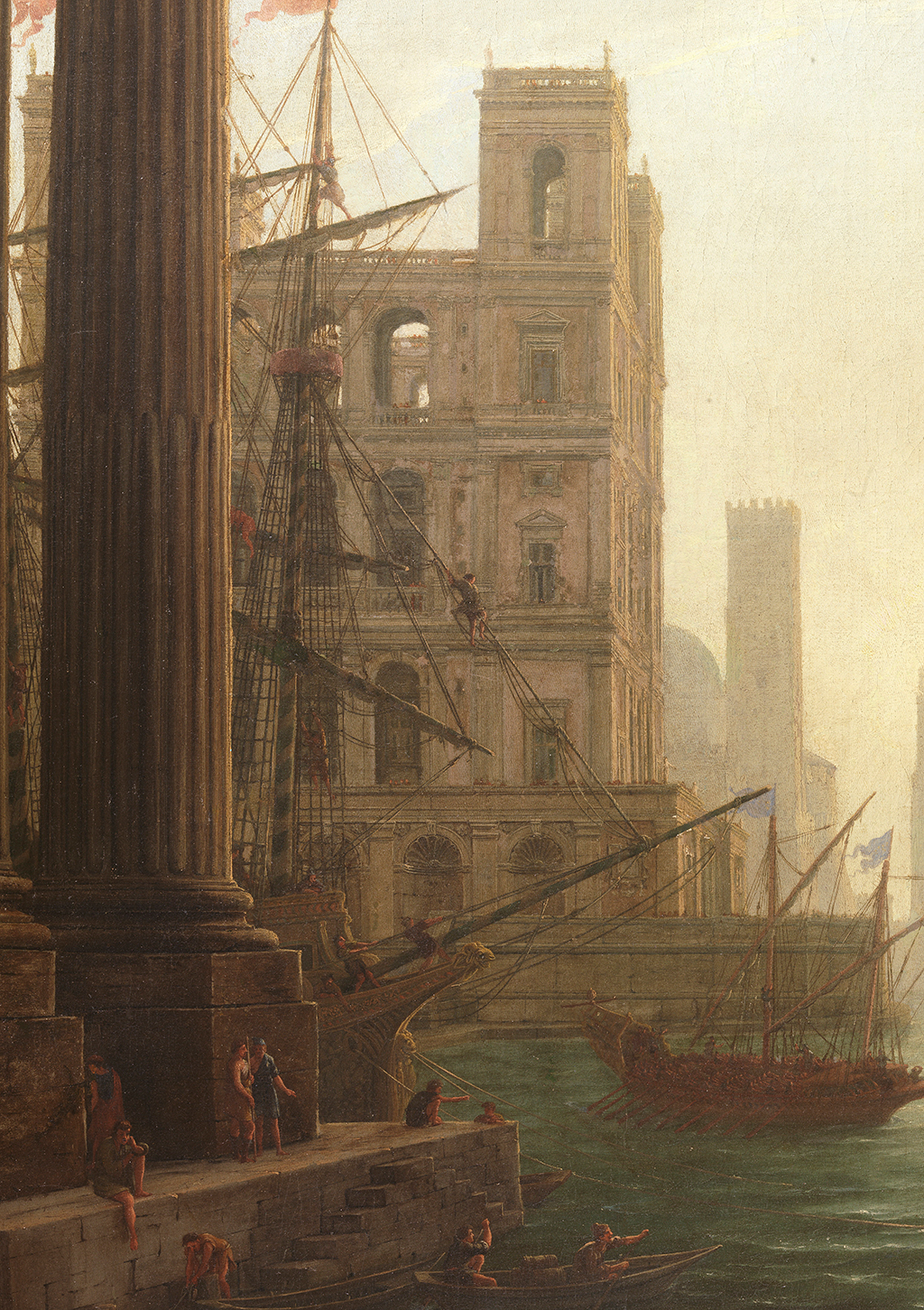
Detail of the buildings

The painter

The author of this painting is Claude Gellée.

He is known as Claude Lorrain in Spain because the region where he was born in France is called Lorraine.

As a young man, Claude moved to Italy, lived in Rome for a long time, and became one of the most famous landscape painters of his time.

Claude Lorrain worked for renowned Italian families and the royal family in France.

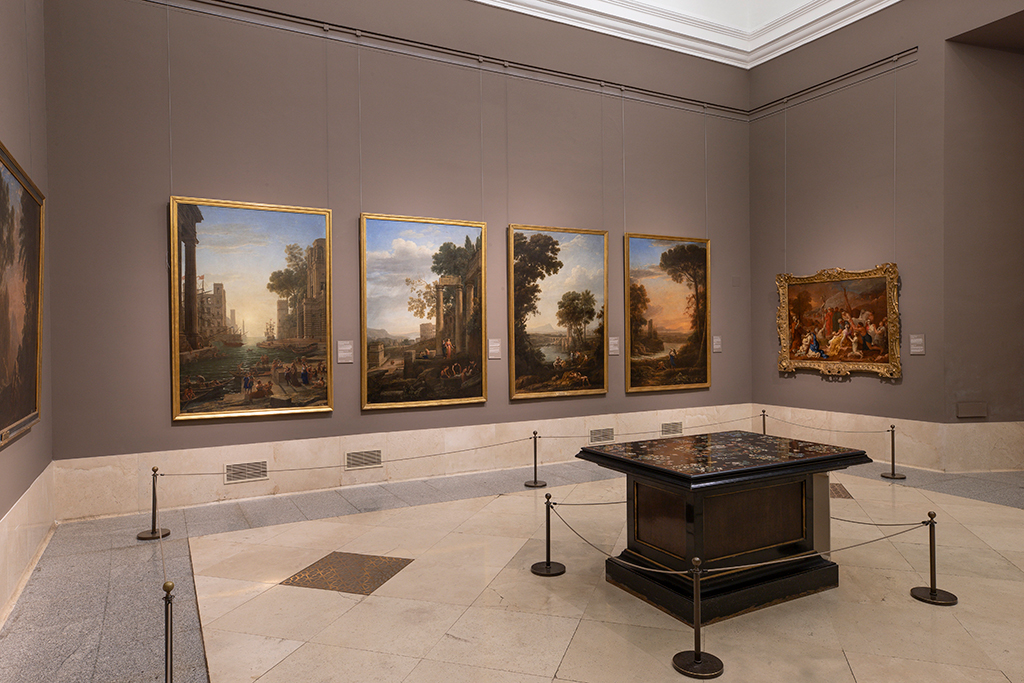
The painting in the room 2
The painting in the room 2 at the museum<
Funded by the European Union - NextGenerationEU Government of Spain - Ministry of Culture Recovery, Transformation and Resiliency Plan Museo Nacional del Prado

Funded with the National Recovery and Resilience Plan (NRPP) , Spain’s Next Generation EU financing and according to the initiatives within the component C.24.I3 Digitization and valorization of major cultural services. The project is part of Campus Prado within Accessibility and Signage: Revitalization of the Urban Environment action line and as a universal accessibility activity.

Up