formularioRDF
The itinerary <em>TITULORECORRIDO</em> has been successfully created. Now you can add in works from the Collection browser
<em>TITULOOBRA</em> added to <em>TITULORECORRIDO</em> itinerary

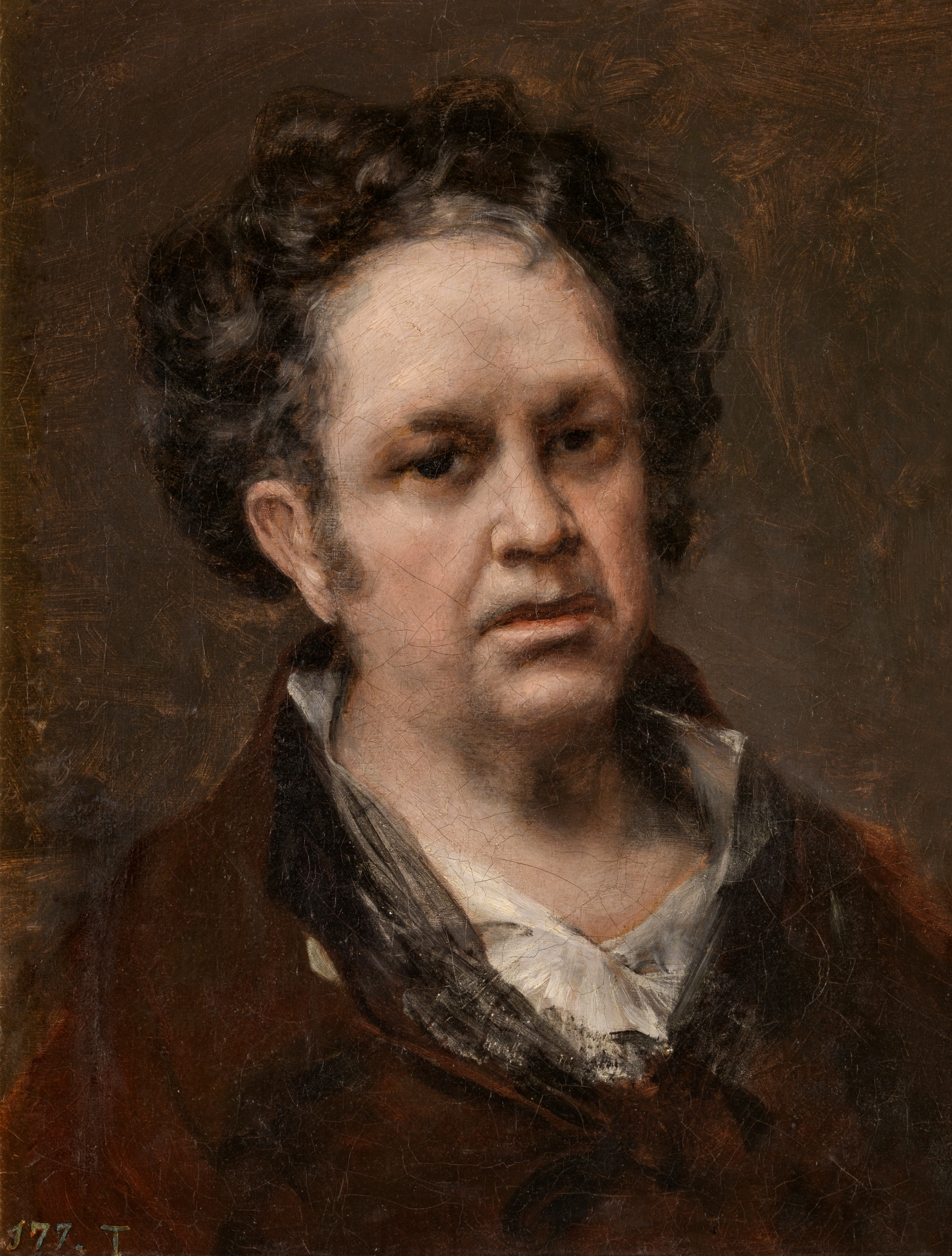
The Third of May 1808 or The Executions. Goya

The Third of May 1808 or The Executions is a painting by Goya, a Spanish painter.

The painting is from 1814.

ETR (Easy to Read) icon
© Easy-to-read european logo: Inclusion Europe. More information at: Easy-to-read

A war scene

The Spanish War of Independence began in May 1808.

The Spanish rebelled against the French army of Napoleon and refused to obey him.

In response, the French shot many of the people who participated in the rebellion.

Goya painted the scene of one of the executions from that night.

In the painting, the 2 groups of people face each other.

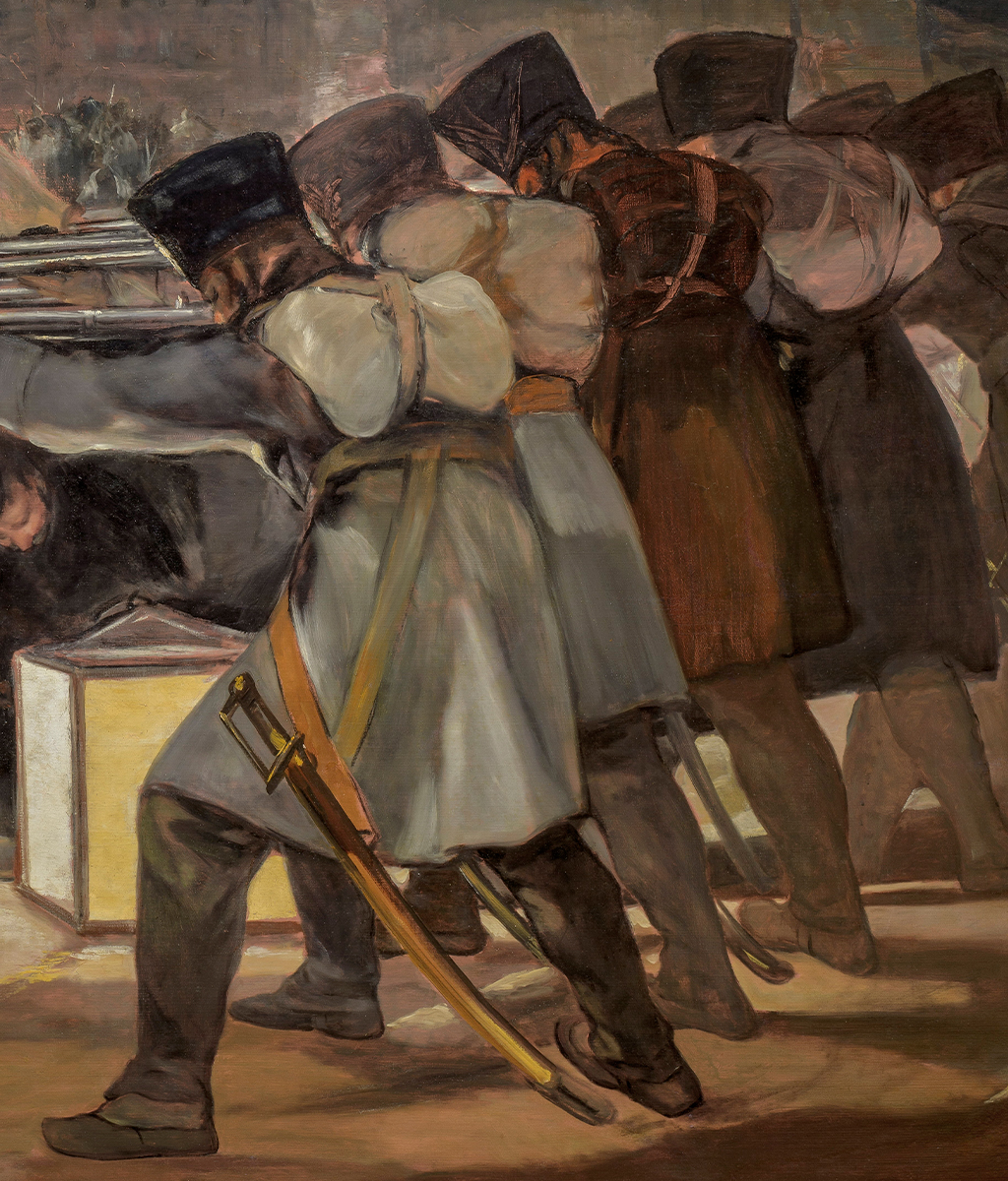
On the right of the painting stands a group of soldiers.

They are the firing squad dressed in grey capes.

The capes are like a cloak with sleeves.

All the soldiers are in perfect formation for firing.

Goya does not show the faces of the firing soldiers.

Goya wants to show the soldiers as killing machines.

On the left of the painting, Goya depicts the men who are about to die.

Goya paints them with different expressions, but they all look scared.

Some men keep their heads down and accept that they are about to die, while other men cover their faces because they cannot bear this situation.

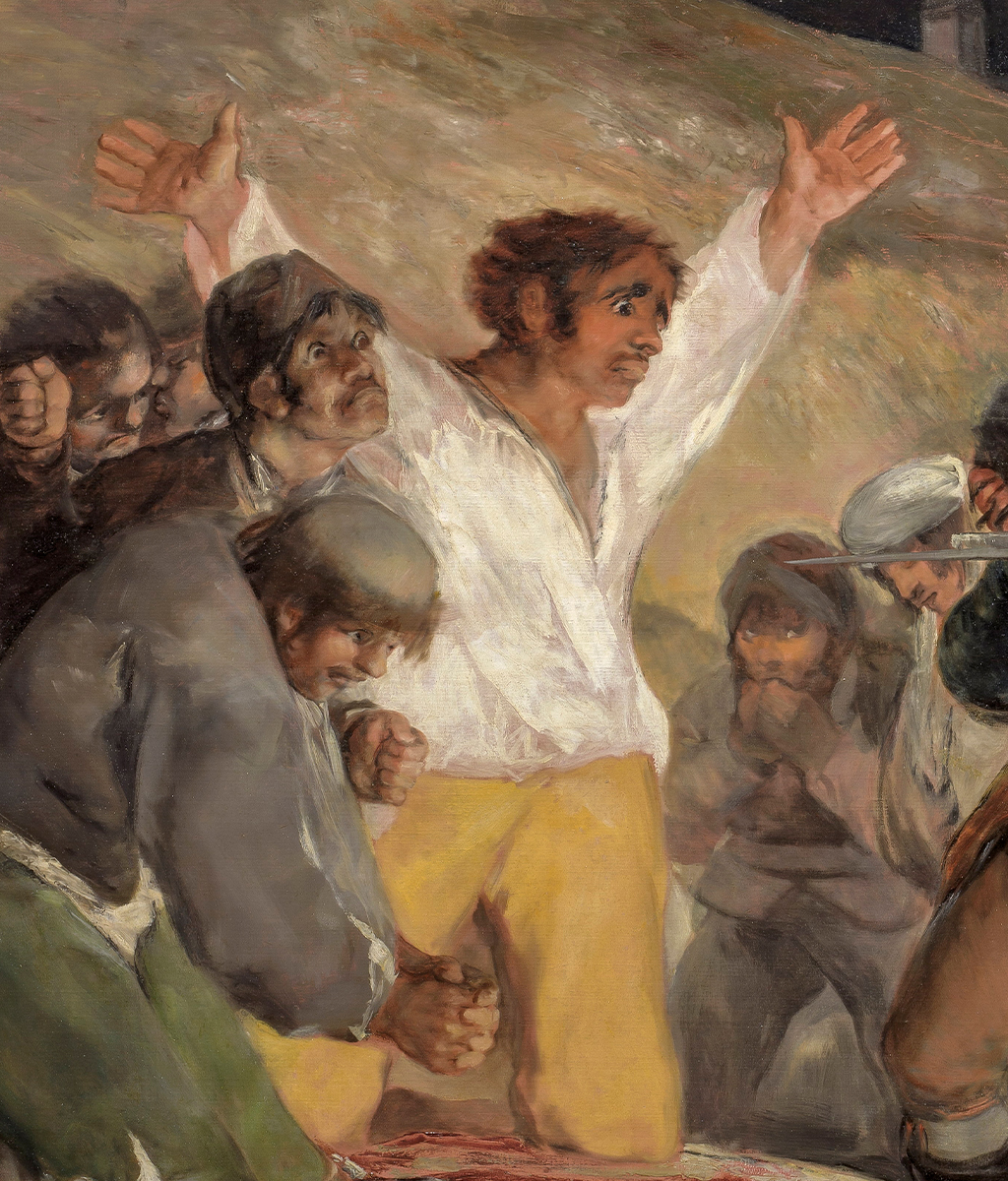
In the centre of the group of victims, a man in a white shirt raises his arms.

His face expresses horror and pleads for his life.

His gestures, position and expression imitate the crucified Christ.

In front of the man in white, the lantern on the floor illuminates the whole group and intensifies the horror of the situation.
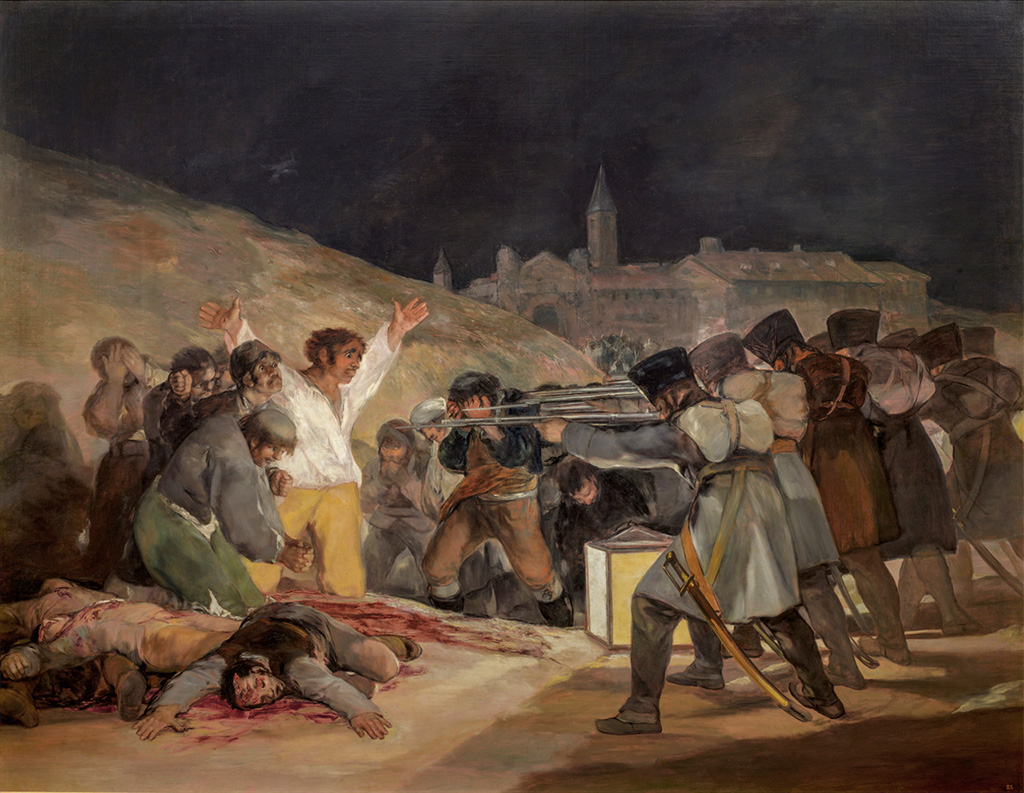
The Third of May 1808 or The Executions by Goya

Whereabouts in Madrid took place the execution?

The execution scene is probably on the Principe Pio Hill or the old Puerta de la Vega in Madrid.

In the background of the painting, we can see the tower of the church of Santa Cruz, which at the time was the tallest in Madrid.

The other lower tower is the tower of the church of Santa María la Real, the church of the Royal Palace.

Detail of the man with a white shirt

The history of two paintings

On 2 May 1808, the people of Madrid rebelled against the French army.

Goya created the painting The Second of May 1808, or The Charge of the Mamelukes, to depict the struggle between the people of Madrid and the invaders on that day.

In this painting, Goya later depicted the executions that happened on the night of 2 May.

These 2 paintings were not commissioned but proposed by Goya.

Goya painted them shortly before King Ferdinand the Seventh returned to Spain to commemorate this rebellion against the French.

Detail of the French soldiers
Funded by the European Union - NextGenerationEU Government of Spain - Ministry of Culture Recovery, Transformation and Resiliency Plan Museo Nacional del Prado

Funded with the National Recovery and Resilience Plan (NRPP) , Spain’s Next Generation EU financing and according to the initiatives within the component C.24.I3 Digitization and valorization of major cultural services. The project is part of Campus Prado within Accessibility and Signage: Revitalization of the Urban Environment action line and as a universal accessibility activity.

Up