formularioRDF
The itinerary <em>TITULORECORRIDO</em> has been successfully created. Now you can add in works from the Collection browser
<em>TITULOOBRA</em> added to <em>TITULORECORRIDO</em> itinerary

Execution of Torrijos and his Companions on the Beach at Malaga. Antonio Gisbert

Execution of Torrijos and his Companions on the Beach at Malaga is a painting by Antonio Gisbert, a Spanish painter.

The painting is from 1888.

ETR (Easy to Read) icon
© Easy-to-read european logo: Inclusion Europe. More information at: Easy-to-read

What event is the artist depicting?

This painting depicts an event that occurred in the history of Spain.

Torrijos was a soldier and minister during the Liberal Triennium, a period of 3 years when the Constitution was reinstated in 1820, opposing the absolute power of King Fernando the Seventh.

Absolute power means the king has all the power without limits.

When the Liberal Triennium government fell, Torrijos had to leave Spain and go to England for political reasons.

He was later deceitfully convinced he could return to Spain and rebel against the king.

To rebel means to refuse to obey someone with authority.

Torrijos and his followers fell for the deception and boarded a ship to return to Spain.

The ship was captured, and they were all executed without a trial for treason against the king.
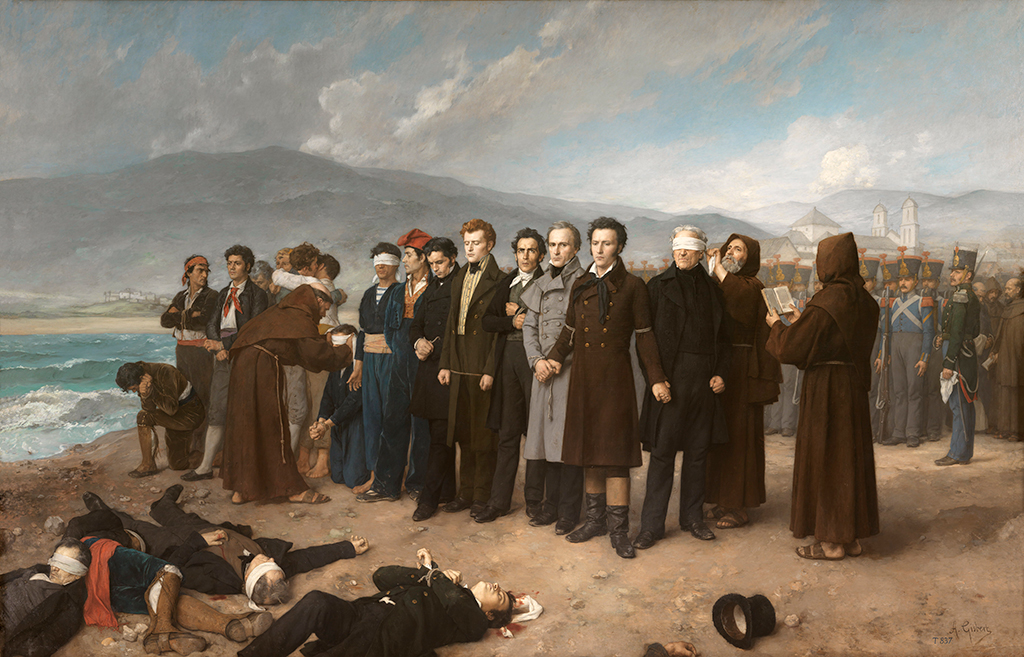
Execution of Torrijos and his Companions on the Beach at Malaga
Execution of Torrijos and his Companions on the Beach at Malaga by Gisbert

Who are the people represented in the painting?

The scene happens on a beach in Málaga.

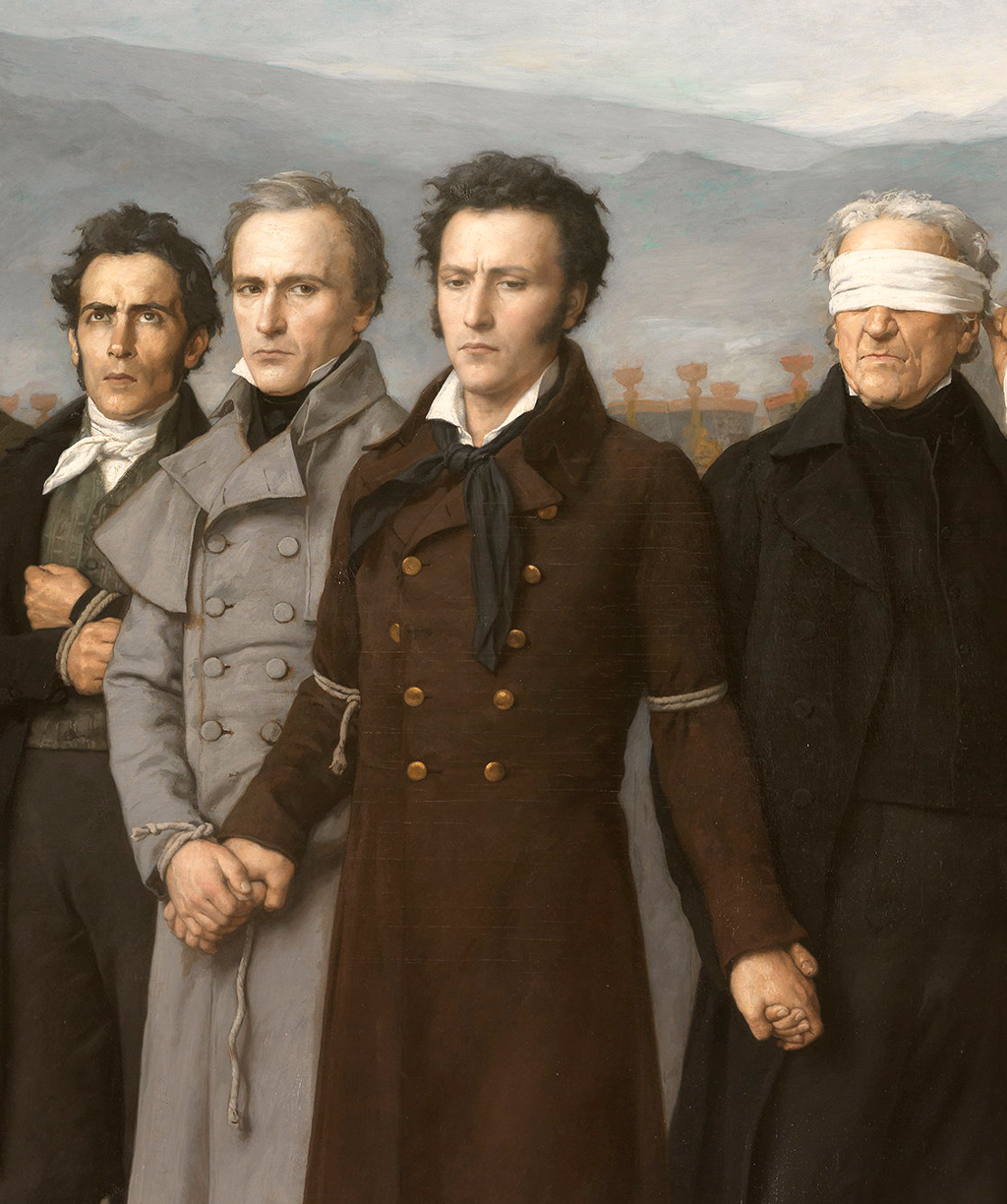
Torrijos is almost in the centre, wearing a brown coat and holding hands with 2 companions.

On the ground are several bodies of executed men.

Behind them, soldiers are ready to shoot again.

Gisbert painted individual portraits of each character, capturing their reactions before facing death.

Some men show concern, others look angry, and some embrace each other with emotion.

It took Gisbert two years to paint this picture.

Gisbert travelled to Málaga to gather information and interview the children and grandchildren of the executed men.

The information he got during this trip helped him paint each face more realistically.

The composition and arrangement of the figures make the viewer a witness to the scene.

Detail of Torrijos
Detail of Torrijos

The history of the painting

The liberal government of President Sagasta commissioned Gisbert to paint this picture as part of the Prado Museum collection.

It had to be a painting that recalled a story from the past to transmit a political message in favour of freedom and against authoritarian governments.

Authoritarian governments limit the freedoms of citizens, while liberal governments grant citizens more rights and freedoms.

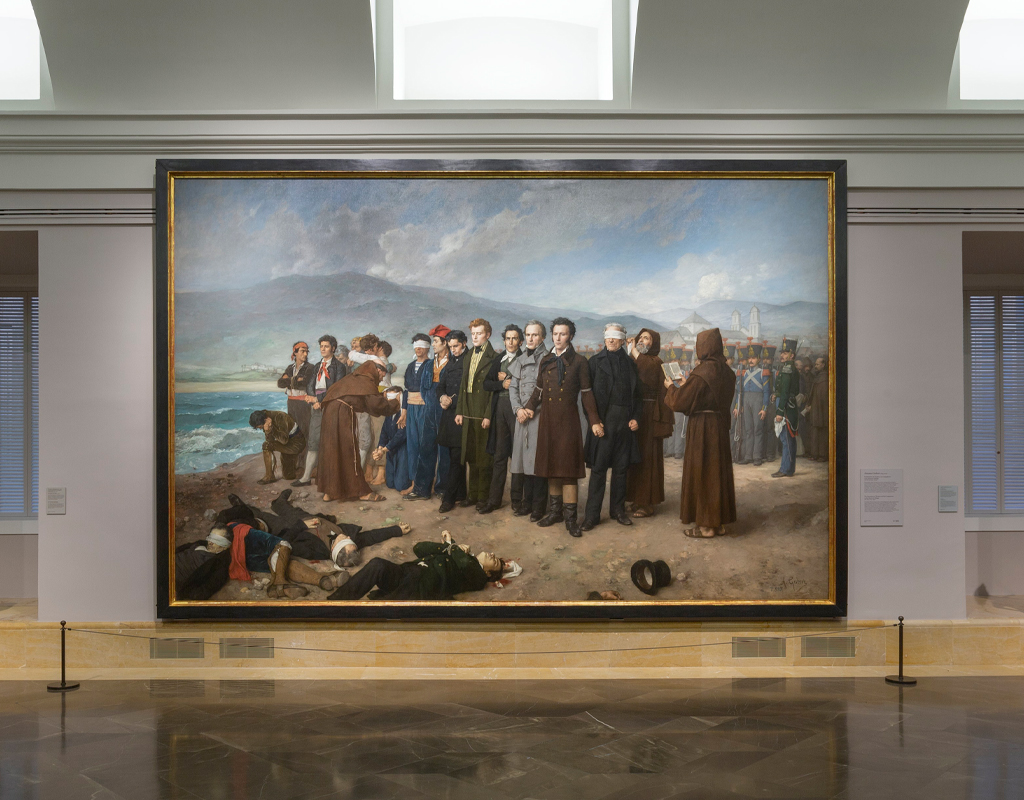
Fusilamiento de Torrijos on display at the museum
Execution of Torrijos on display at the museum
Funded by the European Union - NextGenerationEU Government of Spain - Ministry of Culture Recovery, Transformation and Resiliency Plan Museo Nacional del Prado

Funded with the National Recovery and Resilience Plan (NRPP) , Spain’s Next Generation EU financing and according to the initiatives within the component C.24.I3 Digitization and valorization of major cultural services. The project is part of Campus Prado within Accessibility and Signage: Revitalization of the Urban Environment action line and as a universal accessibility activity.

Up