formularioRDF
The itinerary <em>TITULORECORRIDO</em> has been successfully created. Now you can add in works from the Collection browser
<em>TITULOOBRA</em> added to <em>TITULORECORRIDO</em> itinerary

Velázquez artworks tour

This is the Velázquez paintings easy-to-read-tour at the Museo del Prado.

ETR (Easy to Read) icon
© Easy-to-read european logo: Inclusion Europe. More information at: Easy-to-read

Velazquez’s beginnings

Velázquez was born in Seville in 1599. 

At the age of 10, he joined the workshop of Francisco Pacheco to learn how to paint. 

Pacheco was one of the most prestigious painters in Seville.

At that time, Seville was the richest city in Spain, and many important artists lived there.

When Velázquez obtained the license to paint professionally, he opened his workshop.

Shortly after, he married the daughter of his master, Pacheco.

Velázquez focused on painting scenes in kitchens and taverns during his early years as an artist.

He paid close attention to the details of these scenes, which brought him success. 

Most of his youthful artworks are currently in collections outside of Spain.
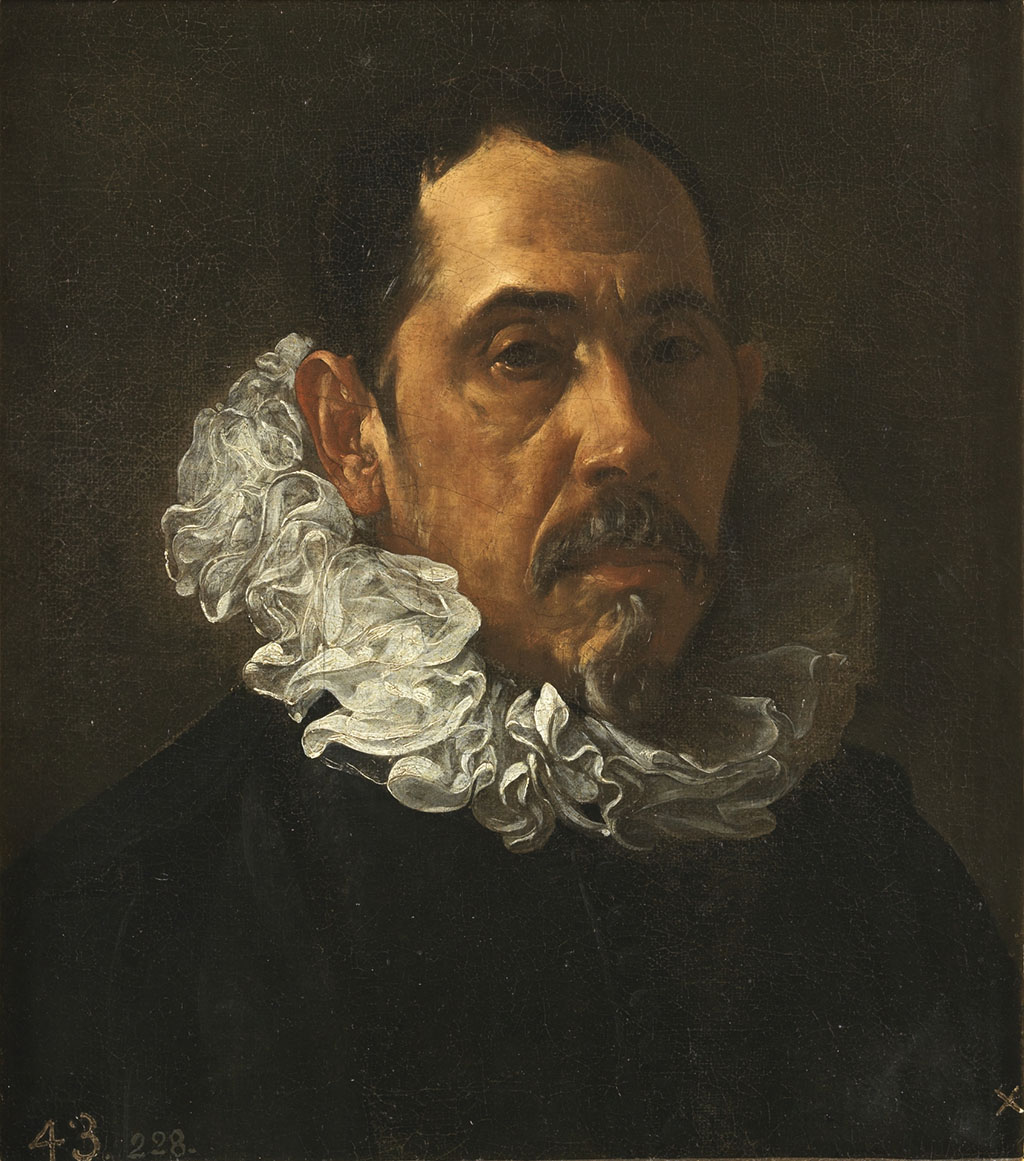
Portrait of Francisco Pacheco by Velázquez

Royal painter

When Velázquez was 24 years old, he moved to Madrid to work for King Philip the Fourth. 

The king appointed him a court painter, the royal family painter.

From that moment until he died in 1660, Velázquez painted commissions for the royal family and other court members.

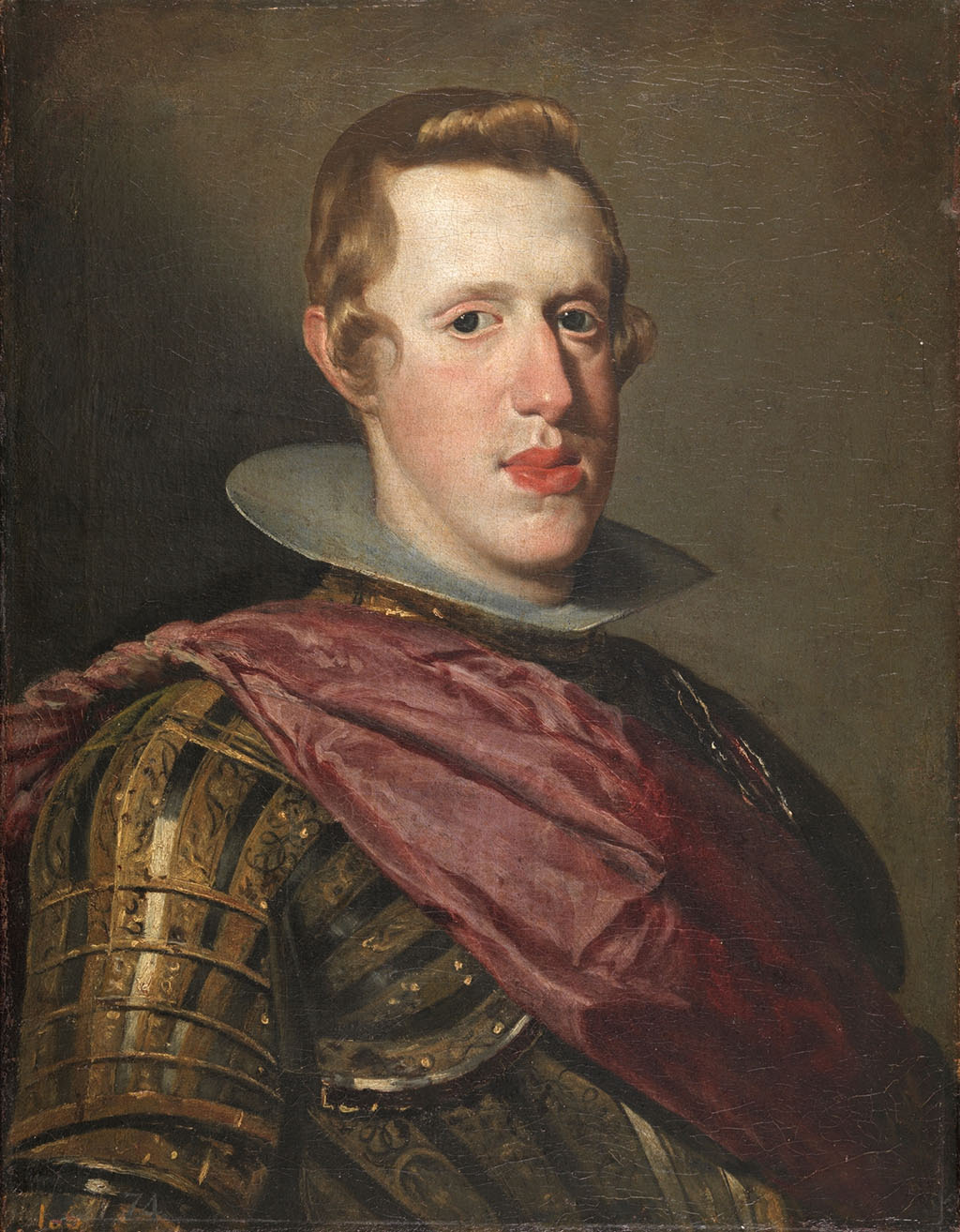
Portrait of Philip the Fourth painted by Velázquez

Learning from other painters

As the court painter, Velázquez had the opportunity to explore and study the painting collection that King Philip the Fourth had in his palaces. 

He particularly admired the work of Titian, an Italian painter.

Velázquez learned to apply colours with quick brushstrokes, almost like stains on the canvas.  

Velázquez also met the Flemish painter Peter Paul Rubens.  

Velázquez admired Rubens and learned a lot from the techniques Rubens used in his paintings.

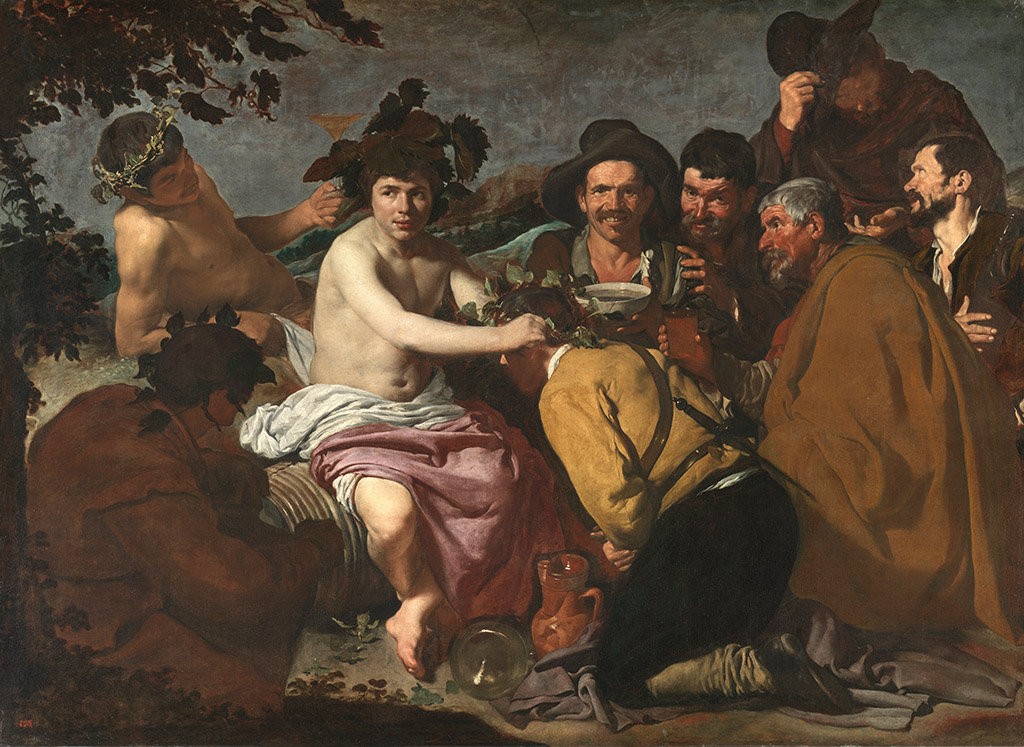
During these years, Velázquez painted his first mythology painting entitled “The Drinkers or The Triumph of Bacchus”.

Mythology is a collection of stories about gods, heroes and traditions specific to nations or cultures. 

In this painting, we can see the difference between how he painted Bacchus, the god of wine, and the realistic representation of other figures, who appeared as ordinary people. 

An ordinary person was a person who belonged to a lower class of the society.

The Drinkers or The Triumph of Bacchus by Velázquez

Trips to Italy

Shortly after, Velázquez travelled to Italy to study the works of Italian artists. 

Experts believed that Rubens advised him to make this journey.

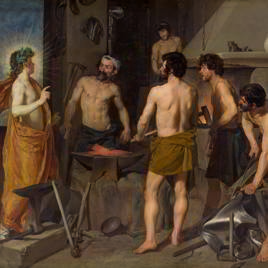
While in Rome, he painted a mythological piece entitled “Apollo in the Forge of Vulcan”.

The painting depicts realistic figures and objects and describes a mythological story. 

When Velázquez returned to Spain, he and other painters worked on decorating the new palace built by Philip the Fourth, the Buen Retiro Palace. 

In the main hall of the palace, the king commissioned paintings to various artists depicting the victories of Spain in wars.

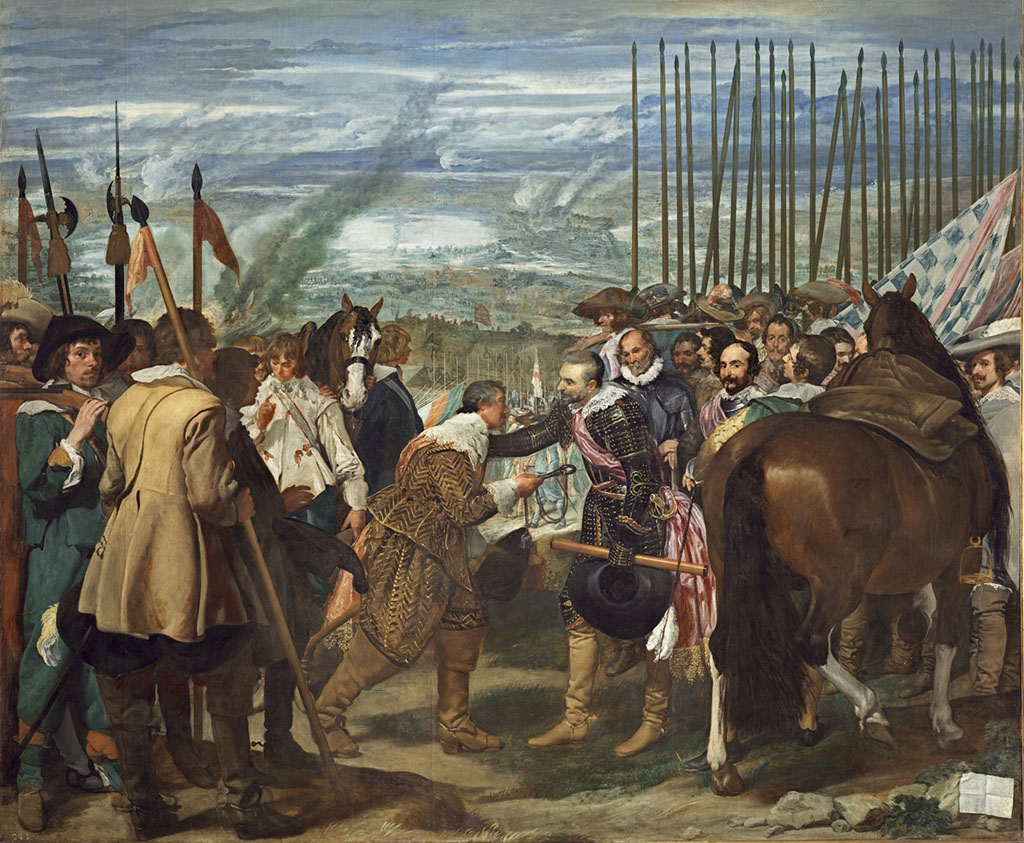
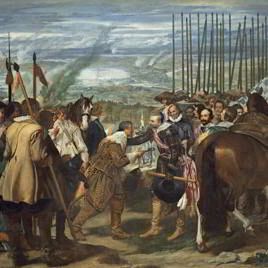
Velázquez painted the work entitled “The Surrender of Breda”.

In 1650, Velázquez travelled to Italy again, this time to buy paintings and sculptures for the collection of the king. 

He stayed in Italy for 2 years.

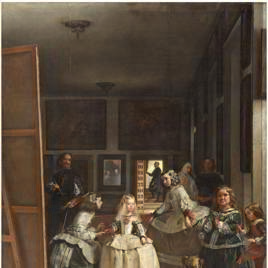
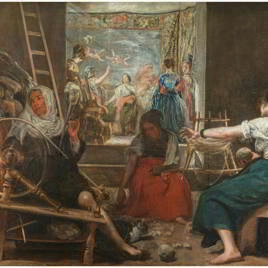
When Velázquez returned, he painted some of his most important works, such as “The Spinners or the Fable of Arachne” and “Las Meninas”.

These works are the best examples of his painting style because they invite the viewer to contemplate the relationship between reality and artistic representation.

In other words, they make us question what we see and what the painter wants us to see while observing the painting. 

Velázquez died in Madrid in 1660 at the age of 61.

The Surrender of Breda by Velázquez
Funded by the European Union - NextGenerationEU Government of Spain - Ministry of Culture Recovery, Transformation and Resiliency Plan Museo Nacional del Prado

Funded with the National Recovery and Resilience Plan (NRPP) , Spain’s Next Generation EU financing and according to the initiatives within the component C.24.I3 Digitization and valorization of major cultural services. The project is part of Campus Prado within Accessibility and Signage: Revitalization of the Urban Environment action line and as a universal accessibility activity.

Up