
Loading...
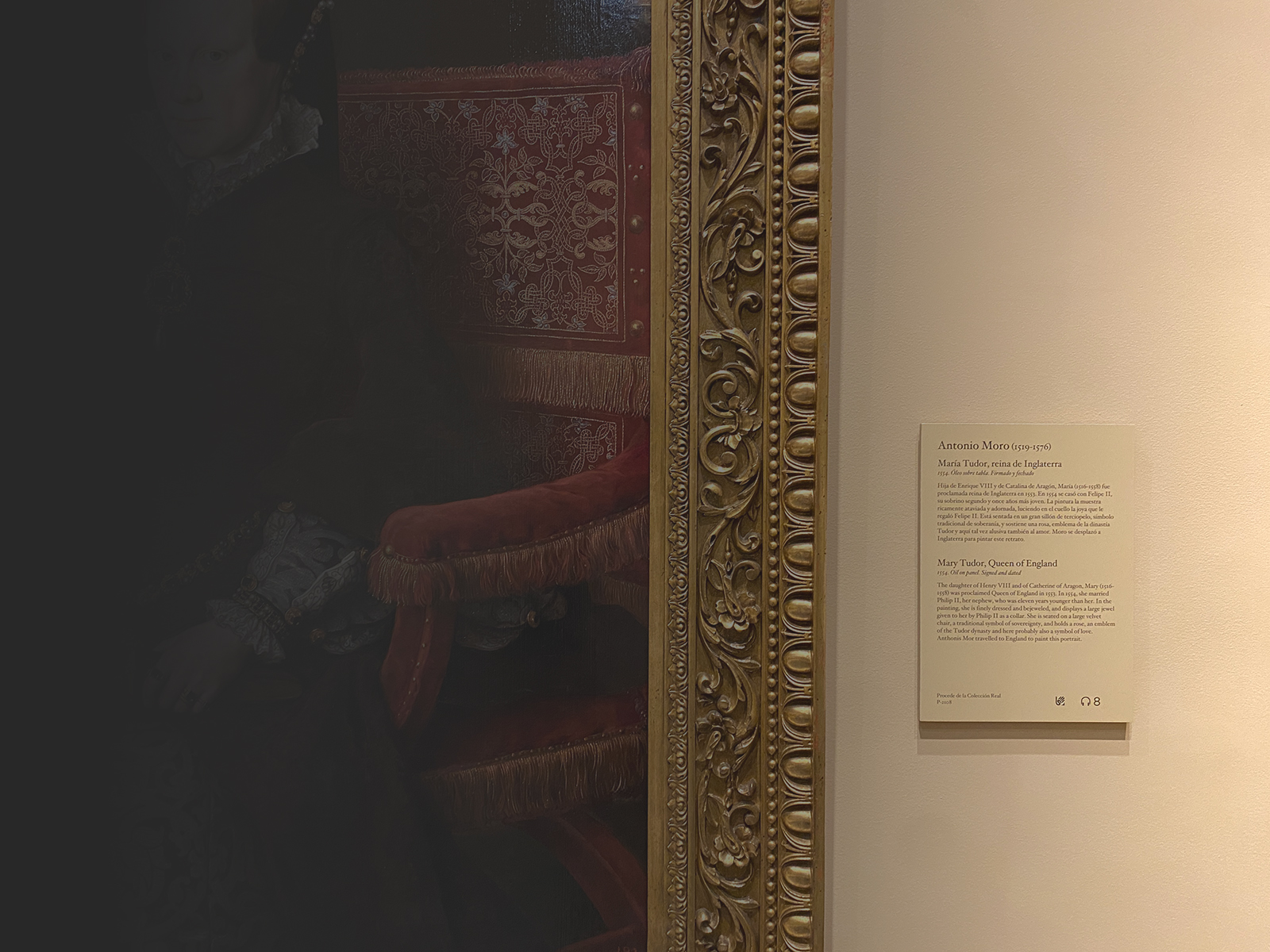
The Female Perspective labels
The Prado’s General Action Plan includes a vision of the museum’s role in society as a leading cultural institution ‘committed to all audiences, a benchmark of universal accessibility, and in social and cultural integration’. It emphasizes the need to renew ‘its exhibition discourse in line with new lines of research and the permanent quest for excellence’.
To reach these goals, there have been different initiatives like the itinerary designed for World LGTBI Day (The Other's Gaze) or the exhibitions A Tale of Two Women Painters: Sofonisba Anguissola and Lavinia Fontana and Uninvited Guests. These initiatives have enriched the museum's academic discourse with innovative approaches that project new narratives on a broader disciplinary discourse, surpassing the traditional theoretical threshold of Art History.
All these initiatives highlight the museum’s firm commitment to reviewing its discourses. To this end, current work is being done to update the content of the artwork records on the website and in the room labels.
The Female Perspective
The itinerary The Female Perspective is part of this revision of content, reaffirming the commitment to making the role of women in art history visible. In this case, all titles of works referencing female figures were reviewed, focusing on instances where women were not mentioned by their title or role but in relation to their male spouses. This information has now disappeared from the titles, changing a total of 17 artworks in the itinerary.
Change in the Label of Mary Tudor, Queen of England
The plaque of Mary Tudor, Queen of England, by Anthonis Mor, is one of the examples of the changes made to the artworks where the reference to the spouse has been erased from the title.
Anthonis Mor (1519-1576)
Mary Tudor, Queen of England, second wife of Philip II
1554. Oil on panel. Signed and dated on the left
Daughter of Henry VIII and of Catherine of Aragon, Mary was proclaimed Queen in 1553. In 1554, she married Philip II, her second nephew, who was eleven years younger than she was. However, the objectives of the union were not fulfilled when she died in 1558.
In the painting, the Queen, who is finely dressed and seated on an large velvet chair, a traditional symbol of sovereignty, holds the rose, symbol of love and emblem of Tudor dynasty, in her right hand. Although the painter shows the respect proper to her rank, he does not conceal her unattractive features and painstakingly beautifies them with his brush and the richness of his colour.
From the Royal Collection
P-2108
Anthonis Mor (1519-1576)
Mary Tudor, Queen of England
1554. Oil on panel. Signed and dated on the left
The daughter of Henry VIII and of Catherine of Aragon, Mary (1516-1558) was proclaimed Queen of England in 1553. In 1554, she married Philip II, her second nephew who was eleven years younger than her. In the painting, she is finely dressed and bejeweled, and displays a large jewel given to her by Philip II as a collar. She is seated on a large velvet chair, a traditional symbol of sovereignty, and holds a rose, an emblem of the Tudor dynasty and here probably also a symbol of love. Anthonis Mor travelled to England to paint this portrait.
From the Royal Collection
P-2108
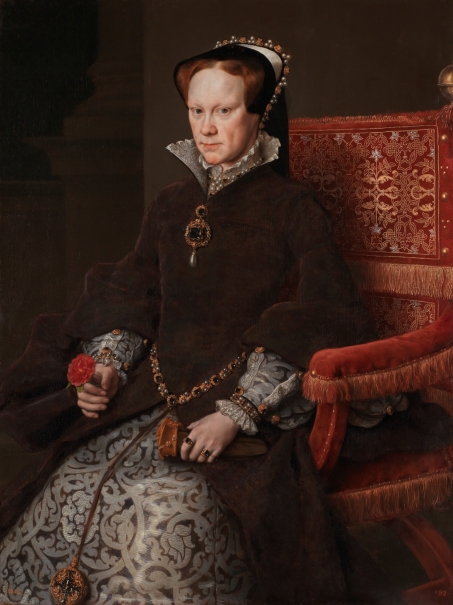
Mary Tudor
Although the title of this work recognizing her relationship with her husband Philip II has not been modified until now, Mary Tudor ruled England from 1553 until 1558. She was the first female sovereign in England in her own right, excluding the controversial reigns of Maud I and Lady Jane Grey. In 1554 she married Prince Philip of Spain (Philip II) becoming Queen Consort of the Spanish Monarchy upon her husband's ascension to the throne in 1556, although she never visited Spain.
Other Changes in Labels and Web Entries
The Museo del Prado, following the reform of Article 49 of the Spanish Constitution, which eliminated the term "diminished" and replaced it with "persons with disabilities," carried out a review of all its texts, both on web entries and in labels and titles. Thus, before the new Constitution came into effect on February 17, 2024, the Museo del Prado had already begun the revisions and corrections.
Example of Changes in the Labels Related to Article 49
Diego Velázquez (1599-1660)
Pablo de Valladolid
ca. 1635. Oil on canvas
Pablo de Valladolid served at court from at least the 1630s until his death in 1648. He was among the group of servants known at that time as “men of pleasure”, including dwarves, “madmen”, buffoons, etc. To judge from Velázquez’s depiction, this sitter mist have had dramatic gifts, as he is shown declaiming or acting a role.
From the Royal Collection
P-1198
Diego Velázquez (1599-1660)
Pablo de Valladolid
ca. 1635. Oil on canvas
Pablo de Valladolid served at court from at least the 1630s until his death in 1648. He was among the group of servants known at that time as “gentes de placer” (entertainers), who played an important role in the court social structure. To judge from Velázquez’s depiction, this sitter must have had dramatic gifts, as he is shown declaiming or acting a role.
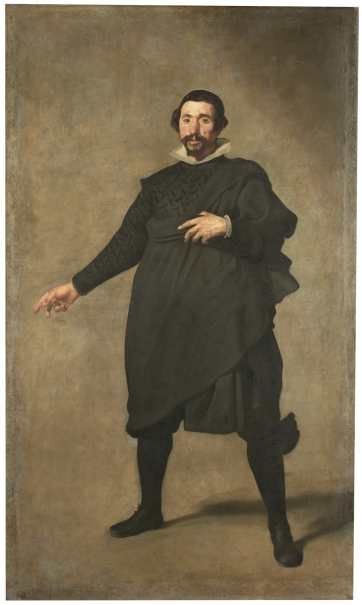
Changes in Physical References
The Museo del Prado has reviewed nearly 27,000 entries for paintings on its website and about 1,800 labels for pieces displayed in its galleries to eliminate the term “diminished” as well as certain physical references to the characters in its artworks. The first changes were made to eight labels that did not conform to the constitutional change.
For example, in the painting Prince Don Carlos by Alonso Sánchez Coello, where it previously stated “to conceal the deformity of his back,” it now simply reads: “to conceal his back.” In this case, a reference to a physical aspect that did not provide further information about the subject has been removed. In the work Brígida del Río, the Bearded Lady of Peñaranda by Juan Sánchez Cotán, where it said: “works that reflect a para-scientific and morbid interest of her abnormal or deviant nature…,” it now reads: “works that reflect a para-scientific interest of her nature”.
The Term “Dwarf” and “Historical” Titles
The term “dwarf” and its derivatives illustrate the complexity of the task. When this word was typed into the museum’s search engine, it initially returned 61 results solely from paintings displayed in its galleries or stored in its warehouses.
In some cases, the term was included in the title of the work, which cannot be modified if it is “historical.” For example, El maricón de la tía Gila, an engraving whose name was handwritten by Goya himself.
In other cases, changes have been made like in Prince Philip and the dwarf Miguel Soplillo and Portrait of a Dwarf. In the first case, the adjective referring to Miguel Soplillo has been removed; in the second, it has been replaced with “buffoon.” In El Niño de Vallecas by Velázquez, the change has been made in the label text. Where it previously stated: “He suffered from dwarfism and ‘cretinism with oligophrenia’”, it now says: “He suffered from achondroplasia and ‘cretinism with oligophrenia’”.