
Loading...
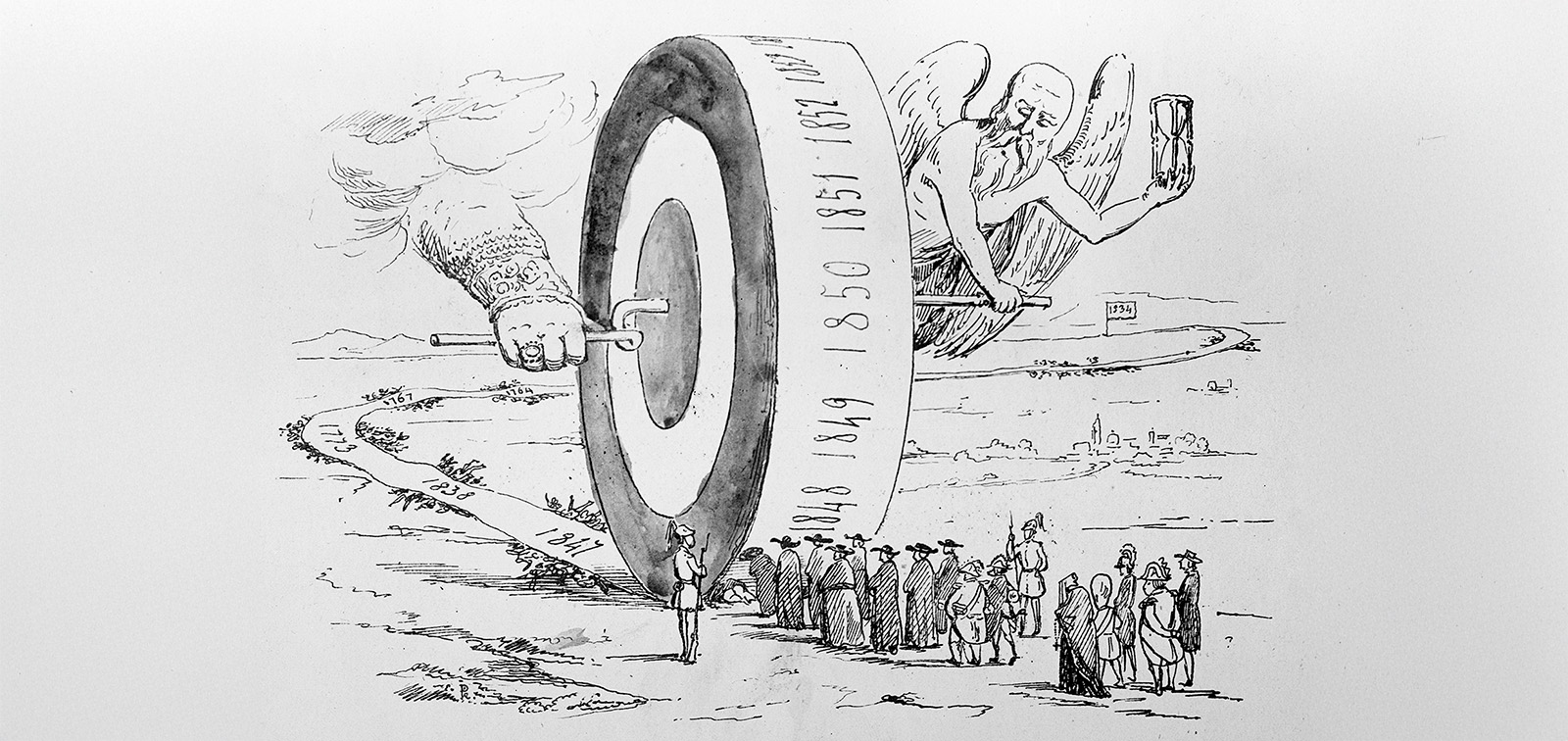
Detail of the anonymous lithograph Il Tempo favorisce // L'ineluttabile destino dei Gesuiti [Time On Our Side/ The Jesuits’ Inevitable Fate] 1848.Venice, Fondazione Musei Civici, Gabinetto dei disegni e delle stampe, inv. St. P.D. 3692/17; photo Fiorentini © Photo Archive - Fondazione Musei Civici di Venezia.
Cátedra del Prado Colloquium 2025.
The Shape of Time: Aspects of Temporality
Tuesday, 18 th november 2025
Academic Chair
Cátedra del Prado Colloquium 2025.
Cátedra del Prado Colloquium 2025.
The Shape of Time: Aspects of Temporality
Tuesday, 18 th november 2025
Historically, time has been measured by multiple means: sliding sand, trickling water, tick-tocking clocks. As of the Middle Ages, these innovations meant that Time’s cyclical structures were slowly superseded by new, linear ones. By focusing on the creative potential of Time’s different modi, the colloquium seeks to draw attention to their heterogenous temporalities in art. And this, from diverse points of view: cosmic-mythological, historical-analytical, and conceptual alike.
RDF
- Sponsored by:
-

- Sign up
- Please fill in the online form available on this website between September 11 and November 11, 2025
- Schedule
- The schedule, as it appears in the program, is in CEST
- Recipients
- University students, researchers, professionals and general public
- Location
- Auditorium, Museo Nacional del Prado
- Price
- Free of charge
- Direction
- Astrit Schmidt-Burkhardt
- Organization
- Museo Nacional del Prado
- Face-to-face and remote attendance
- Face-to-face attendance is possible, subject to available seating. Remote attendance is possible; a Zoom link will be provided to registered attendees. Desired attendance mode must be indicated when registering.
- Language
- English and Spanish with simultaneous translation into both languages
Program
2025
- Nov
- 18
09.30 hAccreditations
10.00 hWelcome
10.15 hArchitecture in four times
Eduardo Prieto (Universidad Politécnica de Madrid)
Vitruvius crystallized the aspiration of buildings to endure through the concept of firmitas, but time has always been present in architecture, at least since the moment humans first sought shelter in nature and learned, through their buildings, to leave a memory of their time on earth. The modes of time in architecture are diverse and complex, and this lecture will attempt to briefly explain them through four concepts that could be associated with more or less mythological personifications. On the one hand, the Time of Cronus, “the god of the spaces of time,” which alludes to the ways in which architectural historians have represented the genealogical evolution of buildings, architects, movements, or styles through diagrams. On the other hand, the Time of Mnemosyne, mother of the nine muses, which describes architecture as a repository of human memory. Alongside them, the Time of Entropy, a contemporary divinity, which points to the future that erodes matter and compels our constructions to transcend themselves in a disturbing aesthetic of destruction. And finally (like the friendly face of these temporal personifications), the Time of Zephyr, which speaks of architecture as an imago mundi, as an atmospheric resonator and an environment we inhabit in search of certain essential pleasures.
10.45 hRevolutionary Architecture between cosmic and Republican time
Arkadij Koscheew (Freie Universität Berlin)
The utopian architecture of 18th century French architects Claude-Nicolas Ledoux and Etienne-Louis Boullée, in whose visual language the timelessness and sublimity of human existence crystallize, has been widely discussed under the term “Revolutionary Architecture.” In particular, their designs for architectures of death, such as cenotaphs and cemeteries, have drawn attention and have often been regarded as expressions of a Newtonian cosmology. Revolutionary Architecture between Cosmic and Republican time questions this interpretation by showing that, embedded in the depictions of the buildings in question, lies a cosmological understanding that is closer to that of René Descartes than to the theories of Isaac Newton. Furthermore, the work of Claude-Nicolas Ledoux and Etienne-Louis Boullée will be discussed in relation to the endeavors of measuring time and space in light of the stratification of the république after 1789.
11.15 hThe Paths of Time. Reflections on the Chrono-cartography of History.
Astrit Schmidt-Burkhardt (Freie Universität Berlin)
History flows, as a multi-linear process, in one sole direction. An intuitive image, one that allows to faithfully render the idea of a temporal directional passing, is that of the path. In temporal maps, it graphically traces the sequence (be it in a straight or in a stratified or in a sinuous line) of events of the past. Processes may be conceived as such – indeed, sometimes, in their very nexuses. In order to make understanding possible, the great distances down the path are divided into tranches (times, epochs, eras…). This conference addresses two different types of historical paths of the 19th and 20th centuries: river ways and country lanes. On the basis of a free reformulation of the Kantian maxim “thoughts without content are empty, intuitions without concepts are blind,” I shall establish the correspondence between those chronological maps with concepts of the temporary as signified by Niklas Luhman, philosopher of social science and systems theorist. And this, for one reason: because intuitive representations and theoretical concepts are linked by a relationship which, while based on deep tension is, nevertheless, most clarifying!
11.45 hAnalyrical Writing and the Spatialization of Time.
Henar Rivière (Universidad Complutense de Madrid)
A fascination with time was a driving force behind the intermedia artistic experimentation that nurtured actionist, performative, and conceptual practices from the 1960s through the 1980s. Working under various banners such as Fluxus, Zaj, and Mail Art, among others, the exponents of this experimentation also showed a widespread tendency to use writing as an artistic medium. This lecture aims to explore how they employed formats specific to writing to develop complex aesthetic reflections on time: books, letters, diagrams, or scores, where temporal notation unfolds across space. That space is, first, the physical space of writing itself—the page, the notebook, the book—following the path opened by Mallarmé’s Un coup de dés. But it’s also the broader space of artistic practice as a catalyst for collective processes, at a time when global connectivity still seemed to offer the possibility of imagining alternatives to the geopolitical status quo.
12.15 hDebate
Activity
Director. Astrit Schmidt-Burkhardt
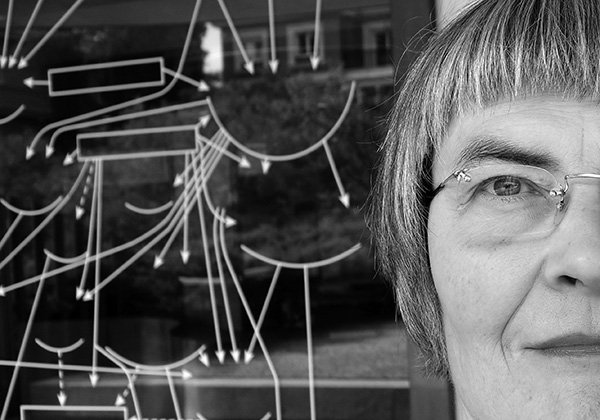
Astrit Schmidt-Burkhardt
Astrit Schmidt-Burkhardt is a historian of images. She teaches post-Enlightenment visual studies and art history in the capacity of adjunct professor at the Freie Universität Berlin. She also works as an appraiser, curator, and editor. She researches and publishes on the avant-garde and the diagrammatic, on the eye and the pseudonym. Book publications: Stammbäume der Kunst. Zur Genealogie der Avantgarde (Berlin, 2005); Maciunas' Learning Machines: From Art History to a Chronology of Fluxus. Second revised and enlarged edition (Vienna, New York, 2011); Die Kunst der Diagrammatik. Perspektiven eines neuen bildwissenschaftlichen Paradigmas. Second revised and enlarged edition (Bielefeld, 2017); Die Chronologiemaschine. Barbeu-Dubourgs Aufbruch in die historiografische Moderne (Berlin 2022); Die Augen der Avantgarde. Von der Macht der Blicke in der Moderne, Bielefeld 2024.
Eduardo Prieto
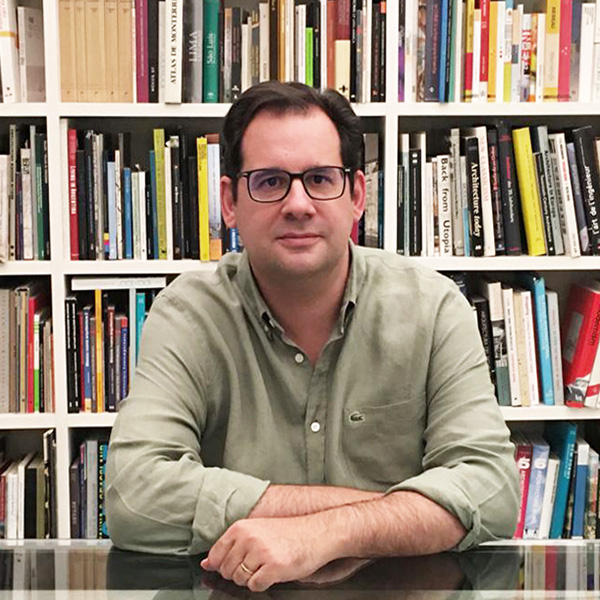
Eduardo Prieto
Eduardo Prieto holds a Ph.D. in International Architecture and received an Extraordinary Doctorate Award from the Polytechnic University of Madrid. He also holds a degree in Philosophy and a D.A. in Aesthetics and Theory of the Arts, and in Moral and Political Philosophy. He is currently a professor at the Higher Technical School of Architecture in Madrid, where he teaches History of Architecture and the international course “Architecture and Environment.” He has been a visiting scholar at Harvard University. He is director of the master’s program “Architecture and Contemporary Culture”; he has lectured at institutions such as the Museo Nacional del Prado, the Juan March Foundation, and the César Manrique Foundation. and has written, among others, the books Historia medioambiental de la arquitectura (2019, 2022, 2023, 2024), Historia de la Historia de la arquitectura (2024), Los laberintos del aire (2023), La vida de la materia (2018, 2025) and La ley del reloj (2016). He works as an architecture critic for Arquitectura Viva, El Mundo and Revista de Libros, among other publications, and has received national and international awards for his built work.
Arkadij Koscheew
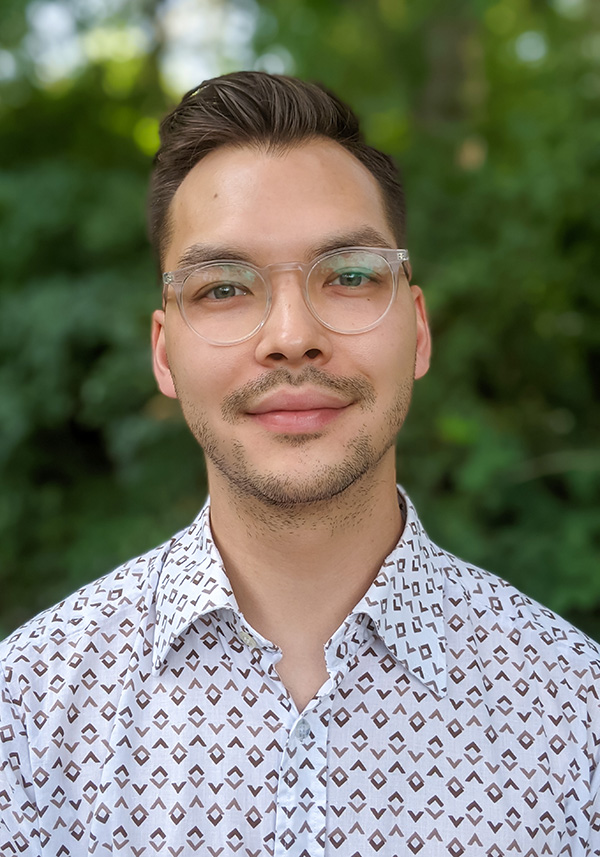
Arkadij Koscheew
Arkadij Koscheew is a historian of culture and art currently enrolled in the MA program Art History in a Global Context at Freie Universität Berlin. He received his B.A. in Cultural Theory and History from Humboldt-Universität zu Berlin. His research interests include time-based art after 1945 and the history of architecture. His writings have been published by Phaidon Press (Vitamin V: Video and the Moving Image in Contemporary Art, 2025), Verlag der Buchhandlung Walther und Franz König (most recently: Realities Left Vacant, catalogue of exhibitions, 2024; Lost in America, catalogue of exhibitions, 2021) and the Department of History at Humboldt-Universität zu Berlin (Diagrammatik der Drohne, monograph, 2021). Koscheew has been a curator at Neuer Berliner Kunstverein (n.b.k.) since 2019, where he has curated exhibitions by artists such as YOUNG-HAE CHANG HEAVY INDUSTRIES, Dara Birnbaum, and Alexandra Bachzetsis and produced exhibitions by Hans Haacke, Joan Jonas, and Hito Steyerl, among others. In 2021–2022, he was the inaugural Curatorial Fellow at the Akademie der Künste, Berlin. In 2025, Koscheew is the acting Head of the Video-Forum at n.b.k.
Henar Rivière
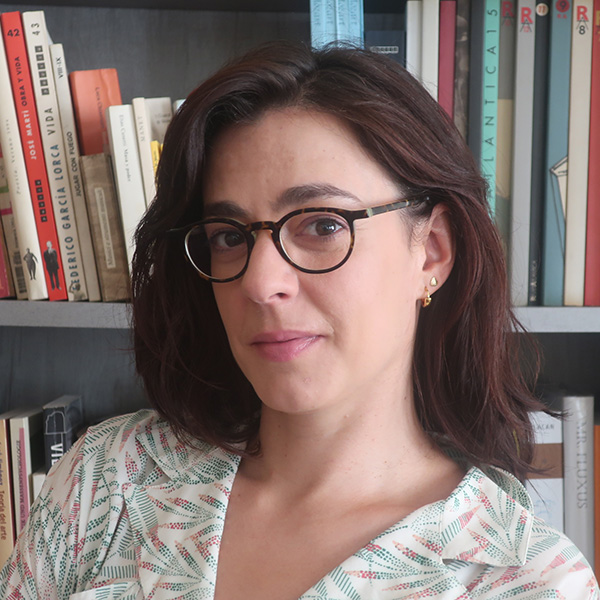
Henar Rivière
Henar Rivière holds a PhD in Contemporary Art History and is Assistant Professor at the Complutense University of Madrid. Together with Rosa Benéitez, she leads the research project ESCON — Escrituras en contacto. Redes de escritura intermedia en la era de la globalización analógica (1961–1991), funded by the 2024 Knowledge Generation Projects call of the Spanish Ministry of Science and Innovation. She was Head of Research and Projects at the Lafuente Archive (Santander), where she developed the project OBASA and Artpool: Collecting, Connecting, Activating. The Active Archive as a Transcultural Alternative in the Global Context (2020–2022). She was recently a visiting researcher at the University of Bremen, the Weißensee Academy of Art Berlin, and the Centre for Artists’ Publications at the Weserburg Museum of Modern Art in Bremen, and previously held a postdoctoral internship at the Getty Research Institute in Los Angeles. Her research focuses on artistic practices that emerged from the 1960s onward in the context of intermedia art, with particular emphasis on performance art and experimental writing, as well as on the international networks of artists that developed around these practices, such as Fluxus, Zaj, and Mail Art.