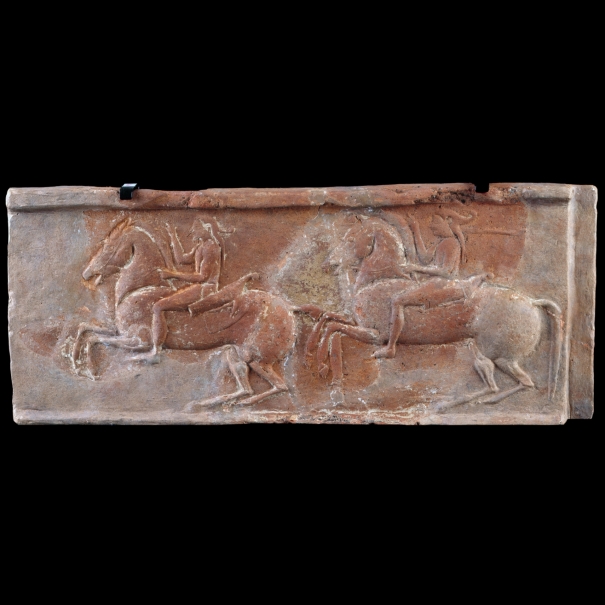
Frieze with Two Riders Racing
500 a.C. - 475 a.C.. Terracotta.Not on display
Panel from an Italian-Etruscan temple. This piece would have covered the temple’s horizontal wooden wall. As many as one hundred identical reliefs have been found at some locations in Etruria, where they formed friezes up to 60 meters in length. A lack of exact parallels makes it impossible to identify the present plaque’s original location. Made from a single mold, the two figures are represented in the same manner. Some details clearly differ, such as the harness, the quiver with bow and arrows by the rider’s thigh and the skirt tied at his hips. The rider’s long trousers, shoes and tunic were painted and have not survived. The riders, with their caps and long hair follow late-archaic style and iconography while the horses already correspond to the classical equine typology from the first quarter of the fifth century B.C.E., marked by considerable volume.