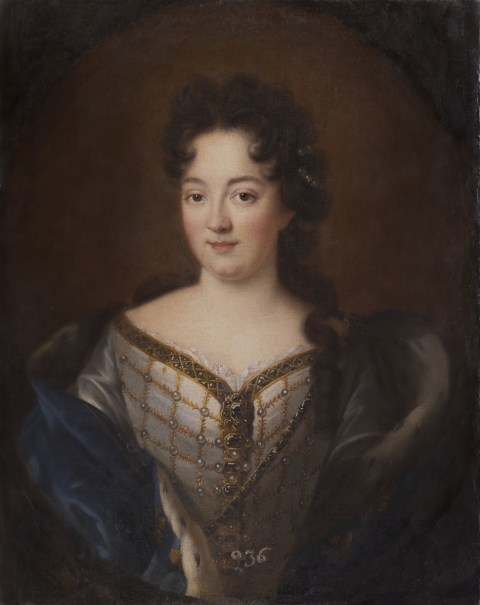
Maria Anna Victoria of Bavaria
XVIII century. Oil on canvas.On display elsewhere
The subject of the portrait is Maria Anna Victoria of Bavaria, the Grand Dauphine, identified by E. Puerto Mendoza on the basis of a replica identical to the Prado painting, which is held at the Alte Pinakothek in Munich (n. 7553) and attributed to the French painter François de Troy. The same author has suggested that this painting formed part of a collection of portraits assembled by Marie Louise d’Orléans (1662–1689), the first wife of Charles II, which would later become part of the Royal Collection. Some of these paintings must have adorned the Queen’s Gallery in the Alcázar, a ceremonial space where the queen launched a decorative and iconographic programme to celebrate her dynasty. Others would have been smaller portraits of relatives, generally busts, which the sovereign would have received as gifts from them and which would have adorned her private rooms.
The 1689 inventory of the Queen’s possessions states that in the new upper dressing room there were: “107 small, square and round fan-shaped paintings and portraits of various members of the royal families of France and elsewhere, with gilded frames”. The inventory also records the existence of other bust or half-length portraits, in square or oval formats. This portrait could be one of them.
Puerto Mendoza, Eduardo, Una serie de retratos de escuela francesa del Museo del Prado en relación con la colección de María Luisa de Orleans: sugerencias y precisiones. Philostrato. Revista de Historia y Arte, 2018, p.5-32 [25]