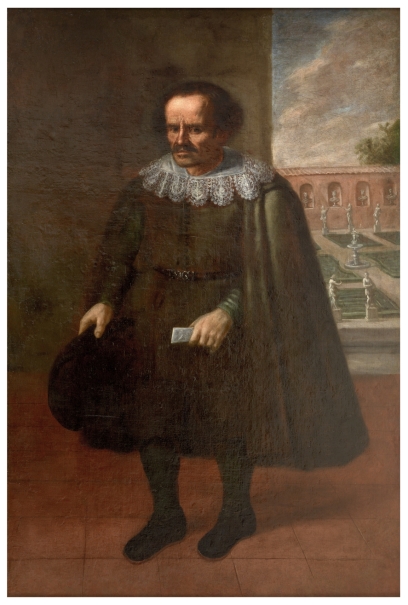
The dwarf Juan de Portilla (?)
Second half of the XVII century. Oil on canvas.Not on display
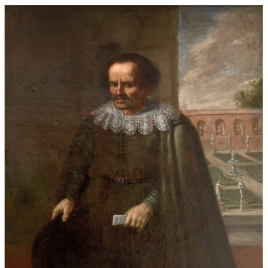
The identification of the sitter is based solely on the reading of the inscription that appears on the paper or petition that he holds in his left hand. At present the inscription only reads with some clarity: .uan...tillo. This individual should perhaps not be thought of as one of those palace jesters, but rather as another employee who, albeit burdened with his physical limitations, carried out a specific task in a specific royal residence. The anonymous author of this portrait gave special importance to the background, depicting a garden filled with statues and fountains and bordered by a low wall decorated with busts in their niches. This may be an allusion to the fact that the sitter frequented this place, either because he worked there or lived there, although it could also have been a simple pictorial resource with no special meaning.
It is difficult to say exactly what garden is being evoked. If it were not an invention of the painter, it might allude to the so-called Garden of the Emperors of the disappeared Alcazar of Madrid. It could also refer to the garden with the same title in Aranjuez or even to some corner of the Casa de Campo in Madrid. The ancient identification of the character does not shed any light either. There is no known individual of his characteristics with that name. The ending of his supposed surname (illo) could actually be a diminutive. This type of affectionate diminutive was commonly used to refer to dwarfs (Estabaillo, Miguelillo, Sebastianillo) and other madmen and scoundrels (Velasquillo, Pablillos, Juanillo), even if they were not of short stature.
The dwarf bears an unpleasant countenance, a baleful look, and a grim expression. His clumsy figure wears a long-suffering green cloth suit and cape, his only distinguishing element being the lace collar of the so-called Spanish points.
Urrea, Jesús, Pintores del reinado de Felipe IV, Madrid; [Pamplona], Museo del PradoCaja de Ahorros de Navarra, 1994, p.84