Vase
1670 - 1680. Oil on canvas.Not on display
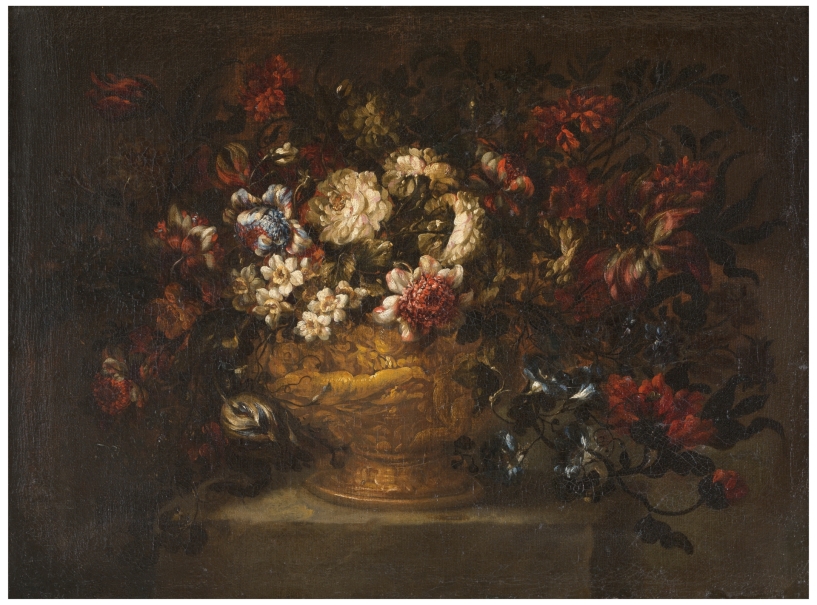
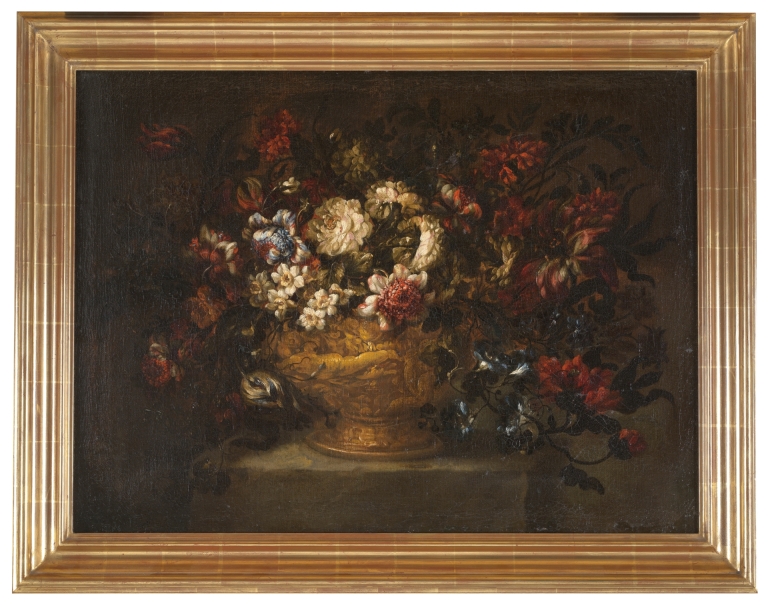
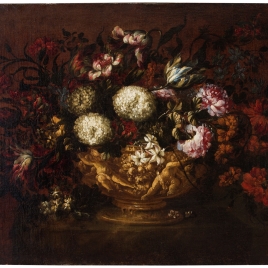
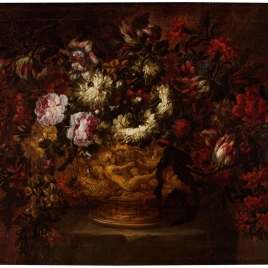
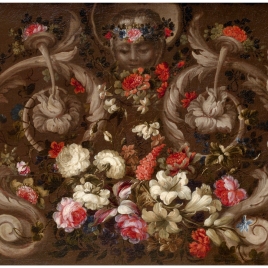
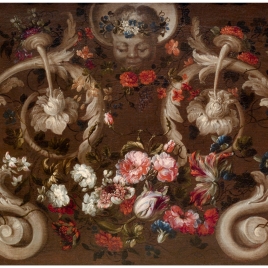
This work is part of a series of five other paintings (P001054, P001055, P004042, P005313 and P005314). They were brought from the convent of San Felipe el Real, Madrid, and thence transferred to the Convent of La Trinidad. These vases must have originally been viewed as images of the natural world that lifted the spirits of its beholders in praise of the Creator.
Judging by their style and technique, this painting and its companions are outstanding examples of De la Corte´s later work. The bowls are filled with dense bouquets, whose flowers occupy the pictorial field in the "horror vacui" style characteristic of De la Corte´s paintings. The abundance of flower varieties and their vibrancy are also typical qualities of this artist´s works. Gabriel de la Corte followed the conventions of the "chiaroscuro" technique, concentrating the light-coloured flowers in the centre of the composition as a chromatic stimulus for the viewer. Meanwhile, he relegated the darker tones to the edges of the bouquet. However, the style that these paintings use is entirely his own. For all the paintings in the series, De la Corte used a relatively thick, open-weave canvas, which was his preferred medium. Although the works were lined in the 19th century, the vigorously worked, painterly surface, which was characteristic of his style, is still visible. Thanks to his ingenious technique of wet-on-wet painting, he conveys the appearance of a wide range of tones, and some of the colour combinations show considerable chromatic subtlety. While the artist modelled most of the flowers with dense pigmented brushtrokes, he created the petals of the tulips and roses with much finer, transparent glazes. Thanks to his usual confident, spontaneous, and free brushstrokes, De la Corte is able to convey the exciting sensation of the freshness of flowers in these paintings.
Flores españolas del Siglo de Oro: la pintura de flores en la España del siglo XVII, Madrid, Fundación Amigos del Museo del Prado, 2002, p.142