Colart de Laon
?, fl. 1377 - ?, fl. 1411Based in Paris between 1377 and August 1411, the painter Colart de Laon died at some point before May 1417. In letters of remission dated January 1408, granted in view of his long and faithful services to the royal family, he was described as very old. He worked for Philip the Bold, Duke of Burgundy, his son John the Fearless, Philip’s nephews Charles VI and Louis, Duke of Orléans, Charles’s wife Queen Isabella and Louis’s son. He or one of his ancestors probably came from Laon, 138 kilometres north east of Paris.
Colart was first mentioned in 1377, when he was paid for work done for Philip the Bold. In Paris on 12 August 1391 he was one of twenty-five artists present when new statutes were promulgated to regulate the activities of the painters and sculptors of Paris. From that year onwards he was described as ‘painter and personal attendant’ to both the king and his brother Louis of Orléans. On one occasion in 1404 Colart was described as a ‘merchant returning to Paris’. Most of his documented work was ephemeral: he painted litters, chariots, shields and flags to be used at tournaments and funeral services and ‘other things befitting his mastery’. However, in April 1396 he created the wooden panel above the altar in the Duke of Orléans’s chapel beside the church of the Celestine monastery in Paris. The work depicted a Crucifixion with Mary and Saint John topped by a Trinity. Later in 1396, Colart was paid for ‘several large panels’ made for Guy de la Tremoille and taken to Chartres. In 1397, he painted a “Crucifixion”, a “Trinity”, the “Four Evangelists” and the “Lamb of God” for the cupboard where the Queen kept her reliquaries. That same year he made the painting Saint Louis and Saint Louis of Toulouse for the head of the dauphin’s bed. In 1400 he painted for the queen on four large linen cloths cartoons for tapestries for four large rooms. A few years later, in 1406, he is known to have been working on a painting commissioned by Jean de la Cloche for the Parlement of Paris. Colart continued to work for the dukes of Burgundy: in 1409 John the Fearless paid him for decorating equipment for a tournament.10 The last documentary reference to Colart was a quittance of 20 September 1411, when he was referred to as painter and “valet de chambre” to King Charles VI and to the Duke of Orléans, by then Louis’s son Charles of Orléans.
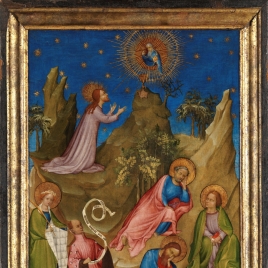
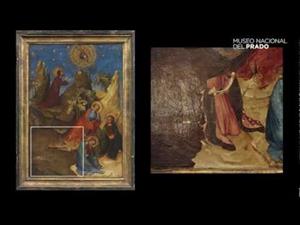
There are no known works that can be securely attributed to Colart. A few have been tentatively ascribed to him on the basis of secondary factors, such as his relationship with the Duke of Orléans and his possible origins in the town of Laon. For instance, a no longer extant mural painting in the Celestine church showing Death piercing the kneeling Duke of Orléans with his arrow was attributed to Colart simply because of its location in that church. A panel of the angel of the Annunciation with the donor Pierre de Wissant protected by the Magdalen (Laon, Musée d’Art et d’Archéologie), now considered anonymous, was ascribed to him because of its provenance from Laon (J. J. Péez Preciado,"Fifteenth-century netherlandish painting at the Museo Nacional del Prado. Catalogue raisonné", Museo del Prado, 2024, p. 346).