Jacopo Ligozzi
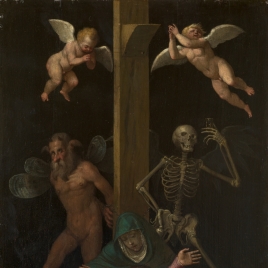
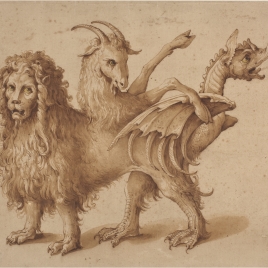
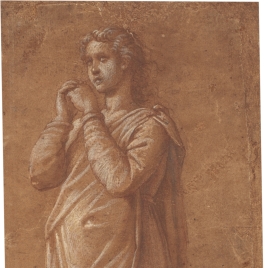
Verona, 1547 - Florence, 1627Ligozzi grew up in a family of painters and artisans in Verona, and arrived in Florence around 1577, at the invitation of Francesco I de' Medici, to work as court decorator, designing tapestries, objets and furniture. But Ligozzi also secured large-scale painting commissions, such as that to decorate the ephemeral architecture that had been erected at the Palazzo Vecchio in 1589, to celebrate the entry of Ferdinand I and Maria Christina of Lorraine. Thereafter, during the 1590s, he became increasingly active as a painter, executing altarpieces and frescoes for churches throughout Florence. Among his first public commissions were the Deposition (1591; S. Gimigniano, S. Spirito) and two historical scenes (both 1591) in the Salone dei Cinquecento in the Palazzo Vecchio. In 1600 he executed frescoed lunettes depicting the Life of St. Francis at Ognissanti. Ligozzi was interested in, and much influenced by, Northern art and this differentiated his work from that of his contemporaries; his drawings in particular demonstrate his ability as a miniaturist. It was probably as a result of this training that he was competent both as a scientific draftsman and a naturalist (Turner, N.: From Michelangelo to Annibale Carracci. A century of Italian drawings from the Prado, Art Services International-Museo Nacional del Prado, 2008, p. 144).