formularioRDF
The itinerary <em>TITULORECORRIDO</em> has been successfully created. Now you can add in works from the Collection browser
<em>TITULOOBRA</em> added to <em>TITULORECORRIDO</em> itinerary

Metabuscador

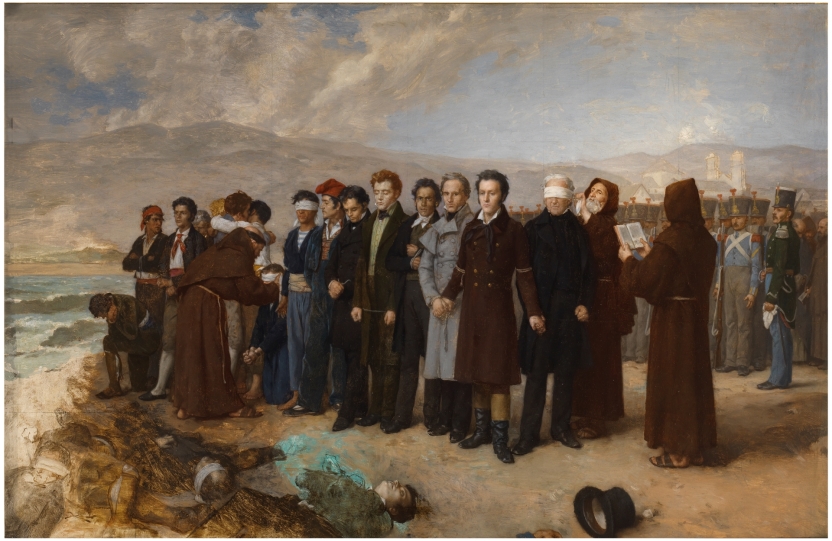
Execution of Torrijos and his Companions on the Beach at Malaga
Oil on panel. After 1888
Previously considered a preliminary study, this is in fact an unfinished, reduced-size replica of the painting and an exact reproduction of it. Gisbert had produced other smaller replicas of some of his paintings, including The Communards and The Puritans. Here he reused a panel with another composition, as the X-radiograph shows. The texture of the paint on this support, which differs from that on the canvas, allows for a new appreciation of the work’s pictorial values and of Gisbert’s meticulo
ARTWORK
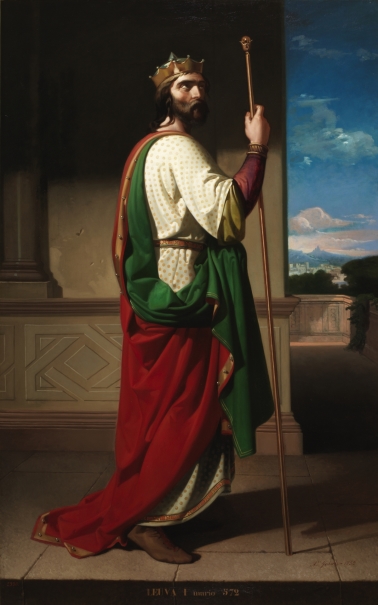
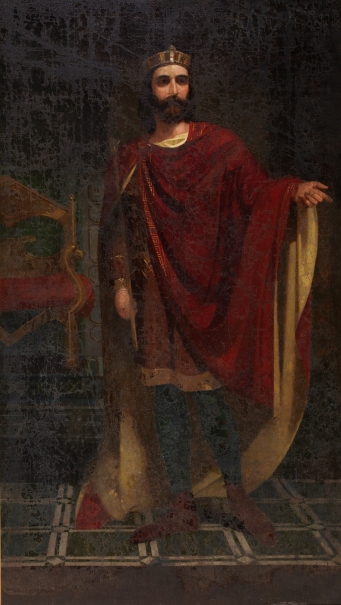
Liuva I
Oil on canvas. 1855
The Chronological Series of the Kings of Spain was a museum project planned in 1847 by José de Madrazo to adorn four of the new rooms at the Real Museo de Pinturas (Royal Museum of Paintings), then under his direction. At the height of the confrontation between the supporters of Isabella II and the Carlists, who denied the sovereign’s right to occupy the throne because she was a woman, the queen assented to the creation and display of a portrait gallery that would represent all the preced
ARTWORK
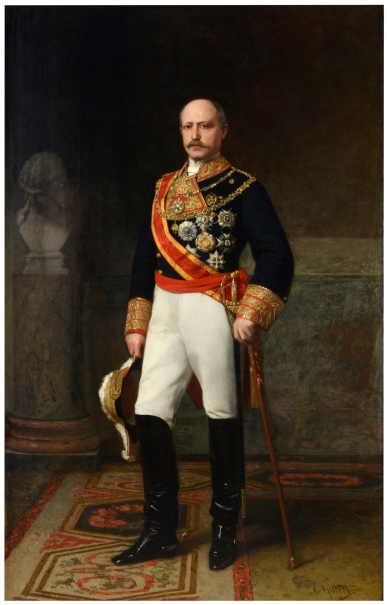
Captain General Francisco Serrano y Domínguez, 1st Duke of la Torre
Oil on canvas. 1870 - 1871
Francisco Serrano y Domínguez, I Duke of la Torre (Isla de León, San Fernando, Cádiz, 1810 - Madrid, 1885) was a soldier and politician, Protector of the Realm (1868-1874) and President of the Council of Ministers. He was the father of Concepción Serrano (P6711). He was born on Isla de León, now San Fernando (Cádiz) on 17 December 1810 and began his studies at The Colegio de Vergara. At the age of twelve, he joined the Sagunto Cavalry Regiment, and then
ARTWORK
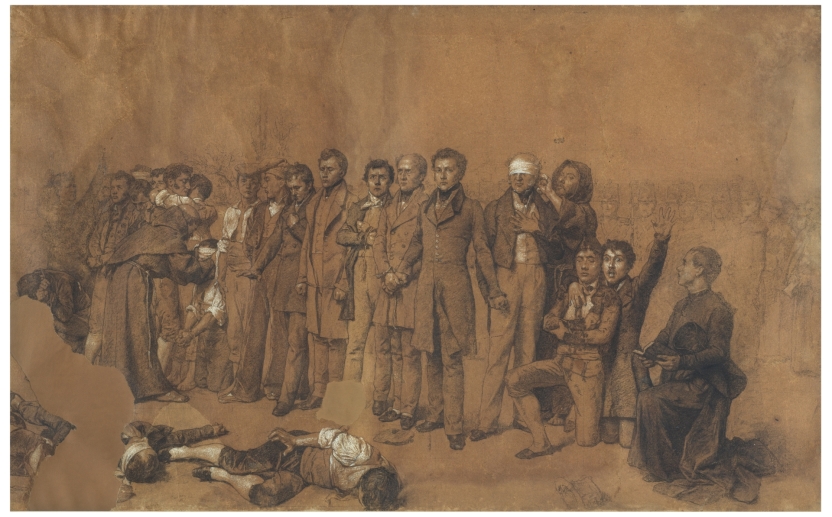
Execution of Torrijos and his Companions on the Beach at Málaga
Charcoal, Pencil, White chalk on paper. 1886 - 1887
Given the painting’s complexity and the number of figures, Gisbert studied its composition in this preliminary drawing. Its dimensions, which are larger than normal for a work of this type, allowed him to extensively work out the arrangement of the figures. If compared with the final painting, it can be seen that Gisbert eliminated the more theatrical figures (including the three on the right), modified the poses of the corpses and changed the features of the principal condemned men in order to
ARTWORK
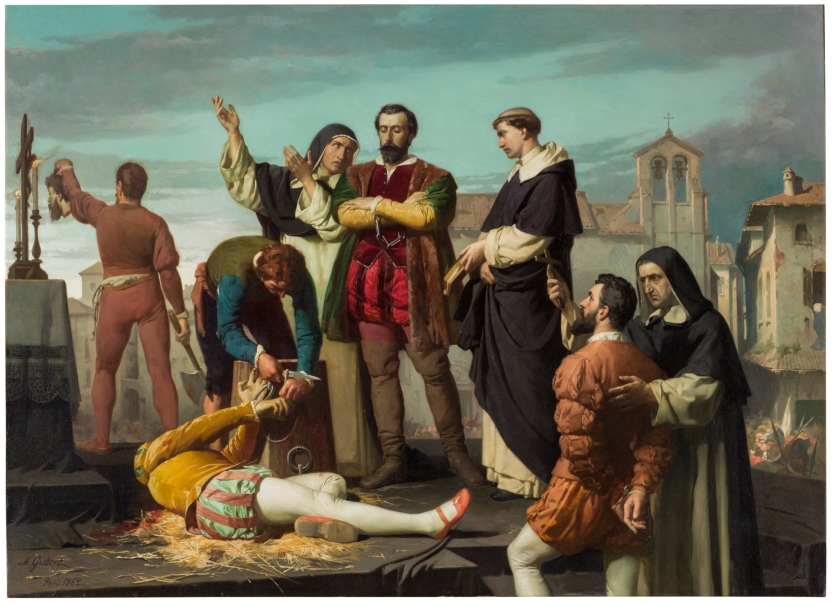
The Comuneros Padilla, Bravo and Maldonado on the Scaffold (replica)
Oil on canvas. 1862
This is a reduced-scale replica of the original in the Spanish Parliament, which is one of Spain’s most famous nineteenth-century history paintings. The subject is associated with the liberal cause and depicts the execution of the heroes of the War of the Communities of Castile after they rose up against royal power and were defeated at Villalar, Valladolid, in 1521.
ARTWORK
Recesvinto
Oil on canvas. Ca. 1854
The Chronological Series of the Kings of Spain was a museum project planned in 1847 by José de Madrazo to adorn four of the new rooms at the Real Museo de Pinturas (Royal Museum of Paintings), then under his direction. At the height of the confrontation between the supporters of Isabella II and the Carlists, who denied the sovereign’s right to occupy the throne because she was a woman, the queen assented to the creation and display of a portrait gallery that would represent all the preced
ARTWORK
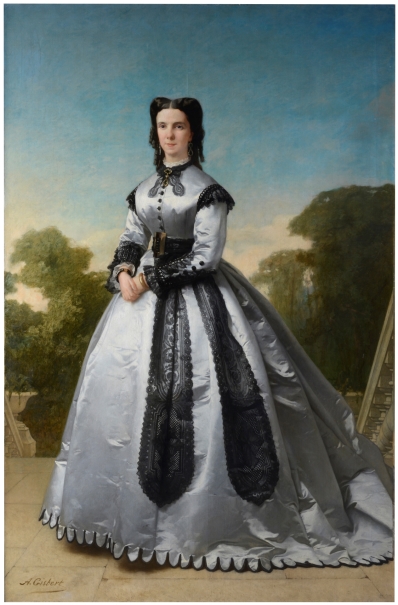
Matilde Periche
Oil on canvas. Ca. 1870
This painting is a portrait of Matilde Periche y Ducompte (Madrid, 6–9–1908), daughter of María Luisa Ducompte. She married before 1878 and lived in Aranjuez, Madrid.
ARTWORK
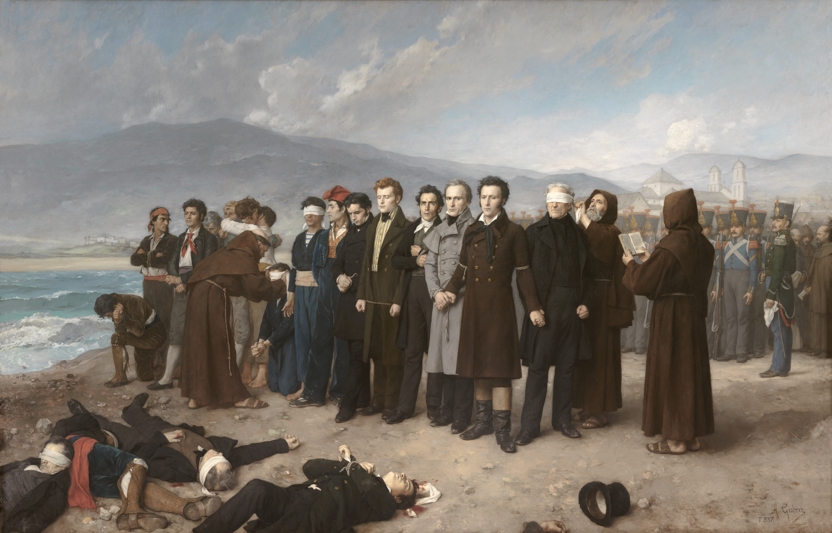
Execution of Torrijos and his Companions on the Beach at Málaga
Oil on canvas. 1888
The finest work of all Gisbert’s production, this impressive painting is also unarguably one of the most beautiful of all 19th-century Spanish history paintings. Moreover, it is one of the greatest political manifestos of all Spanish painting in defense of human freedom crushed by authoritarianism and one of the very few cases in which a clear propagandistic message was directly inspired by government officialdom. In fact, it did not enter the Museo del Prado after being shown at the National Fi
ARTWORK
Loading...

Loading...

Up