formularioRDF
The itinerary <em>TITULORECORRIDO</em> has been successfully created. Now you can add in works from the Collection browser
<em>TITULOOBRA</em> added to <em>TITULORECORRIDO</em> itinerary

Metabuscador

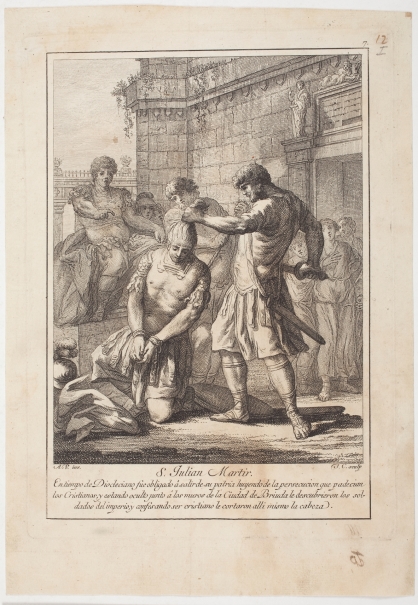
Saint Julian
Taille douce: etching and engraving on laid paper. 1779
Estampa suelta que se grabó para la serie de santos del Flos Sanctorum, desde el 1 de enero hasta el 10 de febrero, ambos inclusive; esta corresponde al día 7 de enero. Estampada sobre papel verjurado con Filigrana incompleta en forma de cabeza y patas delanteras de un caballo, probablemente papel holandés de finales del siglo XVIII. Se vendió entre agosto de 1779 y junio de 1780 en la librería de Antonio Baylo en la calle de Carretas de Madrid, cuya dirección aparece en la primera estampa de la
ARTWORK
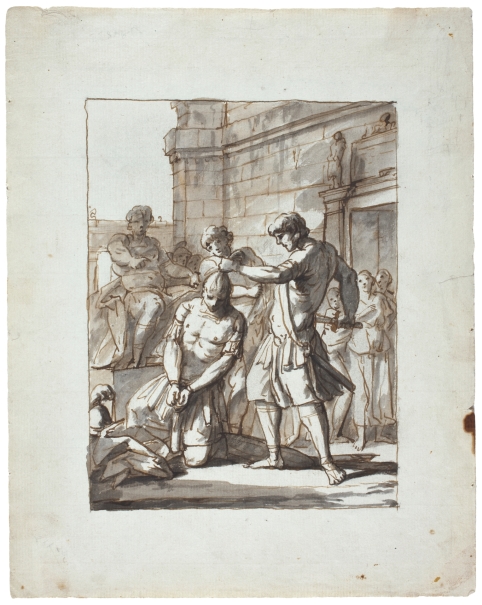
Saint Julian
Pencil ground, Wash, Grey ink, Pencil, Grey-brown ink on laid paper. 1773
La representación de la vida y muerte de los santos ha sido un tema recurrente en la ilustración del libro religioso a lo largo de la historia. En España, desde los primeros libros miniados medievales hasta el gran desarrollo que alcanzaron las artes gráficas durante la segunda mitad del siglo XVIII, fueron muchos los libros publicados referentes a las vidas de los santos que en su conjunto se conocieron bajo los títulos genéricos de Leyenda Aurea o Flos Sanctorum. De las oficinas tipográficas e
ARTWORK
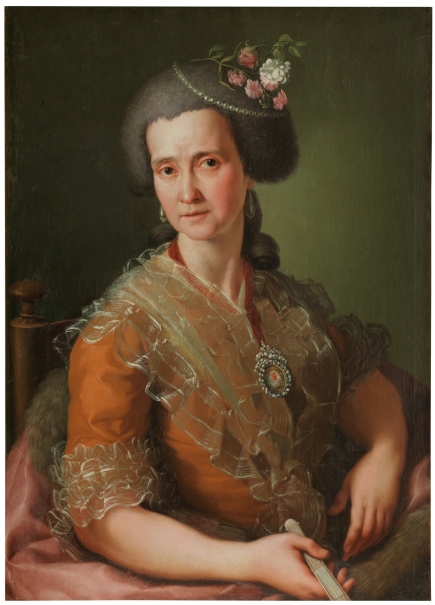
Manuela Tolosa y Aviñón
Oil on canvas. 1785 - 1788
This is a portrait of Manuela María Teresa Cayetana Tolosa y Aviñón (Madrid, 11 July 1740–Madrid, 7 December 1797), the second wife of the painter Antonio González Velázquez, whom she married on 8 April 1745. At least eight children were born of their marriage, including the author in this portrait. Undoubtedly, despite the slight differences in size, there was a desire to pair this portrait with that of the painter Antonio González Velázquez (P00
ARTWORK
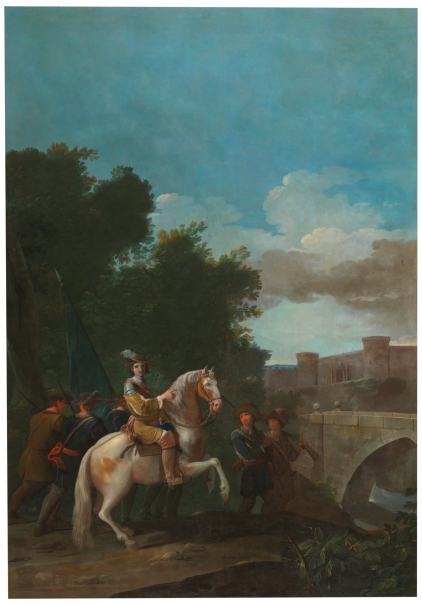
Military Convoy
Oil on canvas. 1776 - 1778
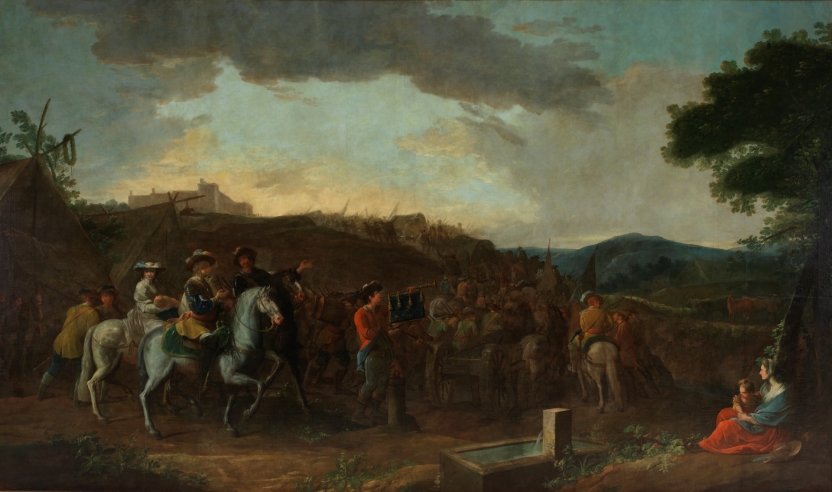
It is a tapestry cartoon intended for the ‘silverware room in the king’s apartment’ within El Pardo Palace. It depicts the march of a vast army towards a fortress in the background, directed by a noble captain on a white horse and accompanied by his wife and son. In this painting, the artist imitated the style of Philips Wouwerman.
ARTWORK
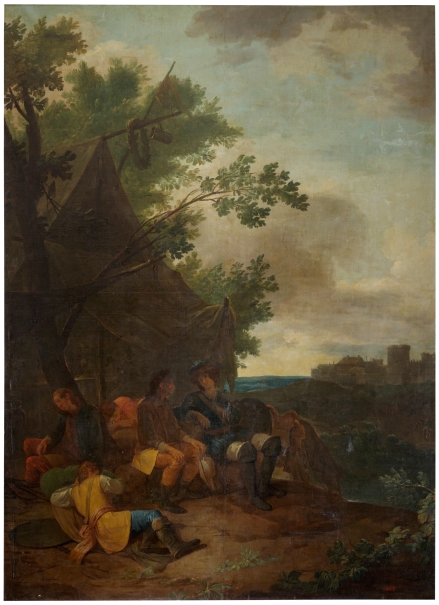
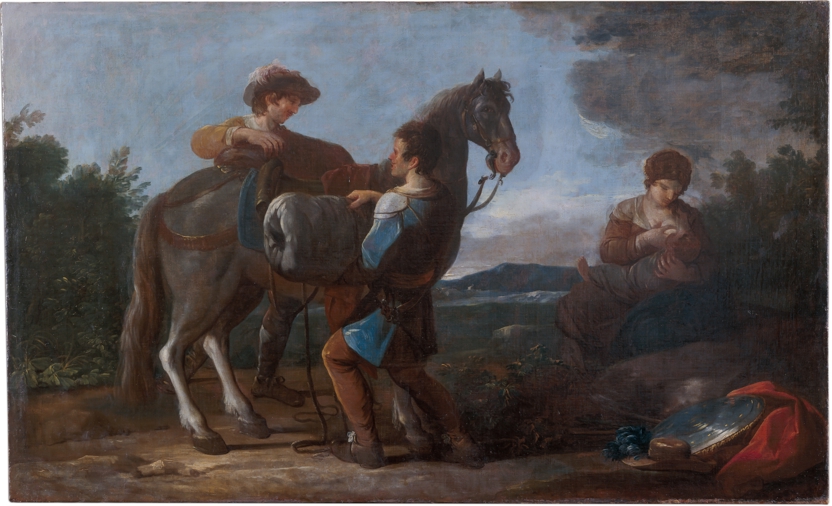
Military Convoy
Oil on canvas. 1776 - 1778
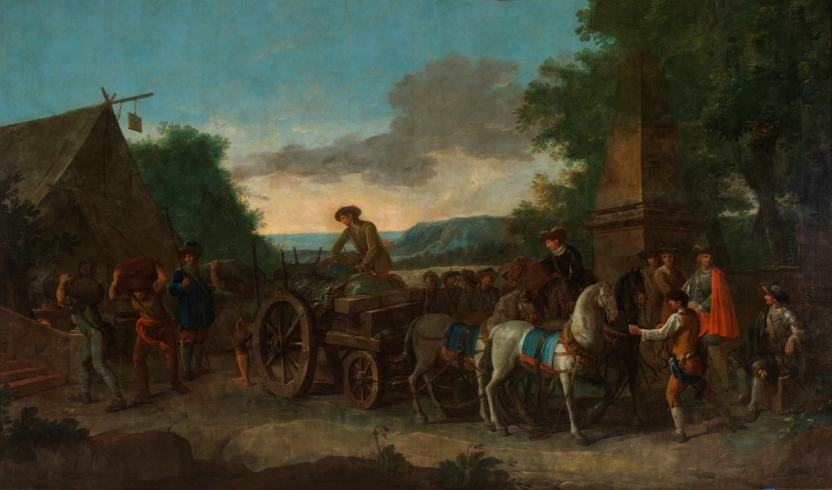
It is a tapestry cartoon intended for the ‘silverware room in the king’s apartment’ within El Pardo Palace. It depicts the unloading of a war ammunition convoy accompanied by soldiers. In this painting, the artist imitated the style of Philips Wouwerman.
ARTWORK
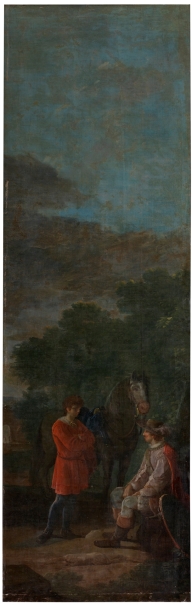
An officer on horseback and four foot-soldiers
Oil on canvas. 1776 - 1778
This work is part of the series of tapestry cartoons executed for the Royal Tapestry Factory of Santa Bárbara in Madrid, between 1750-1800.Antonio González Velázquez (1723–1794) started working on these works in 1765, during the reign of Charles III, King of Spain (1759–1788). According to the existing documents, he produced 71 pieces for tapestries bound for different spaces in the Royal Sites, even though the production of some of them was later called off. This work is th
ARTWORK
Loading...

Loading...

Up