formularioRDF
The itinerary <em>TITULORECORRIDO</em> has been successfully created. Now you can add in works from the Collection browser
<em>TITULOOBRA</em> added to <em>TITULORECORRIDO</em> itinerary

Metabuscador

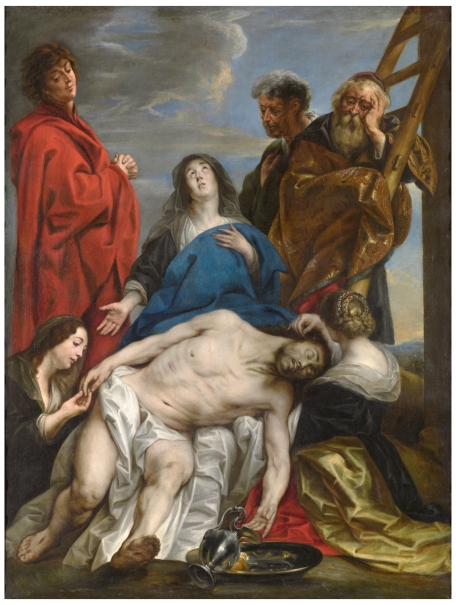
Pietà
Oil on canvas. 1650 - 1660
The Virgin holds Christ´s dead body on her lap and turns an imploring look towards the heavens. Saint John, in red, Joseph of Arimathea and Nicodemus meditate on the event of which they are the protagonists. Towards the bottom, Mary Magdalene removes the Thorns form Christ´s head and Mary Salome kisses his hand. This is a work from Jordaens´ mature period, with the long, watery brushstrokes that characterize his final paintings. After making numerous preparatory drawings for the figures, he crea
ARTWORK
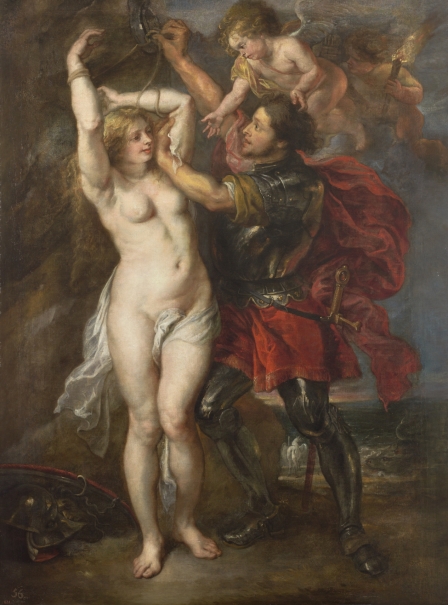
Perseus freeing Andromeda
Oil on canvas. 1639 - 1641
As punishment for the vanity of Cassiopeia, who thought herself more beautiful than the Neriads, Poseidon, god of the seas, sent a monster to the kingdom of Ethiopia. Its fury could only be detained if it received Cassiopeia´s daughter, Andromeda. This painting illustrates the moment when Perseus frees Andromeda from her bounds. He is in love with her, as is made clear by the presence of Cupid with his quiver, and later makes her his wife. Hymen, goddess of marriage, announces this engagement wi
ARTWORK
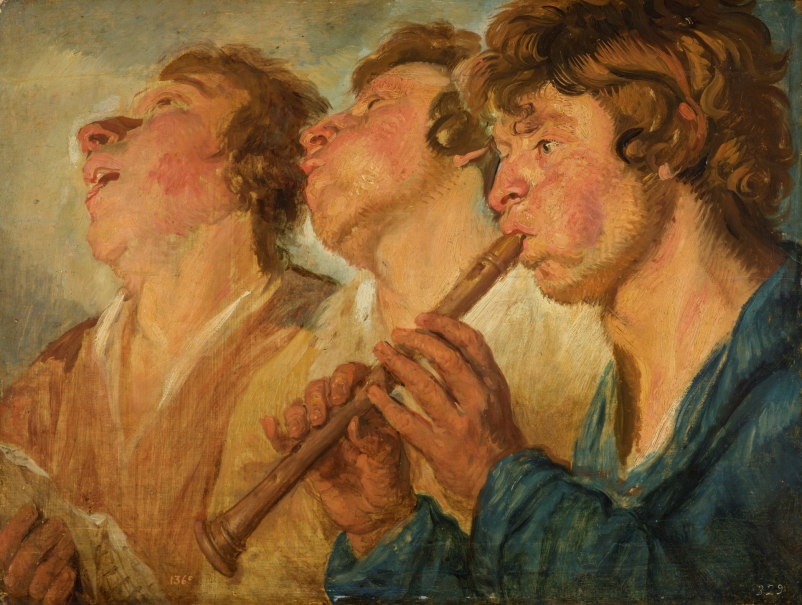
Three Strolling Musicians
Oil on panel. 1645 - 1650
A bust depiction of three street musicians. The first plays a flute while the other two sing from sheet music held by one of them. The sketchy rendering and vigorous brushstrokes mark this as a preliminary study. However, as no known work of Jordaens uses similar figures, his authorship has long been in doubt. The very loose rendering and large amount of paint in the brushstrokes of the flesh tones, as well as the strong touches of white, recall the youthful period of Van Dyck (1599-1641), who h
ARTWORK
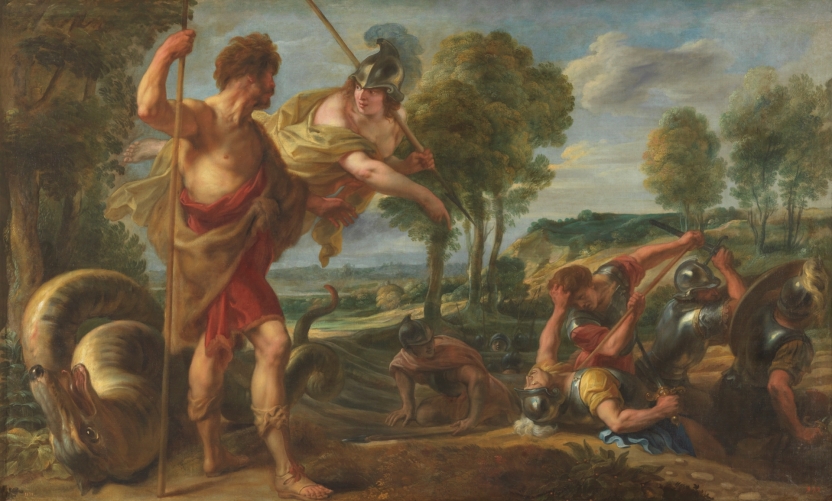
Cadmus and Minerva
Oil on canvas. 1636 - 1638
La historia de Cadmo y la aparición de Minerva aparece en el libro III de las Metamorfosis (95-114): "(...) Mientras el vencedor calcula el tamaño del enemigo vencido, se oyó de repente una voz; no era posible saber de donde venía, pero se oyó: "¿Por qué miras, hijo de Agénor, la serpiente que has matado? También tú serás serpiente y te mirarán" (...)Deslizándose por el cielo aparece Palas y le ordena labrar la tierra y plantar los dientes viperinos, simiente de un futuro pueblo. Obedece Cadmo(.
ARTWORK
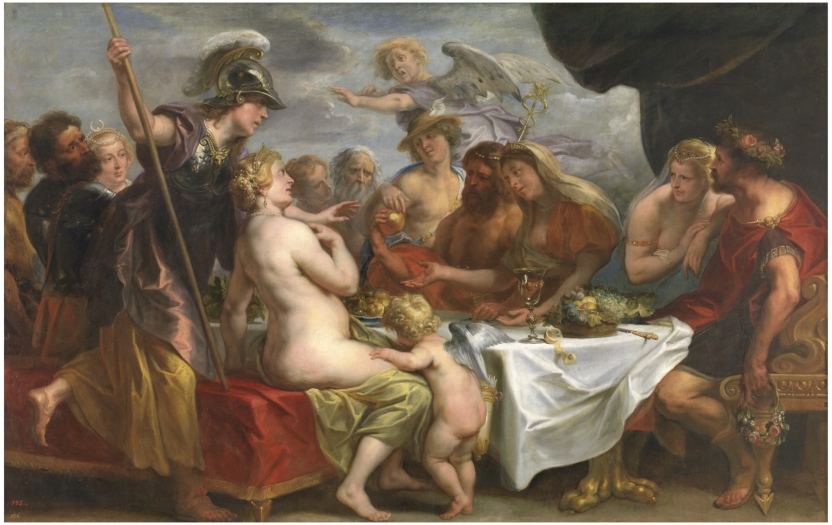
Marriage of Peleus and Thetis
Oil on canvas. 1636 - 1638
As with the Rape of Hippodamia (P01658), this marriage scene was commissioned from Rubens as part of the mythological cycle drawn from Ovid´s Metamorphoses, which was to serve as the main artistic decoration of the Torre de la Parada. While Rubens prepared the oil sketch for the scene (Art Institute of Chicago), the Marriage of Peleus and Thetis was one of the numerous full-scale canvases whose execution Rubens delegated to his associates in Antwerp, in this case the painter Jacob Jordaens, who
ARTWORK
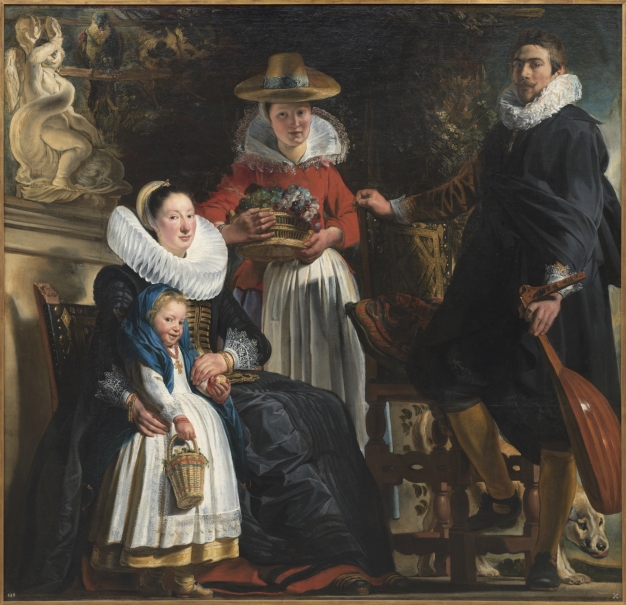
The Painter's Family
Oil on canvas. 1621 - 1622
This attractive group portrait, one of the most interesting of the 17th-century Dutch school on account of its bourgeois spirit with aristocratic leanings, is an extraordinary skilful depiction of the artist´s close family. Jordaens portrays himself with his wife Catharina van Noort and their first child Elizabeth, born on 26 June 1617, whose age allows us to date the work approximately. Catharina sits sturdily on an armchair; she is easily recognisable for her slightly almond-shaped eyes,
ARTWORK
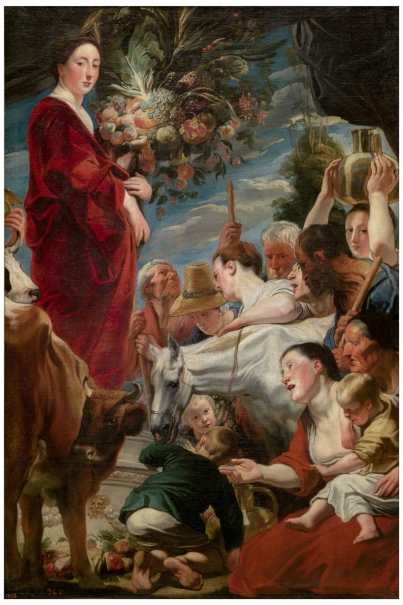
Offering to Ceres
Oil on canvas. Ca. 1620
Crowned with wheat, as goddess of the Earth, Ceres holds a horn filled with fruit, a symbol of the abundance and fertility that characterizes her. She receives homage from a group of peasants, who bear an offering of the products they receive from the earth they farm. This goddess taught humans to use the plow and to farm, to which the painter alludes by including oxen in the work. Ceres also embodies the changing seasons, that is, the cycle of life, which is represented here by the figures of d
ARTWORK
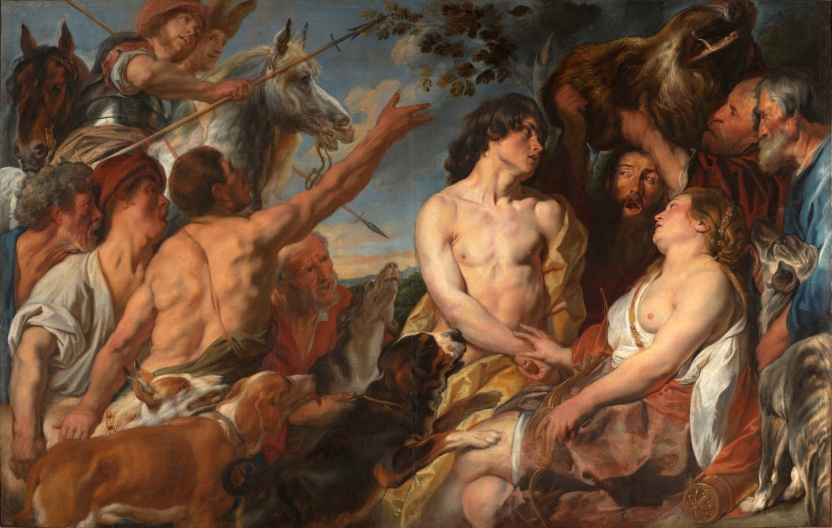
Meleager and Atalanta
Oil on canvas. 1620 - 1623
This mythological scene is drawn from the Metamorphoses of Roman poet Publio Ovidio Nason, one of the texts on ancient mythology that had the greatest intellectual impact on 17th-century Flemish artists. According to Ovid, Diana had sent an enormous wild boar to ravage the region of Calydon as punishment after the king failed to make the promised sacrifices to her. The king’s son, Meleager, was an experienced hunter and he gathered his most skilled colleagues to kill the beast. One of them was A
ARTWORK
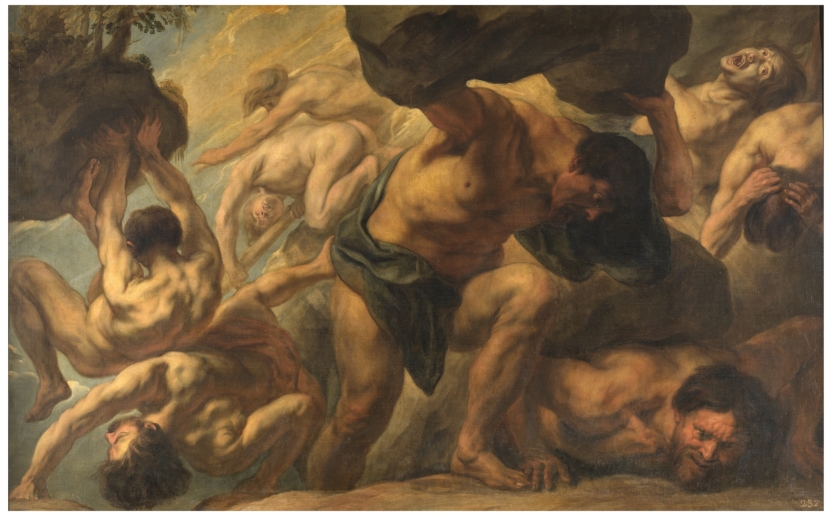
The Fall of the Giants
Oil on canvas. 1636 - 1638
La caída de los gigantes es un episodio brevemente narrado por Ovidio en sus Metamorfosis, Libro I (151-155), en la cual los gigantes que habitaban la tierra querían llegar al cielo y por ello fueron castigados por los dioses: "(...) Y para que el elevado cielo no estuviera más seguro que la tierra, los Gigantes, se dice, aspiraron al reino celestial, y levantaron montañas apiladas hasta las altas estrellas. Entonces el padre omnipotente lanzó su rayo, hizo añicos el Olimpo y derribó el Pelio de
ARTWORK
Loading...

Loading...

Up