formularioRDF
The itinerary <em>TITULORECORRIDO</em> has been successfully created. Now you can add in works from the Collection browser
<em>TITULOOBRA</em> added to <em>TITULORECORRIDO</em> itinerary

Metabuscador

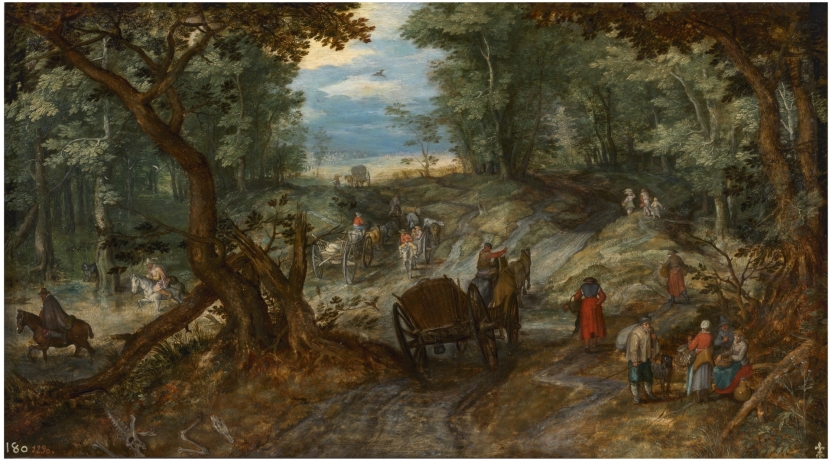
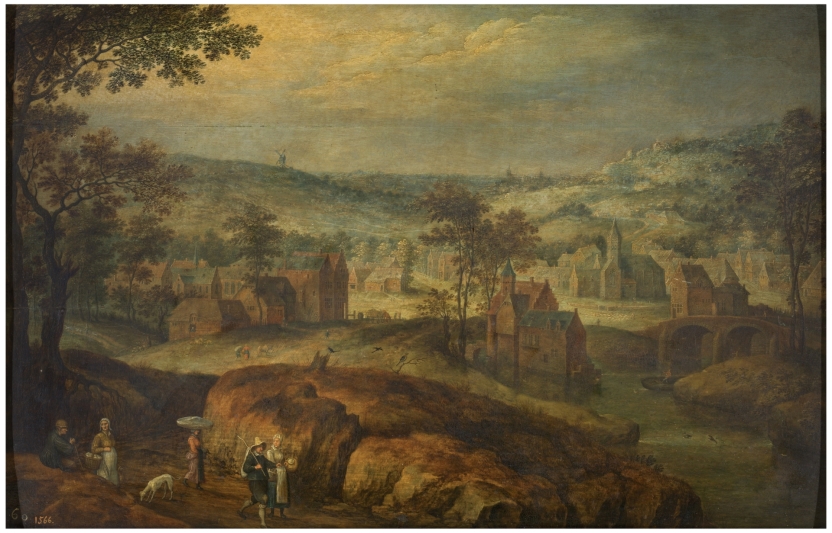
Country Life
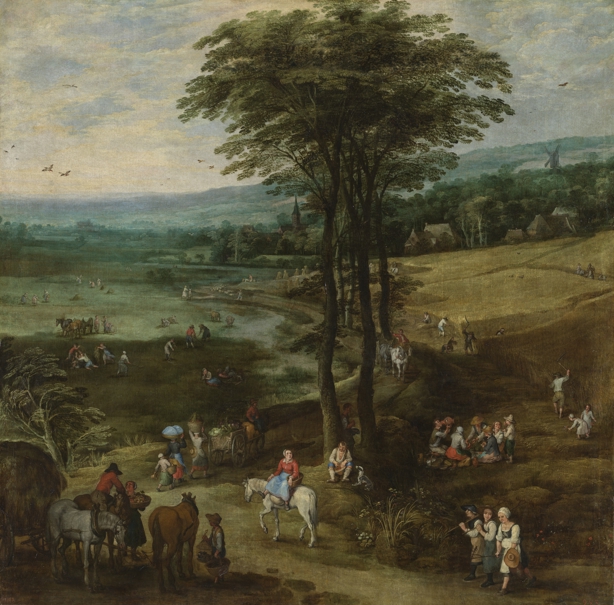
Oil on canvas. 1620 - 1622
A broad view of the Flemish countryside, with diverse scenes of peasants carrying out their respective tasks. This is one of the finest examples of the collaboration between Jan Brueghel “the Elder”, who is thought to have painted the figures, and Joos de Momper, who made the landscape. The scene is formed by accumulating various planes that follow each other toward the back, in perspective. The enormous trees in the center split the composition in two. They are the vertical counterpoint to the
ARTWORK
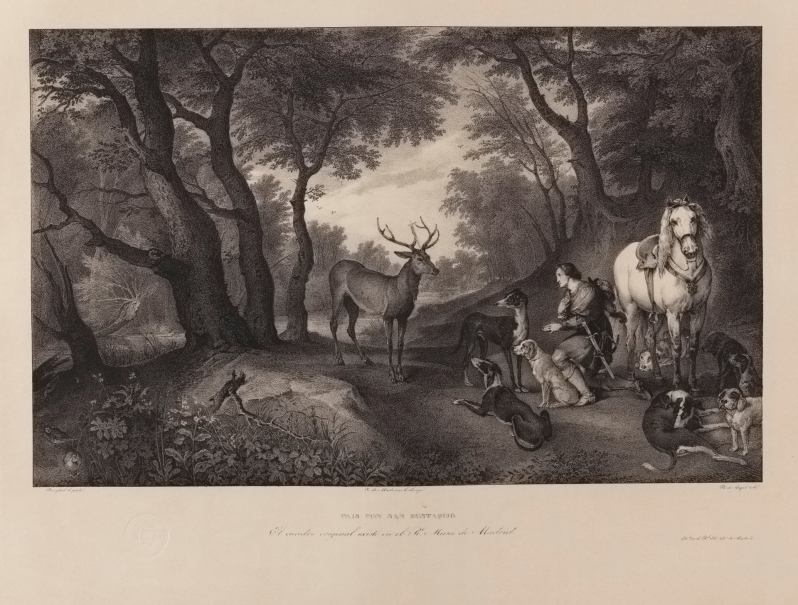
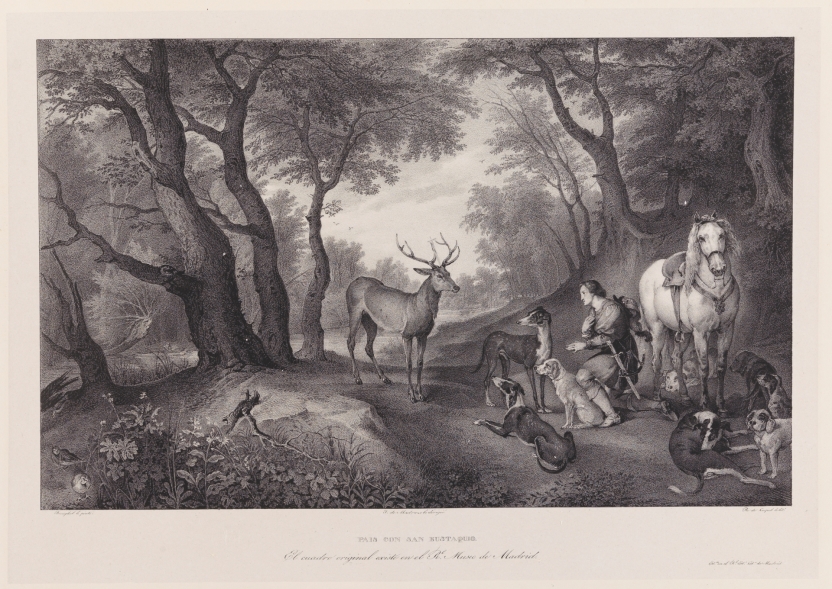
The Vision of Saint Hubert
Lithographic aquatint, Pen lithography, Scraper, Crayon lithography on wove paper. 1829 - 1832
Es una litografía de Andreas Pic de Leopold (1789?-después de 1860). Produce el lienzo, conservado en el Museo Nacional del Prado (P01411), de la conversión de san Huberto, cuya figura del santo fue pintada por Rubens; el resto de la composición es de la mano de Jan Brueghel el Viejo. El lienzo, en su momento, se creyó solo de Brueghel, tal y como se indica en la letra de la estampa. El título que aparece en la estampa es: Pais con San Eustaquio. Este santo era un romano del siglo II convertido
ARTWORK
Andreas Pic de Leopold – Lithographer – (The original work, according to inscriptions, attributed to: Jan (Jan 'Velvet' Brueghel) Brueghel the Elder)
Jan (Jan 'Velvet' Brueghel) Brueghel the Elder – (Author of the original work)
Peter Paul Rubens – (Author of the original work)
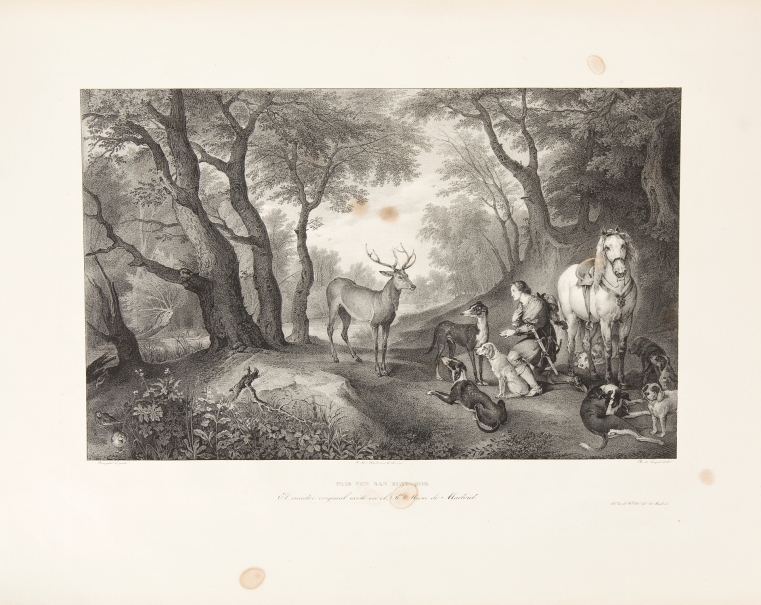
The Vision of Saint Hubert
Pen lithography, Lithographic aquatint, Crayon lithography, Printing on japon, Scraper on wove paper. 1829 - 1832
Es una litografía de Andreas Pic de Leopold (1789?-después de 1860). Reproduce el lienzo, conservado en el Museo Nacional del Prado (P01411), de la conversión de san Huberto, cuya figura del santo fue pintada por Rubens; el resto de la composición es de la mano de Jan Brueghel el Viejo. El lienzo, en su momento, se creyó solo de Brueghel, tal y como se indica en la letra de la estampa. El título que aparece en la estampa es: Pais con San Eustaquio. Este santo era un romano del siglo II convertid
ARTWORK
Andreas Pic de Leopold – Lithographer – (The original work, according to inscriptions, attributed to: Jan (Jan 'Velvet' Brueghel) Brueghel the Elder)
Jan (Jan 'Velvet' Brueghel) Brueghel the Elder – (Author of the original work)
Peter Paul Rubens – (Author of the original work)
The Vision of Saint Hubert
Lithographic aquatint, Crayon lithography, Printing on japon, Scraper, Pen lithography on wove paper. 1829 - 1832
Es una litografía de Andreas Pic de Leopold (1789?-después de 1860). Reproduce el lienzo, conservado en el Museo Nacional del Prado (P01411), de la conversión de san Huberto, cuya figura del santo fue pintada por Rubens; el resto de la composición es de la mano de Jan Brueghel “el Viejo”. El lienzo, en su momento, se creyó solo de Brueghel, tal y como se indica en la letra de la estampa. El título en la estampa es: Pais con San Eustaquio. Este santo era un romano del siglo II convertido al crist
ARTWORK
Andreas Pic de Leopold – Lithographer – (The original work, according to inscriptions, attributed to: Jan (Jan 'Velvet' Brueghel) Brueghel the Elder)
Peter Paul Rubens – (Author of the original work)
Jan (Jan 'Velvet' Brueghel) Brueghel the Elder – (Author of the original work)
The Vision of Saint Hubert
Lithographic aquatint, Pen lithography, Scraper, Crayon lithography on wove paper. 1829 - 1832
Es una litografía de Andreas Pic de Leopold (1789?-después de 1860). Reproduce el lienzo, conservado en el Museo Nacional del Prado (P01411), de la conversión de san Huberto, cuya figura del santo fue pintada por Rubens; el resto de la composición es de la mano de Jan Brueghel el Viejo. El lienzo, en su momento, se creyó solo de Brueghel, tal y como se indica en la letra de la estampa.El título que aparece en la estampa es Pais con San Eustaquio. Este santo era un romano del siglo II convertido
ARTWORK
Andreas Pic de Leopold – Lithographer – (The original work, according to inscriptions, attributed to: Jan (Jan 'Velvet' Brueghel) Brueghel the Elder)
Peter Paul Rubens – (Author of the original work)
Jan (Jan 'Velvet' Brueghel) Brueghel the Elder – (Author of the original work)
Forest with Carts crossing a Ford and Riders
Oil on panel. Ca. 1607
This forest corresponds to one of the typologies that Jan Brueghel the Elder pioneered around 1605 and that he developed over the course of that decade. The painting depicts a well-travelled path through a forest, leading to a village discernible on the horizon. A small stream crosses the path. The painter intends for the viewer to experience the interior of the forest, thus offering several possibilities: to follow the horsemen as they ford the stream to the left, behind the group of trees that
ARTWORK
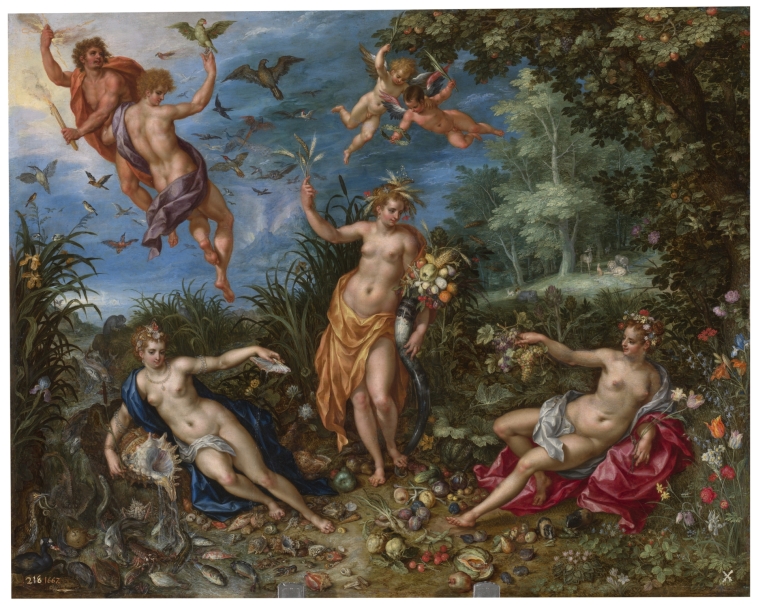
Abundance with the Four Elements
Oil on copperplate. 1606
In this painting, Ceres, goddess of agriculture and fertility, is surrounded by fruits and flowers, pictured as the personification of Abundance holding the horn of plenty in her hands. The history of the horn of plenty is taken from two texts by the Roman poet Ovid (43 BCE-CE 17/18), Metamorphoses (IX, 80-100) and Book of Days (V, 121-24). The idea of prosperity is completed by the personifications of the four elements in the form of two female figures on the ground beside her, and two males, i
ARTWORK
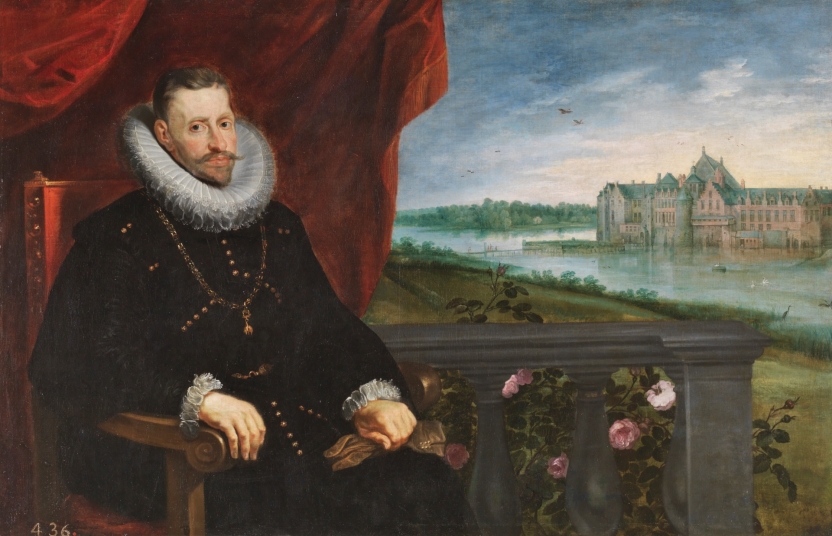
Archduke Albert of Austria
Oil on canvas. Ca. 1615
Alberto de Austria, the sovereign prince of the Low Countries, is dressed in black and sits under a canopy indicating that this is a court portrait. Unlike the customary indoor portraits, this one is set on a balcony open to a landscape that includes Tervuren Palace, near Brussels. This portrait, and that of his wife, Isabel Clara (P01684), seeks not only to bring out the figure of the Archduke, but also to emphasize the rulers´ ties to their lands. At the same time, the palace, which was the fo
ARTWORK
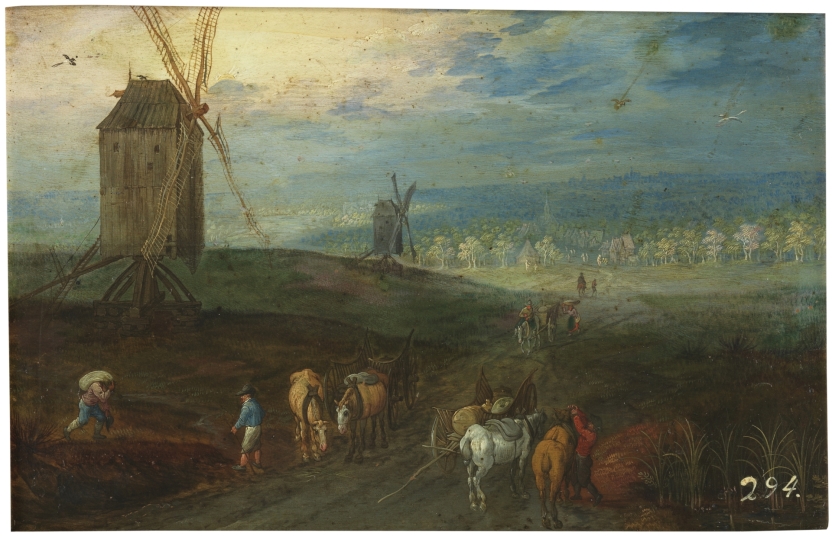
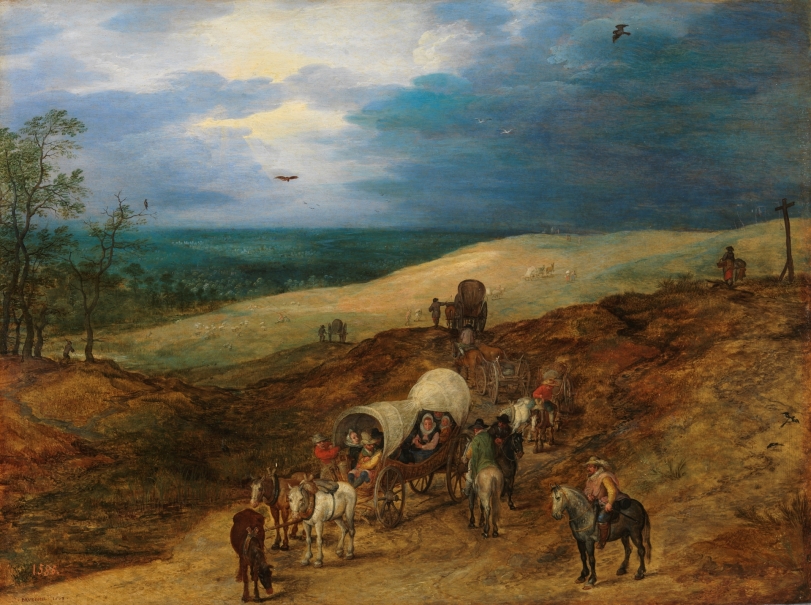
Landscape with Wagons
Oil on panel. 1603
Highwaymen seem to have stopped a wagon with travelers in the midst of a barren landscape. More wagons and travelers on foot appear along the trail in the background. This work is difficult to interpret. It may just as well represent a violent assault as a simple everyday scene in a landscape. At any rate, it shows how Brueghel composed this sort of scene on the basis of various planes that reach back into the distance. The grey sky in the background has an opening through which light reaches so
ARTWORK
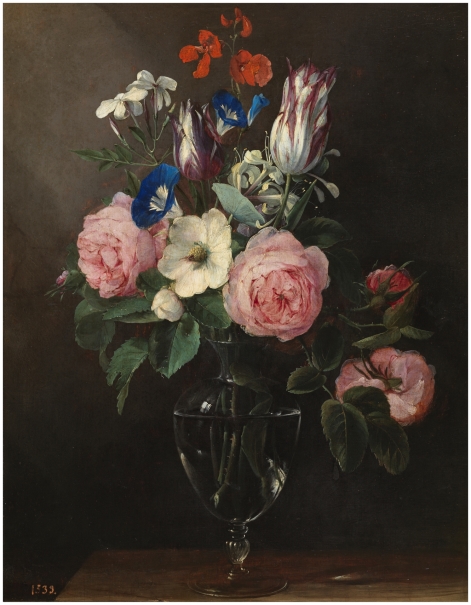
Vase of Flowers
Oil on panel. 1600 - 1625
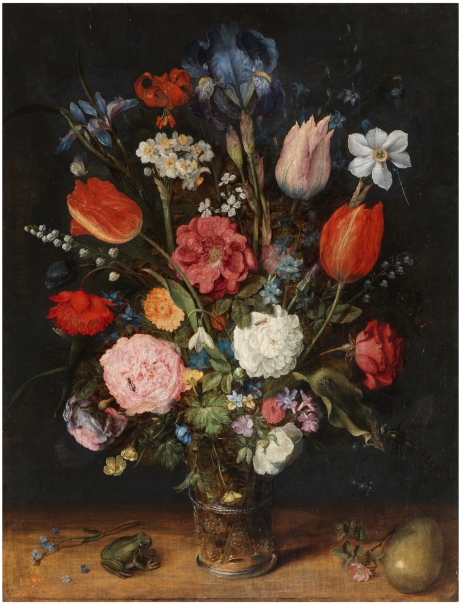
Jan Brueghel el Viejo fue uno de los creadores de la pintura de gabinete, que comienza a consolidarse como tal en el siglo XVII. Magnífico pintor de paisajes, se especializó también en la representación de naturalezas muertas, de bodegones y de floreros. Esta pequeña tabla es una muestra de su habilidad como artista al conseguir, con apenas unos toques de blanco, la transparencia del jarrón de cristal, mientras que las flores, de distintas variedades, están trabajadas con suma delicadeza. Las ho
ARTWORK
Vase of Flowers
Oil on panel. 1609 - 1615
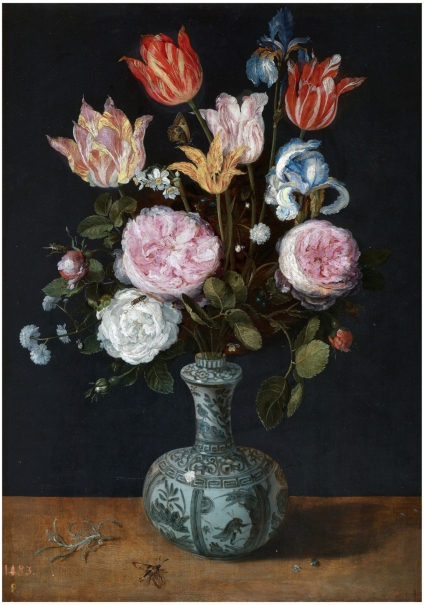
This panel depicts a bouquet of tulips, roses and irises in a small porcelain vase. On the table is an insect, a sprig of leaves and more flowers. The blue and white porcelain vase is from Jingdezhen in Jiangxi province, China, and was made for export.
ARTWORK
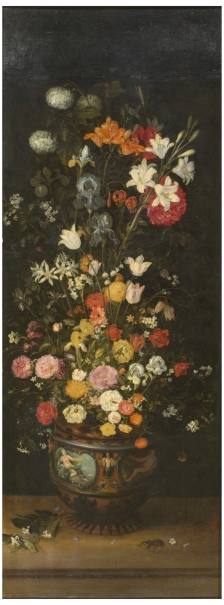
Vase of Flowers
Oil on panel. First quarter of the XVII century
Following the death of Ferdinand VI in 1759, Isabella Farnese acted as governor until the arrival of Charles III. At that date, she decided to establish her residence in Madrid and acquired the Buenavista Palace. In addition to the building, she also purchased a group of forty-six Flemish paintings for the purpose of decorating her new residence: twenty-nine attributed to David Teniers II and seventeen to Jan Brueghel the Elder. Notable among the latter are two depictions of vases of flowers, on
ARTWORK
Loading...

Loading...

Up