formularioRDF
The itinerary <em>TITULORECORRIDO</em> has been successfully created. Now you can add in works from the Collection browser
<em>TITULOOBRA</em> added to <em>TITULORECORRIDO</em> itinerary

Metabuscador

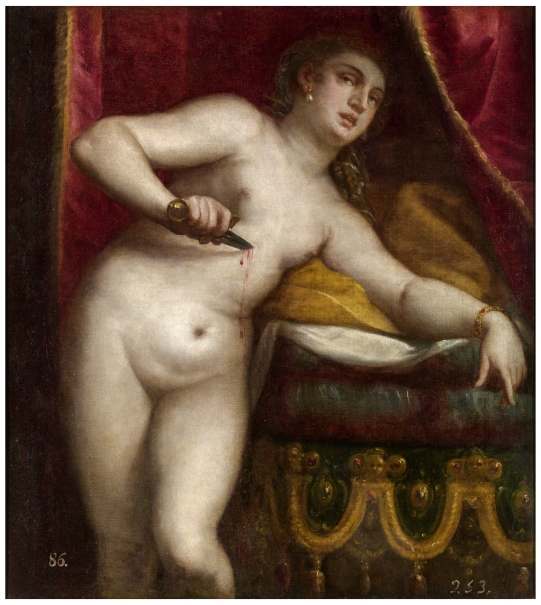
The Death of Lucretia
Oil on canvas. Last third of the XVI century
The Roman patrician lady Lucretia killed herself after being raped by the son of the King of Rome, an act that brought about the fall of the monarchy and the proclamation of the Republic in 510 B. C.
ARTWORK
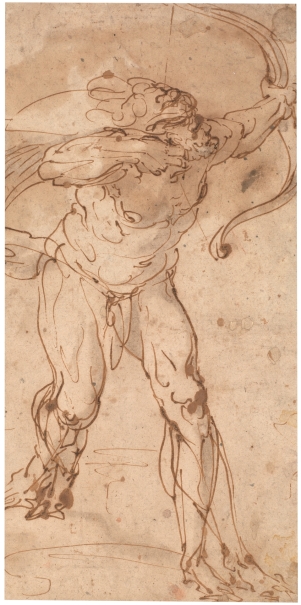
Hercules shooting his bow
Pencil ground, Grey-brown ink, Wash, Pencil on brown paper. 1544 - 1550
Hercules used his bow when firing at the Stymphalian birds, the destruction of which was the sixth of his Labors. These voracious creatures ate human flesh, had brazen claws, wings and beaks and used their feathers as arrows. Their habitat was a lake near Stymphalus in Arcadia. On hearing of the task that Hercules had been allotted, Athena provided the hero with a brass rattle, by the noise of which he startled the birds, killing them one by one with his arrows as they flew away. In the drawing,
ARTWORK
Justice, Fortitude and Temperance
Pencil, Wash, Grey-brown ink on dark yellow paper. 1550 - 1560
The composition, which shows the three Theological Virtues, was probably made with a painted composition in mind, though no such work survives. As Pérez Sánchez has argued, the style indicates a date around 1550-60, when the artist was still working in Genoa. Cambiaso treated the subject again at the end of his career in one of the frescoes in the choir of the Escorial, though the design of his latter composition is radically different from that of the present sheet.
ARTWORK
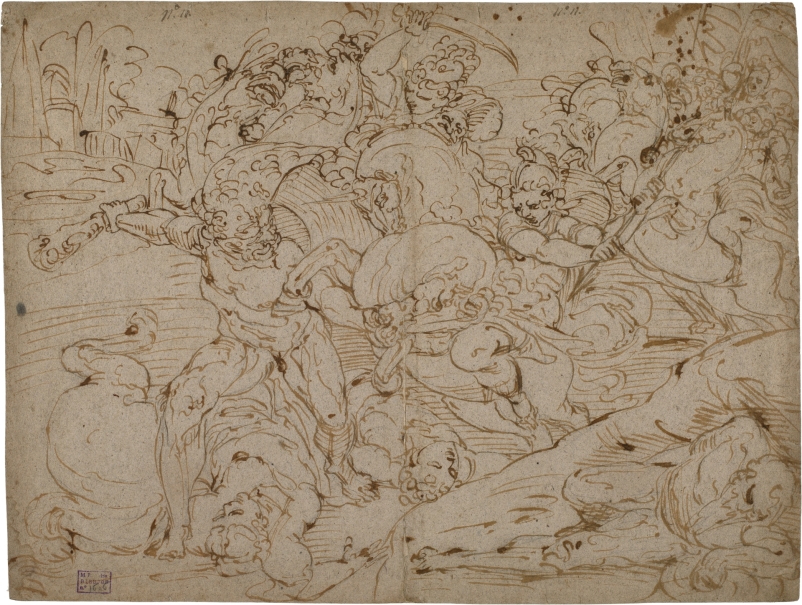
Battle between Hercules and the Amazons
Pencil, Grey-brown ink on brown paper. 1544 - 1550
The encounter between Hercules and the Amazons, the ninth of his Labors, arose from his assignment to seize the girdle of Queen Hippolyte of the Amazons. Admete, the daughter of Eurystheus, had expressed a desire to possess it, and Hercules therefore set off on a mission to satisfy her desire. The girdle was the ensign of the Queen´s power and she had received it as a present from Ares. The Amazons were a race of warrior women, who had established their own kingdom in Asia Minor and were particu
ARTWORK
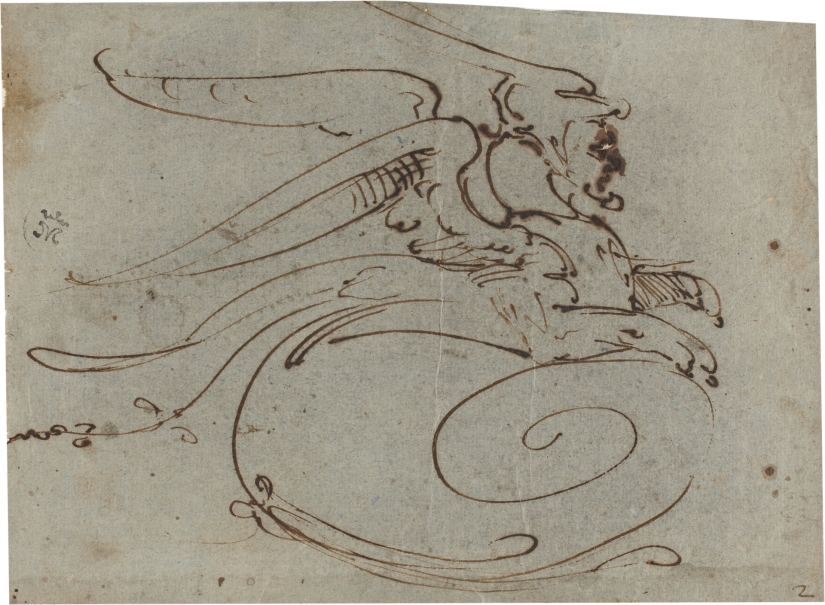
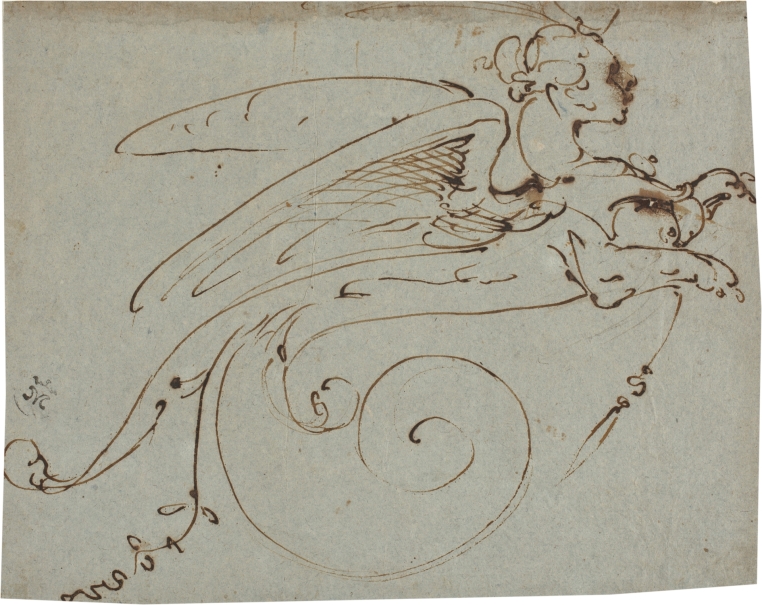
Dibujo para unas volutas con la forma de una arpía
Grey-brown ink, Pencil, Pencil ground on blue paper. Last third of the XVI century
The fantastic creature in the present sheet resembles those appearing as crests of helmets in some ornamental suits of armor manufactured in Northern Italy in the middle of the sixteenth century, particularly Milan. A good example is that in the form of a siren (part woman, part bird) on top of the helmet in the armor of Alessandro Farnesse preserved in the Kunsthistorisches Museum, Vienna (inv. A 1132). Datable around 1576-80, this exceptional garniture is thought to be by the Milanese armorer,
ARTWORK
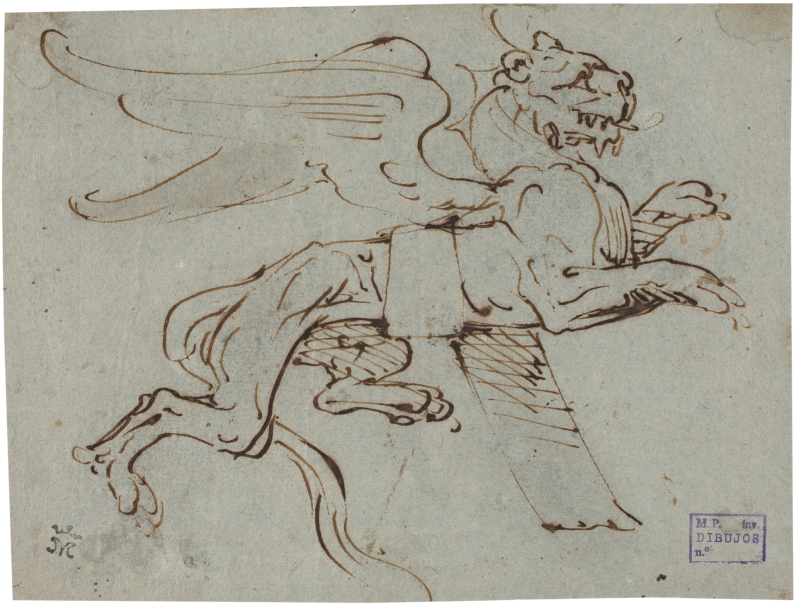
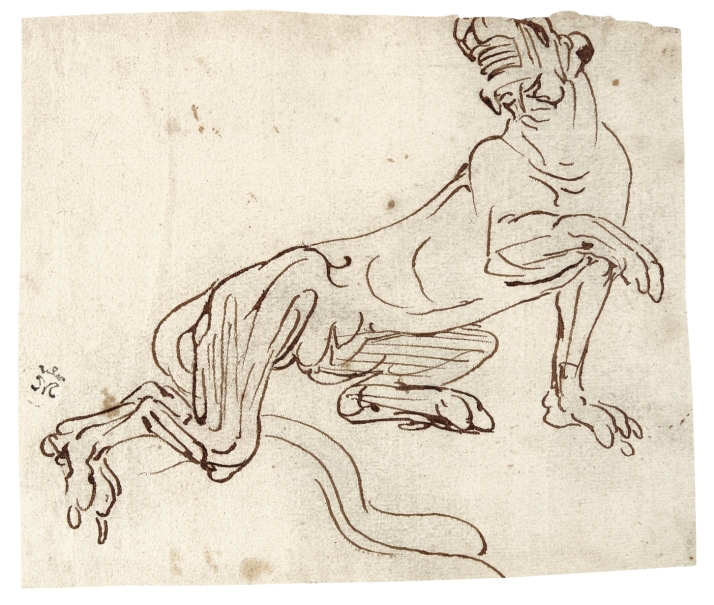
Seated lioness, with one of its front paws raised
Pencil, Grey-brown ink on grey paper. XVI century
The album page on which the drawing is laid has been cut down. A lioness in a similar pose appears at the feet of a standing Bacchus in a drawing in the Ashmolean Museum, Oxford (inv. no. KTP II, no. 132).
ARTWORK
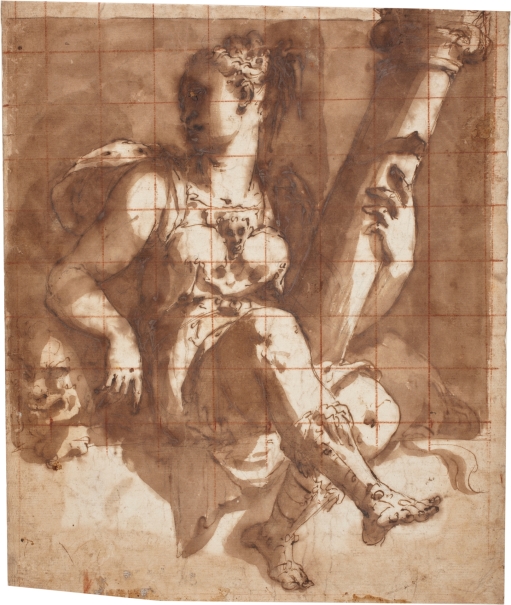
Fortitude
Red chalk, Wash, Grey-brown ink, Pencil ground, Pencil on yellow paper. XVI century
Although sadly much corroded, the drawing is of high quality and the handling compatible with Cambiaso´s autograph drawings. Fortitude is one of the three Theological Virtues, whose attributes are a column and a lion.This and a handful of other drawings by Cambiaso and his School, which do not belong to the Cambiaso Album, described below, have various provenances. Only three appear to have belonged to the same eighteenth-century Italian collector, since all three are laid down onto a paper back
ARTWORK
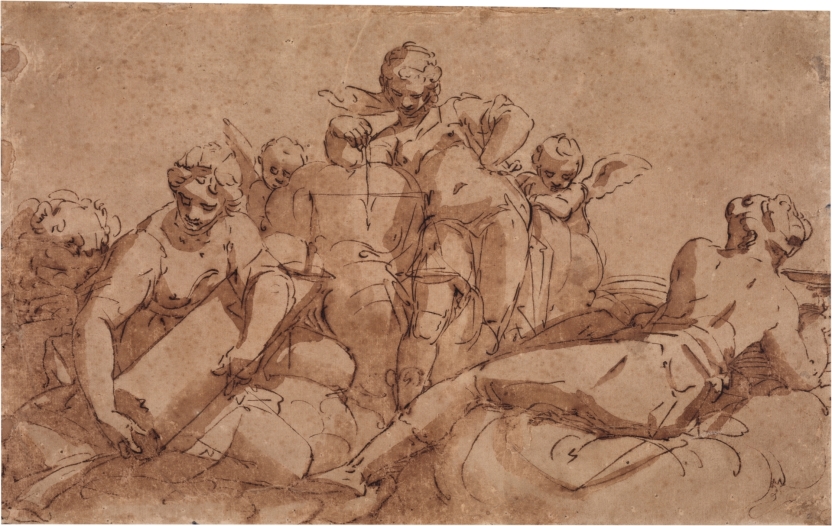
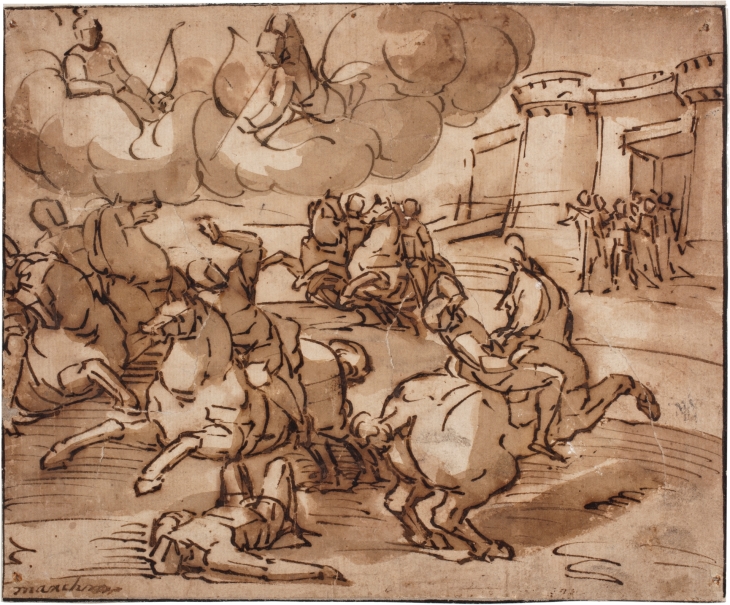
The Death of Niobe's Children
Wash, Pencil, Grey-brown ink on brown paper. 1570 - 1580
As related in the Homeric story, Queen Niobe, the wife of Amphion, King of Thebes, was the mother of six sons and six daughters, of whom she was greatly proud. She deemed herself superior to Latona, who had given birth to only two -Apollo and Artemis- both sired by Jupiter, to whom Latona was married before Juno. Indignant at Niobe´s presumptuousness, Apollo and Artemis slew all of her children with arrows. In the drawing, Apollo and Artemis are seen in clouds at the top of the composition, with
ARTWORK
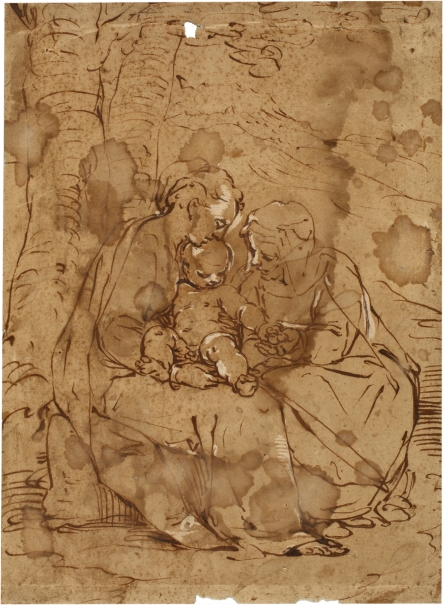
Saint Anne, the Virgin and the Christ Child
White lead, Pencil, Grey-brown ink on paper. XVI century
This drawing may possibly be by Cambiaso himself, though stains and other damages to the sheet impair assessment of its quality. A studio version of the composition, in reverse and in pen and brown ink only, is in the Louvre (inv. no. 9229).
ARTWORK
Luca Cambiaso – (Attributed to)
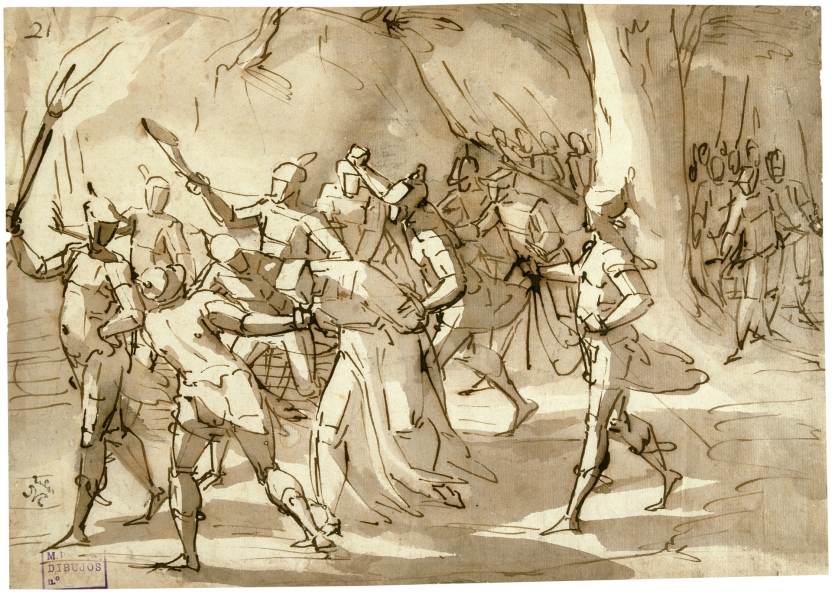
The Capture of Christ
Wash, Grey ink, Pencil ground, Pencil, Grey-brown ink on yellow paper. Third quarter of the XVI century
The drawing belongs to a collection, mostly by Cambiaso´s workshop, formerly preserved in an old album. According to Renaissance tradition, a painter needed to prove himself as an inventor of figure compositions: these were not the casual groupings of scenes from everyday life that might take his fancy, but the great actions of human history, from the Bible, mythology, ancient history and literature. The painter, like the poet, needed to stir human emotion, which he did by interpreting tradition
ARTWORK
Loading...

Loading...

Up