
Loading...
Bénédicte Savoy photographed by Maurice Weiss
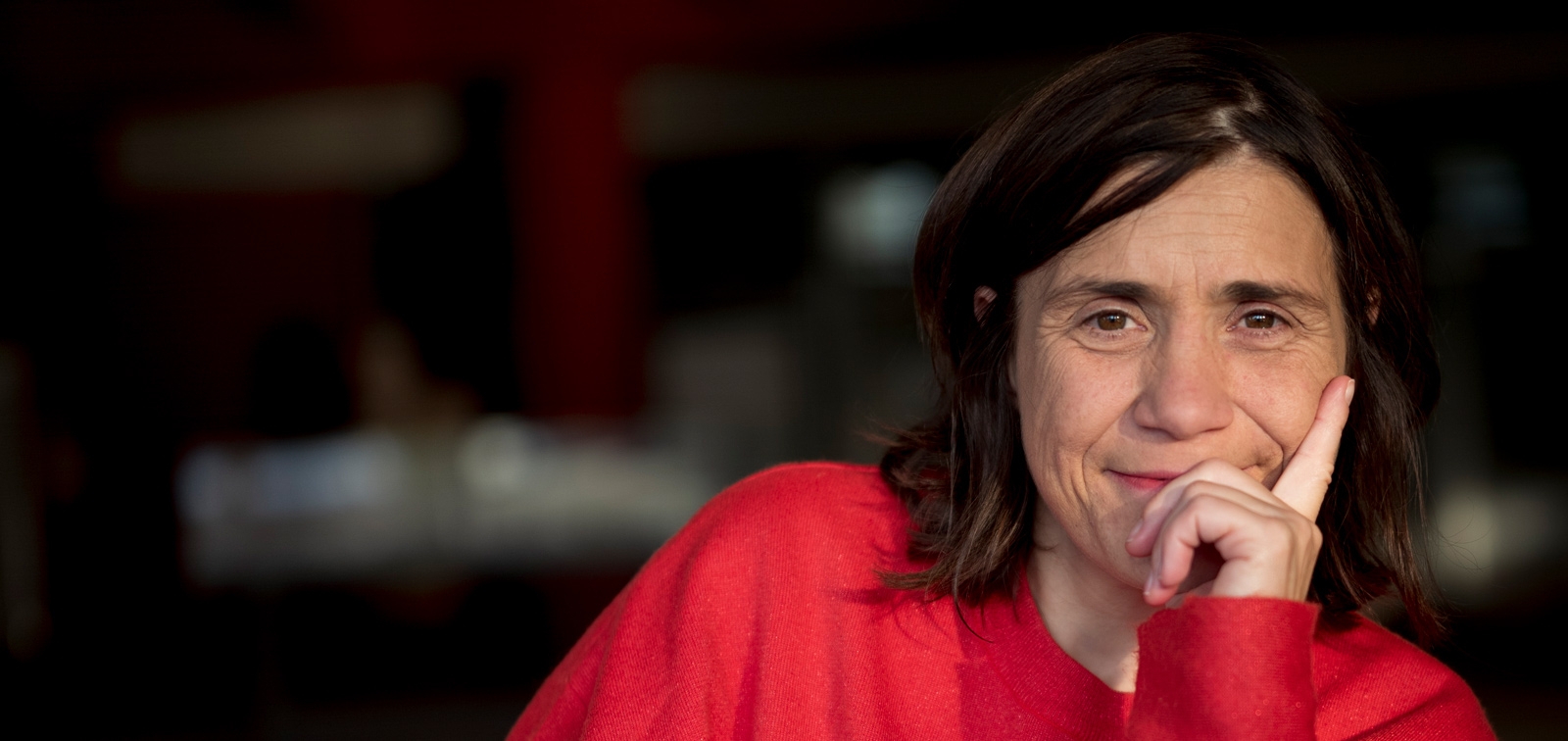
Seminar of the Prado Museum Chair
Factivism. Working with Historical Sources
November 8, 15, 22 and 29, 2024
Academic Chair
Seminar of the Prado Museum Chair
Seminar of the Prado Museum Chair
Factivism. Working with Historical Sources
November 8, 15, 22 and 29, 2024
The 12th Prado Museum Chair program will include four lectures, a colloquium and a four session seminar. The seminar will be held every Friday morning in November. It will include practical exercises in historiographical analysis related to the topic that provides this Chair with its name: Returning Looted Heritage: 1815, the Dismantling of the Louvre and the Rebirth of Museums in Europe.
In our master seminar, Factivism. Working with Historical Sources, the relevance of historical documents in different formats –text and images – will be studied in order to understand their value or lack thereof in the construction of European museums and the issue of restitution. Questions such as: how can the aporia of sources be addressed methodically? Is there a political scope in archival research? How –if so- does an in-depth reading of centuries old documents contribute to current debates about restitution and museums? Documents from the year 1814-15 will provide us with the starting line to try to tackle all these issues. They are also in line with the ones that will be addressed in the Thursday lectures.
The language of the seminar will be English, but we will try to work in a variety of European languages. Native speakers from all countries are welcome!
RDF
- Sponsored by:
-

- Schedule
- Seminars: Fridays 8, 15, 22 and 29 November 2024, from 9.30 a.m. to 2 p.m. (Spanish peninsular time)
- Recipients
- Postgraduate, predoctoral students and postdoctoral students who have obtained their doctoral degree within the last three years (not before 2022).
- Location
- Classroom 1 of the Casón del Buen Retiro (Alfonso XII, 28) and permanent exhibition halls of the Museo Nacional del Prado.
- Direction
- Bénédicte Savoy
- Organization
- Museo Nacional del Prado
- Contact
- Attendance application
Attendance at the seminar is subject to pre-registration. The Museo del Prado and the Fundación Notariado offer a maximum of 25 places, all of which are free of charge.
Applicants should be either postgraduate, predoctoral and postdoctoral students or researchers. In the case of postdoctoral students, the doctoral degree must have been obtained within the last three years (not before 2022). Participants will be selected on the basis of their academic record, educational profile and interest in the course, proof of which will be provided by means of a text (500 words maximum), by way of a letter of motivation and a summary of their academic record, which should not exceed one page. Applications are to be submitted between September 10 and October 20, 2024, inclusive. After the deadline, applicants will be notified of the decision. Successful applicants must attend all the lectures as well as participate in the seminars. The application must be made online using the form available on this page during the period indicated above.
Program
2024
- Nov
- 8
09.30 hThe Question of Restitution
In this session we will use and analyse specific newspaper articles, correspondence, pamphlets, statements, etc. to focus on such multifaceted and politically charged terms as restitution, repatriation, recovery and others.
- Nov
- 15
09.30 hQuestion 2: The Controversy
The second session will be devoted to the legal texts and principles invoked by the victors and the vanquished to justify the dismantling of the Napoleon Museum in 1814 and 1815, the legal references and the ethical foundations of their respective positions.
- Nov
- 22
09.30 hThe Difficult Question of Universality
In this session we will closely examine the visual and textual concepts of universality proposed by the various parties during the great art recovery campaign of 1814 and 1815. We will compare these with more recent texts on the subject.
- Nov
- 29
09.30 hOne more Question: Reappropriation
The final session of the seminar will focus on the more performative issues that affected the staging, image and institutionalisation of the works recovered in Paris by the various European powers after 1815. In particular, we Will focus on the question of the exhibition and display of the works recovered in France.
Activity
Chair 2024
The 12th Prado Museum Chair is devoted to the study of the processes of restitution of cultural heritage to countries looted by France during the Napoleonic period. It is led by Professor Bénédicte Savoy.
Development
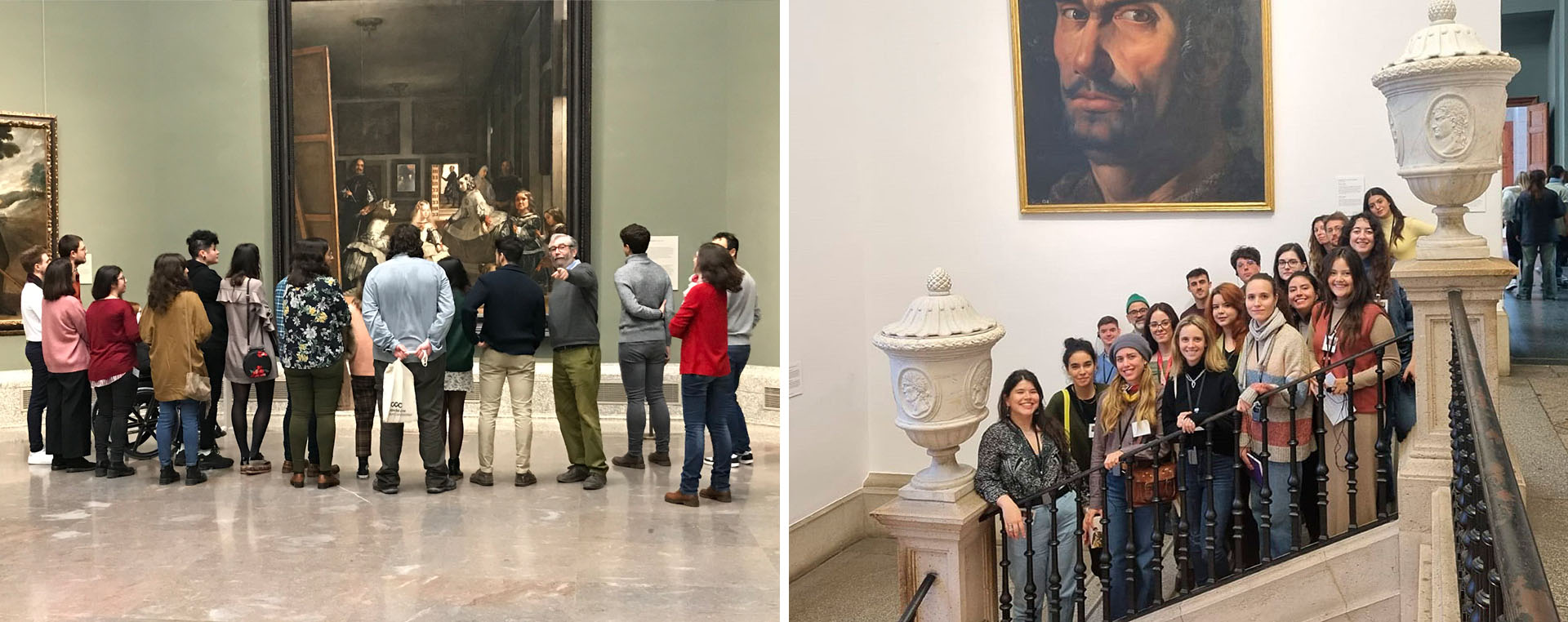
Images of the Prado Chair Seminars held in 2019 and 2023.
Since its first editions, the Prado Chair has included in its program a seminar, always distributed in four sessions, for a small group of students. The aim is to deepen the topics covered in the Chair's lectures and to experience an intensive learning, always in accordance with the working dynamics proposed by the Chair holder. The seminar usually takes place in a classroom in the Museum's Centre for Studies and Research, but occasionally in the exhibition rooms or other areas of the Museum. The results of this teaching experience have been highly valued by those who have participated in successive editions of the Chair.
Work dynamics
The holder of the Prado 2024 Chair proposes a participatory learning dynamic for the seminar, based on attention to written and visual documents to be analysed together, always in relation to the theme of the processes of heritage restitution experienced in Europe after the fall of the Napoleonic Empire. The seminar will use a digital platform to facilitate access to a large part of the documents and literature proposed for study.
Recipients
- Postgraduate students, predoctoral students and young doctors in Art History.
- Applications from students and young doctors in the following specialities will also be considered: Art Restoration, Fine Arts and Architecture.
- Occasionally, well-reasoned applications from students in other humanities disciplines may be considered on a case-by-case basis if the application is sufficiently justified.
Requirements
- In the case of a completed doctorate, applicants must have obtained the doctoral degree within the last three years (not earlier than 2022).
- Good knowledge of English. Knowledge of Spanish, as well as French and Italian would also be an asset.
Deadline and application
- Pre-registration period: 10 September - 20 October 2024, inclusive.
- Pre-registration must be done through the on-line form that will be available on this website during the pre-registration period.
- At the time of pre-registration, candidates will be required to produce:
- Identity document or passport.
- Brief description of your academic career (maximum one page).
- Academic record or any other document that allows the recognition of the studies carried out and the results obtained.
- A letter of motivation of no more than 500 words, stating your interest in attending the Prado Chair seminar.
Selection criteria
- The selection of students from among the applications that meet the requirements for participation will be made by the Academic Board Direction of the Chair in coordination with the Director of the Centre for Studies. The selection will be based on the suitability of the applicant’s educational profile, academic record, specific interest in the proposed topics and research methods, and the arguments presented in the letter of motivation. The academic management reserves the right to conduct personal interviews with candidates.
- Selection as a participant for the Chair's seminar commits the student to attend the four lectures and the four seminar sessions scheduled, and to prepare the readings and/or exercises suggested by the Academic Board.
- The Museo Nacional del Prado will issue certificates to the students of the seminar.
Holder of the Prado Chair 2024
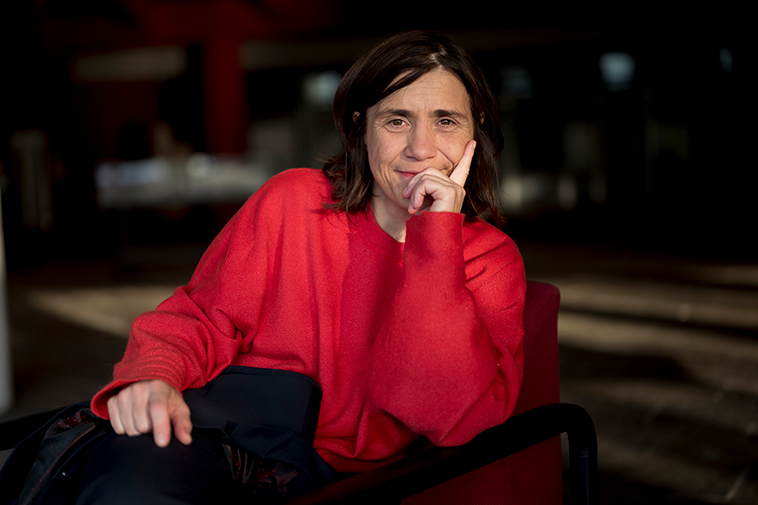
Bénédicte Savoy photographed by Maurice Weiss
Bénédicte Savoy is professor for Modern Art History at the Technische Universität Berlin. Between 2016 and 2021 she also held a professorship at the Collège de France in Paris, where she taught the cultural history of artistic heritage in Europe from the 18th century to the 20th century. Her research focuses on museum history, Franco-German cultural transfer, Nazi looted art, and research on postcolonial provenance. In 2018 she wrote the report “On the Restitution of African Cultural Heritage” together with Senegalese scholar Felwine Sarr. This report was commissioned by Emmanuel Macron, President of France.
She has received numerous awards for her research, academic activities, and teaching, including the 2016 Gottfried Wilhelm Leibniz Prize of the German Research Foundation and, most recently, the Berlin Science Prize. She is a member of the Berlin-Brandenburg Academy of Sciences and Humanities, a Knight of the French Legion of Honor and a member of various other institutions, advisory boards, and committees. Her most recent publications include the book “Africa’s Struggle for Its Art: History of a Postcolonial Defeat,” which has been translated into several languages, and the joint publication “Atlas der Abwesenheit. Kameruns Kulturerbe in Deutschland” (Atlas of Absence. Cameroon’s Cultural Heritage in Germany).