formularioRDF
The itinerary <em>TITULORECORRIDO</em> has been successfully created. Now you can add in works from the Collection browser
<em>TITULOOBRA</em> added to <em>TITULORECORRIDO</em> itinerary

Exhibition

The Hans Rudolf Gerstenmaier Donation

Museo Nacional del Prado. Madrid 7/15/2019 - 1/12/2020

Hans Rudolf Gesternmaier’s gift to the Prado stands out among recent donations of nineteenth-century painting not only for its size—eleven works in total—but also because of its specific focus on the art of the late 1800s and early 1900s, one of the pillars of his substantial collection and the most recent category in the museum's.

This donation, on display in Room 60 of the Villanueva Building, brings painters like Hermen Anglada-Camarasa, Eduardo Chicharro, Ignacio Zuloaga and Joaquín Mir into the museum. These compositions enrich the final section of the Prado’s Spanish painting collection, where their close contemporaries Sorolla and Beruete are already represented.

Under the terms of a royal decree ratified on 17 March 1995, the Museo Nacional Centro de Arte Reina Sofía was assigned works by certain artists who, despite having been born before Picasso—the cut-off date used to separate the collections of the two institutions—had substantially contributed to the rise of modernism in the twentieth century. However, thanks to an agreement signed by the Reina Sofía and the Prado, the latter is now able to incorporate works by artists previously allocated to the former. The Prado can therefore begin to exhibit, with a true sense of history, the most recent pieces in its collection of Spanish paintings, hanging works by Ignacio Zuloaga, Hermen Anglada-Camarasa, Eduardo Chicharro and others alongside those of their close contemporaries.

Thanks to the generous gift of Hans Rudolf Gerstenmaier (Hamburg, 1934), a businessman who moved to Spain in 1962 and began collecting in the following decade, the creations of artists like Darío de Regoyos, Ignacio Zuloaga, Hermen Anglada-Camarasa, Eduardo Chicharro, Joaquín Mir and Juan de Echevarría, who lived and worked at the same time as Sorolla and Beruete, have enriched the museum’s most recent holdings and opened up a new direction for the growth of its collections.

Access

Room 60 . Villanueva Building

RDF

RDF

Exhibition

The donation

The donation
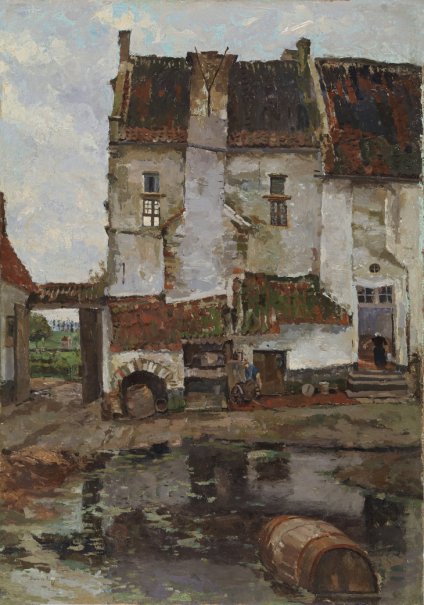
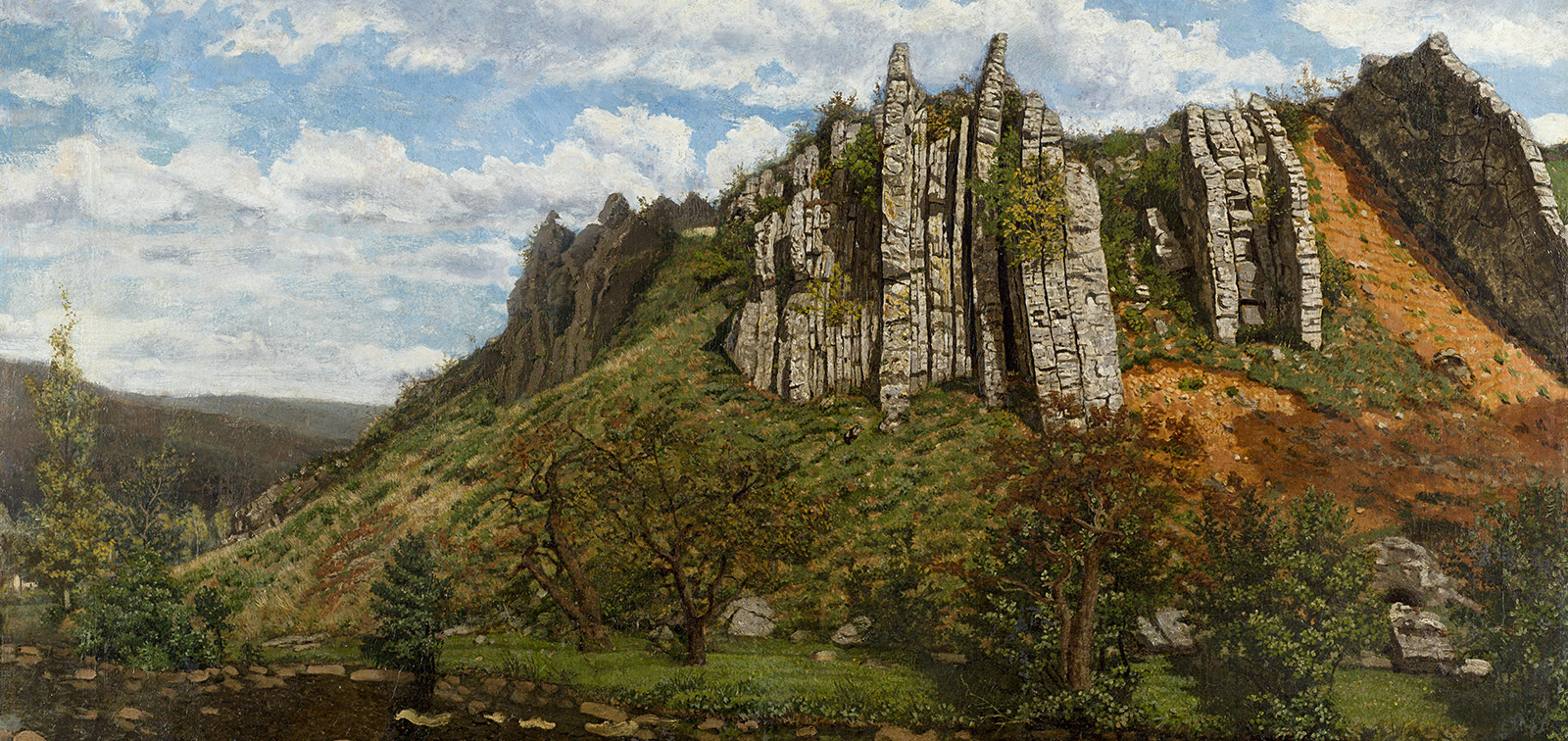
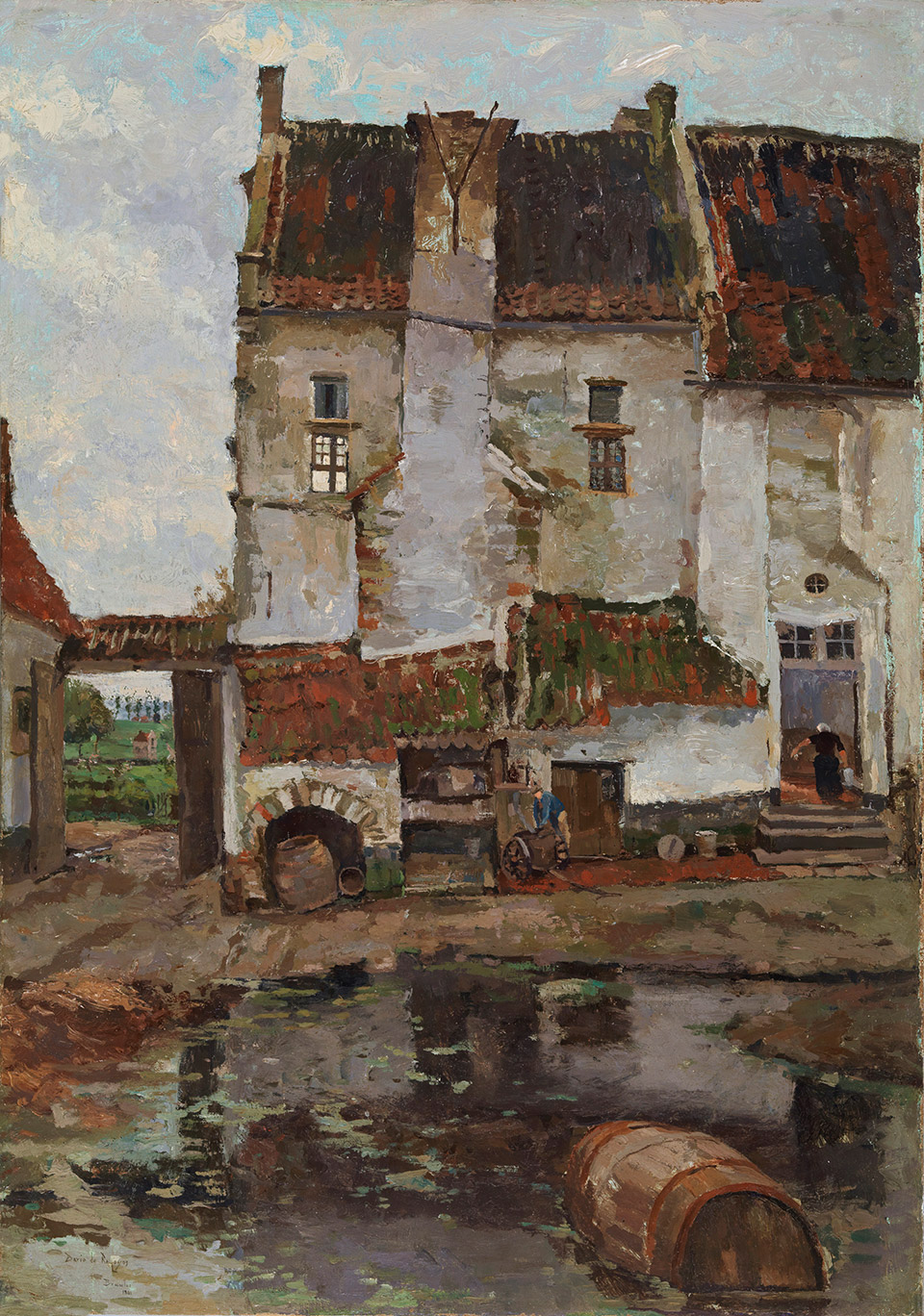
Outskirts of Brussels
Darío de Regoyos
Oil on canvas, 101.2 x 70.5 cm
1881
Madrid, Museo Nacional del Prado. Gerstenmaier Donation

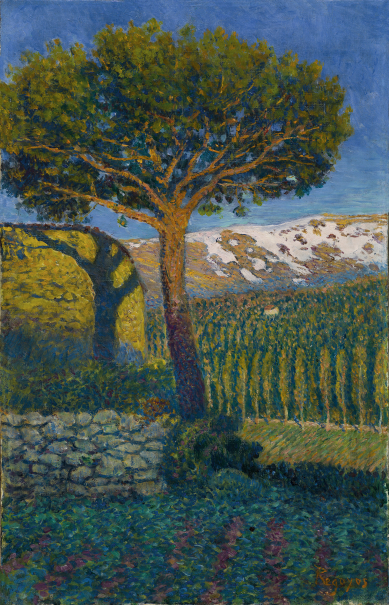
The previously unpublished painting titled Outskirts of Brussels by Regoyos, one of the most cosmopolitan artists of his generation, is among the finest examples of his early work. In contrast, The Pine at Béjar, made during his mature period, shows the artist’s total mastery of Impressionistic pictorial resources.

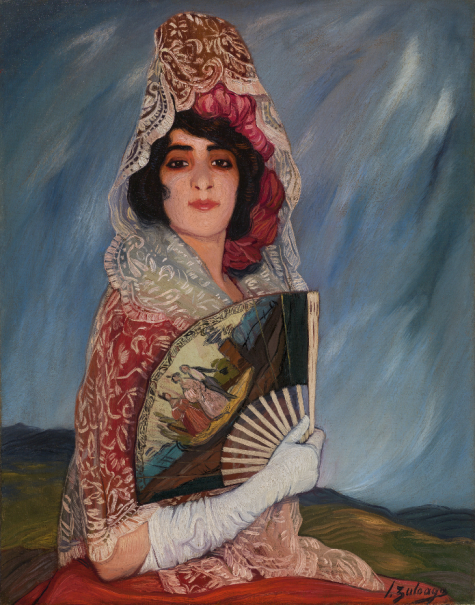
His friend Zuloaga is represented by Woman from Madrid, a typically Spanish interpretation of feminine sensuality set against a blue background of broad, light-coloured brushstrokes that denote his familiarity with El Greco’s work.

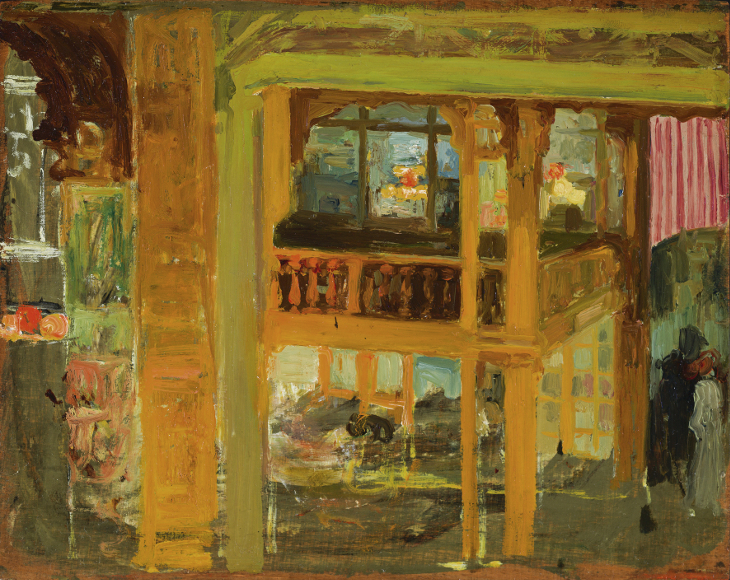
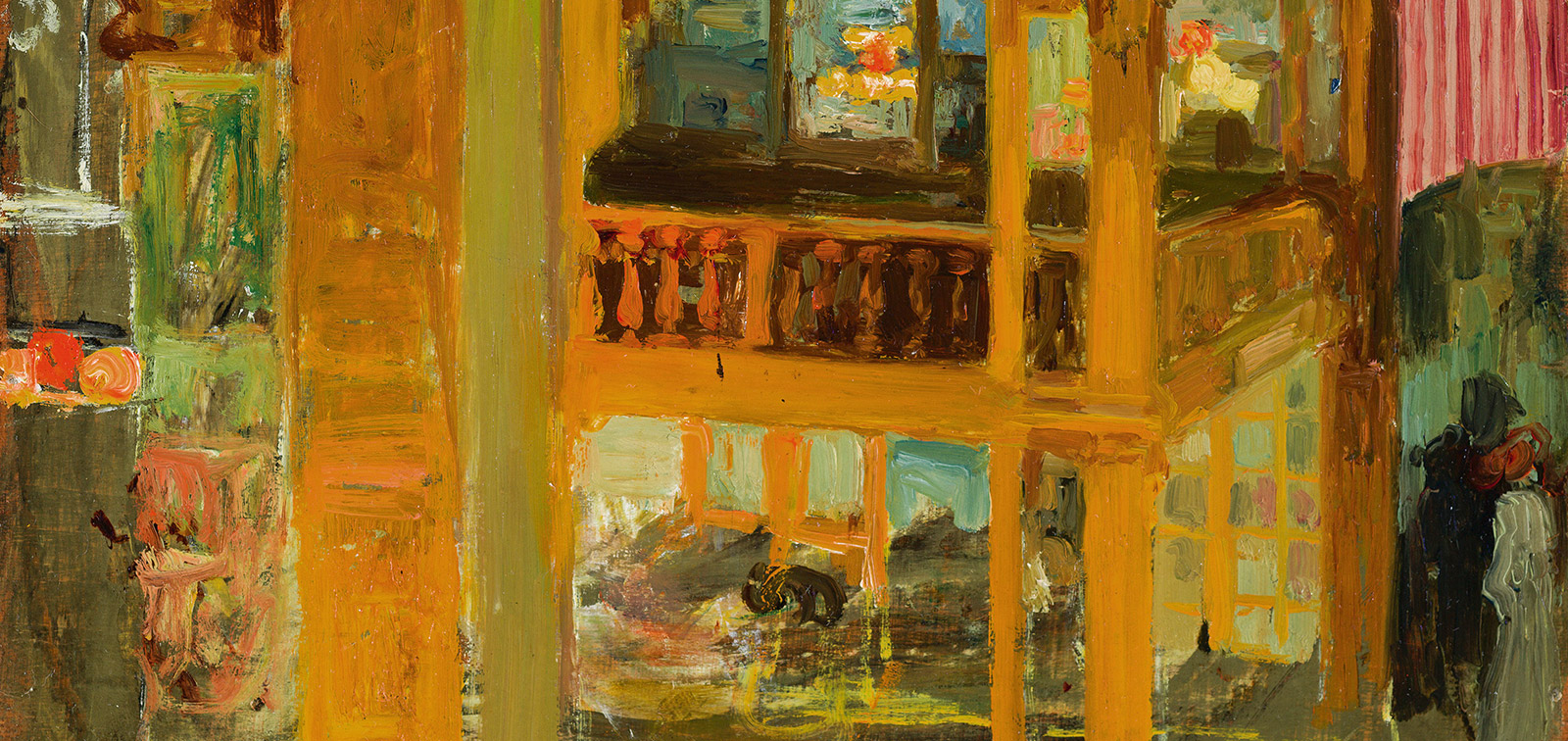
Hermen Anglada-Camarasa, another great innovator of international renown, used his mastery of colour to convey a personal vision of artificial light in the fin-de-siècle Interior of a Café-concert.

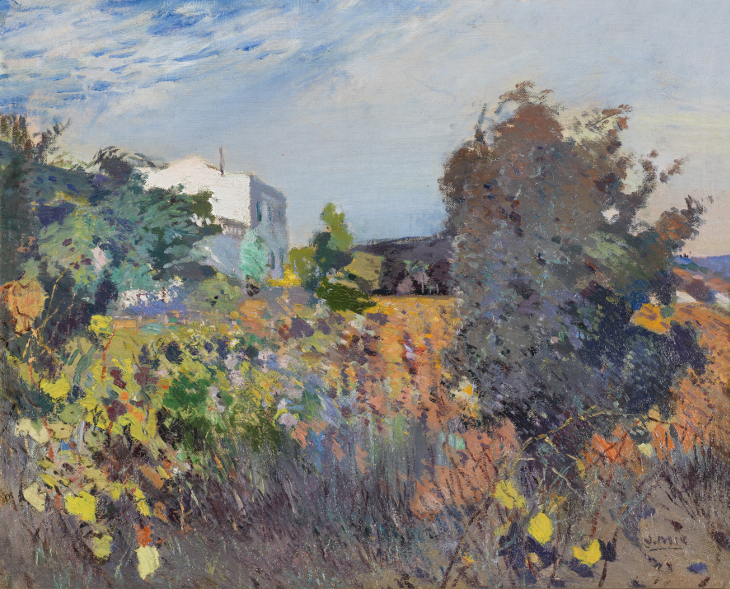
Moving into the post-modernist era, Joaquín Mir, the best landscape artist of his generation, is represented by Torre Solà. Montornés, an honest, direct composition painted during his time inEl Mollet.

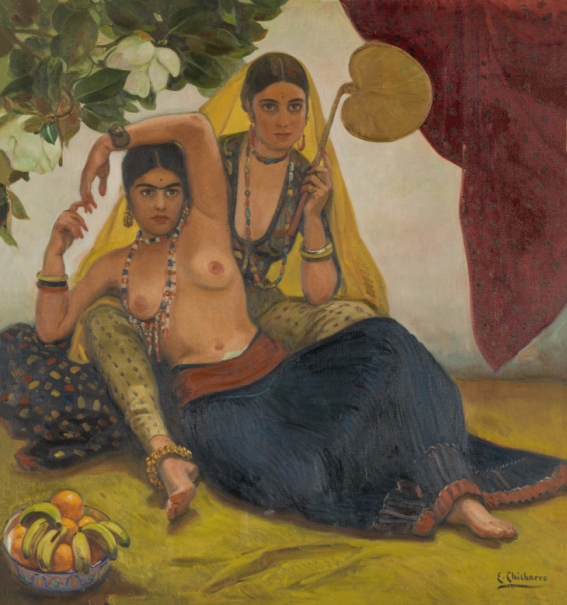
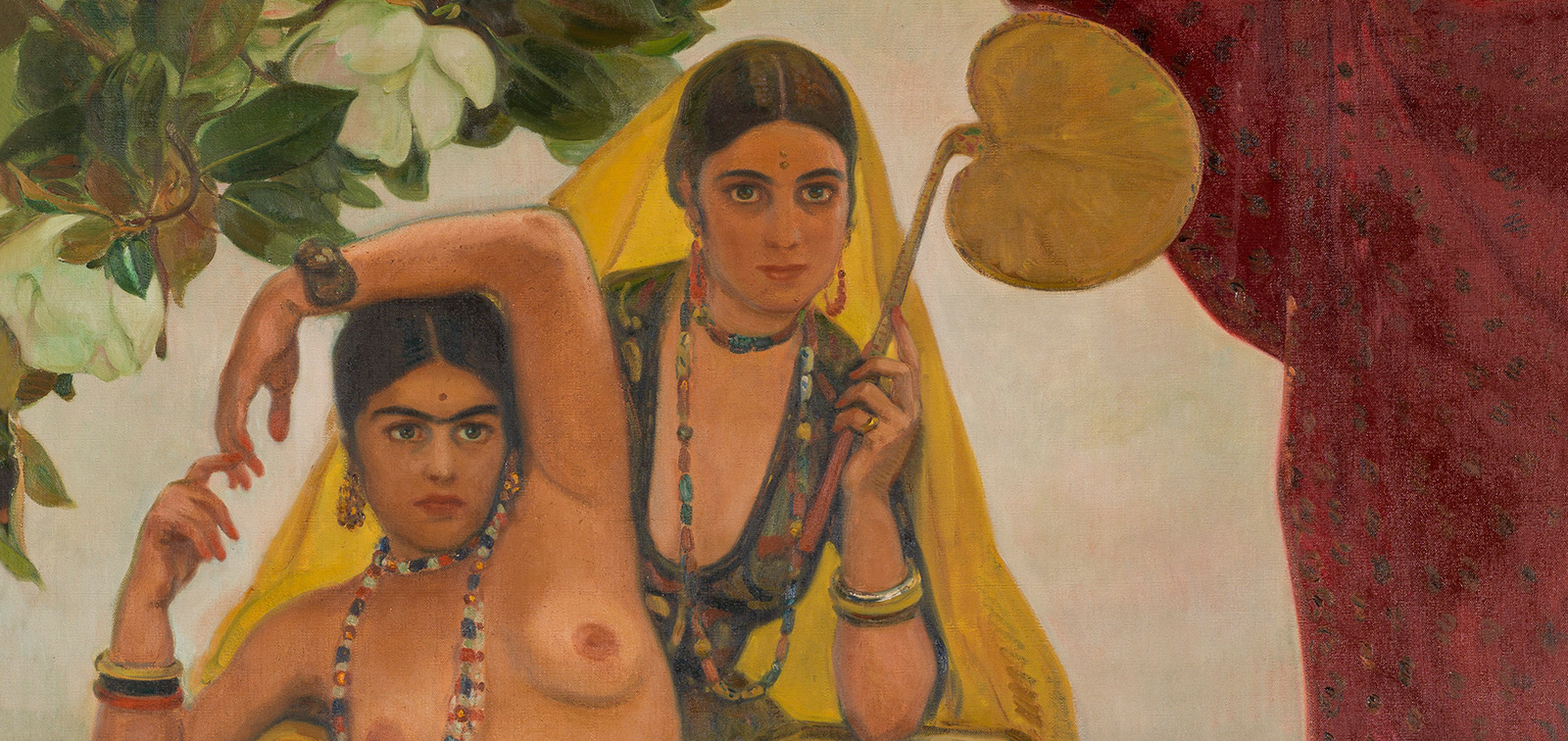
Eduardo Chicharro’s Indian Dancers shows how, in the 1920s, the artist drifted towards a more sensually and exotically suggestive style of painting.

Gypsy Family, Palencia, illustrates Juan de Echevarría’s fascination with such themes and with Post-Impressionist painters (especially Gauguin). Echevarría had close ties to the Generation of ‘98 and to Valle-Inclán, whose daughter Mariquiña he portrayed.

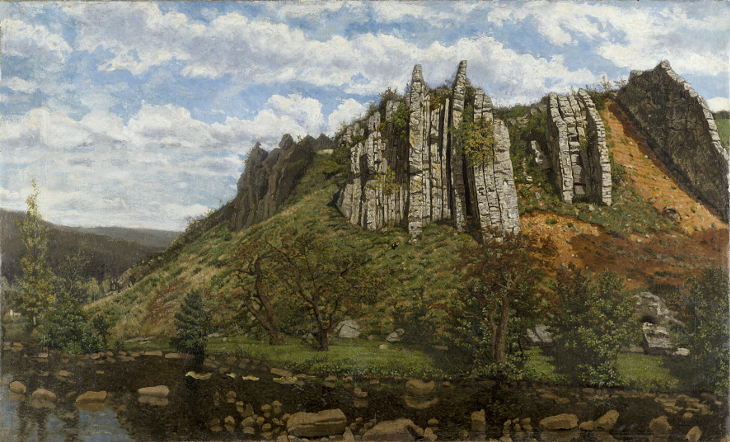
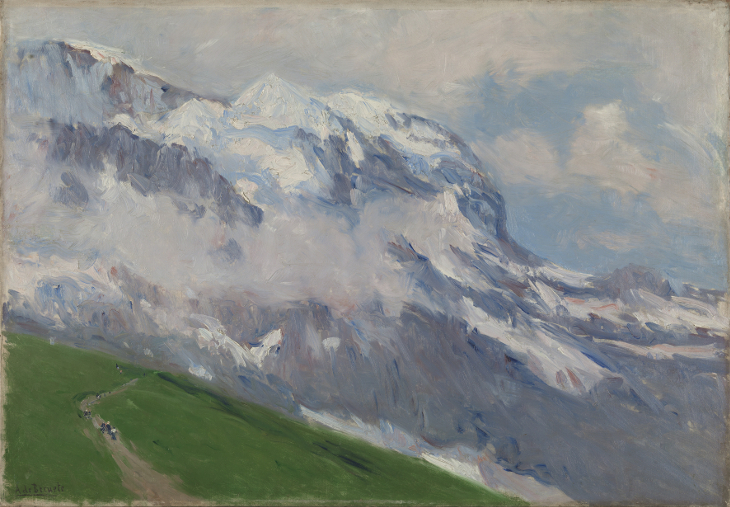
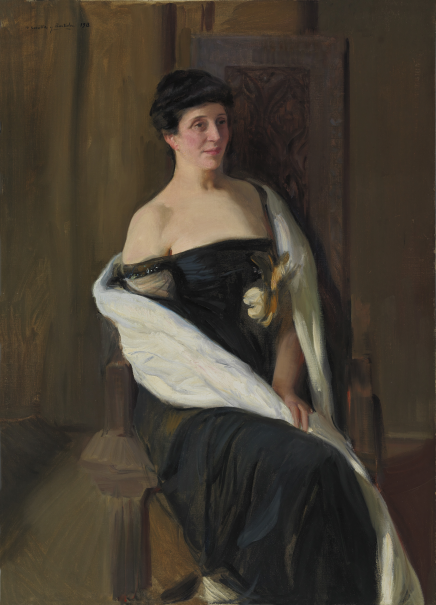
In addition to the foregoing, Gerstenmaier decided to donate three important works by painters already represented at the Prado: Joaquín Sorolla, Aureliano de Beruete and Agustín de Riancho. The museum only owned one work made in the last year of Riancho’s life, which has now been joined by a much earlier and larger landscape. As for Sorolla, the Prado did not have any portraits from the final decade of his career. The likeness of the woman now identified as Ella J. Seligmann, wife of a major art dealer based in Paris, is also one of Sorolla’s most understated and elegant portraits, offering a more concise vision than earlier works. Finally, although the Prado is home to the largest existing collection of works by Beruete, it was missing an example of his extraordinary Alpine landscapes—a subject also curiously absent from the museum’s nineteenth-century collection, despite the interest it held for artists of that era.

Hans Rudolf Gerstenmaier

Mr Gerstenmaier was born on 9 September 1943 in Hamburg, Germany, where he studied business. He initially worked at the Hamburg office of Brown, Boveri & Cie., a prestigious Swiss firm specialised in electrical engineering and motor development. In 1962, he moved to Spain for business. At first, he worked as a representative of MAN, the well-known lorry company, and later began acting for German automotive companies in the parts industry, with the idea of striking out on his own. His plans prospered, and in 1964 he went into business for himself as Rudolf Gerstenmaier, supplier of German car parts, which eventually became the public limited company Gerstenmaier S.A. At its height, the enterprise boasted a large turnover, one hundred and fifty employees, and thirty local offices in Spain.

Gerstenmaier’s newfound prosperity prompted him to take an interest in art and begin collecting, an activity in which his discovery of Spanish art was destined to play a vital part. In those days, he kept company with antique dealers like Felipe Sánchez de la Fuente, whose wife, Beatriz Lafora, was the daughter of the well-known dealer Juan Lafora Calatayud. In general, he was surprised by the many late medieval, Renaissance and Baroque pieces for sale on the Madrid market. Around 1970, he began collecting Spanish paintings from the fifteenth and sixteenth centuries, which were soon joined by Flemish paintings. His collecting interests expanded to include a third category, nineteenth-century paintings, initially drawn to the sensory vivacity of Joaquín Sorolla’s work and the rich materiality of Hermen Anglada-Camarasa’s compositions. Those years were marked by the increasingly intense activity of auction houses, among them several prestigious foreign firms, whose sales he attended. Mr Gerstenmaier’s home in Madrid housed his most modern paintings and some of the Old Masters, especially from Flanders. He assembled a large part of the sculptures and decorative arts at his residence in the village of El Boalo (Manzanares el Real, Madrid), where he also integrated elements of Renaissance architecture. In 2002, he sold his company to a Swiss multinational and retired from business to focus on collecting and sharing his art through numerous exhibitions in different cities across Spain and even abroad, such as Cascais, Portugal, Mexico City and Santiago de Chile. In addition to organising these shows, Mr Gerstenmaier generously approved loans for many other events, including the Prado’s Fortuny exhibition in 2017, for which he lent an excellent watercolour on a Moroccan theme.

Artworks

1

2

3

4

5

6

7

8

9

10

11

Print on demand

Print artworks available in our catalogue in high quality and your preferred size and finish.

Image archive

Request artworks available in our catalogue in digital format.

Up