formularioRDF
The itinerary <em>TITULORECORRIDO</em> has been successfully created. Now you can add in works from the Collection browser
<em>TITULOOBRA</em> added to <em>TITULORECORRIDO</em> itinerary

Exhibition

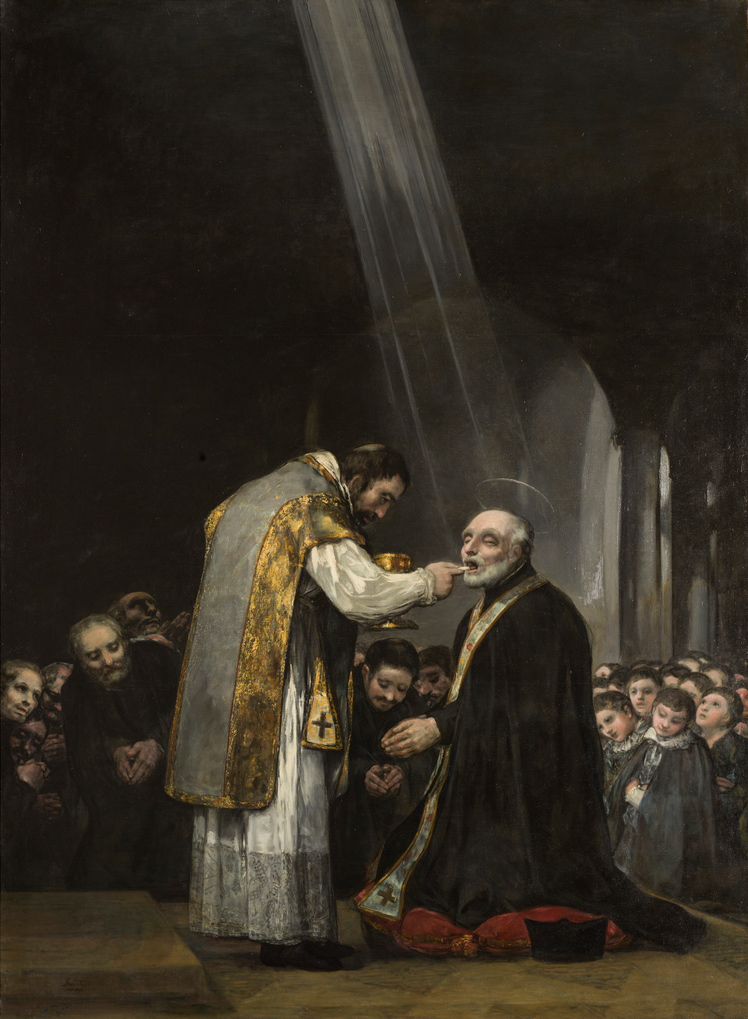
The Last Communion of St Joseph Calasanz

Madrid 10/29/2018 - 9/20/2021

The Museo del Prado and Fundación Amigos del Prado present Goya’s Last Communion of St Joseph Calasanz. Thanks to the generosity of its owner, the Order of the Pious Schools in the province of Bethany, this work will remain in Room 34 of the Villanueva Building for one year, with the possibility of renewing the loan for a second year.

The temporary addition of this painting to the museum’s collections is particularly significant because it coincides with the 200th anniversary of the Prado’s opening in 1819, the same year the work was painted. Its display in the context of the largest and most complete collection of Goya’s oeuvre offers further insight into the essence of his painting and his art in general, revealing his profound and exceptional knowledge of human beings and their tensions, fractures and sufferings. Goya expressed all of these things in that large altar painting by studying each of the characters in the scene, who seem to prefigure a western classical theme like the Three Ages of Man, combating violence with meekness, or light and shadow as a metaphor for the subjects’ deeds and thoughts.

Access

Room 34 . Villanueva Building

RDF

RDF

Sponsored by:
Fundación Amigos del Museo del Prado

Exhibition

Goya’s Religious Paintings

Goya’s Religious Paintings
The Last Communion of St Joseph Calasanz
Francisco de Goya
Oil on canvas, 303 x 222 cm
1819
Madrid, Collection of Padres Escolapios

The Romantic perception of Goya as a religious sceptic or unbeliever, which downplayed the importance of his devotional work, has recently been modified by the discovery of new canvases on religious themes in private collections and, above all, the reinterpretation of known frescoes and canvases by this artist. We can now be quite certain that religious painting was an important part of his oeuvre. Records show that, like most artists of his time, Goya received commissions from the church, public institutions and devout individuals throughout his career; in fact, such work gave him a solid foundation for other creative pursuits.

The Last Communion of St Joseph Calasanz, made for the Piarist order in Madrid in 1819, two years after the equally exceptional altar painting of Saints Justa and Rufina for the cathedral of Seville, is Goya’s last religious painting as well as his final public work.

In recent years, the Museo del Prado has acquired several private devotional compositions by Goya—including the early Saint Barbara, two depictions of The Holy Family, a pendant piece to one of them titled Tobias and the Angel, and Saint John the Baptist in the Desert—in an attempt to expand its collection of religious paintings by the artist.

The Last Communion of St Joseph Calasanz

Made in 1819 for San Antón, the church of the Piarist school in Madrid, this was the last of Goya’s large altar paintings. Nothing certain is known about Goya’s relationship with the Piarists at the time—there is no evidence to support the claim that he attended the Pious School in Zaragoza—or the reason for this commission, although he may have had a connection with them as the order was run by people from his native Aragón. As was often the case with church commissions, the order may have proposed the theme, which highlights the importance of the Eucharist for Calasanz, who always had the chapel for celebrating Holy Communion placed at the centre of his schools.

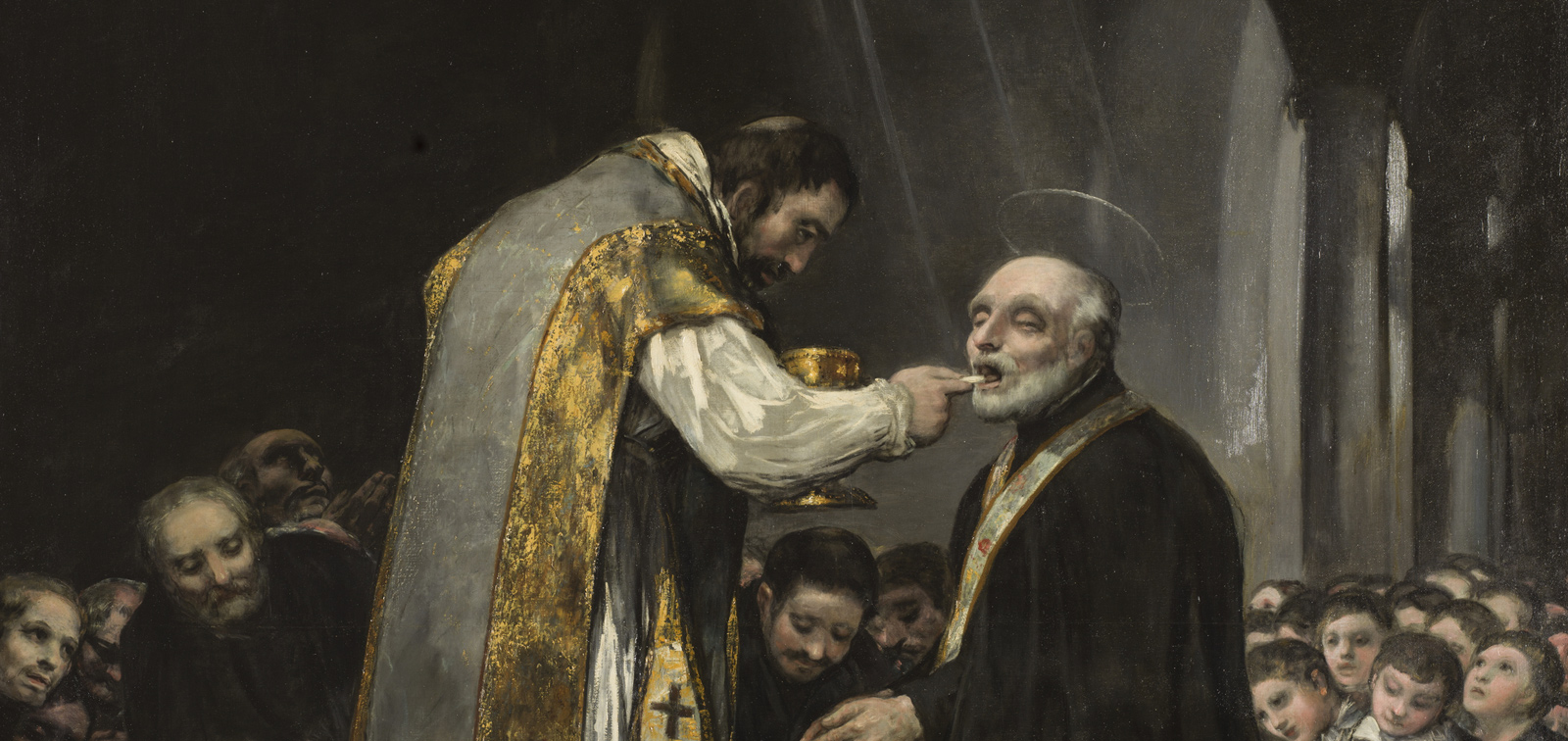
The complex scene allowed the artist to convey the saint’s religiosity, faith, life of humility and penitence, and educational work. He is accompanied by several priests from the order and some of the smaller children who are kneeling round him, captivated by the total dedication and submission of their teacher, who has been touched by the divine light. The picture was intended to be viewed by the teachers and pupils of the Madrid school and parishioners who attended religious services at the popular church of San Antón. This work evokes, more eloquently than any other religious painting by Goya, a lofty realm of supreme spirituality and sanctity. Goya deliberately used a remarkably spacious, luminous arrangement, illustrating the lesson he had learned from Velázquez’s Las Meninas, to create the optical illusion that the real space of the church continued in the imaginary space of the canvas.

Artworks

1

Print on demand

Print artworks available in our catalogue in high quality and your preferred size and finish.

Image archive

Request artworks available in our catalogue in digital format.

Up