formularioRDF
The itinerary <em>TITULORECORRIDO</em> has been successfully created. Now you can add in works from the Collection browser
<em>TITULOOBRA</em> added to <em>TITULORECORRIDO</em> itinerary

Charles the Fourth of Spain and His Family. Goya

Accessible visit / Easy-to-read content of Museo del Prado / Charles the Fourth of Spain and His Family. Goya

Charles the Fourth of Spain and His Family is a painting by Goya, a Spanish painter. 

The painting is from 1800.

ETR (Easy to Read) icon
© Easy-to-read european logo: Inclusion Europe. More information at: Easy-to-read

A royal portrait

Goya painted a group portrait of the royal family, including himself.

The painting reveals the personalities of each figure and the power dynamics between them.

Queen Maria Luisa of Parma stands proudly in the centre.

She holds the hand of her youngest son, Francisco de Paula, and hugs her daughter, Maria Isabel.

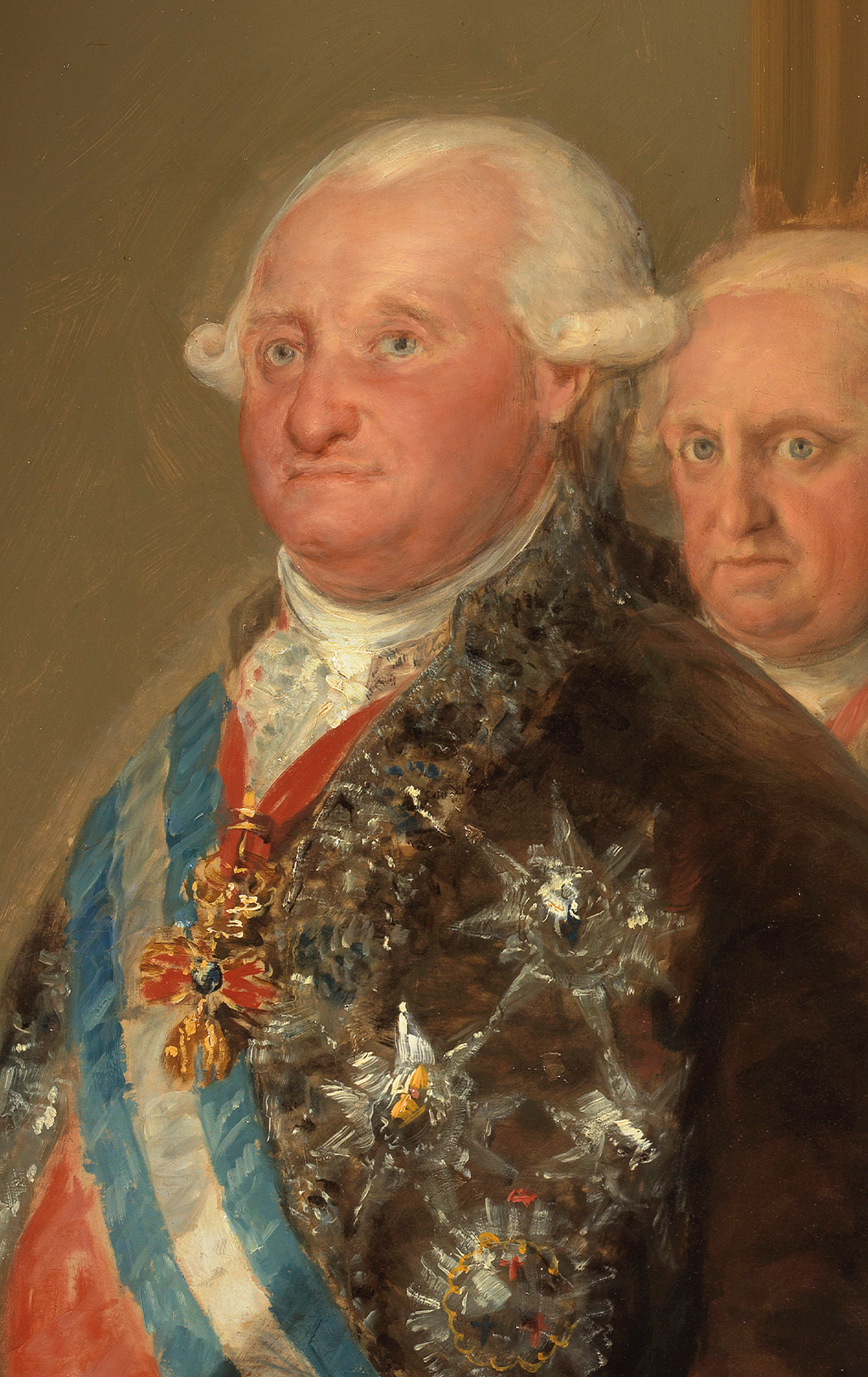
Next to little Francisco de Paula stands King Charles the Fourth, dressed in full regalia and wearing various insignia, medals, and sashes.

The king has a calm expression.

At the time, there was a rumour that the queen held real power.

The successor, Ferdinand, Prince of Asturias, is on the left, dressed in blue.

He will be the future King Ferdinand the Seventh.

Behind Ferdinand is his brother, Carlos Maria Isidro.

In the background stands Maria Josefa, sister of Charles the Fourth.

In front of Maria Josefa, a woman with her face turned sideways represents the future wife of Ferdinand.

Ferdinand did not have a wife at that time.

On the right, behind King Charles the Fourth, stands the brother of the king, Antonio Pascual, with his wife.

Next to Antonio Pascual stands the daughter of the king, the Infanta Maria Luisa, with her husband and her son Carlos Luis.

The presence of the baby represents the idea that the royal family will continue in the future.
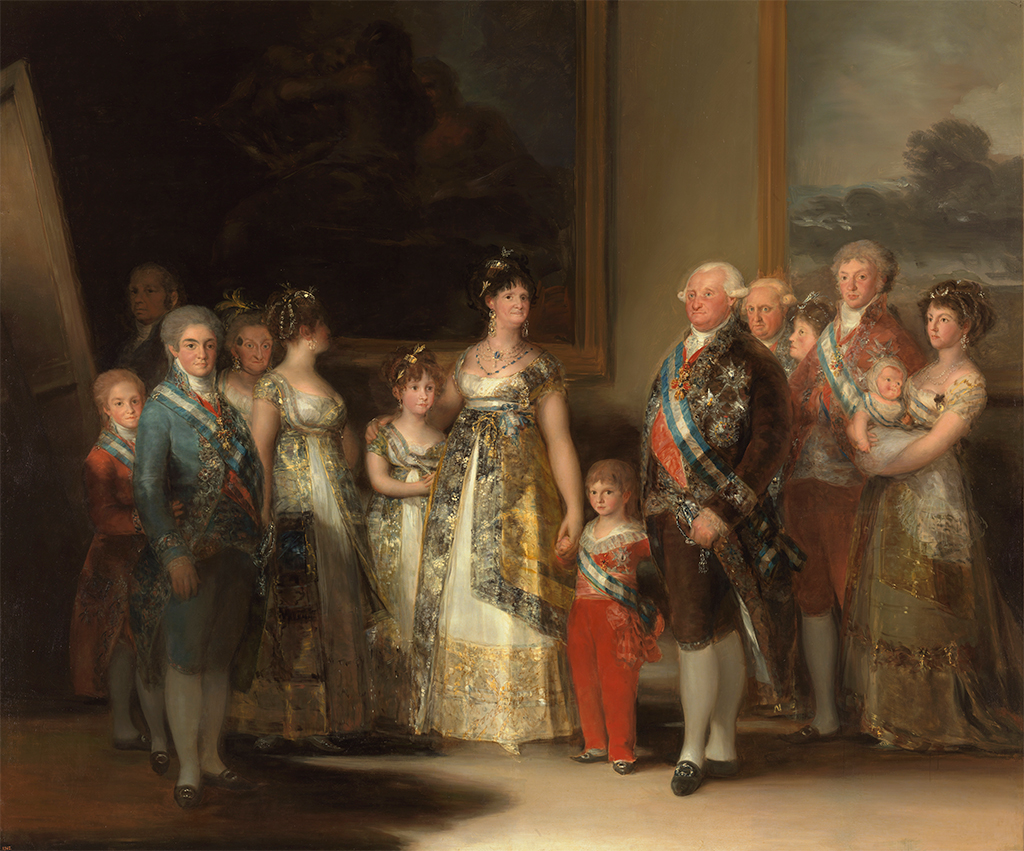
Charles the Fourth of Spain and His Family
Charles the Fourth of Spain and His Family by Goya

The painter

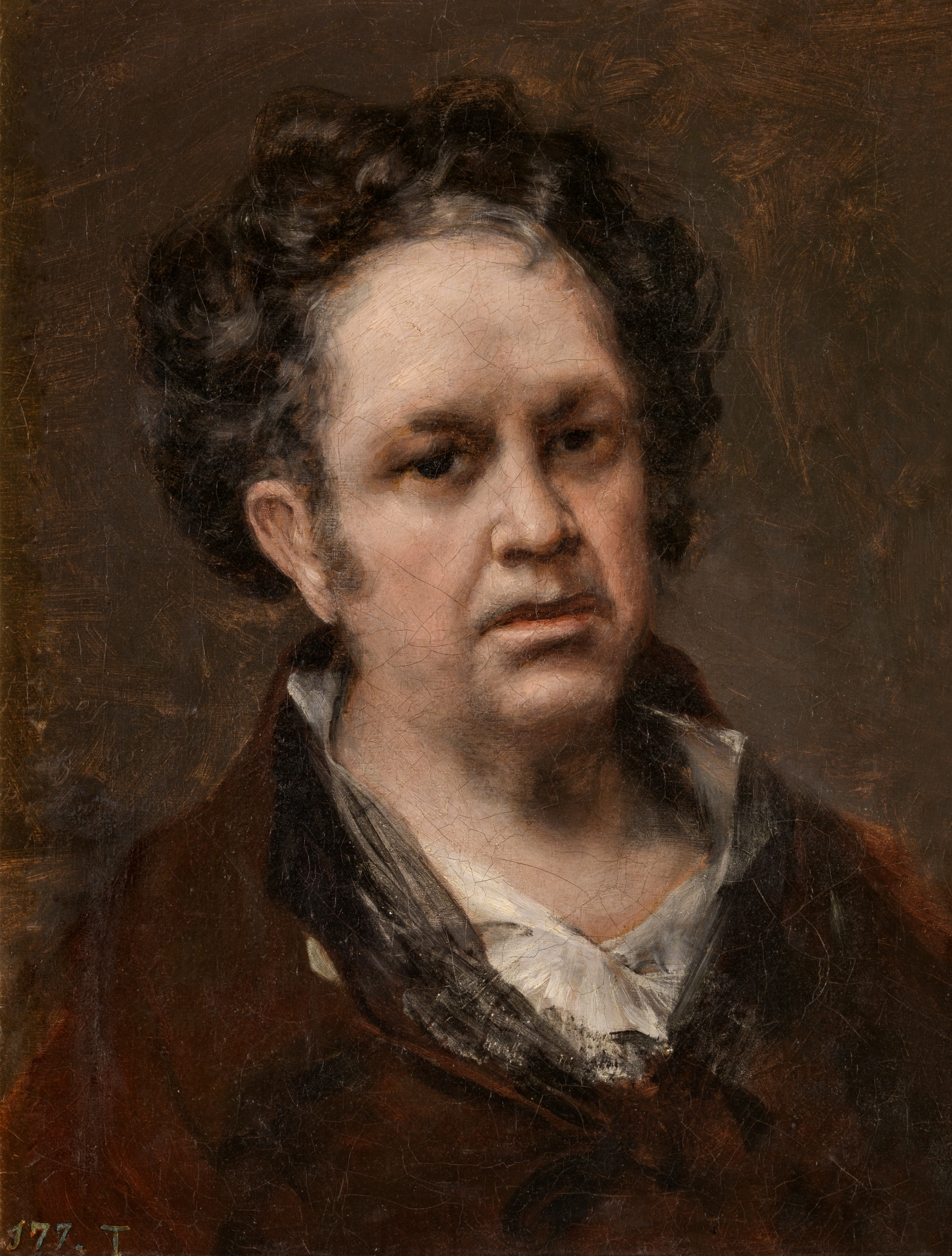
Finally, Goya paints himself on the left, almost hidden in shadow.

We can see Goya painting a large canvas, similar to how Velázquez appears in Las Meninas.

But there are differences between the 2 paintings.

Velázquez was more concerned with showing space and light, while Goya was more concerned with the details of the clothes, the ornaments and the jewellery.

Goya created this painting in a year of political tension with France.

In the painting, Goya intended to show the power of the ruling family in Spain.

The revolution triumphed in France a few years earlier, and the French monarchs were sentenced to death.

This painting is large, and Goya spent several months painting it.

It was his first painting after King Charles the Fourth appointed him as his principal palace painter.

Before working on a large group portrait, Goya first painted individual portraits of each member of the royal family.

It helped him remember the positions and characteristics of each member.

You can see some of these individual portraits in the same room at the museum.

Detail of Charles the Fourth
Funded by the European Union - NextGenerationEU Government of Spain - Ministry of Culture Recovery, Transformation and Resiliency Plan Museo Nacional del Prado

Funded with the National Recovery and Resilience Plan (NRPP) , Spain’s Next Generation EU financing and according to the initiatives within the component C.24.I3 Digitization and valorization of major cultural services. The project is part of Campus Prado within Accessibility and Signage: Revitalization of the Urban Environment action line and as a universal accessibility activity.

Up