formularioRDF
The itinerary <em>TITULORECORRIDO</em> has been successfully created. Now you can add in works from the Collection browser
<em>TITULOOBRA</em> added to <em>TITULORECORRIDO</em> itinerary

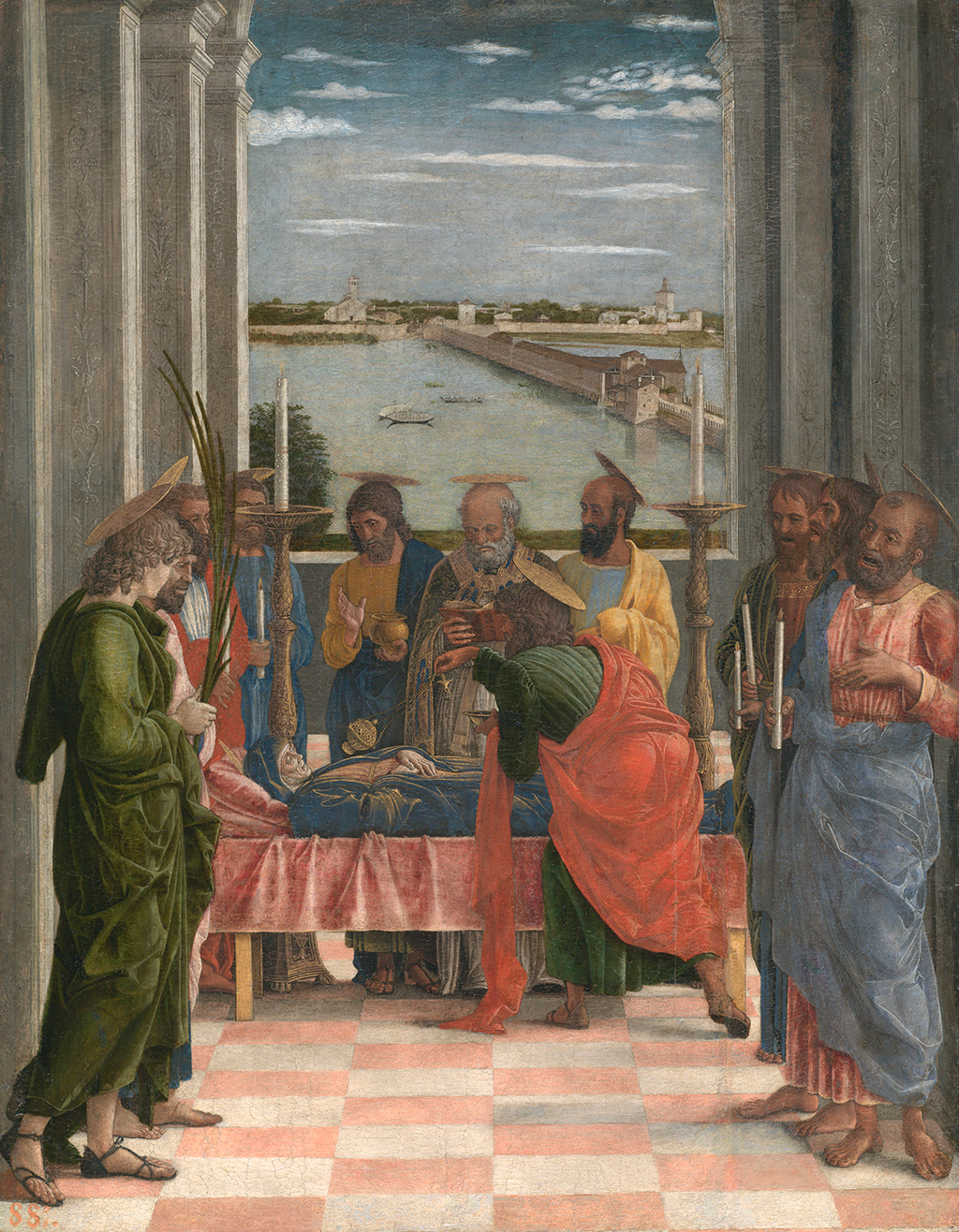
The Death of the Virgin. Mantegna

The Transit of the Virgin is a painting by Andrea Mantegna, an Italian painter.

The painting is from 1462.

ETR (Easy to Read) icon
© Easy-to-read european logo: Inclusion Europe. More information at: Easy-to-read

What is the subject?

This painting on wood depicts the moment before the death of the Virgin Mary, as narrated in the Apocryphal Gospels.

Apocryphal Gospels describe stories from the Christian religion but are not included in the Bible.

This moment is named the transition, representing the passage from life to death, from earthly to heavenly life.

The Virgin Mary lies on a bed surrounded by 11 apostles.

Saint Thomas is not present because, according to the Apocryphal Gospels, he was preaching in India.

Saint Peter, with a white beard in the centre, holds a missal.

One of the apostles blesses the Virgin with holy water, while another holds incense.

The rest hold candles and sing.

Saint John is dressed in green and carries a palm.

The gestures of the apostles transmit sadness, but it is not excessive.
TheTransitoftheVirgin
The Transit of the Virgin by Andrea Mantegna

Why is the painting relevant?

According to experts, this painting by Mantegna is considered the best because of the impressive depth effect he achieved.

The apostle holding the incense leans over the bed, creating the illusion that some apostles are in front while others are behind.

Even the floor tiles contribute to the sense of depth in the room.

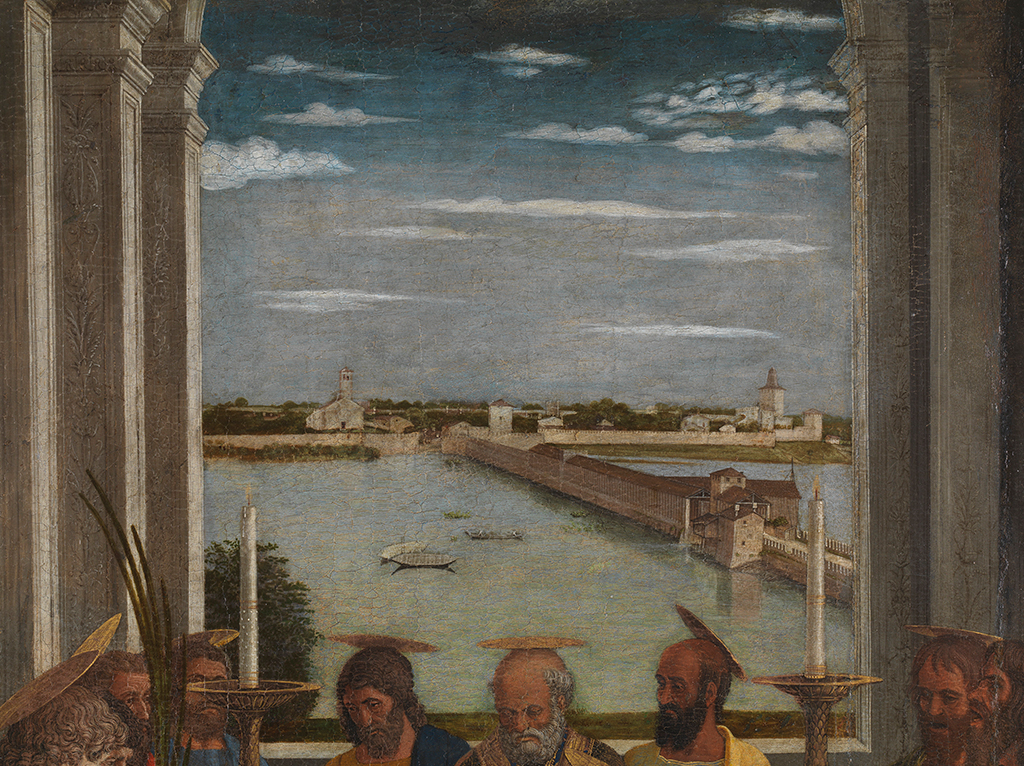
The view of the landscape through the window is incredibly detailed.

It is the first time in Italy that a painter has depicted a landscape with such a perspective, where the details are proportional to their distance.

This view is known as a topographic view.

As a result, the lake next to the Italian city of Mantua appears larger, the bridge over the lake becomes smaller in the distance, and the town of Borgo di San Giorgio is very small in the background

The painting was originally larger, but the upper part was later cut.

In the upper section, Mantegna painted the figure of Jesus Christand the ceiling of the room, which had a vaulted arch shape.

The room was designed in the Renaissance architectural style.

The Renaissance is an art style from the 15 and 16 centuries.

Mantegna created this artwork specifically for the Gonzaga family, who were the Marquises of Mantua.

The family commissioned him when he was 29 years old, and he continued to work for them until his death at the age of 76.

For this reason, the background landscape in the painting depicts the Italian city of Mantua.

Detaillandscape
Detail of the landscape

This work belongs to the following tours:

Easy-to-read content of Museo del Prado
Funded by the European Union - NextGenerationEU Government of Spain - Ministry of Culture Recovery, Transformation and Resiliency Plan Museo Nacional del Prado

Funded with the National Recovery and Resilience Plan (NRPP) , Spain’s Next Generation EU financing and according to the initiatives within the component C.24.I3 Digitization and valorization of major cultural services. The project is part of Campus Prado within Accessibility and Signage: Revitalization of the Urban Environment action line and as a universal accessibility activity.

Up