formularioRDF
The itinerary <em>TITULORECORRIDO</em> has been successfully created. Now you can add in works from the Collection browser
<em>TITULOOBRA</em> added to <em>TITULORECORRIDO</em> itinerary

The Immaculate Conception. Tiepolo

The Immaculate Conception is a painting by Giambattista Tiepolo, an Italian painter. 

The painting is from 1679.

ETR (Easy to Read) icon
© Easy-to-read european logo: Inclusion Europe. More information at: Easy-to-read

What is the subject?

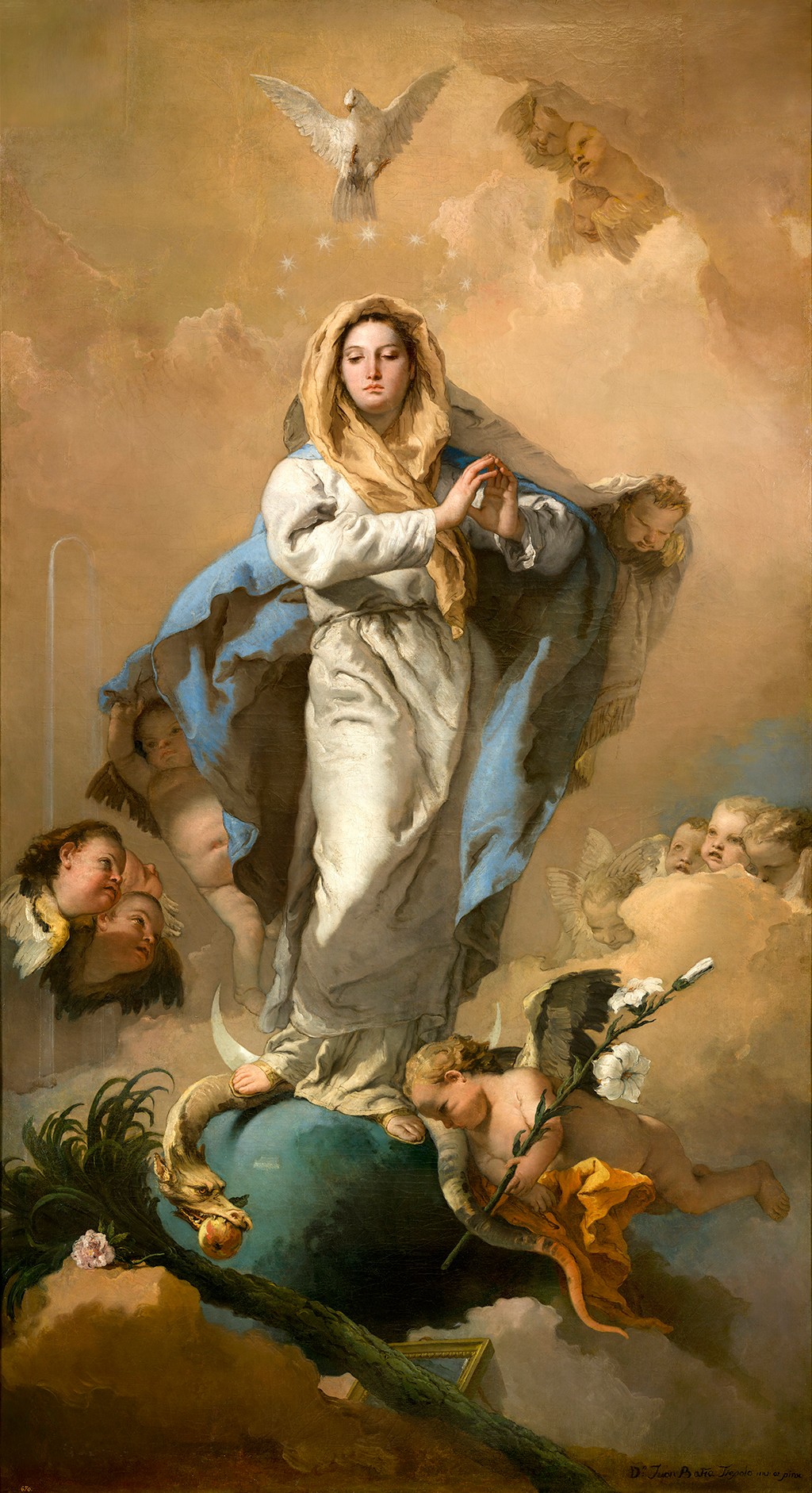
Tiepolo created this painting representing the Virgin Mary as the Immaculate Conception in the sky.

The Bible tells us that a great sign appeared in the form of light in the sky during the Apocalypse.

The Apocalypse is a part of the Bible that describes the end of the world.

In that light was a woman with the moon under her feet and a crown of 12 stars.

That woman is the Immaculate Conception depicted in this painting.

The Virgin Mary is in the centre of the painting.

She raises her hands high, and her eyes almost closed.

The Virgin Mary has her feet on the world and the moon.

She crushes a dragon with her feet.

The dragon is a symbol representing the devil.

There is also a palm tree representing the victories of the Virgin Mary.

The Virgin Mary has a crown of stars above her head.

The white dove above the Virgin Mary represents the Holy Spirit.

The Holy Spirit, the Father, and the Son are the 3 persons in God.

The angels surround and support The Virgin Mary.

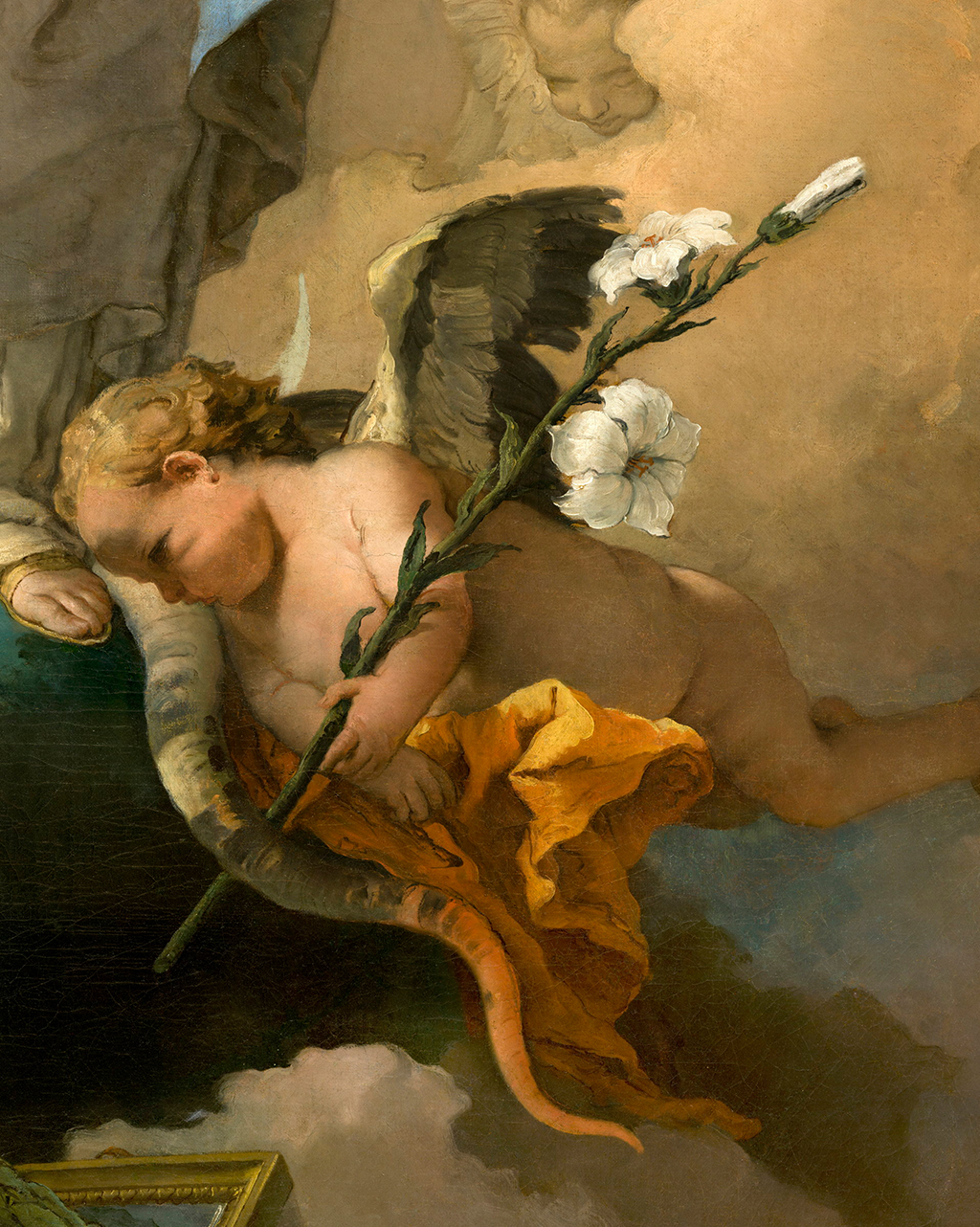
The angels have items in their hands that symbolise the Virgin Mary

For example, one of the angels has a branch of lilies.

The lilies symbolise that the Virgin Mary is pure.
TheImmaculateConception
The Immaculate Conception by Tiepolo

The painter

Giambattista Tiepolo was the author of this work.

He was born in Venice, Italy, and dedicated himself to painting frescoes.

Frescoes are paintings made on walls and ceilings using a mixture of lime and pigments.

Tiepolo travelled to Spain when he was 66 years old.

In Spain, he worked for King Charles the Third.

The king provided Tiepolo with a salary, a house, and travel expenses, and in return, Tiepolo was commissioned to decorate the newly built Royal Palace.

Tiepolo decorated several palace rooms and accepted additional painting commissions for the king.

Two sons of Tiepolo accompanied him during his stay in Spain.

His sons were also painters.

Tiepolo created this painting for the side altar of the Convent of San Pascual in Aranjuez.

Detailbaby
Detail of an angel

This work belongs to the following tours:

Easy-to-read content of Museo del Prado
Funded by the European Union - NextGenerationEU Government of Spain - Ministry of Culture Recovery, Transformation and Resiliency Plan Museo Nacional del Prado

Funded with the National Recovery and Resilience Plan (NRPP) , Spain’s Next Generation EU financing and according to the initiatives within the component C.24.I3 Digitization and valorization of major cultural services. The project is part of Campus Prado within Accessibility and Signage: Revitalization of the Urban Environment action line and as a universal accessibility activity.

Up