formularioRDF
The itinerary <em>TITULORECORRIDO</em> has been successfully created. Now you can add in works from the Collection browser
<em>TITULOOBRA</em> added to <em>TITULORECORRIDO</em> itinerary

The Lances or The Surrender of Breda. Velázquez

The Lances or The Surrender of Breda is a painting by Diego Velázquez, a Spanish painter.

The painting is from 1635.

ETR (Easy to Read) icon
© Easy-to-read european logo: Inclusion Europe. More information at: Easy-to-read

What is the subject?

This painting is one of the most famous works by Velázquez.

Breda is a city in the region that we know today as the Netherlands.

The Spanish army attacked Breda and surrounded the city for several months.

In the end, the city surrendered. 

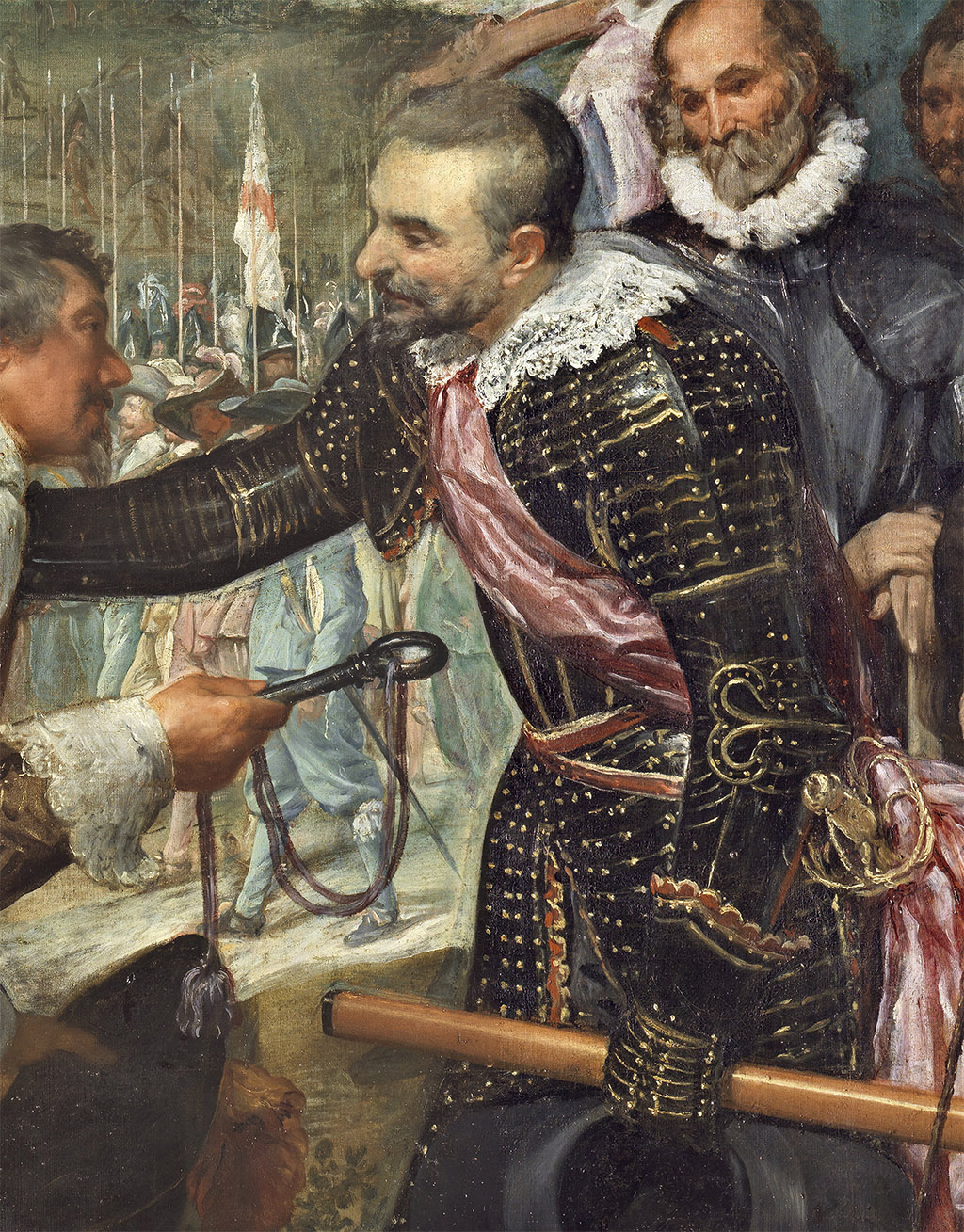
In the painting, the governor of the city, Justinus van Nassau, delivers the keys to the city to General Ambrogio Spinola. 

Ambrogio Spinola commanded the Spanish soldiers.

The act of delivering the keys to the city was a symbol of surrender. 

In the background, we can see a smoky landscape depicting the destruction caused by the war.

On the left side of the painting are the Dutch soldiers, and on the right are the Spanish soldiers.
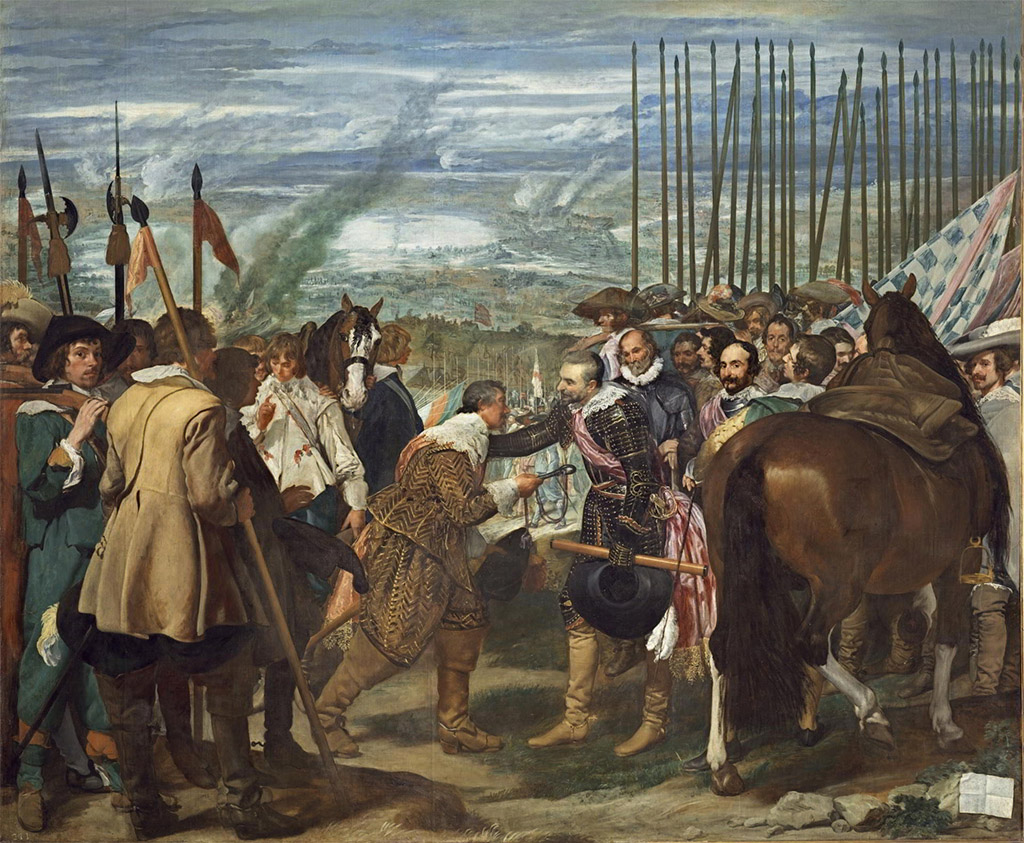
Picture of The Lances by Velázquez

A different war scene

This war painting is different from the typical war paintings.

Usually, a war painting shows the conqueror triumphant and the defeated humiliated.

When people surrendered, they knelt in front of the conqueror. 

But in this painting, the general of the Spanish army stops the Dutch governor from kneeling. 

The general of the Spanish army treats the Dutch governor with respect instead of humiliating him. 

The Spanish victory at Breda was very significant at the time. 

It was part of the long war between Spain and the United Provinces in the region that we know today as the Netherlands. 

The painting has political importance.

Velázquez paints the general of the Spanish army with a respectful gesture because the Spanish kings wanted to show that they were fair to people defeated in the war.

This painting served as political propaganda for the Spanish kings.

Detail of the Spanish army general

Relevant details of the painting

The painting has some curious details.

For example, on each side, there is a soldier looking at the viewers.

The popular name of the painting, The Lances, comes from the lances painted on the side of the Spanish army. 

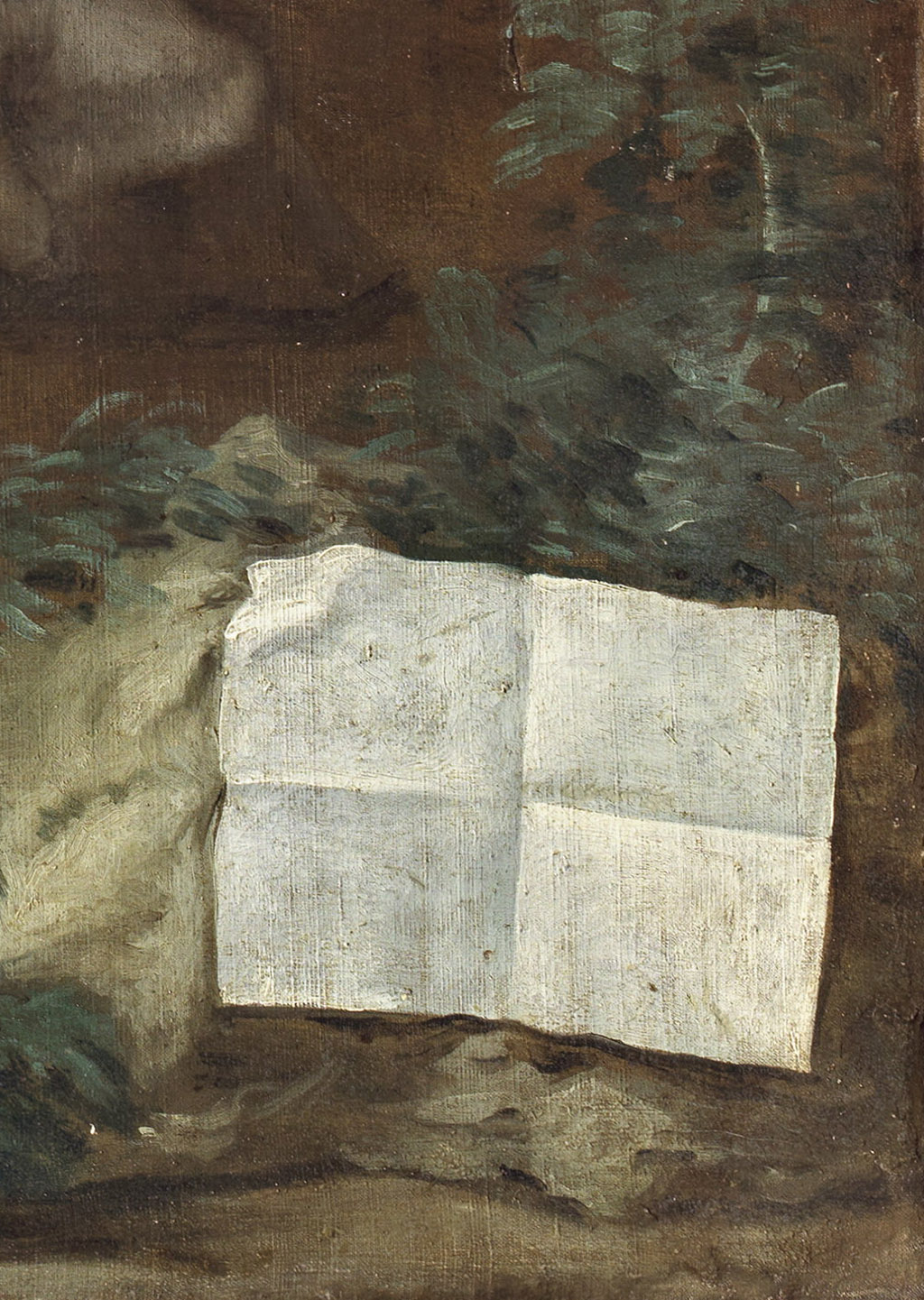
Velázquez did not sign the painting, but he left a blank space in the lower right corner of the painting.

It was a way of making everyone wonder who created this painting.

Velázquez was the only person capable of creating such a painting. 

“The Surrender of Breda” hung in the Hall of Realms in the Buen Retiro Palace in Madrid.

This former palace of the kings was near the Retiro Park in Madrid.

Detail of the blank sheet used as a signature
Funded by the European Union - NextGenerationEU Government of Spain - Ministry of Culture Recovery, Transformation and Resiliency Plan Museo Nacional del Prado

Funded with the National Recovery and Resilience Plan (NRPP) , Spain’s Next Generation EU financing and according to the initiatives within the component C.24.I3 Digitization and valorization of major cultural services. The project is part of Campus Prado within Accessibility and Signage: Revitalization of the Urban Environment action line and as a universal accessibility activity.

Up