The exhibition with the largest number of works organised by the Prado in China to date
The Museo del Prado arrives in China with the exhibition Ages of Splendor. A History of Spain in the Museo del PradoThursday, April 11, 2024
The exhibition sets out to demonstrate the excellence and uniqueness of the Prado’s collections while also focusing on works that reveal the interest in European art among the different countries of Asia, particularly China, from the 16th to the 19th centuries.
El Greco, Sofonisba Anguissola, Rubens, Velázquez, Murillo, Zurbarán, Titian, Clara Peeters, Goya, Fortuny and Sorolla are among the great masters included in this survey, which totals 70 works.
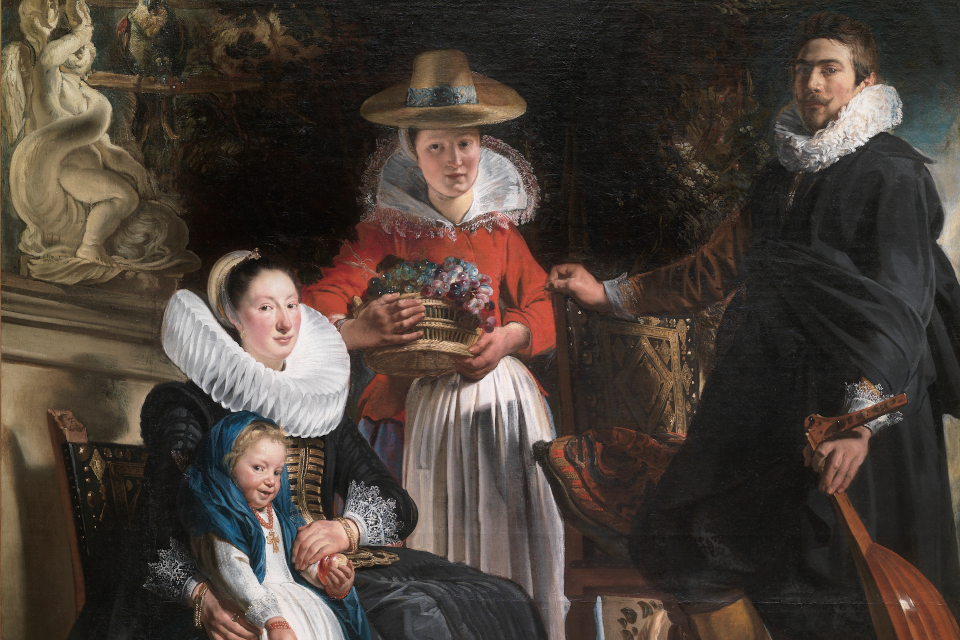
Detail of The Artist’s Family Jacques Jordaens. Madrid, Museo Nacional del Prado
On display for more than four months, from 23 April to 1 September, Ages of Splendor. A History of Spain in the Museo del Prado is produced by Shanghái Lujiazui Development (Group) Company Limited and co-organised by the Museo Nacional del Prado and the Museum of Art Pudong. It represents an unprecedented opportunity in Shanghai to appreciate a selection of 69 works from the collection of the Museo Nacional del Prado, including 3 by El Greco, 4 by Velázquez, 6 by Rubens and 8 by Goya.
Structured around different accounts, the exhibition presents complementary themes. Through its eleven rooms visitors are introduced to Spain’s social and political evolution over more than 400 years, from the reign of Charles V to the start of the 20th century, with further information provided by explanatory material such as time lines and genealogical trees. There is also a particular focus on the evolution of specific artistic genres such as mythology, still life and religious painting, each of them the subject of specific rooms, of which the space devoted to the nude is particularly striking as it evokes the “Sala reservada” [private room] that existed in the Prado during its early years.
The exhibition is completed with the loan of the Prado’s version of the Mona Lisa, displayed in a special section entitled “In Focus”. This allows for a presentation of the painting’s history, from the 18th century when it was in the Spanish Royal Collection to its restoration at the Prado in 2011. Bringing the loan of paintings from the Prado to 70, this section is further enhanced by three works on paper (also from the Museum’s collection) which show the state of the Mona Lisa prior to 2011.