The Museo Nacional del Prado and Colnaghi announce the unveiling and loan of Caravaggio’s masterpiece Ecce HomoMonday, May 6, 2024
The Museo Nacional del Prado and Colnaghi are honoured to announce the loan of Caravaggio’s masterpiece Ecce Homo to the Spanish national museum in Madrid, on behalf of the painting’s new owner.
The Prado Museum will unveil the work on 28 May for a special one-piece exhibition, on display until October 2024.
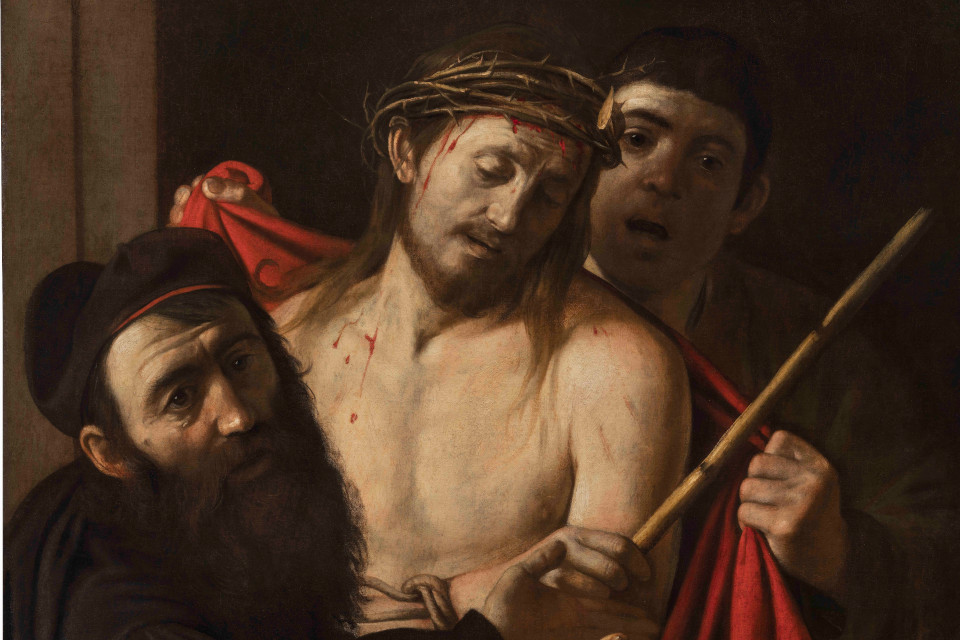
Ecce Homo (after the restoration). Michelangelo Merisi (conocido como Caravaggio). Image courtesy of the private collection
Painted by the great Italian artist around 1605-09 and believed to have once been part of the private collection of Phillip IV of Spain, the painting is one of around only 60 known works by Caravaggio in existence, and thus one of the most valuable old master artworks in the world.
Since the Prado Museum alerted Spain’s Ministry of Culture of the relevance of the painting when it reemerged at Ansorena auction house in April 2021 attributed to a pupil of José de Ribera, the work has been under the custodianship of the art gallery Colnaghi, in collaboration with Filippo Benappi (Benappi Fine Art) and Andrea Lullo (Lullo Pampoulides). The painting was restored by specialist Andrea Cipriani and his team under the supervision of experts from the Comunidad de Madrid regional government. The results of this intricate process are featured in a comprehensive publication alongside texts by expert specialists including Keith Christiansen, Gianni Papi, Giuseppe Porzio (art history professor at the University of Naples L'Orientale and member of the scientific committees of Pio Monte della Misericordia and Royal Palace in Naples) and Maria Cristina Terzaghi, to be released to coincide with the unveiling.
Since its reappearance at auction three years ago, Ecce Homo has represented one of the greatest discoveries in the history of art, inspiring an unprecedented speed of consensus around its authentication. Following an in-depth diagnostic investigation by Claudio Falcucci – a nuclear engineer specialising in applying scientific techniques to the study and conservation of cultural heritage – restoration has been carried out in an informed and rigorous manner, allowing each decision to be based on an exhaustive assessment of the work’s constituent materials, their specific alteration processes, and the painting’s conservation history, reaffirming this initial attribution to the Italian master.
Specialist interpretation of the painting carried out by Maria Cristina Terzaghi (associate professor in History of Modern Art at University Roma Tre and member of the scientific committee of Museo di Capodimonte in Naples), Gianni Papi (art historian and author), Giuseppe Porzio (art history professor at the University of Naples) and Keith Christiansen (curator at The Metropolitan Museum of Art) is included in the publication, each moving along different trajectories. Specifically: the circumstances of its discovery, the provenance, the stylistic, technical and iconographic aspects of the work, its critical fortune and the legacy left by the master in Naples. Four of the most authoritative experts on Caravaggio and Baroque painting, they all share the same passionate certainty: that Ecce Homo is a masterpiece by the Italian artist.
The expressive oil on canvas depicts the art historical motif of the Roman governor Pontius Pilate presenting Christ to the people, with the words "Ecce homo!" ("Behold the man") - one of the most dramatic moments of the Passion, recorded in the Gospel of John (19:5). The work is a powerful example of Caravaggio’s mastery of conception: a skilful composition presenting a three-dimensional and dynamic scene that is entirely innovative, yet within the confines of an established iconographic tradition.
The unveiling of the Ecce Homo and the announcement of this loan – an act of generosity by its new owner – is accompanied by a collaborative publication bringing together leading experts in the field with seminal essays by Christiansen, Papi, Porzio and Terzaghi, bearing testament to the work’s monumental importance. Titled Caravaggio: The Ecce Homo Unveiled, it offers an essential starting point for the understanding of this new addition to Caravaggio’s oeuvre.