formularioRDF
The itinerary <em>TITULORECORRIDO</em> has been successfully created. Now you can add in works from the Collection browser
<em>TITULOOBRA</em> added to <em>TITULORECORRIDO</em> itinerary

Charles the Fifth. Leone and Pompeo Leoni

Charles the Fifth is a sculpture by Leone and Pompeo Leoni, the Italian sculptors.

The sculpture is from 1553.

ETR (Easy to Read) icon
© Easy-to-read european logo: Inclusion Europe. More information at: Easy-to-read

What makes this piece valuable?

The sculpture is larger than life-size and made of high-quality Carrara marble.

Carrara is a town in Italy famous for its marble.

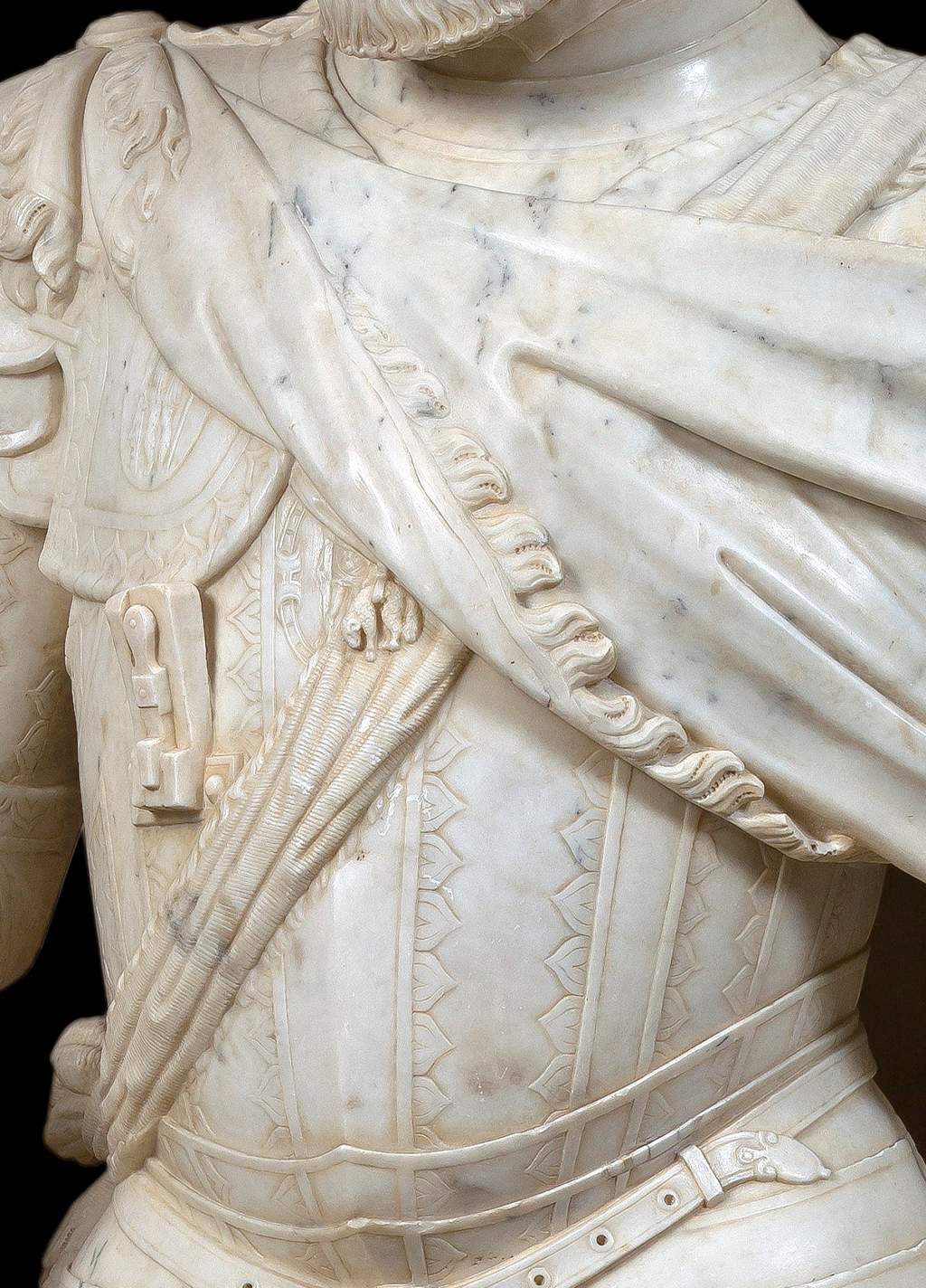
The sculpture depicts Emperor Charles the Fifth standing, wearing armour and a sash that distinguishes him as a general and leader of the imperial army.

In his right hand, he holds a sword.

Under the mantle draped over his shoulders, which he gathers with his left hand, we see the Order of the Golden Fleece.

The Golden Fleece is a collar worn by the kings of Spain during important events.

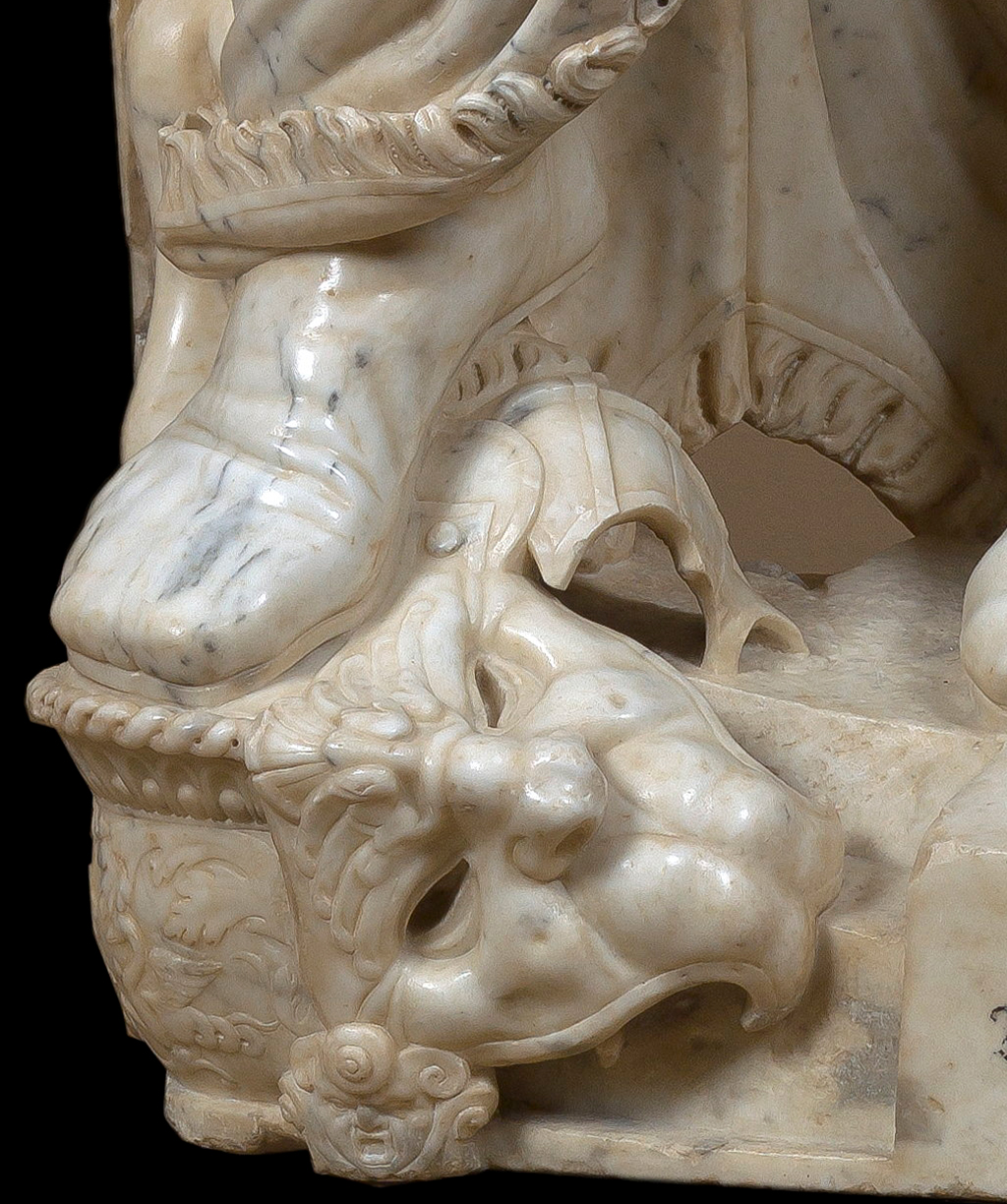
Charles the Fifth steps with his right foot on a helmet with an unusual shape.

Behind his leg is an imperial eagle, the symbol of the Habsburg royal family.

The emperor belonged to this family.
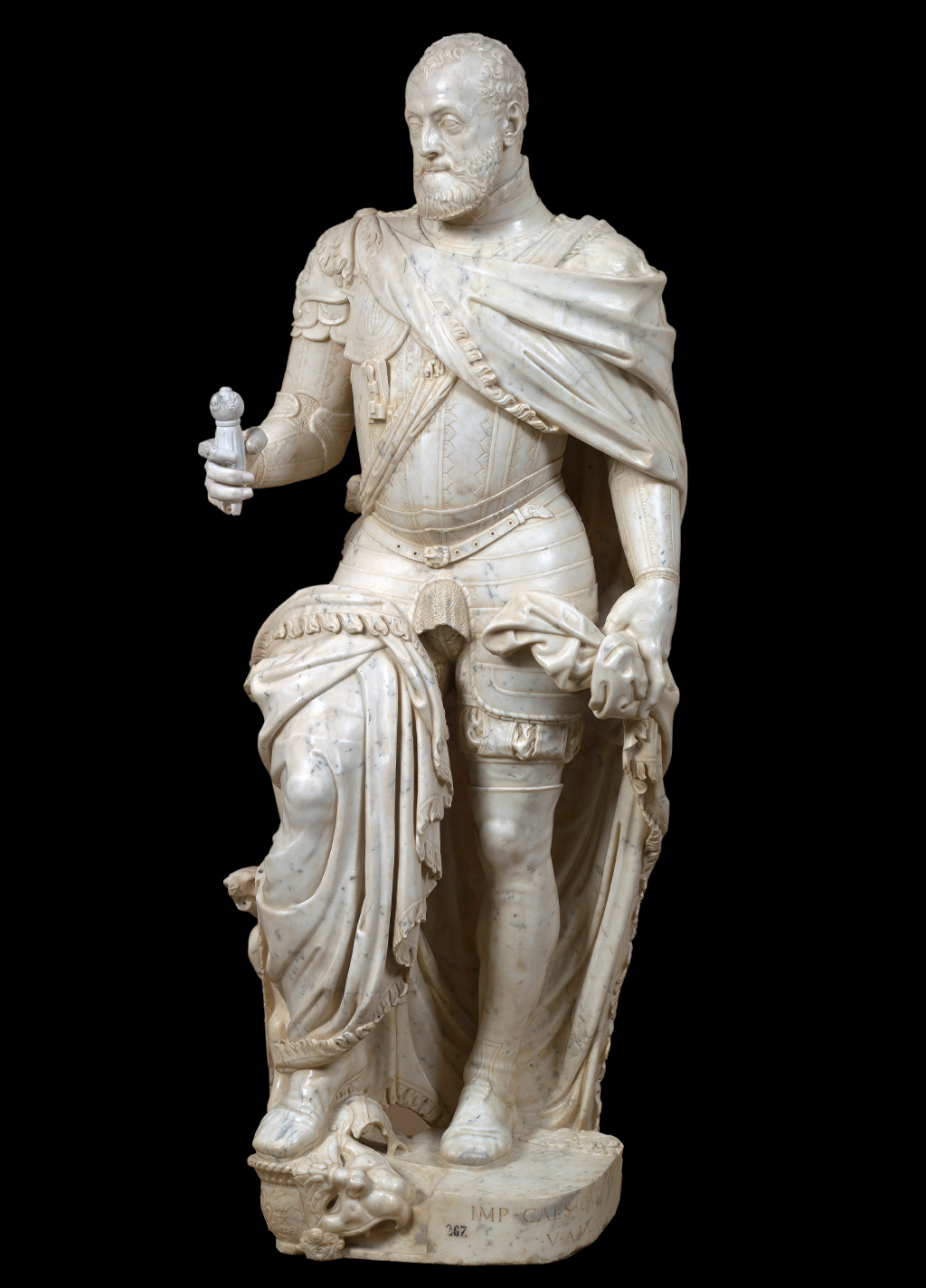
Charles the Fifth
Charles the Fifth by Leone y Leoni

What is the sculpture trying to convey?

The sculptors portrayed Charles the Fifth as a warrior, but they intended to transmit peace.

The emperor commissioned this sculpture from Leone Leoni, the father of Pompeo, to show that he brought peace to the people after defeating his enemies.

The Leoni created this sculpture years after Charles the Fifth defeated Protestant Christian princes in the Battle of Mühlberg in Germany.

Charles the Fifth was a Catholic Christian.

At that time, many conflicts existed between the Catholic and Protestant branches of Christianity.

Detail of armor
Detail of armor

Inspiration

This sculpture takes inspiration from the Roman poem by Virgil titled The Aeneid.

The Aeneid describes the legend of the hero Aeneas and the founding of Rome.

It also praises the Roman Emperor Augustus.

Augustus commissioned The Aeneid from Virgil to glorify the Roman Empire.

The sculpture depicts Charles the Fifth like the sculptures of Roman emperors.

This way of showing Charles the Fifth helped people associate his power with the power that the Roman Emperor Augustus once held.

At the base of the sculpture is a shortened Latin inscription that translates to Emperor Caesar Charles the Fifth Augustus, emphasising this idea.

Detail of helmet
Detail of helmet

This work belongs to the following tours:

Easy-to-read content of Museo del Prado
Funded by the European Union - NextGenerationEU Government of Spain - Ministry of Culture Recovery, Transformation and Resiliency Plan Museo Nacional del Prado

Funded with the National Recovery and Resilience Plan (NRPP) , Spain’s Next Generation EU financing and according to the initiatives within the component C.24.I3 Digitization and valorization of major cultural services. The project is part of Campus Prado within Accessibility and Signage: Revitalization of the Urban Environment action line and as a universal accessibility activity.

Up