formularioRDF
The itinerary <em>TITULORECORRIDO</em> has been successfully created. Now you can add in works from the Collection browser
<em>TITULOOBRA</em> added to <em>TITULORECORRIDO</em> itinerary

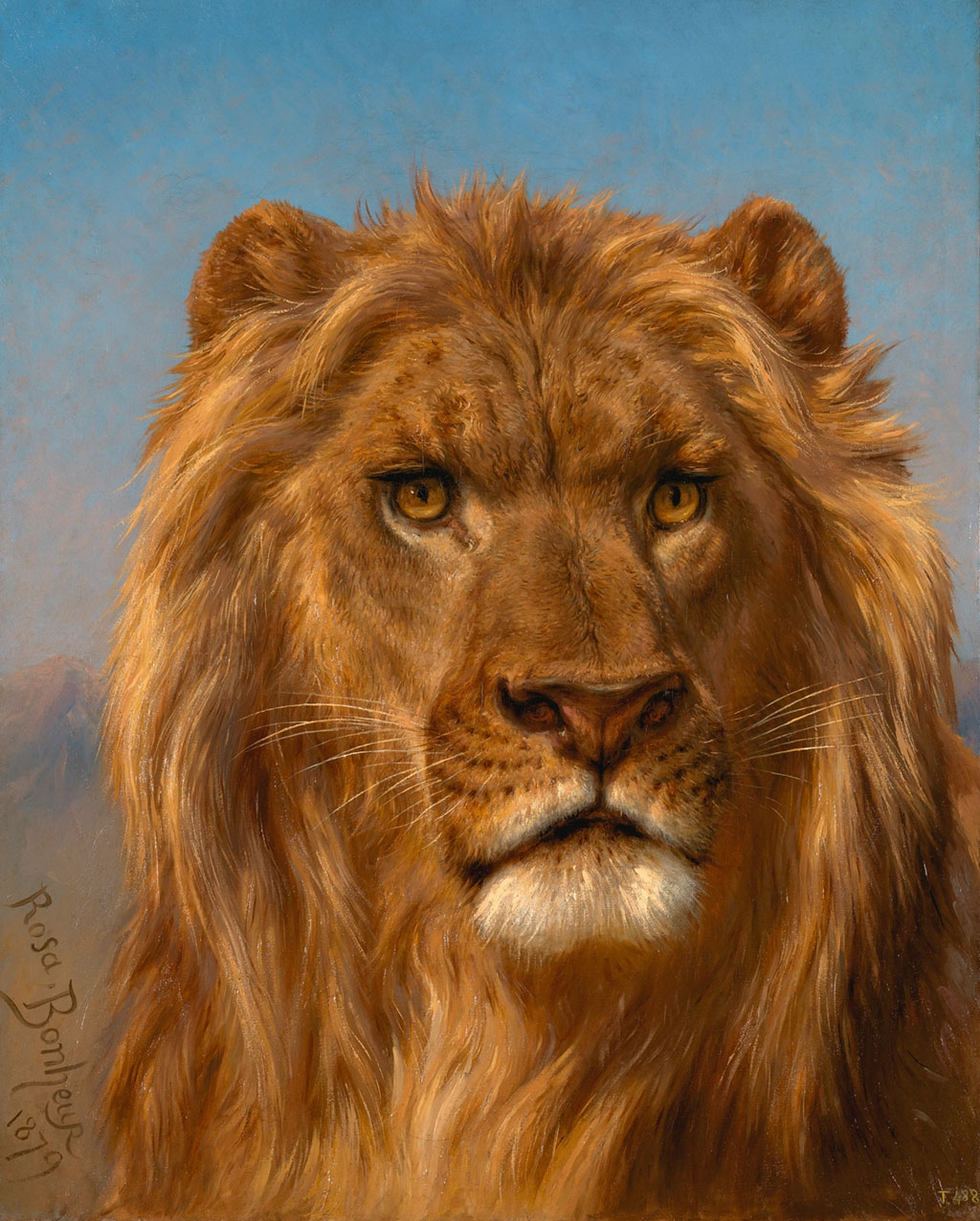
El Cid. Rosa Bonheur

El Cid is a painting by Rosa Bonheur, a French painter.

The painting is from 1879.

ETR (Easy to Read) icon
© Easy-to-read european logo: Inclusion Europe. More information at: Easy-to-read

An African lion

This painting is entitled “El Cid” and depicts a lion.

In the painting, we can see the face of an Atlas lion. 

Behind the lion, Rosa Bonheur painted an Atlas mountain. 

The Atlas is a group of mountains in North Africa that extends on Tunisia, Algeria and Morocco.

El Cid by Rosa Bonheur

Why does the title refer to a historical character?

The painting depicts a highly detailed and brightly coloured representation of the face of a lion.

Rosa Bonheur intended to show the magnificence of the lion to the viewer. 

For this reason, the portrait of the lion looks similar to a human portrait.

The lion is a symbol of courage and strength.

The title of the painting is “El Cid”. 

El Cid is the name of a character from Spanish history who was a war hero in the Middle Ages.

Both El Cid and the lion represent freedom and courage. 

The painter

Rosa Bonheur is the author of this painting.

She was born in France and learned painting from her father.

Rosa Bonheur specialised in painting animals.

For Rosa Bonheur, the freedom of the lion also represents her freedom. 

Bonheur was a woman who struggled for her freedom at a time when women could not be free.

For example, she asked permission to go to cattle fairs dressed as a man so that she could watch the animals.

She also refused to have children to focus on her painting career and refused to marry a man to live with her painter partner. 

Queen Victoria of England supported her work, and Rosa Bonheur received many commissions from the English nobility.

A nobleman is a person who has a title granted by the king or inherited from the family.

Rosa Bonheur gained much prestige and fame. 

With her fortune, she bought a castle near Paris, where she lived all her life.

Rosa Bonheur kept many animals living freely on her castle grounds.

She used these animals as models for her paintings and sculptures.

She used the lions in the Paris Zoo as models to create her first paintings of lions.

Later, she bought a pair of Atlas lions to live on her castle grounds, which made it easier for her to paint them.

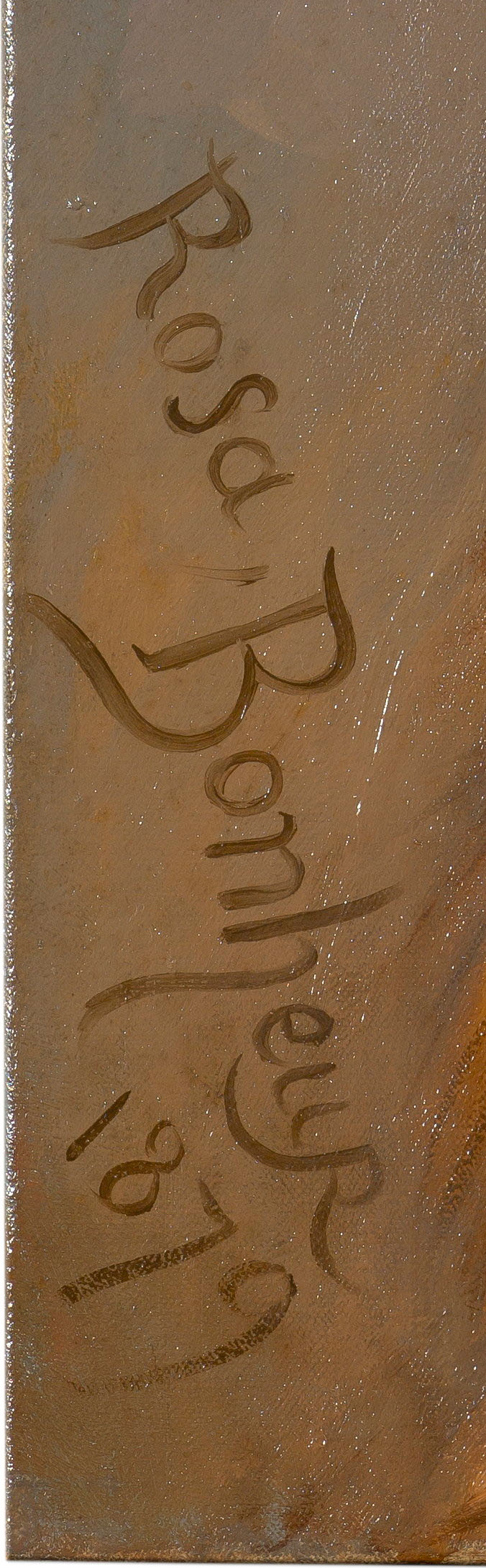
Detail of the signature

How did the painting get to the Museum?

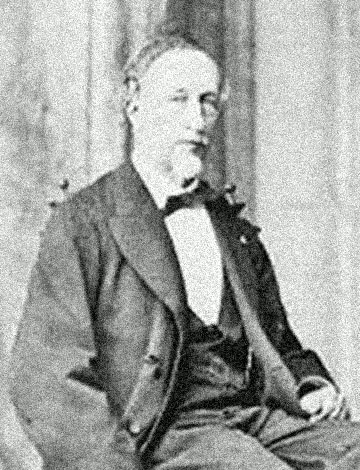
This painting arrived in Spain thanks to Ernest Gambart.

Ernest Gambart was an art dealer and a close friend of Rosa Bonheur.

He donated the painting to the Prado Museum, which made Rosa Bonheur even more famous in Spain.

Soon after, Rosa Bonheur received an award of the Grand Cross of Isabella the Catholic.

This award was a recognition given to great artists.

Ernest Gambart (public domain photography)
Funded by the European Union - NextGenerationEU Government of Spain - Ministry of Culture Recovery, Transformation and Resiliency Plan Museo Nacional del Prado

Funded with the National Recovery and Resilience Plan (NRPP) , Spain’s Next Generation EU financing and according to the initiatives within the component C.24.I3 Digitization and valorization of major cultural services. The project is part of Campus Prado within Accessibility and Signage: Revitalization of the Urban Environment action line and as a universal accessibility activity.

Up