Other famous women in the Prado Museum are female artists.
Exploring paintings created by female artists in the Prado Museum is fascinating, as historically, women could not pursue painting as a profession.
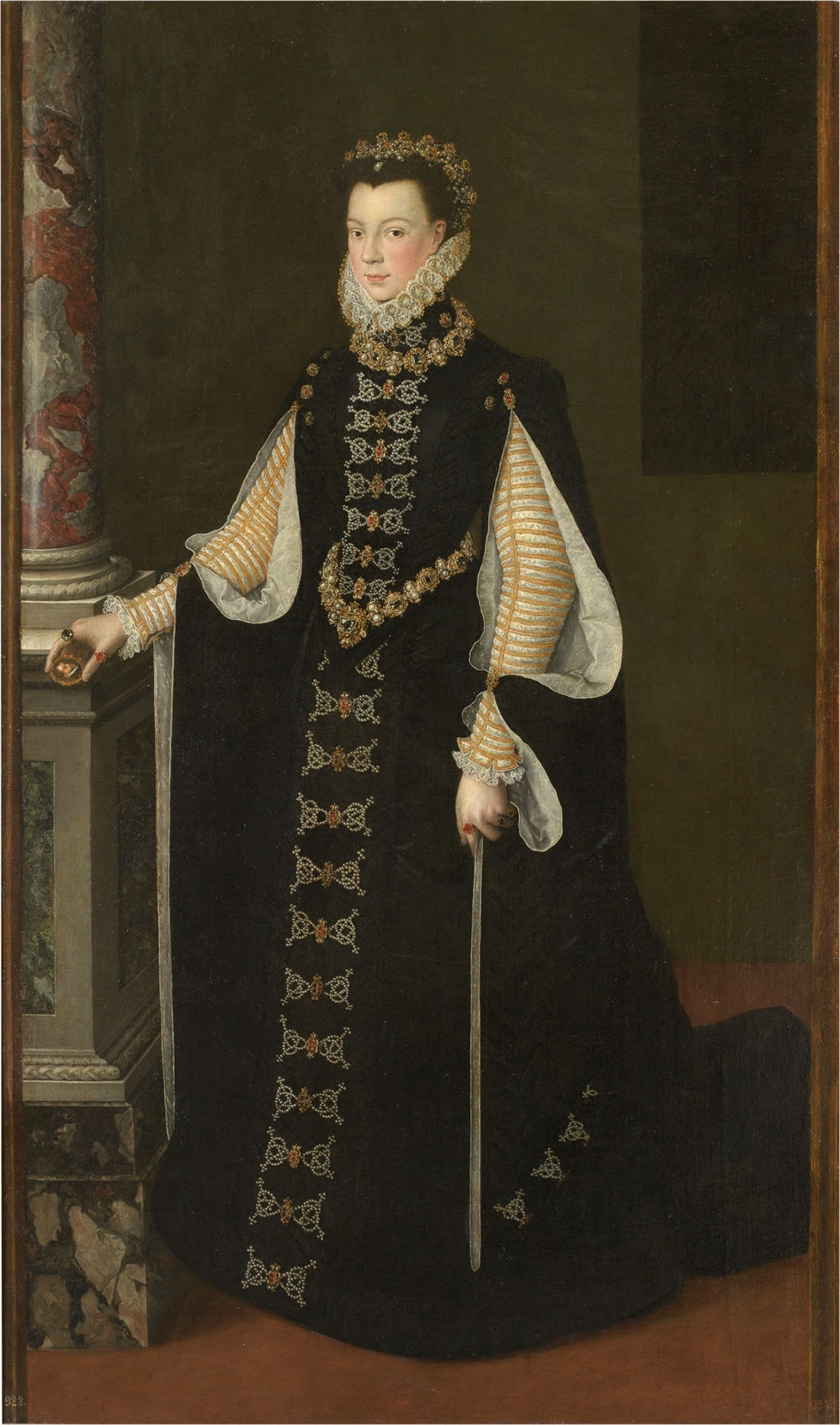
This itinerary begins with the Italian painter Sofonisba Anguissola, who lived in the 16 century and came to Spain as a lady-in-waiting to Queen Isabel de Valois.
She painted several portraits of the queen and her husband, Philip the Second.
In these 2 paintings, you can see her detailed painting style.
There are also works by two 17 century female painters.
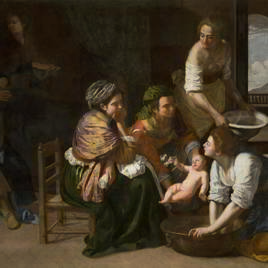
One is Artemisia Gentileschi, the daughter of the famous Italian painter Orazio Gentileschi.
She learned painting from her father.
Artemisia specialised in painting religious and historical scenes where women are the protagonists.
One of her religious paintings is “The Birth of Saint John the Baptist”, depicting a group of women bathing a newborn child.
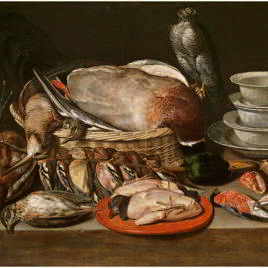
The other 17 century female painter in the Prado Museum is Clara Peeters, who worked in the Flemish city of Antwerp.
Flanders is a region in Belgium.
All known paintings by Clara Peeters are still lifes.
Still lifes are paintings representing food, objects, and flowers on a table.
One of her most valuable still lifes is entitled “Still Life with a Sparrow Hawk, Fowl, Porcelain and Shells”.
In this painting, she realistically portrays various objects and animals.
Clara Peeters signed her paintings and sometimes included her self-portrait reflected in a glass or metal object because she was very proud of her work.
Angelica Kauffmann was a prominent painter in the late 18 and beginning of 19 centuries.
She was Swiss and travelled to England and Italy, where she was associated with many important figures in culture and society.
Kauffmann painted portraits of several of these individuals, including Anna Escher von Muralt, a highly regarded Swiss family member.
Also, Kauffmann created historical scenes, which were considered the most significant paintings of the era.
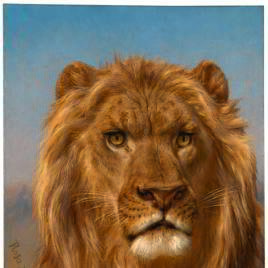
Rosa Bonheur, a French painter from the 19 century, specialised in painting animals and achieved great success.
She lived in a castle and had lions, like the one she painted in the work “El Cid”.
The painting depicts the strength and courage of the lion.
Bonheur identified herself with that strength and courage because she fought for freedom at a time when women were oppressed.
From the 20 century, the Prado Museum features the work entitled “La boulonnaise” by the painter María Blanchard.
She was one of the most prominent and innovative Spanish painters of her time.