formularioRDF
The itinerary <em>TITULORECORRIDO</em> has been successfully created. Now you can add in works from the Collection browser
<em>TITULOOBRA</em> added to <em>TITULORECORRIDO</em> itinerary

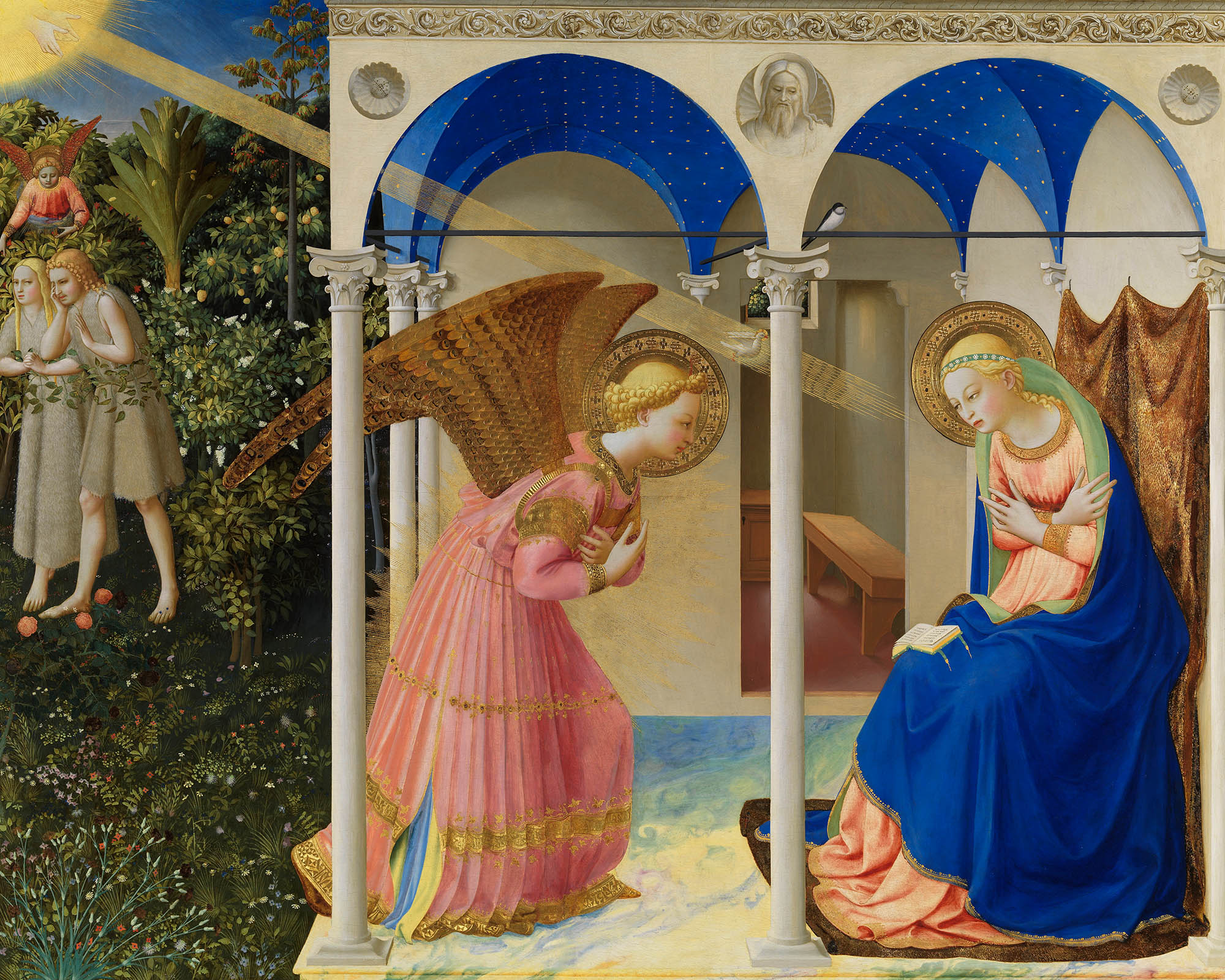
The Annunciation. Fra Angelico

The Annunciation is a painting by Fra Angelico, an Italian painter.

The painting is from 1426.

ETR (Easy to Read) icon
© Easy-to-read european logo: Inclusion Europe. More information at: Easy-to-read

What is the artist depicting?

This painting shows the moment the Archangel Gabriel announces to the Virgin Mary that she will be the mother of the Son of God, as told in the Gospel.

The Gospel is a book in the Bible that describes the life and teachings of Jesus Christ.

The painting is divided into 2 scenes.

On the right side of the painting is the main scene.

This scene represents the moment the angel bows and announces to the Virgin. The Virgin sits and reads a book, which she leaves on her lap.

The 2 figures are under an open structure with blue vaults and thin columns.

In a diagonal beam of light, there is a dove which symbolises the Holy Spirit.

The beam goes towards the ear of the Virgin and symbolises the moment of the Conception through the word of God.

Conception is the moment when the Virgin becomes pregnant.

The painting depicts 2 scenes.

On the left, we see Adam and Eve in a lush garden.

An angel expels them from the Eden as a result of their sin.

On the right, we see the Archangel Gabriel announcing the arrival of Jesus Christ to the Virgin.

This event means the freedom of humanity from sin.

Below the painting is a predella showing 5 small panels that depict different moments from the life of the Virgin.

These moments include her birth and wedding, the Visitation, the Adoration of the Magi, the Presentation of Jesus Christ in the Temple, and the Assumption of the Virgin into heaven.

Detalle del ángel y la Virgen
Detail of the Archangel Gabriel and the Virgin Mary

The painter

Fra Angelico painted this artwork for the convent of Santo Domingo in Fiesole, near the Italian city of Florence.

The painting has the same frame since Fra Angelico painted it.

The friars of Santo Domingo in Fiesole sold the painting to the Duke of Lerma, the favourite of King Philip the Third. The favourites were like prime ministers in the 17 century.

Later, the painting was in the Convent of Las Descalzas Reales in Madrid.

The author was named Guido di Pietro.

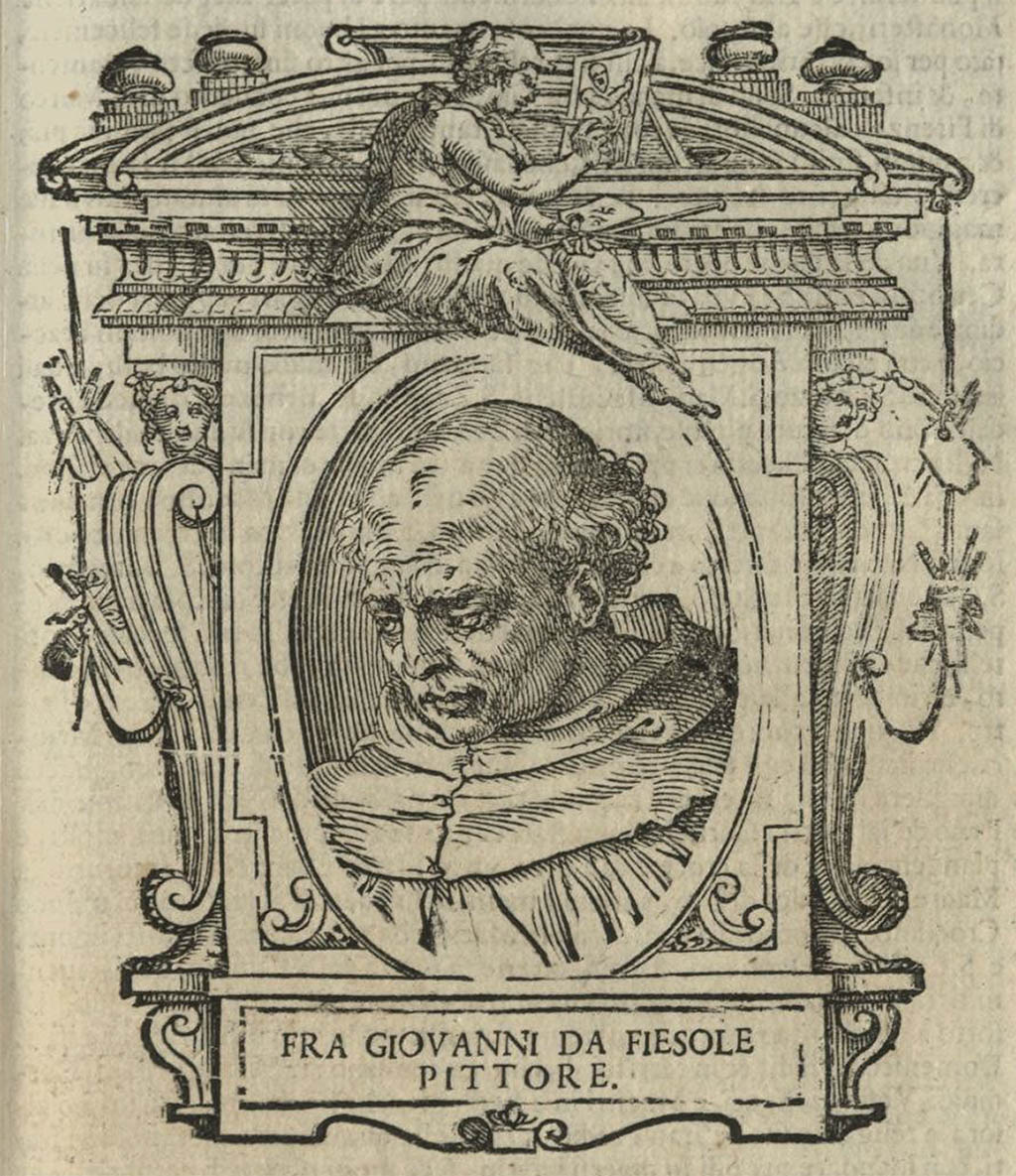
When he became a Dominican friar, he changed his name to Fra Giovanni da Fiesole. He was named Fra Angelico after his death.

Fra Angelico painted this artwork at an important moment for art in Florence.

At that time, Gothic-style painters, who were disappearing, coexisted with Renaissance-style painters who were emerging.

The Gothic style is an artistic movement that occurred between the 12 and 15 centuries.

The Renaissance style is another artistic movement that occurred between the 15 and 16 centuries.

Portrait of Fra Angelico from "Delle vite de più eccellenti pittori, scultori et architetti" by Vasari

This work belongs to the following tours:

Easy-to-read content of Museo del Prado
Funded by the European Union - NextGenerationEU Government of Spain - Ministry of Culture Recovery, Transformation and Resiliency Plan Museo Nacional del Prado

Funded with the National Recovery and Resilience Plan (NRPP) , Spain’s Next Generation EU financing and according to the initiatives within the component C.24.I3 Digitization and valorization of major cultural services. The project is part of Campus Prado within Accessibility and Signage: Revitalization of the Urban Environment action line and as a universal accessibility activity.

Up