formularioRDF
The itinerary <em>TITULORECORRIDO</em> has been successfully created. Now you can add in works from the Collection browser
<em>TITULOOBRA</em> added to <em>TITULORECORRIDO</em> itinerary

The Dead Christ supported by an Angel. Antonello da Messina

The Dead Christ supported by an Angel is a painting by Antonello da Messina, an Italian painter. 

The painting is from 1476.

ETR (Easy to Read) icon
© Easy-to-read european logo: Inclusion Europe. More information at: Easy-to-read

What is the subject?

In this painting, an angel holds the figure of the dead Jesus Christ from behind while weeping.

The angel covers Jesus Christ with a blue cloak.

In a sign of respect, the angel does not touch the skin of Jesus Christ.

This painting depicts the body of Jesus Christ that was removed from the cross.

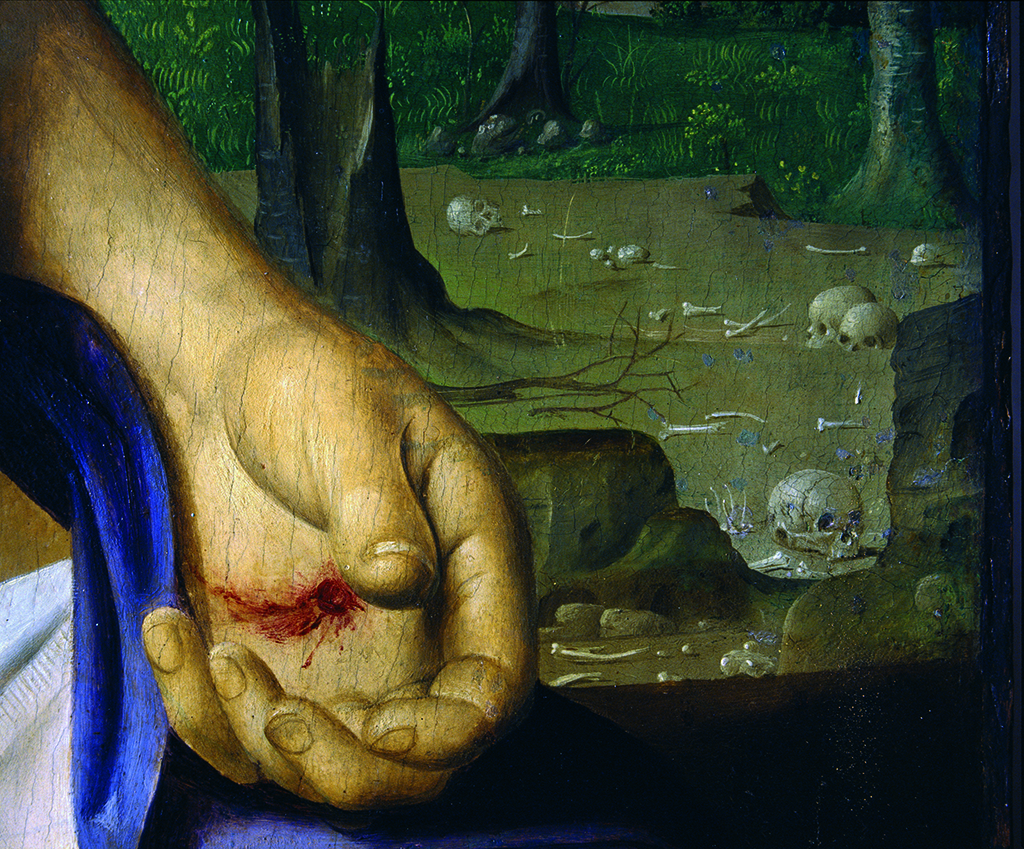
Jesus Christ has wounds on his side and hand.

On the neck and chest of Jesus Christ there are drops of blood.

The drops of blood fell from his head when the crown of thorns was removed.

The 2 figures are in a cemetery because there are bones and skulls in the lower part of the painting.

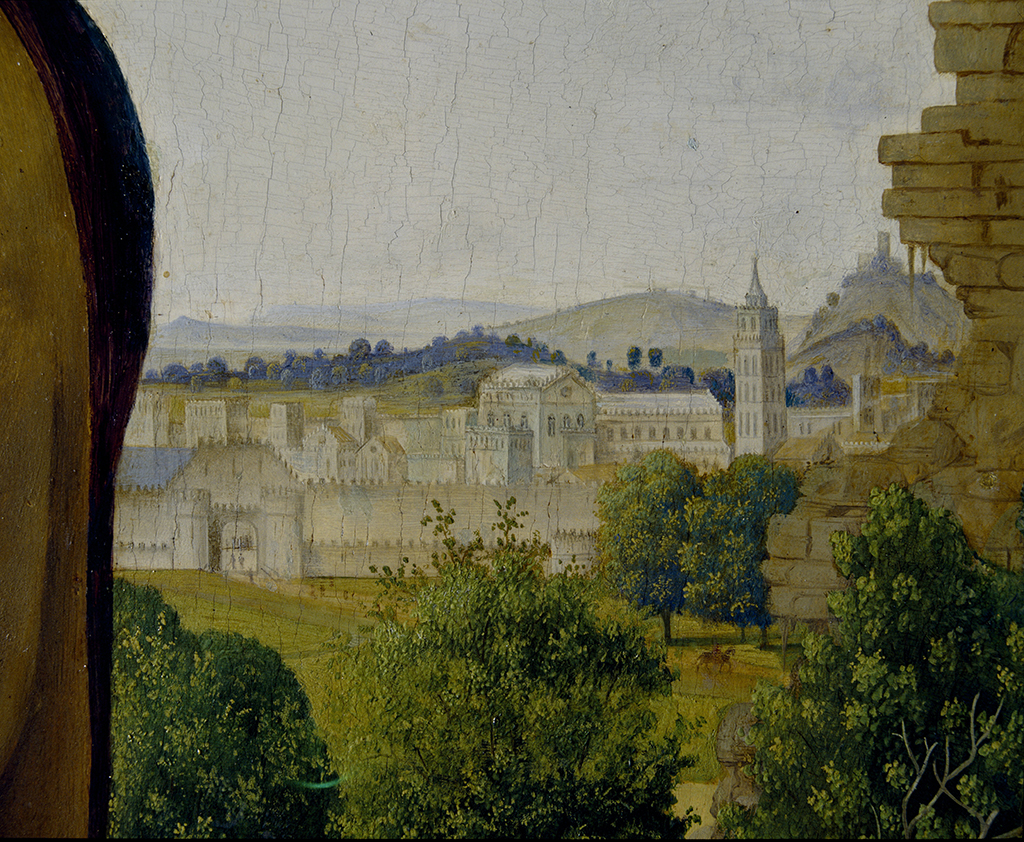
Below the wing of the angel, in the background landscape, the author painted the Mount Calvary with the crosses.

Jesus Christ was crucified on the Mount Calvary.

n the background, we see a city representing Jerusalem. Jesus Christ died in Jerusalem.

But in reality, this painting shows a view of the Italian city of Messina.

We can recognize the medieval walls and the church of San Francesco in Messina.

The painter who made this painting was born in Messina.

For this reason, the painter is called Antonello da Messina.
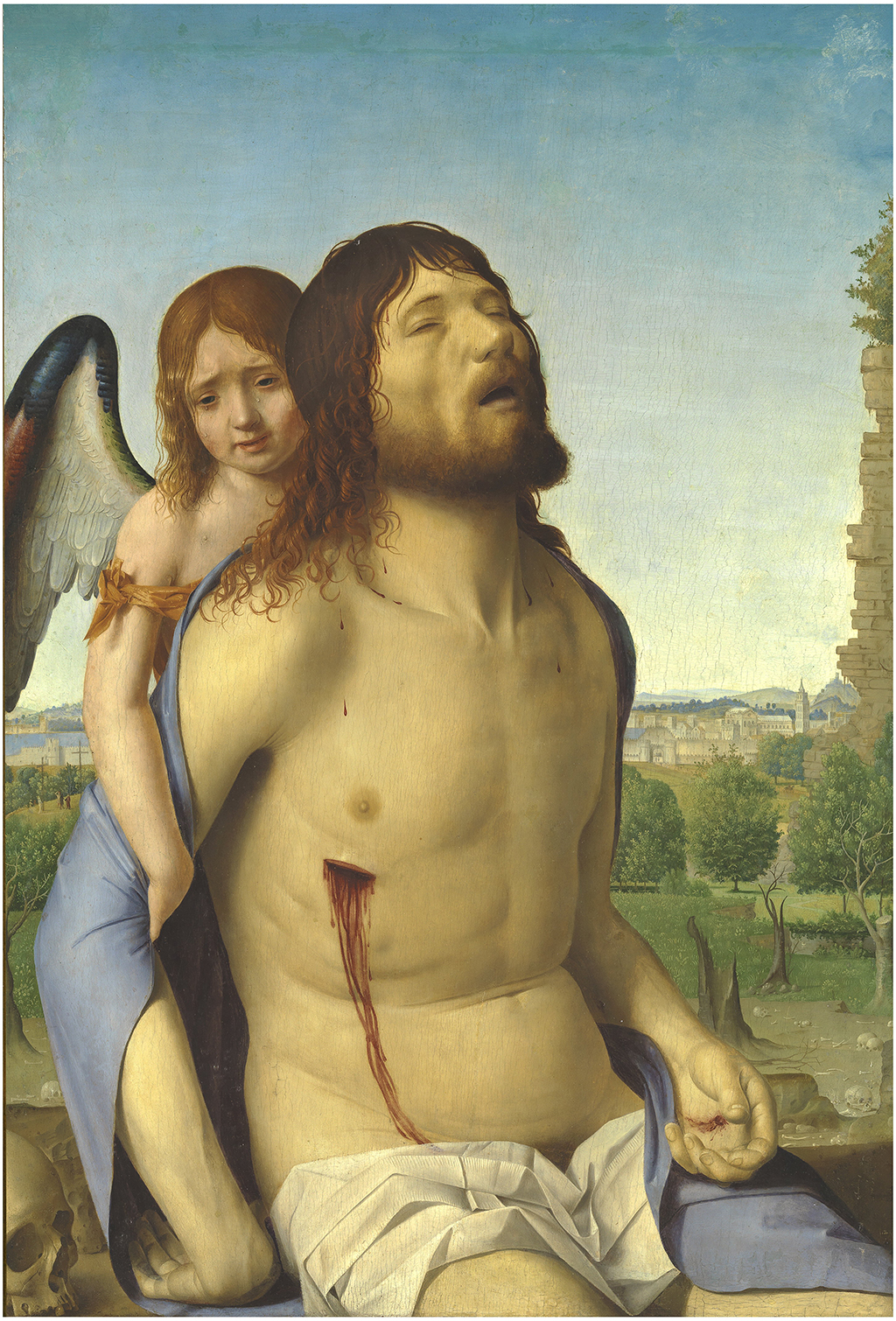
deadChrist
The Dead Christ supported by an Angel by Antonello da Messina

The painter

Antonello da Messina received his training in Naples and had the opportunity to study the works of other Italian artists, such as Giovanni Bellini.

Giovanni Bellini also painted angels in his paintings.

Antonello also travelled to the Netherlands to learn techniques from the Dutch painters.

Antonello da Messina created a painting on a wooden panel using a combination of Italian and Dutch painting techniques.

His attention to detail is visible in the depiction of the hair of Jesus Christ.

Antonello also had a talent for painting bodies that looked like sculptures.

Detaillandscape
Detail of the landscape

The history of the painting

This painting belonged to the Countess of Lesmos.

She believed the painting was created by the German painter Dürer.

The painting was in the rooms of the Countess in the Convent of the Conception of Monforte de Lemos, where she lived.

The Prado Museum bought the painting in 1965.

When experts studied the painting, they discovered that the author was Antonello da Messina.

Detailhand
Detail of the hand

This work belongs to the following tours:

Easy-to-read content of Museo del Prado
Funded by the European Union - NextGenerationEU Government of Spain - Ministry of Culture Recovery, Transformation and Resiliency Plan Museo Nacional del Prado

Funded with the National Recovery and Resilience Plan (NRPP) , Spain’s Next Generation EU financing and according to the initiatives within the component C.24.I3 Digitization and valorization of major cultural services. The project is part of Campus Prado within Accessibility and Signage: Revitalization of the Urban Environment action line and as a universal accessibility activity.

Up