formularioRDF
The itinerary <em>TITULORECORRIDO</em> has been successfully created. Now you can add in works from the Collection browser
<em>TITULOOBRA</em> added to <em>TITULORECORRIDO</em> itinerary

The Virgin and Child. Luis de Morales

The Virgin and Child is a painting by Luis de Morales, a Spanish painter.

The painting is from 1565.

ETR (Easy to Read) icon
© Easy-to-read european logo: Inclusion Europe. More information at: Easy-to-read

What is the subject?

This scene shows the Virgin Mary as a beautiful teenager looking affectionately at her son Jesus.

The Virgin sits with her head slightly tilted.

She holds the child delicately and looks at him thoughtfully.

The child, who is facing away from the viewer, lifts his head towards his mother and moves his legs nervously.

He searches for her breast with one hand and, with the other, lifts the veil of the Virgin.

Mother and son gaze at each other, but the gaze of the Virgin is sadder, as if she senses that her son will die on the cross.

This feeling in the Virgin is evident in her downward gaze, almost transparent skin, and the stretched and rigid fingers which hold the child.

Instead of depicting a scene from the Bible, Morales paints a devotional image that people can prayed to.

For this reason, he paints only the Virgin and the child, without additional characters or details, and he places them against a black background.

Also, Morales not only paints a religious scene but also represents the love of mothers for their children.
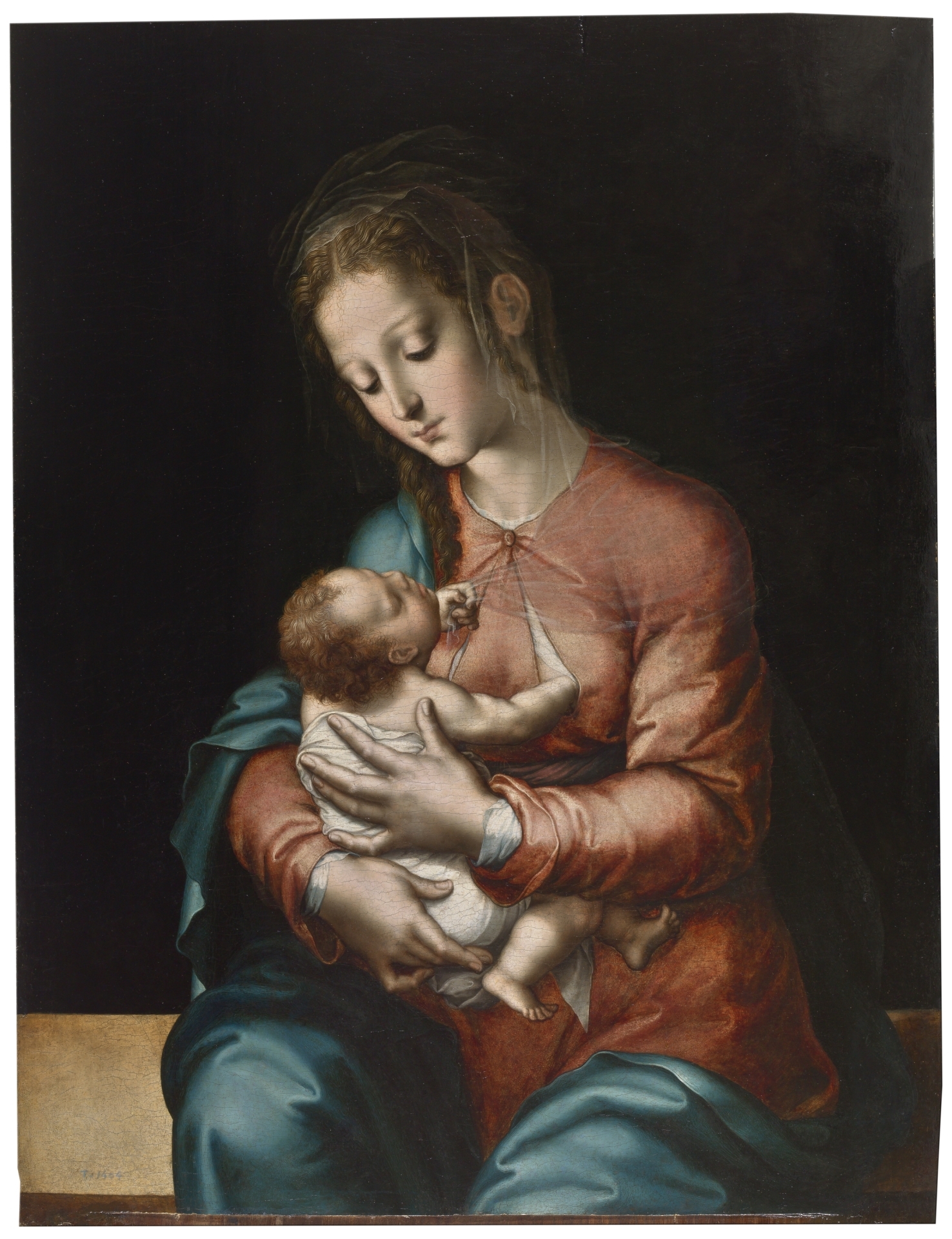
The Virgin and Child by Luis de Morales.

Relevant features of this painting

The painting combines 2 influences.

On one hand, Morales focused on details.

It was typical of painters from Flanders, a region in Belgium.

On the other hand, Morales used shadows as the Italian painter Leonardo da Vinci.

Morales was probably familiar with Italian painting through artists who lived Valencia at that time.

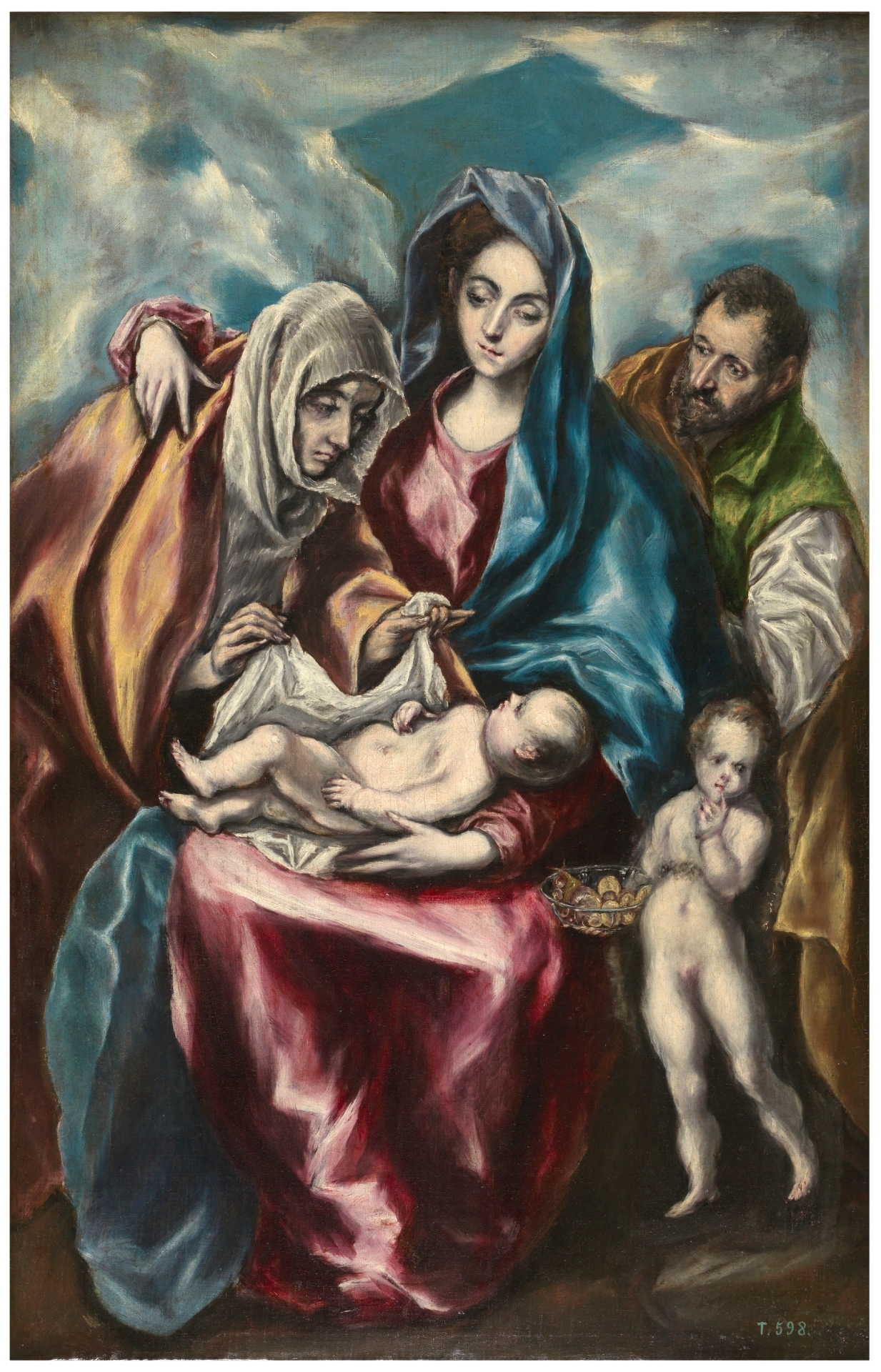
There is also a third influence from El Greco, seen in the elongated shape of the figures.

Morales repeated this scene in many paintings, but this version is one of the highest quality.

The interest of painters in depicting this scene of the Virgin breastfeeding disappeared years later.

It became a subject considered inappropriate or indecent.

Morales was the most important Spanish painter in the second half of the 16 century, the same period when El Greco worked in Spain.

Morales was called the Divine because during his lifetime he preferred painting religious subjects.

The Holy Family with Saint Anne and the Infant Saint John by El Greco.
Funded by the European Union - NextGenerationEU Government of Spain - Ministry of Culture Recovery, Transformation and Resiliency Plan Museo Nacional del Prado

Funded with the National Recovery and Resilience Plan (NRPP) , Spain’s Next Generation EU financing and according to the initiatives within the component C.24.I3 Digitization and valorization of major cultural services. The project is part of Campus Prado within Accessibility and Signage: Revitalization of the Urban Environment action line and as a universal accessibility activity.

Up