Aristotle
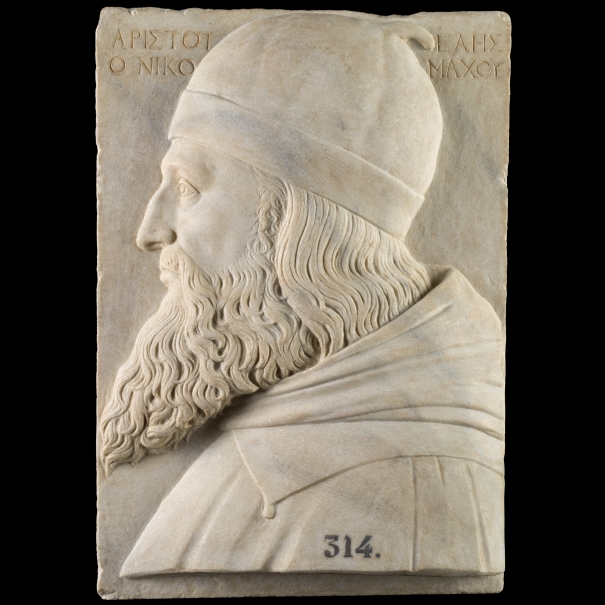
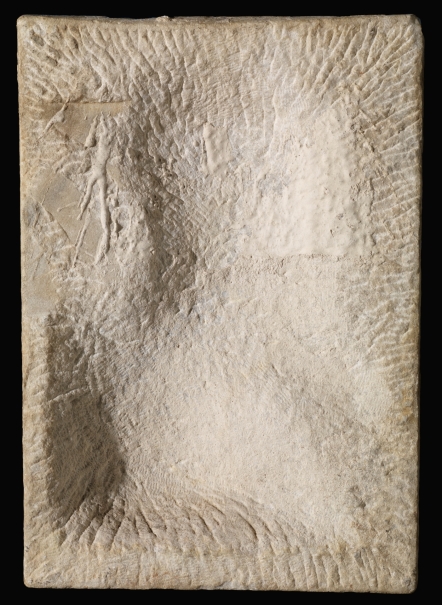
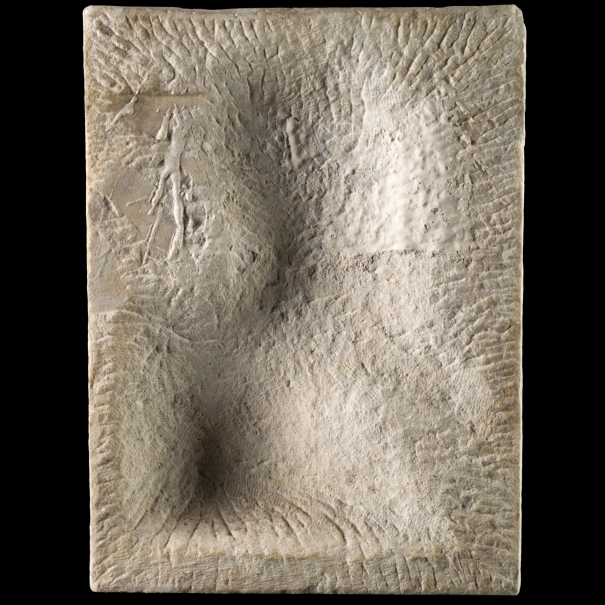
1525 - 1550. Marble.Room 041
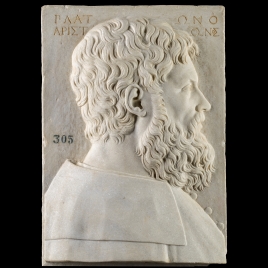
This image of Aristotle was in the possession of Diego Hurtado de Mendoza (1504-1575), poet, bibliophile, antiquarian and imperial ambassador in Venice between 1539 and 1546, when he moved to Rome. Aristotle formed a pair with a portrait of Plato, also now in the Prado (E305), and both were given by Mendoza to Philip II. Hurtado de Mendoza’s passion for philosophy (he was a gran Aristotélico in the words of Páez de Castro), explains the presence among his possessions of sculpted and painted images of philosophers and of a painting of Philosophy. Mendoza was the author of a translation of Aristotle’s Mechanica. In the dedication of his translation to the Duke of Alba, Mendoza pointed out the purpose of his undertaking: so that it can be seen how correctly and easily one can translate from Greek into our language without passing through Latin, and confessed to his passion for Aristotle: my principal aim has been to occupy my time [...] in studying and identifying the works of Aristotle through the interpretations and texts that have come into my hands. Mendoza’s predilection for this philosopher was reflected in his library, which had so many works by Aristotle that Mendoza made it available to the Academia Aristotélica created by some of those present at the Council of Trent. When the library was sent to El Escorial in 1576 the works on Aristotle and commentaries on them amounted to sixteen Latin manuscripts, twenty-two Greek ones, one in Arabic and more than one hundred printed Latin editions.
The present bust is a replica of an anonymous, Florentine bronze relief of the fifteenth century. The relief was known in Venice in the first half of the 16th-century and various versions are known in marble, always paired with one of Plato. The finest example, in the episcopal palace in Trento, has been attributed to the sculptor Vincenzo Grandi, followed in terms of quality by the one in the Prado (almost identical in size), then by the others in Munich, Paris and elsewhere, which are of lesser quality. The presence of Mendoza in Trento during the opening sessions of the Council of Trent might favour an attribution of the Prado’s Aristotle to a hand close to that of Grandi. However, the similarity between these pairs of philosophers and the Self-portrait by Valerio Belli (London, Victoria and Albert Museum) has recently been pointed out. Without suggesting Belli to be the creator of the Mendoza reliefs, it has been noted that in Venice Mendoza acquired numerous bindings with reproductions of medals and plaquettes by Belli.
Falomir, Miguel (ed.), El retrato del Renacimiento. El retrato del Renacimiento, Museo Nacional del Prado, 2008, p.301