Christ at the Column
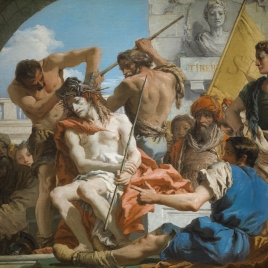
1772. Oil on canvas.Not on display
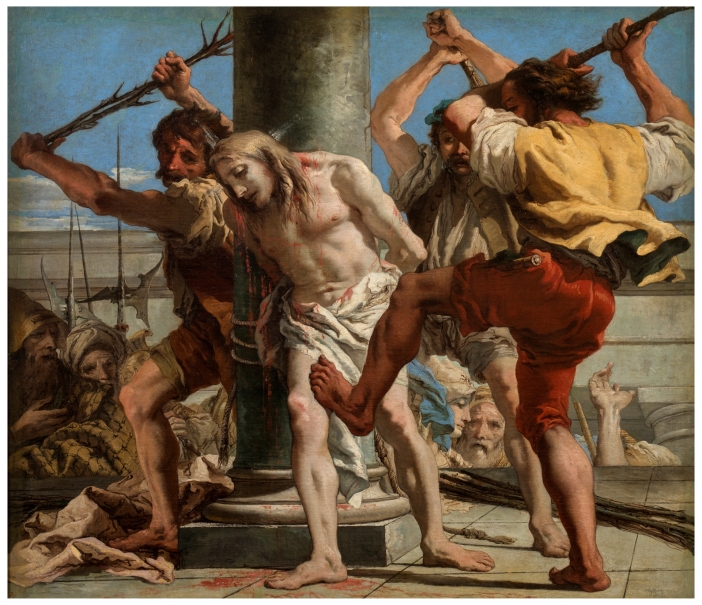
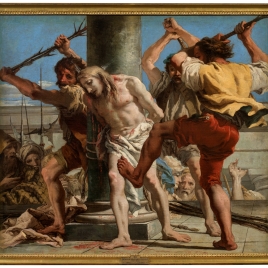
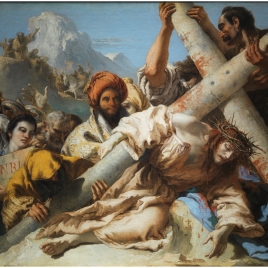
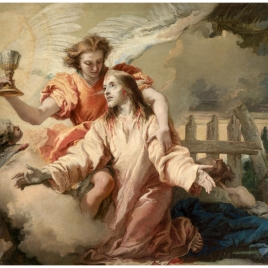
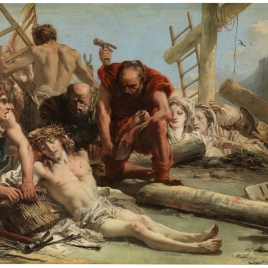
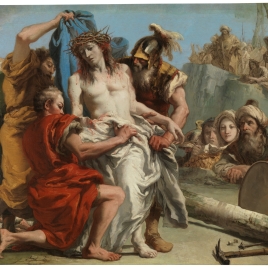
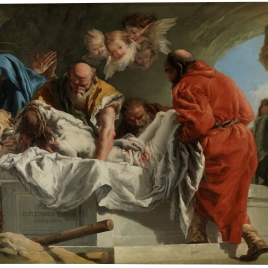
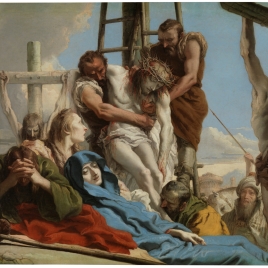
Painted in Venice, the painting is part of the series of eight scenes from the Passion of Christ comprising works P355 to P362. They came from the Convent of San Felipe Neri, Madrid, from which they were transferred to the Museo de la Trinidad. We have little knowledge of the conditions set forth in the contract (if one ever existed) by the secular clerics of San Felipe Neri. Therefore, we have not been able to document any established limitations in terms of format, total number of scenes, size, etc. However, it appears that some limitations must have existed and that they necessarily conditioned the artist’s work. The very low viewpoint adopted and the deformed proportions of some of the figures—particularly Christ’s legs, especially pronounced in The Descent from the Cross (P361)—suggest that this series was conceived as an overdoor. Alternatively, the apparent need to place them in a high place was kept in mind from the beginning in order to allow a large group of the faithful to contemplate this painting simultaneously, as is done in the Stations of the Cross. However, this is not necessarily the case.
Another characteristic of this series gives the entire group of paintings a strong personality. This is either due to limitations of a contract that has not yet been found or to other circumstances. Unlike other works by this artist portraying similar themes, here Giandomenico created a deliberately claustrophobic environment that sought to convey an almost unbreathable sense of drama, even though the narrative takes place outdoors. With this purpose in mind, he grouped the characters essential to the scene in the foreground, as well as a few others. This grouping creates an unsettling atmosphere that invites us to reflect on the events depicted. This arrangement of figures, the artificial gradient of colours, the theatrical props, and the almost expressionistic value of some of the faces confer upon the entire scene a deliberately unreal atmosphere. At the same time, it transports us to an event of special religious significance and incomparable dramatic possibilities. Perhaps the most important characteristic of the whole series is the combination of all the technical and expressive resources to reach a dramatic atmosphere, which would be alien to the world created by the Tiepolos, apparently more capable of creating effects than of stimulating feelings.
Colour is another resource the artist masterfully used to influence the viewer’s mood. Clearly, no attempt was ever made to reproduce a real scene. An example of this is, once again, the canvas of The Descent from the Cross (P361), in which the dramatic effect is magnified by the use of colours contrasting so strongly that one might consider it violent. Orange, blue, red or green without gradient between them are in stark opposition to the large surfaces of icy ivory used for the faces of the female figures and Christ himself, already dead. Other figures actively contribute to the creation of this oppressive atmosphere. These include the face of one of the two thieves, depicted almost without drawing, with light-coloured patches of an almost expressionist quality and of Mary Magdalene, undoubtedly the figure who best encapsulates the desolation and sadness that pervades the whole series.
Luna, Juan J., Pintura europea del siglo XVIII: guía, Madrid, Museo del Prado, 1997, p.145-148