formularioRDF
The itinerary <em>TITULORECORRIDO</em> has been successfully created. Now you can add in works from the Collection browser
<em>TITULOOBRA</em> added to <em>TITULORECORRIDO</em> itinerary

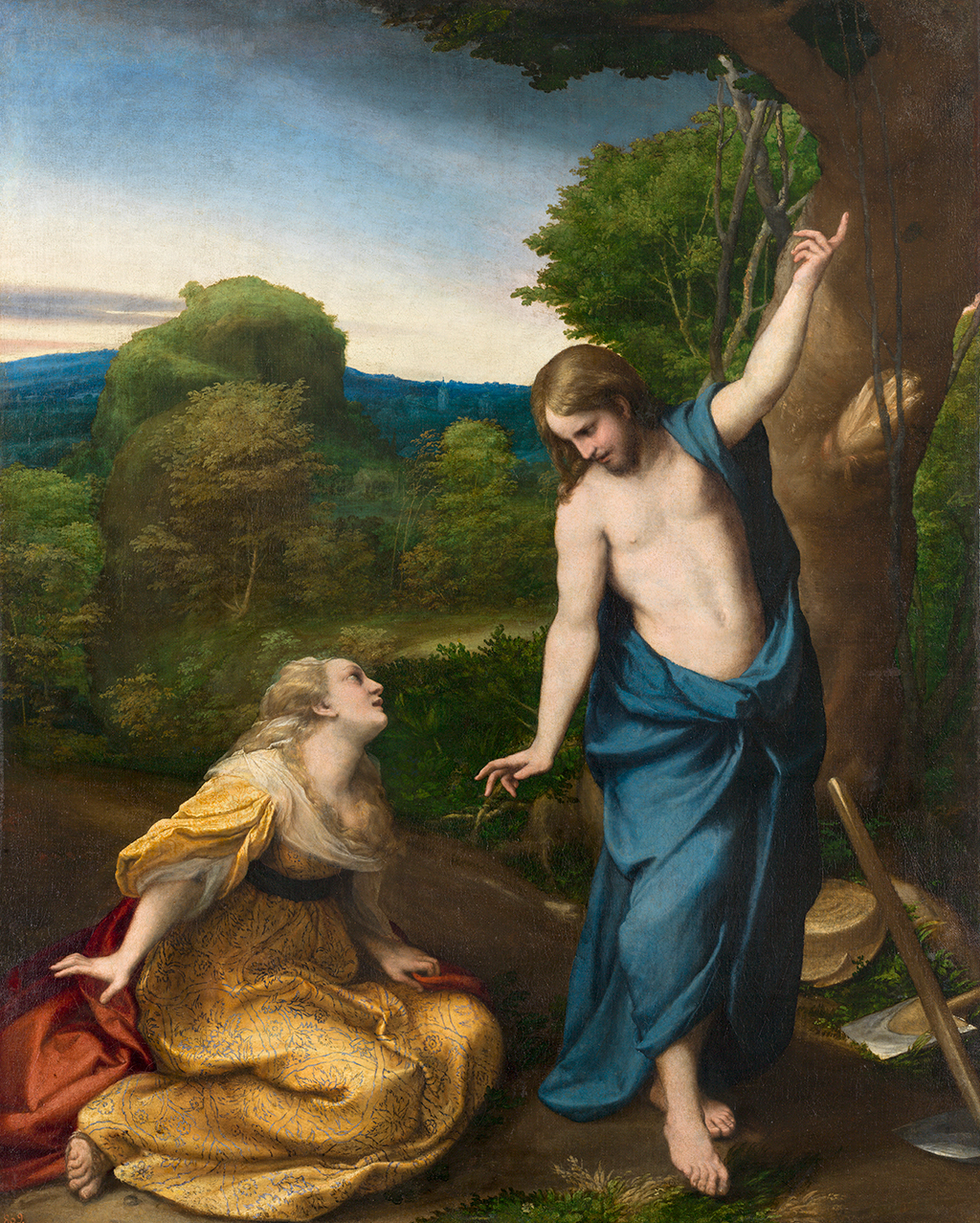
Noli me tangere. Correggio

Noli me tangere is a painting by Correggio, an Italian painter.  

The painting is from 1525.

ETR (Easy to Read) icon
© Easy-to-read european logo: Inclusion Europe. More information at: Easy-to-read

What is the painter depicting?

This painting shows 2 figures.

The standing man is Jesus Christ, and the kneeling woman is Mary Magdalene.

El hombre que está de pie es Jesucristo y la mujer arrodillada es María Magdalena.

Mary Magdalene was one of the women who accompanied Jesus Christ when he was crucified.

The Bible tells us that a few days after the crucifixion, Mary Magdalene confused Jesus Christ for a gardener.

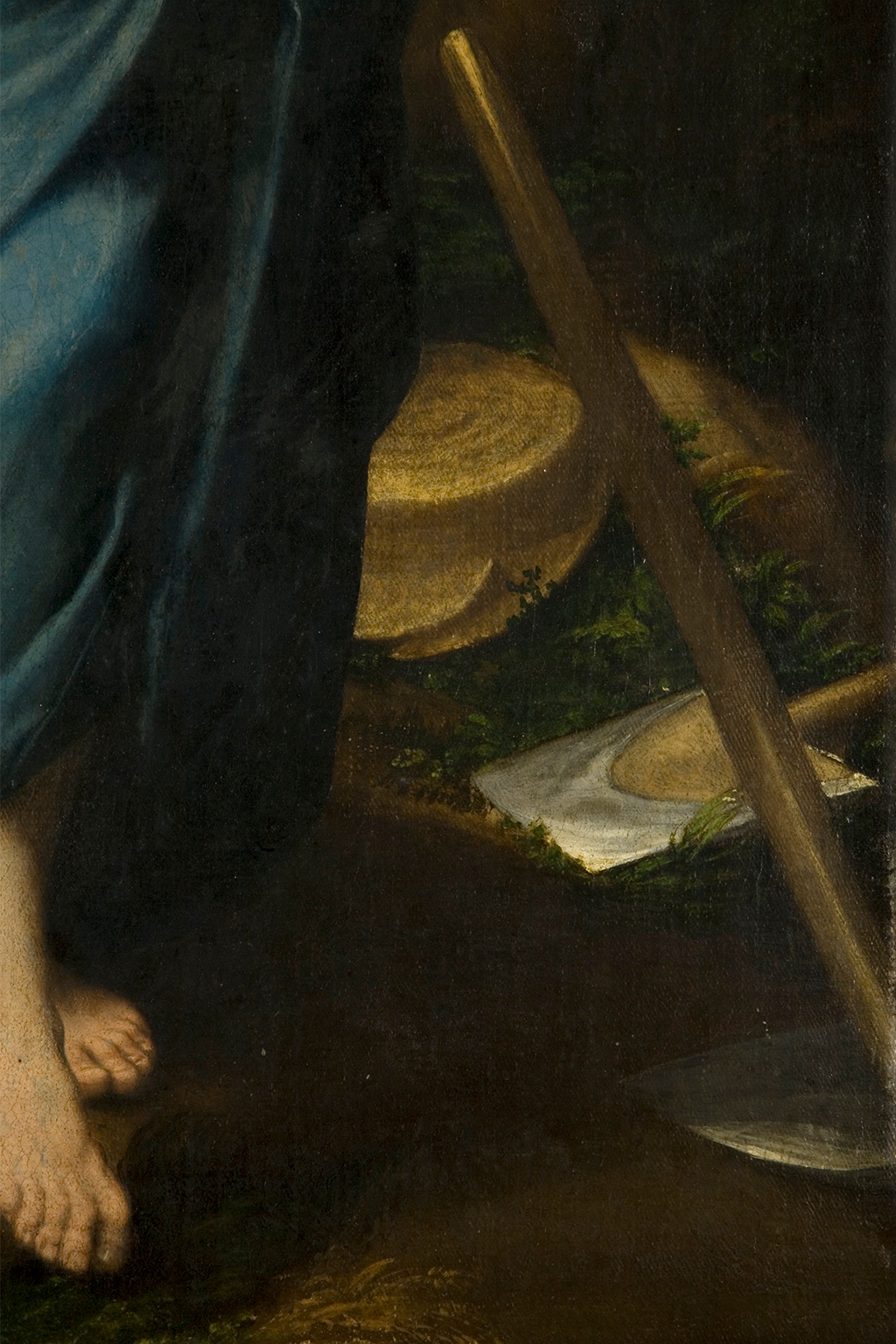
For this reason, Correggio painted the gardening tools on the right of the figure of Jesus Christ.

Jesus Christ points to heaven and warns Mary Magdalene not to touch him because he has not yet ascended to heaven to be with God.

For this reason, the painting is entitled Noli me tangere, which means do not touch me.

When Mary Magdalene hears Jesus speak, she recognizes that he is the risen Christ who was crucified.

Mary Magdalene is in a position that seems unsure.

Her posture and face show surprise and excitement.

Her position contrasts with the expression and gesture of Jesus Christ, who looks serene and calm.

The position of the 2 figures creates a diagonal line running from the foot of Mary Magdalene to the hand of Christ.

This line gives balance to the painting.

Correggio painted a landscape with trees and mountains in the background and added the light of dawn to the sky
Nolimetangere
Noli me tangere by Correggio

The painter

Correggio was an Italian painter named Antonio Allegri.

Experts believe that he was born in the village of Correggio in northern Italy.

For this reason, he is called Correggio.

His first works were paintings that decorated the ceilings and walls of churches.

He also created paintings for church altars.

Experts believe that Correggio created this painting to decorate a private oratory of the Ercolani family.

An oratory is a place where people pray at home.

Correggio knew that people could look at the painting closely, so he painted the landscape and the tools of Christ with great care and detail.

The painting had several owners until Prince Niccolò Ludovico Ludovisi gave it to Philip the Fourth, the King of Spain.

The painting was in El Escorial for many years and arrived in the Prado Museum in 1839.

This painting is well-known and admired by other artists.

Detail of the tools

This work belongs to the following tours:

Easy-to-read content of Museo del Prado
Funded by the European Union - NextGenerationEU Government of Spain - Ministry of Culture Recovery, Transformation and Resiliency Plan Museo Nacional del Prado

Funded with the National Recovery and Resilience Plan (NRPP) , Spain’s Next Generation EU financing and according to the initiatives within the component C.24.I3 Digitization and valorization of major cultural services. The project is part of Campus Prado within Accessibility and Signage: Revitalization of the Urban Environment action line and as a universal accessibility activity.

Up