The Assumption of the Virgin
Ca. 1700. Oil on canvas.On display elsewhere
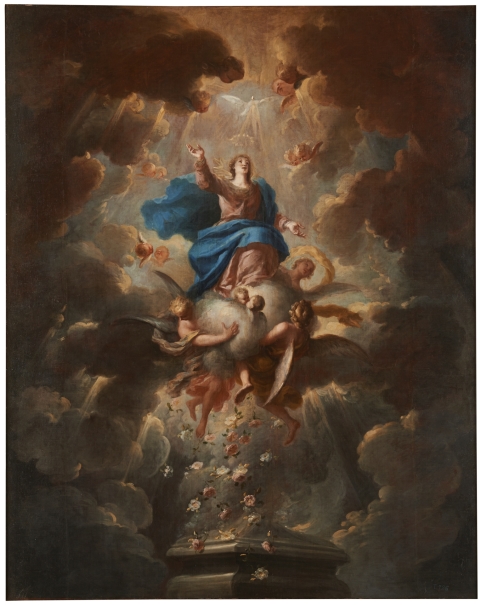
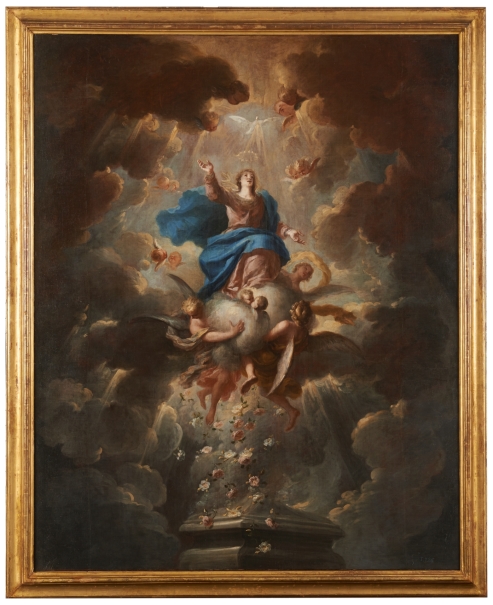
Apart from being an interesting work from a formal and aesthetic point view, this is a fascinating painting from an iconographic point of view. This is because the painting combines the theme of the Virgin´s departure from the tomb and her assumption or elevation to heaven, without including the figures of the apostles who usually witness this event. In addition, the artist conceived the tomb as a large closed funerary urn, converting it into a pedestal or support from which the Virgin rises. As she ascends into the air, she scatters a cascade of roses. The models for the three larger angels are derived from Claudio Coello, but the overall composition is inspired by Flemish painting, although it has been so considerably abbreviated that, by concentrating all its interest on Virgin Mary, comfortably seated on the throne of clouds, its source of inspiration has been transformed. The whole composition is dominated by the scenographic sensation obtained by the clouds breaking apart, the angels’ fluttering figures and the small cataract of cherubs. The Baroque dynamism is perfectly achieved through a great moderation of means: the tearing of the cottony clouds, the contrast of the chiaroscuro, the figures who seem like a helical whirlwind, and the Virgin’s strong diagonal arms. All of these elements are enough to obtain a beautiful and refined fully Baroque Marian image.
Pintores del Reinado de Carlos II, Madrid, Museo del Prado, 1996, p.80