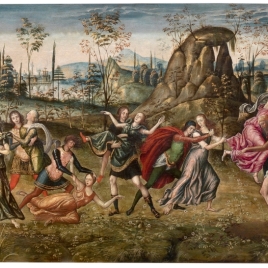
The Continence of Scipio
1496. Oil on panel.Room 056B
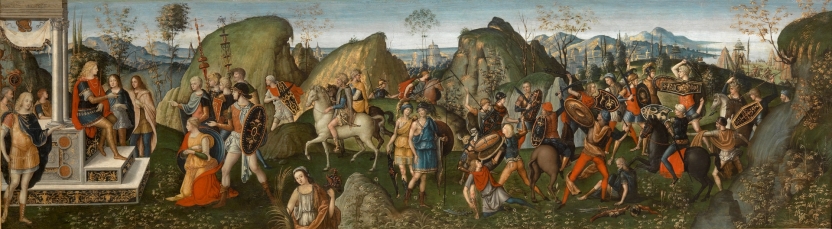
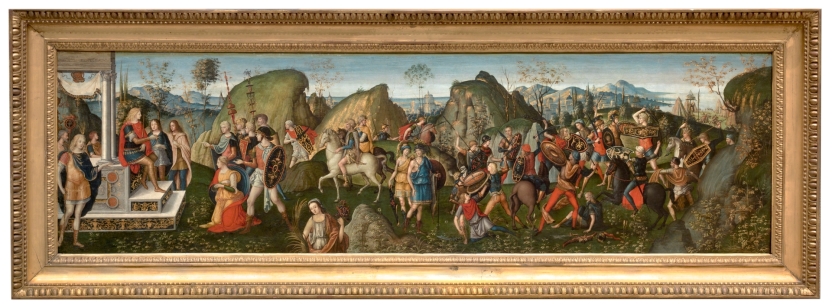
This painting and The Rape of the Sabines (P524) were part of the decoration of two cassoni commissioned in May 1496 in Bologna by Lodovico da Sala from the painter Guido Aspertini. These paintings were commissioned for the betrothal of his daughter Angelica to Giovan Battista Bolognetti held in August of that year. Certain elements of The Continence of Scipio also suggest that these panels are associated with this marriage. For example, the female figure in the foreground holding a palm branch in one hand and a staff crowned by a helmet with an angel in the other has been interpreted as an allusion to the bride’s name.
Although only Guido Aspertini is mentioned in the contract, critics acknowledge the participation of his younger brother Amico. His absence from the document may be explained by the fact that he was in Rome accompanying his father, Giovanni Antonio Aspertini, who was also a painter. In fact, these works are similar to other works by Amico painted before 1500, namely The Adoration of the Shepherds (Berlin, Gemäldegalerie), with which they share the same treatment of the flora. Moreover, they would be inconceivable without the artist’s stay in Rome. This Roman sojourn would explain not only Amico’s debts to Pinturicchio but also the reference to many figures from classical statuary. This is the case in both The Rape of the Sabines (where the reference to Belvedere’s Apollo in the Roman warrior wearing armour and a red cloak is obvious) and The Continence of Scipio, some of whose figures come from the Trajan’s Column.
Whether at the client’s request or by the painters’ own initiative, the panels illustrate passages from classical Rome, a common practice at the time. These include the rape of the Sabines and the delivery of Publius Cornelius Scipio’s fiancée to the barbarian chief Allutius, who had been enslaved after the capture of Carthage. As is customary on the cassoni, the scenes contain moral lessons. Scipio’s scene was interpreted as a praise of continence and a reference to the husband’s generosity. However, contemporary writers such as Balthasar Castiglione and Marco Antonio Altieri transformed the rape of the Sabines into a glorification of the Roman woman, capable of sacrificing herself for the sake of family and homeland.
Museo Nacional del Prado, Pintura italiana del Renacimiento: guía, Madrid, Museo del PradoAldeasa, 1999, p.83